Straight Ankle Lock: 7 Essential No-Gi Setups & Escapes
Rousimar Palhares once ended a UFC fight in 31 seconds with nothing but a straight ankle lock, then held it long enough to draw a suspension. That single clip taught a generation of no-gi grapplers two things at once: the ankle lock finishes fast, and it deserves respect. It is the least flashy entry in the leg-lock game — no inside heel hook, no saddle, no reaping the knee — and it is also the only one a brand-new white belt is allowed to throw. Learn it well and you have a finish that works from your first week of no-gi through the black-belt divisions of ADCC.
What Is the Straight Ankle Lock in No-Gi?
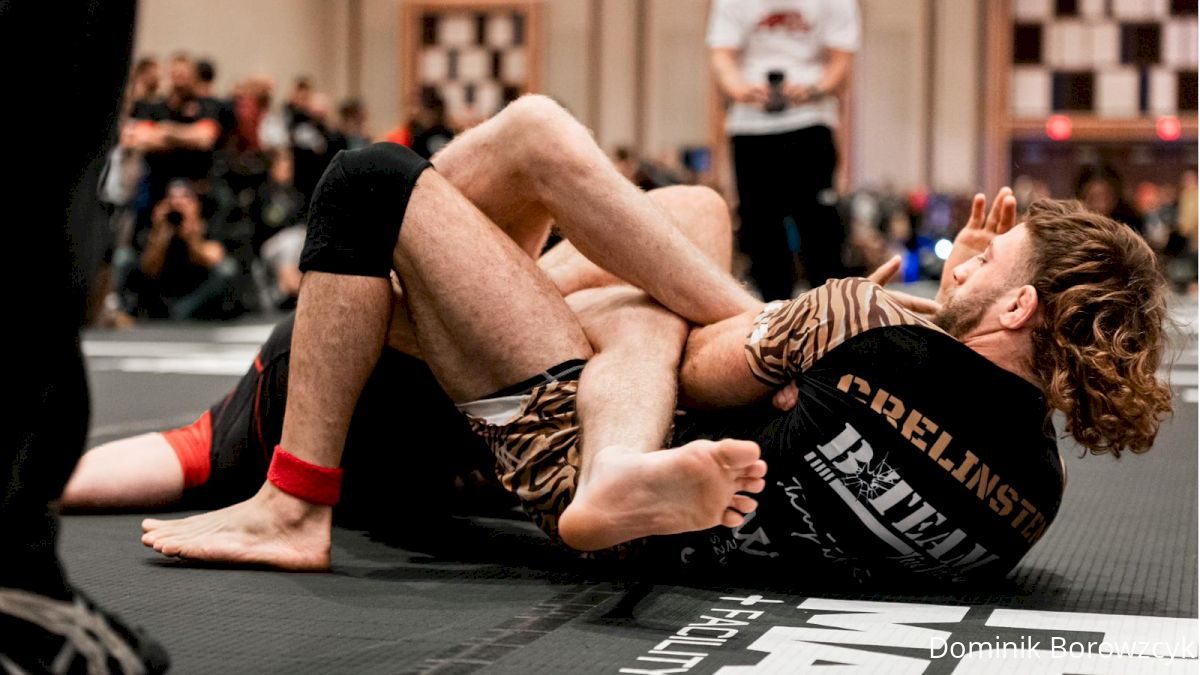
The straight ankle lock — also called the Achilles lock or straight footlock — is a submission that attacks the ankle joint and Achilles tendon by hyperextending the foot. You trap your opponent’s leg between your legs, slide the bony blade of your forearm underneath their Achilles tendon, and then extend your whole body to bend their foot backward past its range. The pain comes from a mix of joint compression at the ankle and pressure on the tendon itself, and the tap usually arrives well before anything tears.
What separates it from the more dangerous leg locks is direction. A heel hook rotates the foot and torques the knee, which is why it wrecks ligaments silently. The straight ankle lock only extends the foot in a straight line, so the athlete feels it building and can tap in time. That is exactly why it sits at the base of the whole leg-lock system — it teaches control and finishing mechanics without the injury risk of its nastier cousins like the heel hook.
Is the Straight Ankle Lock Legal? Belt and Ruleset Rules
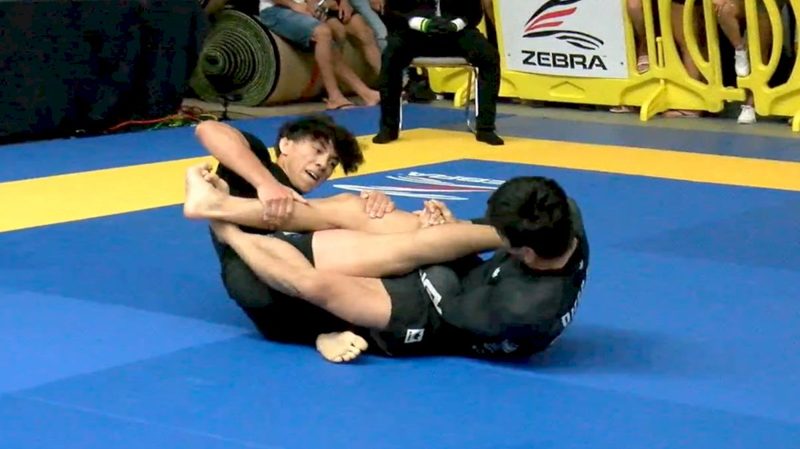
Yes — the straight ankle lock is legal at every IBJJF belt, from white to black, in both gi and no-gi. It is the only leg lock with that status. Kneebars and toe holds open up at brown belt, and inside heel hooks became legal for adult brown and black belts in no-gi only after the IBJJF’s 2021 rule change. The straight ankle lock has always been fair game, which is why coaches hand it to beginners first.
There is one line you cannot cross: reaping the knee. If your foot crosses the centerline of your opponent’s body and puts rotational stress on their knee, you are “reaping,” and that is a disqualification below brown belt under IBJJF rules. Keep your controlling leg on the near side of their hip and you stay legal. Sub-only and ADCC rulesets are far more permissive — most allow every leg lock — but if you compete IBJJF, know where the line is before you fall back.
The Ashi Garami: Where Every Ankle Lock Starts
You cannot finish an ankle lock without first owning the leg, and that ownership happens in a family of positions called ashi garami — Japanese for “leg entanglement.” The most common entry point is single-leg X guard, where you’re on your back with one foot on your opponent’s hip and their leg threaded across your body. From there you elevate, break their base, and transition into a straight ashi where their trapped foot ends up in your armpit.
Control comes before the submission every single time. Your knees pinch together to trap the leg, your outside foot hooks their hip to stop them from stepping over, and your inside knee stays tight to their hamstring. Grapplers who skip the position and reach straight for the foot get their leg pushed down and passed. If you want to drill the entry in isolation, our single-leg X guard guide breaks down the sweeps and leg-lock entries that feed directly into the ankle lock.
7 Straight Ankle Lock Setups That Finish in No-Gi
The ankle lock rarely appears out of nowhere. It shows up when someone forces a scramble, over-commits to a pass, or gives up a leg to defend something else. These seven setups cover the situations where the finish is genuinely there for the taking.
1. Off the Single-Leg X Sweep
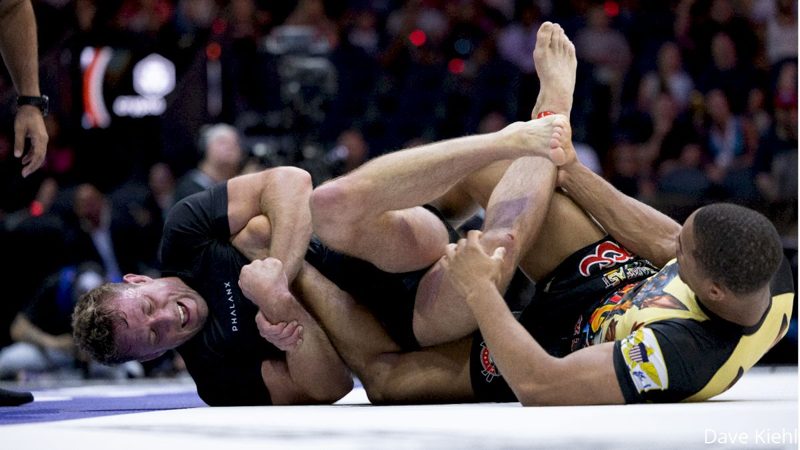
This is the bread-and-butter entry. You attack a single-leg X sweep, your opponent bases out to avoid going over, and in that moment their weight is committed forward and their foot is stuck in your entanglement. Instead of chasing the sweep, sit up into a straight ashi, slide your forearm under the Achilles, and fall back. The sweep and the submission are the same motion — you just choose which one they hand you.
2. From the Failed Toreando Pass
When your opponent tries to toreando (bullfighter) pass and you frame on their hip with your foot, their lead leg is already lined up for you. Catch it, thread your legs into ashi garami as they drive forward, and their momentum feeds the leg straight into the finish. Passers who blitz without respecting the legs walk into this one constantly.
3. The Ankle Lock to Sweep to Ankle Lock Loop
Not every ankle lock is meant to finish — some are meant to make them move. You fall back on the near leg, they hand-fight and posture up to defend, and that posture kills their base. Use it to come up on the sweep, take top position, and re-attack the same ankle from the other side. Treat the first attempt as a question and the second as the answer.
4. Off the Backstep When They Defend the Heel
Reach for an inside heel hook (at brown or black in no-gi) and a savvy opponent will boot-slide their heel out to safety. The instant they straighten the foot to escape the heel exposure, the Achilles is served up on a plate. Switch your grip from the heel to the blade-of-forearm ankle lock and finish the leg they just “saved.”
5. The 50/50 Ankle Lock Battle
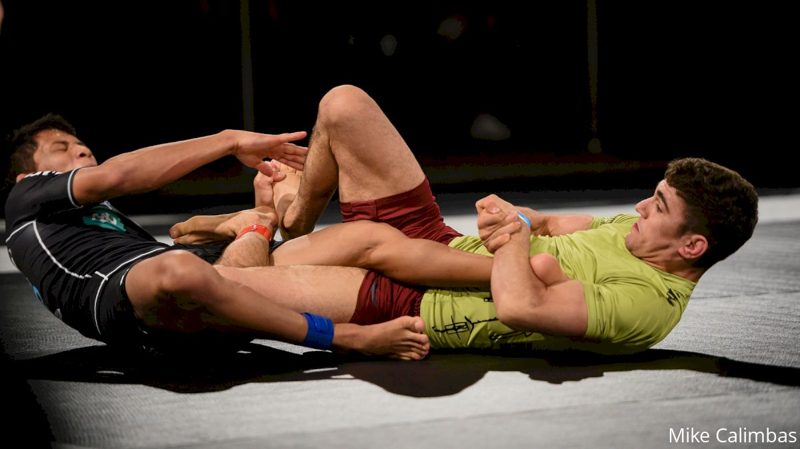
In 50/50, both athletes have symmetrical leg entanglements, and the ankle lock becomes a race. Whoever gets the inside position on the Achilles and extends first wins the exchange. The key is to control their free leg with your hands so they cannot counter-attack your ankle while you finish theirs. This is where clean mechanics beat strength every time.
6. From Top Position: The Ankle Lock Pass Counter
When you’re passing and your opponent throws up a stiff leg to frame, you don’t always have to clear it — you can attack it. Trap the framing foot, step over into a top ashi (sometimes called the “honey hole” entry), and settle your weight down while you finish. Attacking from the top keeps you off your back against a good scrambler.
7. The Scramble Ankle Lock in a Sub-Only Match
In sub-only and ADCC-style matches, scrambles are constant, and a foot left dangling in a transition is an invitation. When your opponent shoots for a takedown or bails on a submission, catch the trailing ankle mid-scramble, lock the entanglement fast, and fall to your back. Speed matters here — the window closes in about a second, so you drill the entry until it’s reflex.
How to Finish the Straight Ankle Lock
The single most common mistake is trying to finish with your arms. The ankle lock is a full-body movement, and your biceps are the weakest part of it. Here is the finishing sequence that actually taps people.
Start with the grip. Slide the blade of your forearm — the bony ridge of the radius, not the soft belly of the muscle — underneath the Achilles tendon, as high toward the calf as you can get. Then lock a figure-four or a strong gable grip to fix your forearm in place. Cinch your elbow tight to your own ribs so there is no space for their foot to slide out.
Now the finish comes from your core, not your hands. Pinch your knees to keep the leg from rotating out, drive your hips into the air, and arch your upper back toward the mat. That arch is what levers the foot backward over your forearm. Done right, the tap comes in one smooth extension — a slow, controlled bridge, never a violent jerk. Rushing the finish is how you get the injuries the straight ankle lock is supposed to avoid.
The Aoki Lock: A Legal Ankle Lock With Heel-Hook Torque
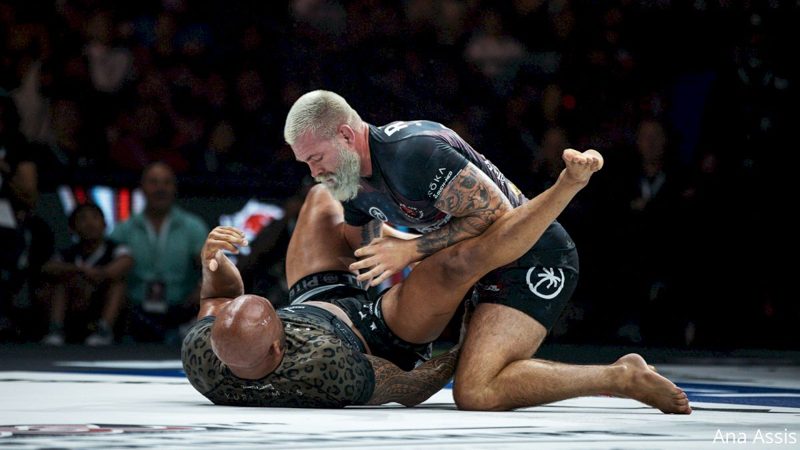
Shinya Aoki, the Japanese MMA legend, made famous a variation that lives right on the edge of the rules. Instead of gripping palm-down, you rotate your locked hands palm-up and turn the finish so the extension carries a twisting component. The result generates something close to heel-hook torque while technically still attacking the ankle, which is why FloGrappling once asked whether it’s a heel hook in disguise.
The Aoki lock is brutally effective, but the same torque that makes it finish also makes it dangerous, so save it for live rounds with trusted partners and hard rolls where a slow tap is respected. For everyday drilling, the straight version teaches better control. The Aoki is what you graduate to once your base mechanics are automatic.
How to Escape and Defend the Straight Ankle Lock
The escape starts before the grip is ever locked. The instant you feel someone entering ashi garami on your leg, your first job is to get your heel line to safety and your knee pointed at the mat — a concept leg lockers call “boot on, heel down.” If your foot stays flexed and your heel is exposed, you’re already losing the exchange.
If the grip is on, don’t panic and don’t yank the leg straight back — that plays into their extension. Instead, rotate your knee toward the ceiling to reduce the Achilles exposure, hand-fight to peel their top grip, and come up on top of their entanglement to relieve the pressure. Turning into them, rather than away, kills the finishing angle. Grapplers who learn to read the entry the way they read a toe hold or a calf slicer stop getting caught by leg locks they never saw coming.
Ankle Lock vs. Heel Hook: Why Beginners Start Here
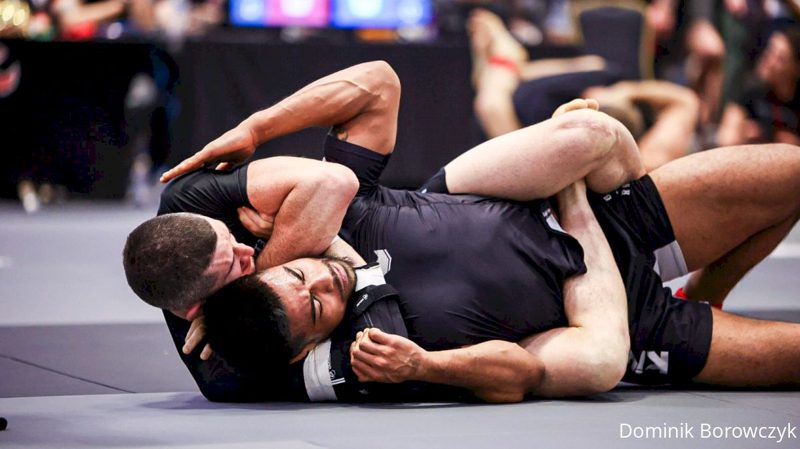
Both submissions attack the same limb, but they belong in different risk categories. The heel hook is a rotational attack on the knee ligaments — it can blow an ACL or a meniscus before you feel real pain, which is why it stays banned for beginners in IBJJF. The straight ankle lock extends in a straight line and gives you a clear, escalating warning, so the tap arrives while the joint is still healthy.
That difference is the entire reason the ankle lock is the on-ramp to the leg-lock game. Master the entanglement control and the finishing mechanics here, where mistakes cost you a tap instead of a surgery, and every more advanced leg attack builds on the exact same foundation. Skip it and rush to heel hooks, and you become the training partner nobody wants to roll with.

Common Mistakes That Kill Your Ankle Lock
The number one error is crossing your feet behind your opponent’s back to “lock” the position. That not only weakens your control, it exposes you to a counter and, in many rulesets, drifts into an illegal reaping position. Keep your knees pinched and your feet honest.
The second is finishing too low on the foot. If your forearm blade sits down by the toes instead of up near the calf, you’re bending the foot instead of loading the Achilles, and strong-ankled athletes will just ride it out. Get high, get the blade under the tendon, and the same effort produces a tap. The third mistake is the one already named — pulling with the arms instead of extending with the hips. Fix those three and your finishing rate on the straight ankle lock climbs fast.

The straight ankle lock isn’t the submission that gets highlight reels — the flying heel hooks and buggy chokes take those. But it is the leg lock you’ll hit more than any other across a competition career, and it’s the one that keeps your training partners healthy enough to keep rolling with you. Drill the ashi garami control until it’s boring, finish with your hips, and respect the tap. If you’re building out your leg-lock game, pair this with our breakdowns on the heel hook and toe hold to round out every attack from the same entanglement.
Sources
- IBJJF Rule Book — Official legal and illegal submissions by belt level and division.
- FloGrappling: Is This Legal Ankle Lock A Heel Hook In Disguise? — Breakdown of the Aoki lock variation and its torque.
- BJJ Fanatics: The Ankle Lock — Reference on straight ankle lock mechanics and finishing details.
- FloGrappling: Top 10 Leg Lockers To Watch At ADCC — Context on how leg locks are used at the elite no-gi level.
Browse our top-rated rashguards and no-gi gear at the RashguardGuy shop →