Calf Slicer No-Gi: 6 Essential Setups and Escapes
The calf slicer is one of the few submissions the IBJJF trusts only to brown and black belts. Every rank below that is banned from using it, which tells you two things at once: it works, and it hurts enough that governing bodies would rather keep it away from beginners. In no-gi, where there is no collar or sleeve to slow the pace, the calf slicer has quietly become one of the most reliable “when they defend the heel hook” finishes on the mat. This guide breaks down what it is, how to hit it from six positions, how to get out, and where it sits inside the rules.
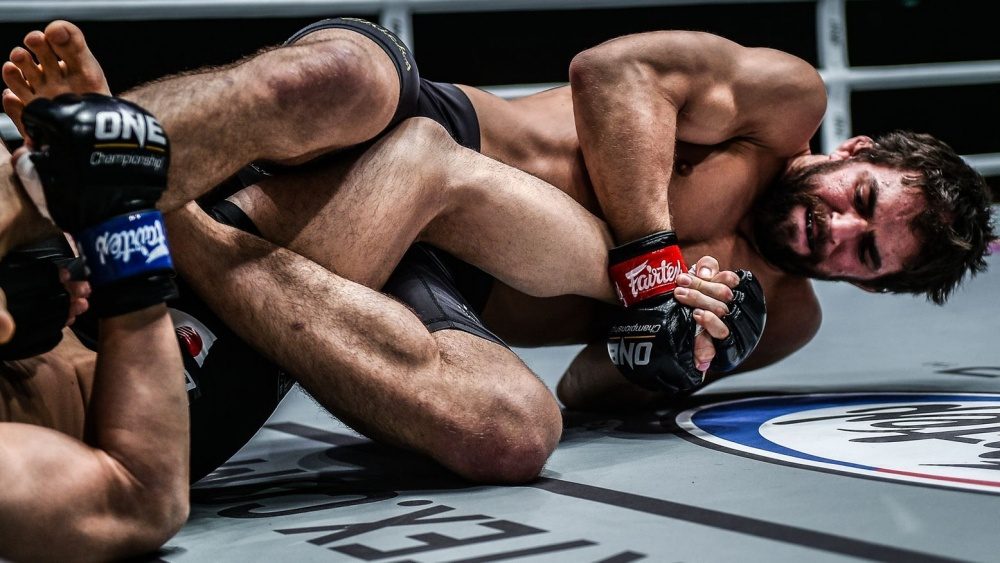
Leg entanglements are the doorway to the calf slicer in modern no-gi.
What Is a Calf Slicer in No-Gi Grappling?
A calf slicer is a muscle compression lock, not a joint lock. Instead of hyperextending a hinge like the knee or elbow, it crushes the belly of the calf against a hard edge, usually your own shin or forearm, that you have buried behind your opponent’s knee. Their leg gets folded shut, their heel pinned toward their backside, and every degree of extra flexion drives the muscle harder into that wedge. The pain is sharp and immediate, and because it attacks tissue rather than a ligament, it can bruise or tear the calf if the person on the receiving end is too proud to tap.
The submission is sometimes called the calf cutter or calf crush, and it belongs to the same slicer family as the bicep slicer. What makes it a no-gi staple is how naturally it appears out of leg entanglements. Any time you are hunting a heel hook and your opponent bends their knee to hide their foot, they hand you the exact shape a calf slicer needs.
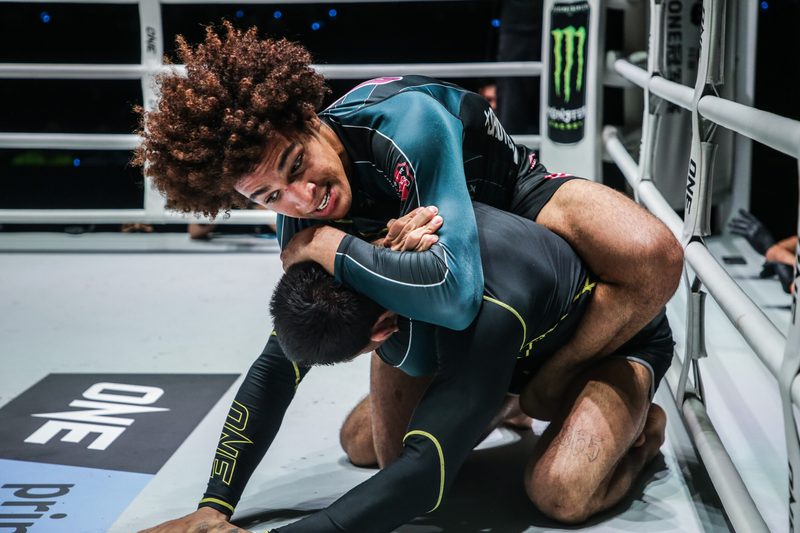
Back control and leg entanglements both feed straight into calf slicer territory.
Why Does the Calf Slicer Hurt So Much?
Most submissions threaten a structure your brain protects on instinct: your arm bends the wrong way, you tap. The calf slicer is different because it works on a muscle that has nowhere to go. Once your shin is wedged deep behind the knee and the leg is folded, the calf is trapped between two hard surfaces, your shin bone on one side and the opponent’s own thigh and femur on the other. There is no slack to give.
Depth is the whole game. A shallow wedge near the ankle is annoying but escapable. A wedge planted right in the crook of the knee, combined with hips that stop the opponent from rolling, turns into a finish in seconds. The truth is that most failed calf slicers fail for one reason: the attacker never got the wedge deep enough before going for the squeeze.
6 Calf Slicer Setups That Work in No-Gi
You rarely go looking for the calf slicer as your Plan A. It is a Plan B that shows up when a leg attack or a back take stalls out. Here are the six entries that produce it most often on the competition mat.
1. From the Truck
The truck, popularized by Eddie Bravo and the 10th Planet system, is the cleanest calf slicer entry there is. Once you have back-stepped over a trapped leg and locked the truck, your shin is already threaded behind your opponent’s knee. From there you bridge into them and pull the foot down, folding the leg over your shin. Kade Ruotolo has finished world-level opponents from exactly this position, and it remains the highest-percentage calf slicer at the elite level.
2. As an Ashi Garami Follow-Up
When you attack a heel hook from ashi garami and your opponent defends by rotating and hiding their heel, they usually bend the knee hard to do it. That bent knee is your invitation. Swap your inside leg’s shin into the gap behind their knee and start closing the entanglement, and the heel hook defense becomes a calf slicer offense.

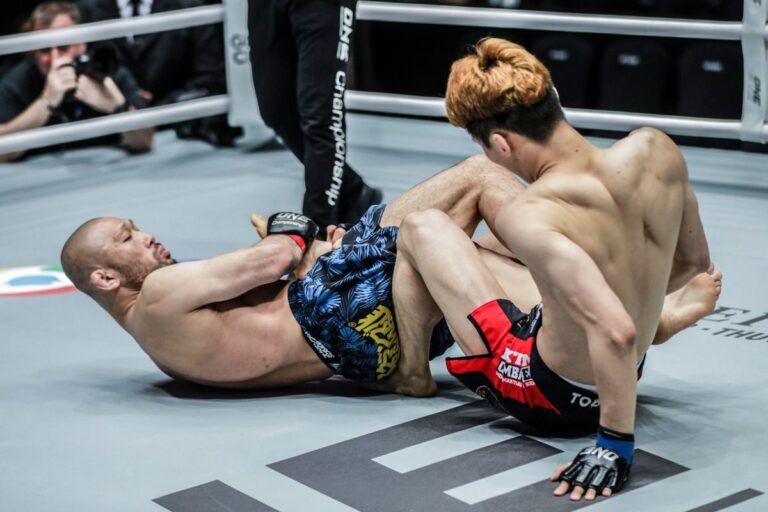
The scramble out of a leg entanglement is where most calf slicers are born.
3. From Back Control
With both hooks in, drop one leg across your opponent’s thigh, hook your foot under their far leg, and lace your shin behind the knee. Triangle your legs to lock the structure, then extend your hips. Back mount calf slicers catch people who are so focused on defending the choke that they forget their legs are exposed.
4. From Turtle and the Front Headlock
When an opponent turtles up, their calves are folded and available. Feed your shin across the back of one knee, control the hips so they cannot roll, and lever the leg closed. This one pairs well with the front headlock game, since the threat of the choke keeps them from posturing out.
5. Off a Top Half Guard Back-Step
From top half guard, back-step over your opponent’s entangled leg the same way you would enter the truck. As you rotate, keep your shin pinned tight behind their knee rather than letting it slide toward the ankle. Land in the back-step, sit into their hip, and the leg folds over your shin on its own.
6. The Rolling Calf Slicer From Seated Guard
Against a seated or De La Riva guard, you can enter with a forward roll that scoops the leg and lands you in a calf slicer as you come up. It is flashy and lower percentage than the truck entry, but it catches opponents who expect a pass and get a leg attack instead. Save it for when you have a big pace advantage.
Across all six, the checklist never changes:
- Get the wedge deep, right behind the knee, not near the ankle.
- Kill the hips so they cannot roll or straighten the leg.
- Fold the knee shut before you try to finish.
- Squeeze with your whole body, not just by pulling the foot.
How Do You Escape a Calf Slicer?
The best calf slicer escape happens before the submission is really on. The moment you feel a shin threading behind your knee, straighten that leg with everything you have. A straight leg has no bend for the wedge to work against, and a straight leg is a calf slicer that never happens.
If you are late and the leg is already folding, hand-fight to peel the wedge out and rotate your knee toward the mat to relieve the pressure. Rolling can work, but only in the direction that unwinds the entanglement, otherwise you tighten the very lock you are trying to escape. And if none of that is landing, tap. A calf slicer will not snap a bone, but a torn calf can cost you months, and no round is worth that.
Straightening the trapped leg early is the difference between an escape and a tap.
Is the Calf Slicer Legal in No-Gi Competition?
This is where a lot of hobbyists get caught out. Under IBJJF rules, the calf slicer is legal only for adult brown and black belts in both gi and no-gi, and it is banned for white, blue, and purple belts as well as all juvenile divisions. So a purple belt who drills the calf slicer all week can be disqualified for using it in an IBJJF bracket.
Submission-only and no-gi rulesets are usually far more permissive. ADCC and most professional no-gi promotions allow the calf slicer at every level, which is a big reason it thrives in the modern no-gi meta. Before you compete, read the specific ruleset for that event. The same move that wins you a match under one banner can lose you one under another. For a broader map of what is and is not allowed, our guides to the toe hold and the knee bar cover the ruleset lines in more detail.

No-gi and submission-only rulesets are where the calf slicer really lives.
Calf Slicer vs Heel Hook, Kneebar, and Toe Hold
The calf slicer sits in a different category from its leg-lock cousins, and knowing the difference tells you when to reach for it. The heel hook attacks the knee ligaments through rotation and is the most dangerous of the group. The kneebar and toe hold attack joints through extension and rotation. The calf slicer, by contrast, is a compression move that targets muscle, which makes it slower to cause permanent damage but no less effective for forcing a tap.
| Submission | Target | Mechanic | IBJJF Legal Rank |
|---|---|---|---|
| Calf Slicer | Calf muscle | Compression | Brown/Black |
| Heel Hook | Knee ligaments | Rotation | No-gi Brown/Black |
| Kneebar | Knee joint | Extension | Brown/Black |
| Toe Hold | Ankle/foot | Rotation | Brown/Black |
Because they live in the same leg-entanglement neighborhood, these submissions chain together. A defended heel hook becomes a calf slicer; a defended calf slicer can become a single leg X sweep or a switch back to the heel. Treating them as one connected system, rather than four separate tricks, is what separates a real leg locker from someone who knows a move.

Leg-lock specialists like Kade Ruotolo treat the calf slicer as one node in a connected system.
Drilling the Calf Slicer Safely
The calf slicer punishes ego harder than almost any other submission, so drill it with a partner you trust. Apply the pressure slowly and stop the instant you feel resistance, not after the tap. Because the pain comes on fast and the damage is muscular, a hard, fast finish in the room is how training partners end up limping for a week.
Work the entries live but cap the finish at controlled pressure. The reps you want are the wedge placement and the hip control, since those are what actually make it work. The squeeze takes care of itself once the position is right. If you are competing in a division where the calf slicer is legal, spend as much time learning to recognize and escape it as you do finishing it, because the person across from you has read the same rulebook.

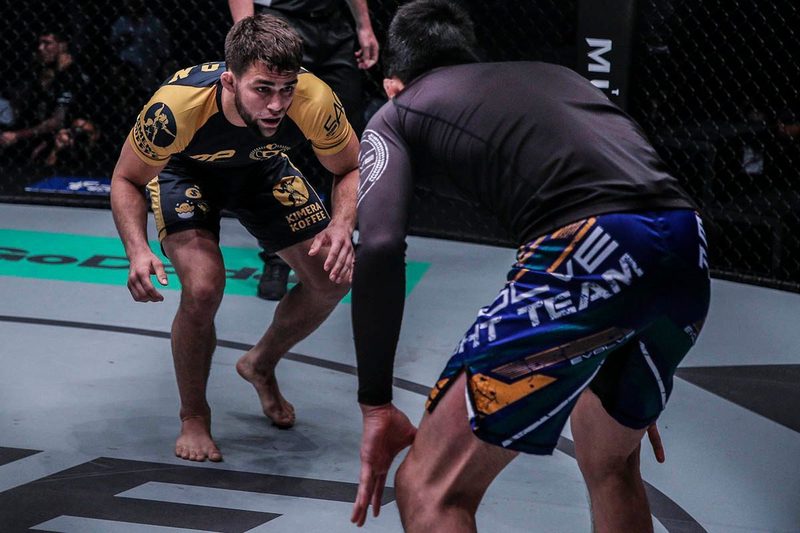
At the top level, no-gi grapplers treat leg-lock defense as seriously as offense.
Watch the Calf Slicer in Action
Video makes the wedge placement click in a way text cannot. This breakdown covers calf slicer entries from multiple positions and shows exactly how deep the shin has to sit.
The Bottom Line on the Calf Slicer
Add the calf slicer to your game the same way the Ruotolos did: as the answer to a defended leg lock, not as a standalone party trick. Learn to spot the folded knee, get your wedge deep, and kill the hips, and you will start finishing matches that used to stall out in a leg-lock stalemate. Then spend equal time learning to straighten that leg early, because in the no-gi divisions where it is legal, everyone is hunting the same folded knee you are. If you want to build out the rest of your leg-lock system, our ankle lock guide is the natural next stop.
Sources
- Evolve Daily — What You Need to Know About the BJJ Calf Slicer — technique overview and no-gi context.
- BJJ Fanatics — Calf Slicer BJJ — mechanics and setup breakdown.
- Submission Searcher — Calf Slicers — position and application database.
- ONE Championship — History of Submission Grappling Bouts — leg-lock finishes at the elite no-gi level.
Browse our top-rated rashguards and no-gi gear at the RashguardGuy shop →