Gordon Ryan: The No-Gi GOAT and the Legacy He Left Behind
Gordon Ryan is widely regarded as the greatest no-gi grappler of all time, and his March 2026 retirement brought that debate to a close for many in the community. Over a decade of competition, he redefined what was possible in submission wrestling — building a record that may never be matched.
Whether you watched him steamroll multiple opponents in a single day at ADCC or saw him submit the world’s best from any position, his body of work speaks louder than any claim. This is the full story of how Gordon Ryan became the standard everyone else is measured against.

The Making of a No-Gi Legend
Ryan grew up in New Jersey and found his way into BJJ as a teenager with no particular athletic pedigree. What changed everything was his connection to John Danaher — the New Zealand-born instructor operating out of a small room in the back of Renzo Gracie’s gym in New York City.
Under Danaher’s coaching, Ryan became the centerpiece of what the BJJ world would come to call the Danaher Death Squad (DDS). This loose collective of training partners — which included Garry Tonon, Nicky Ryan, Craig Jones, and later others — developed a systematic, leg-lock-centric approach to no-gi grappling that would destabilize the entire competitive landscape.
Ryan was their most complete product. He had the wrestling base to impose top position, the leg lock system to finish from below, and the back-taking mechanics to end fights from anywhere. By the time he was 20, he was already beating established black belts in high-level tournaments.
ADCC: Where He Built His Throne
The Abu Dhabi Combat Club (ADCC) World Championships is the sport’s highest-stakes event — held every two years with a grueling format where competitors may face multiple top-ranked opponents in a single day. Ryan’s ADCC record is the clearest proof of his dominance.
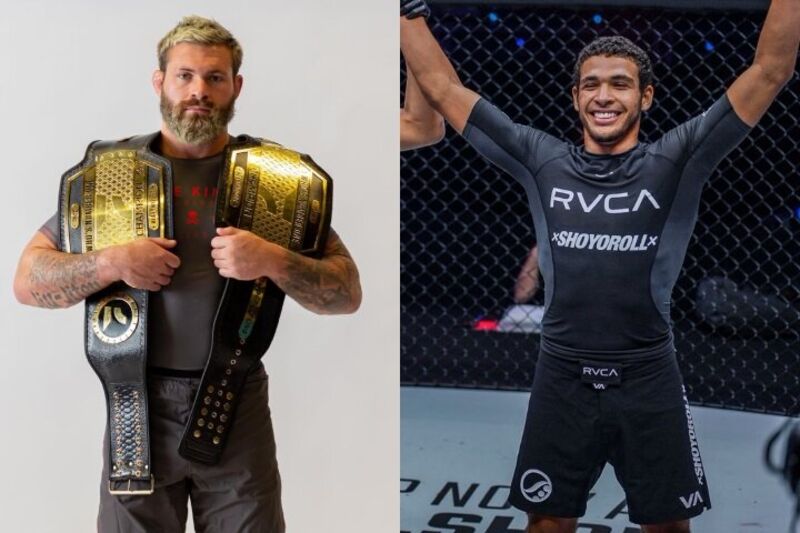
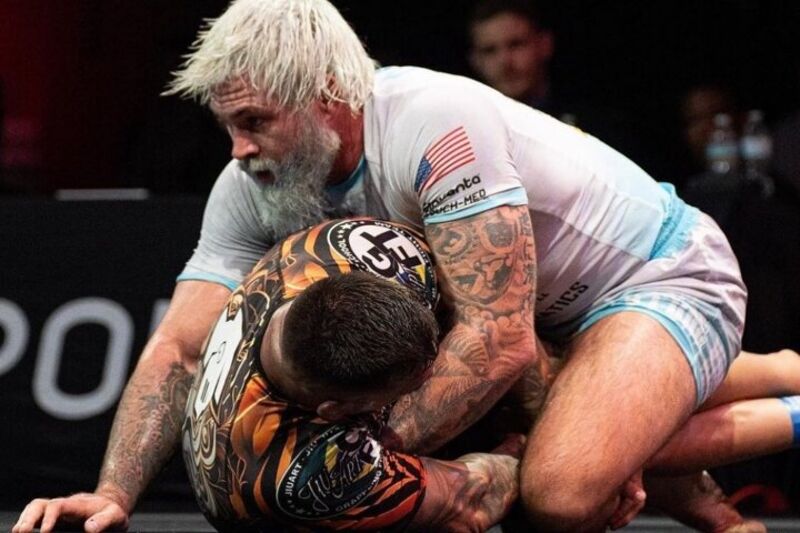
He won gold at ADCC 2017 in the Under-99kg division, submitting multiple opponents and barely breaking a sweat against the best in the world. At ADCC 2019, he won the 99kg+ class — an open weight class that requires defeating massive, world-class opponents across a full day of competition. He did it with a collection of leg locks, rear naked chokes, and dominant top control that made it look inevitable.
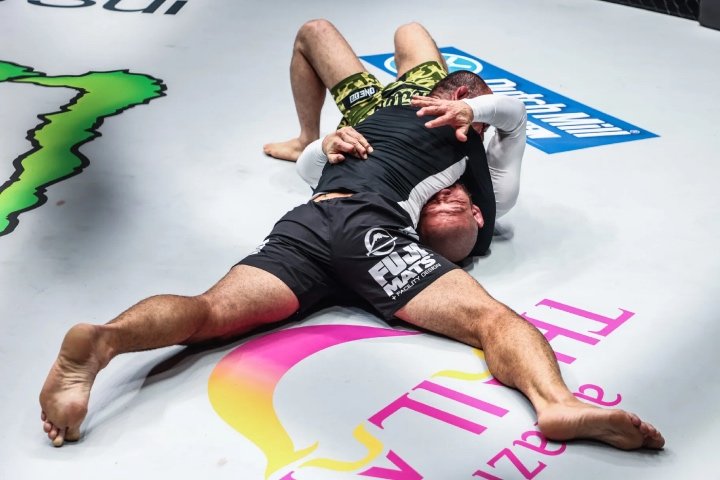
Then came ADCC 2022, held in Las Vegas. Ryan entered as the clear favorite across every weight class. He submitted all five of his opponents in the under-99kg bracket and then took the superfight against André Galvão — a legend who had held that championship for over a decade. Ryan submitted Galvão, ending the Brazilian’s reign and cementing his legacy as the greatest to ever do it.
Three ADCC gold medals. The superfight championship. Not a single loss at the tournament across all those appearances. That record alone puts Ryan in a category by himself.
The Leg Lock Revolution He Led
Before Ryan and the DDS systematized heel hooks and leg entanglements, most high-level no-gi grapplers treated legs as dangerous territory — risky to attack, tricky to defend, and generally avoided in favor of upper-body submissions. Ryan helped change that permanently.
The foundation of the DDS leg lock system is ashi garami — a leg entanglement position that controls the opponent’s hip and knee while allowing for attacks on the heel, ankle, and knee. Ryan didn’t invent ashi garami, but he and Danaher turned it into a complete offense-and-defense system with specific entries, transitions, and finishing sequences.
The inside heel hook became Ryan’s signature. From the inside sankaku or single-leg-X entry, he could isolate the heel and apply rotational torque to the knee in a direction it can’t flex safely. Applied correctly, it’s one of the fastest submissions in the sport — a tap in seconds if the opponent makes even a minor positioning error.
But Ryan’s leg lock game went beyond just the heel hook. He developed precise mechanics around the outside heel hook from 50/50, the calf slicer from the saddle, and the kneebar from a variety of positions. What set him apart was the ability to chain attacks — if you defended one, you walked into another.
For anyone looking to understand the complete picture, our comprehensive guide to no-gi leg lock submissions breaks down the full system that Ryan helped pioneer.
What Made Him Different: The Technical Breakdown
Ryan’s technical profile was unusual among elite grapplers because he had no obvious weakness at any range. Most world-class no-gi athletes have a primary game and a secondary game — a zone where they’re dangerous and zones where they’re merely competent. Ryan operated at a high level everywhere.
Standing and takedowns: Ryan wasn’t a decorated wrestler, but he had enough takedown ability to be dangerous — particularly with body locks, snap-downs, and direct wrestling attacks. More importantly, he developed a strong pulling game that let him choose his preferred exchange rather than fighting neutrally on the feet.
Top game and passing: Once he got there, Ryan’s pressure passing was suffocating. He used hip-to-hip connections and body weight distribution to prevent guard players from recovering frames, then attacked legs or moved to back control once the guard broke. His leg drag mechanics were especially clean — controlling the near leg while threatening the pass and the leg lock simultaneously.
Back control: Ryan had arguably the most reliable back control and rear naked choke system of any active competitor. He drilled the “shoulders to the mat” concept obsessively — forcing the opponent’s near shoulder down while staying off center with his weight, making defense nearly impossible.
From bottom: Even when forced to play guard, Ryan was dangerous. His open guard had enough threat behind it — both the leg attack entries and the sweeping mechanics — that opponents couldn’t simply stand and pass without opening themselves up to other counters.
The Retirement and What Led There
In March 2026, Ryan publicly announced his retirement from competitive grappling. The announcement came alongside an admission that he had used performance-enhancing drugs during his competitive career — a disclosure that sparked significant debate in the BJJ community about how his accomplishments should be weighed.
Tye Ruotolo, one of the most prominent active no-gi competitors, commented that “steroids are not good for longevity” when reacting to the retirement news. Others in the community noted that PED use, while prohibited in many sports, exists in a gray area in grappling where testing remains inconsistent at best.
The retirement announcement also touched on health concerns. Ryan had been open over the years about digestive issues that required multiple surgeries, and the demands of elite-level no-gi competition at his intensity had taken a physical toll that went beyond normal wear and tear.
How much does the PED admission change the legacy? That depends on your perspective. The techniques he executed, the positions he controlled, and the problem-solving he demonstrated under high-level competitive pressure weren’t fabricated by any substance. His opponents were some of the best in the world, and he outgrappled them consistently. But the legitimacy questions are real, and they’ll be part of how history records his career.
Gordon Ryan’s Instructional Legacy
Ryan’s impact extends well beyond his competition record. He produced an enormous volume of instructional content through BJJ Fanatics — detailed, systematic breakdowns of virtually every aspect of his game. Unlike many instructionals that stay surface-level, Ryan’s materials went deep into the principles behind each technique: why the angle works, what the opponent can do to counter, and how to chain into the next attack when the first one gets stuffed.
His instructionals on the back attack system, the leg lock series, and passing the guard have become reference material for serious no-gi practitioners at all levels. The return on investment from studying his teaching is legitimately high — even if you’re never going to compete at world level, the conceptual framework he lays out improves decision-making on the mat.
On the YouTube side, Ryan produced a significant amount of free instructional content — short clips covering specific details that his followers could apply immediately. That material remains available and continues to get views from practitioners building their game.
How He Changed No-Gi Training Culture
Before the DDS era, no-gi grappling was often treated as a subset of gi BJJ — the same techniques, minus the collar and sleeve grips. What Ryan’s generation demonstrated was that the two were genuinely different sports with different optimal strategies, and that no-gi-specific training would produce better no-gi grapplers.
The emphasis shifted. Wrestlers started appearing more prominently at elite grappling events. Guard systems without grips became more sophisticated. Heel hook defense — once treated as almost a specialty skill — became a required element of any serious no-gi practitioner’s game.
Ryan’s success also changed how gym owners and coaches thought about no-gi competition. Programs that were once mostly gi-focused started allocating more mat time to no-gi-specific drilling and rolling. ADCC trials and other high-level submission-only events saw attendance grow as more practitioners realized the technical depth that format demanded.
For those training without a gi, building a complete competitive game means understanding these foundations. Our guide to the ashi garami leg entanglement system covers the positional concepts that Ryan helped make mainstream.
The GOAT Debate: How Does He Stack Up?
Any honest conversation about the greatest no-gi grappler has to weigh Ryan against Marcelo Garcia — widely considered the dominant no-gi grappler of the 2000s — and against André Galvão, who held the ADCC superfight championship for over a decade.
Garcia’s argument rests on his ADCC record (five world titles across the 2003, 2005, 2007, 2009, and 2011 editions) and his extraordinary technical refinement. Garcia competed in an era with less systematic leg lock work and won with guillotines and arm drags, demonstrating dominance in his time that parallels what Ryan achieved in his.
Galvão’s case is built on longevity — holding the ADCC superfight across multiple championship cycles while competing alongside an entire generation of improved athletes. His technical base was comprehensive and his conditioning exceptional.
Ryan’s counter is simple: he beat both eras. His early wins came against Garcia-era practitioners. His ADCC 2022 superfight win was a direct statement against Galvão. The submission rate across his career — particularly against top-ranked opponents — is exceptional by any measure.
The PED admission complicates a clean verdict. But strictly on technical execution and competitive results, Ryan’s resume is the strongest ever compiled in no-gi grappling.
What No-Gi Competitors Can Take From His Game
You don’t need to be aiming for ADCC to benefit from studying how Ryan competed. A few principles from his approach that apply at every level:
Positional control before submission. Ryan was never in a rush. He improved position methodically, cut off space, and waited for the opponent to create an opening rather than forcing submissions against solid defense.
The threat creates the opening. His leg lock entries were dangerous enough that opponents had to adjust their guard defense to account for them — which opened the passing lanes. His back-taking mechanics were dangerous enough that opponents gave up position to prevent them. Every threat he developed created secondary openings elsewhere.
Drilling over rolling for skill development. Ryan was famously vocal about the importance of deliberate drilling — not just going hard in sparring, but isolating specific positions and techniques until the mechanics became automatic. His precision in competition reflected the quality of preparation he put in.
For no-gi practitioners looking to sharpen their overall game, the upcoming ADCC 2026 in Poland will feature the next generation of grapplers carrying forward the technical evolution that Ryan’s generation drove.
The Gap He Left
Ryan’s retirement removed the clearest measuring stick from the active competition scene. For the last several years, the fundamental question at every elite no-gi event was whether the winner could beat Gordon Ryan. That question is now hypothetical.
The names that emerge as the new measuring sticks — Kade and Tye Ruotolo, Mason Fowler, Kaynan Duarte, Mikey Musumeci, Ffion Davies on the women’s side — are excellent grapplers who would have been formidable challenges for Ryan at his best. But Ryan’s absence means the sport’s ceiling, in terms of a dominant standard-setter, is currently unoccupied.
That gap will either close when one of the current generation establishes similar dominance or it will remain open indefinitely as the sport fragments into a collection of specialists without a single figure who excels across all ranges and all positions the way Ryan did.
Either way, the technical standards he established — the leg lock systems, the back control mechanics, the concept of truly complete no-gi grappling — are permanent contributions. The sport looks different because of him. That doesn’t get retired.
Sources
- ADCC Combat Club – Official Results Archive
- Grappling Insider – Gordon Ryan Justifies GOAT Claim
- BJJEE – Tye Ruotolo Responds to Gordon Ryan’s Retirement
Browse our top-rated rashguards and no-gi gear at the RashguardGuy shop →