How Ear Guard Construction Shapes No-Gi Performance
Walk into any gear store — physical or digital — and you’ll find a dozen ear guard options at different price points, each claiming to offer the best protection. Most grapplers make the decision based on price or a gym recommendation. What rarely gets examined is what the design itself actually does during no-gi grappling, and how specific construction choices interact with the demands of scrambles, guard work, and wrestling entries. The wrong ear guard for your game isn’t just uncomfortable — it moves at the wrong moments and protects less than a well-matched one you actually wear consistently.
Cup Geometry and What It Means Under Pressure
The cup is the primary barrier between your ear and whatever presses against it — a knee during a scramble, a forearm across the side of your head, a thigh in side control. Cup geometry determines how that pressure gets redirected, and the variables that matter most are depth and backing.
Depth is the first variable. A shallow cup sits closer to the ear and offers less air gap between the impact surface and the cartilage. A deeper cup creates more distance, distributing lateral force across a wider area of the skull rather than concentrating it at the ear itself. In no-gi, where pressure arrives from multiple angles with no fabric buffer between your head and a training partner’s body, that depth differential matters more than it might in wrestling, where positions are more structured and contact surfaces are more predictable.
The second variable is whether the cup is open-backed or sealed. Open-backed cups allow airflow and reduce heat buildup during extended rolls — a genuine benefit in a packed gym or a hot climate. The tradeoff is that sweat accumulates between the cup and the ear more easily, which creates both comfort and hygiene issues. Sealed cups manage moisture better but run hotter. In practice, this becomes a compliance issue: grapplers who overheat in their ear guards take them off, and an ear guard that isn’t on provides no protection at all.
Strap Architecture and Why It Determines Scramble Retention
The strap system is where most ear guard failures actually happen. A cup with excellent geometry becomes useless the moment it rotates off the ear during a scramble — and scrambles in no-gi, with wrestlers driving angles and bodies moving explosively, are precisely when displacement risk peaks.
Single chin strap designs rely on one anchor point below the jaw. When the head moves aggressively — turning hard while threading through a guillotine attempt, or ducking under a body lock — that single strap creates a rotational axis. The cup can pivot around it because nothing prevents that motion. This is the most common failure mode in budget ear guards and the primary reason grapplers abandon them after a few hard sessions.
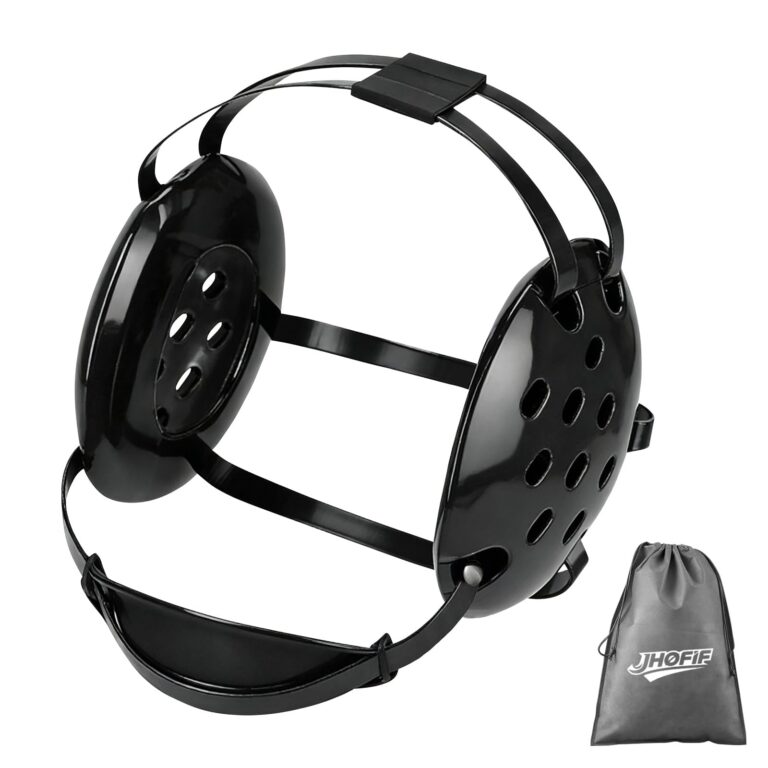
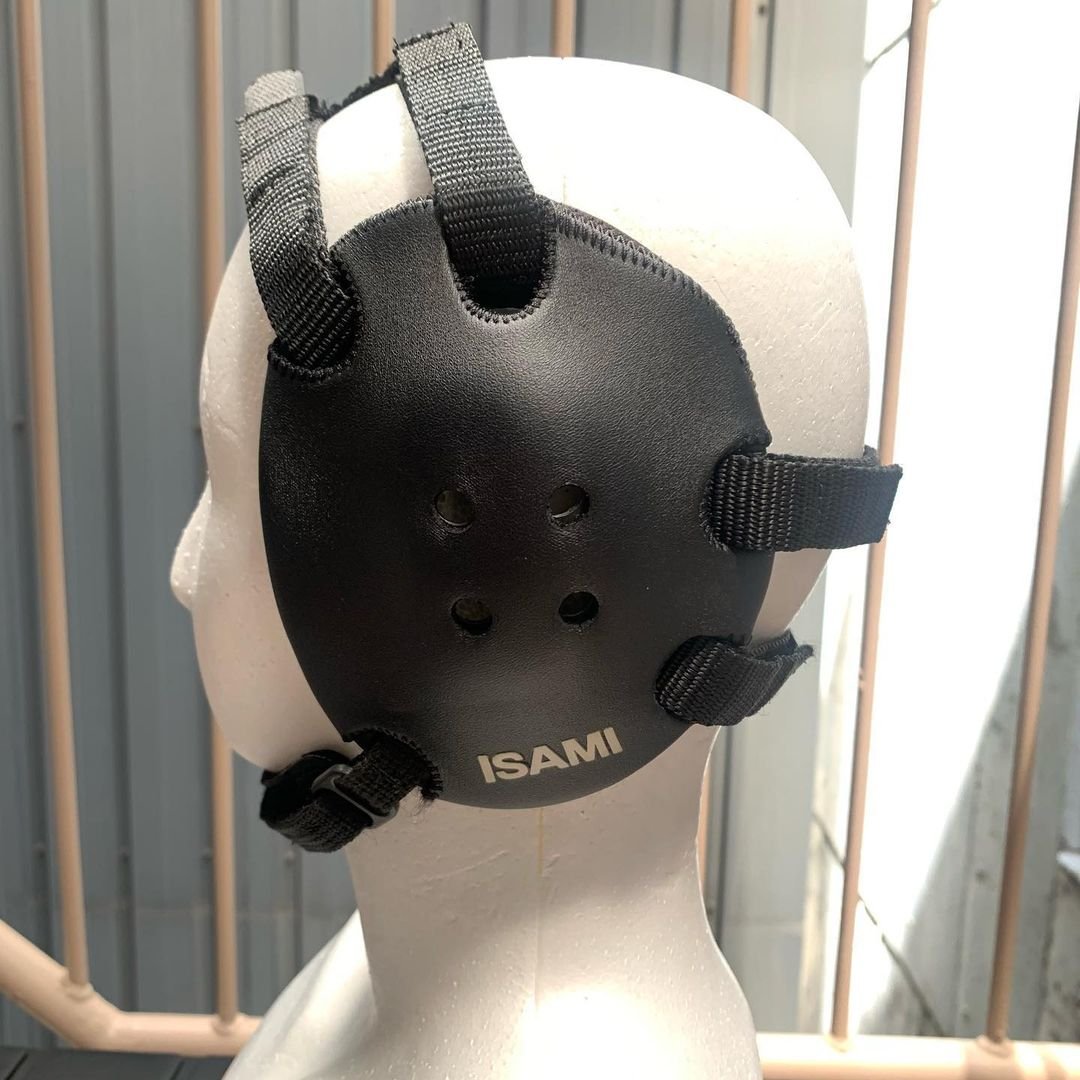
Double-strap systems add a second anchor, typically running behind the head or across the crown. With two independent anchor points, the cup has significantly less rotational freedom. The triangulated geometry resists the multi-directional head movement that no-gi scrambles demand. Most mid-to-upper tier ear guards use this architecture, and for live training involving wrestling and scrambles, it’s the minimum acceptable design.
Full wraparound designs — a headband that encircles the skull with ear cups integrated into the band — maximize retention by distributing anchor points around the entire head circumference. They stay put in almost any scramble scenario. The tradeoff is profile height and how they sit during certain head positions. Some grapplers find the band interferes with how they post their head during guard recovery or creates an uncomfortable pressure point during sustained head-to-mat contact.
Shell Material and Its Tradeoffs in No-Gi
Hard shells — typically ABS plastic or reinforced polymer — offer the best protection against direct blunt force impact. If a knee lands on the side of your head or a scramble produces a sharp collision, a hard shell deflects that load far better than foam alternatives. The problem specific to no-gi is snag risk. Hard edges can catch on a training partner’s rashguard during close scrambles, and when they do, the sudden lateral displacement is jarring and can pop the cup off entirely. Hard shell ear guards work reliably during positional drilling but require careful strap tension management in live, explosive training.
Semi-rigid EVA foam occupies the middle position. It absorbs shock through compression rather than deflection and has no hard edges to snag on fabric. The concern is sustained-pressure scenarios: holding turtle position while an opponent grinds their weight through cross-face pressure, or being flattened in side control with a forearm along the side of your head. EVA foam compresses under sustained load in a way hard shell doesn’t. It handles impact well but offers less protection during prolonged grinding pressure — which is a common feature of no-gi top control.
Soft silicone or neoprene cups prioritize comfort and conformity. They adapt to the skull, reduce pressure hotspots, and are forgiving during head-to-mat contact. They also provide the least protection in high-compression environments. If your training involves significant wrestling or top-pressure exchanges — as most serious no-gi training does — soft cups alone are not a complete solution.
Profile Height and Head Positioning
Profile height — how far the ear guard extends outward from the plane of the skull — directly affects how your head sits in several common no-gi positions. In bottom guard, your head often presses against a training partner’s torso, hip, or thigh. A high-profile ear guard creates a contact point that can lever your head into an awkward angle or create gap between your head and your partner’s body that disrupts framing and control geometry.
Low-profile ear guards minimize this interference. They sit closer to the skull and don’t dramatically alter how your head engages with contact surfaces. Guard players who work close-range hip escapes, guard recovery, and bottom-side control often prefer low-profile designs for this reason: the equipment disappears into the training rather than competing with it. There is some coverage tradeoff — a lower-profile cup may not fully shelter the entire ear surface — but for guard-oriented games, the positional benefit frequently outweighs it.
Wrestlers and top-game-oriented grapplers have more tolerance for profile height. Head positioning in top pressure is about driving weight down rather than threading through tight spaces, and a higher-profile cup with greater coverage area may protect a larger surface of the ear during those specific exchanges. Profile requirements are not universal — they track with how and where you use your head in your game.
Compression Headgear as an Alternative Design Approach
Not every ear protection option relies on a rigid cup. Compression headgear — neoprene or spandex caps that fit over the skull and ears without a hard shell — operates on a different mechanical principle. Instead of creating a deflection barrier, it distributes pressure evenly across the ear and surrounding tissue. The design premise is that even distribution of force causes less concentrated trauma than a single localized impact at an unprotected point.
In practice, compression headgear fits two specific situations well: early prevention before cauliflower ear has formed — where the goal is pressure management, not impact deflection — and post-drainage maintenance, where healing tissue needs gentle, consistent compression to prevent fluid from re-accumulating. For aggressive live training in no-gi with wrestlers generating explosive pressure, compression headgear alone is generally not sufficient as a primary protection strategy.
The low profile and full conformity of compression designs do make them genuinely useful as a supplement. Some grapplers layer them under a low-profile hard cup to get the even-pressure distribution of neoprene combined with the impact protection of a rigid shell. Whether this layering works depends on the cup depth of the hard guard — a very shallow cup won’t accommodate additional material without creating a fit problem with the strap system.
Where Ear Guards Fail — Construction Weak Points
Understanding where ear guards fail helps evaluate build quality before you buy. The first and most common failure point is the strap attachment. On budget options, straps are often secured by a single rivet or a thin plastic loop. These fail under the cumulative stress of repeated stretching, sweat exposure, and the kind of lateral force that happens when an ear guard gets caught during a scramble. The rivet loosens progressively, the strap begins pulling out from the mount, and retention degrades before the cup or shell shows any visible wear.
On better-constructed ear guards, straps run through reinforced webbing channels or are secured with dual attachment points that distribute the load across multiple contact areas. The difference in longevity under heavy training conditions is significant, and it’s one of the clearer indicators of overall build quality.
The cup-to-strap junction is the second failure zone. On modular designs where the strap system and cup are separate components, the connection housing is exposed to continuous sweat and mechanical stress. Plastic or rubber materials at this junction soften over months of use, and the cup begins to wobble in the mount rather than holding a fixed position. This doesn’t always cause immediate displacement, but it introduces play into the system that accumulates into a retention problem over time.
Chin strap elastic loses tension with use — this is normal wear. The rate of degradation depends on material quality. Flat elastic braid degrades faster than round cord elastic under comparable frequency of use. If a chin strap starts feeling loose well before the cup or shell shows wear, it’s a material choice indicator worth noting when evaluating future purchases.
Reading Your Game Into the Design Decision
Guard players who spend sessions working bottom position — hip escaping, recovering guard, controlling frames from below — need low profile and a secure double-strap system that doesn’t interfere with how their head posts on the mat or contacts a partner’s body. Shell hardness matters less here than profile and strap geometry. The ear guard should functionally disappear during the kind of close, technical work that guard play demands.
Wrestlers and takedown-heavy grapplers face a different environment. Wrestling entries involve head contact at speed and often at awkward angles. Hard shell construction earns its place in this context because impacts are sharper and less predictable. The strap system needs to handle explosive, multi-directional head movement, which means chin strap engagement quality and strap width are more critical variables than they are for positional drilling.
Leg lockers frequently work inverted — inside heel hook positions, ashi garami entries, reaping positions where the body is upside down and the head can contact the mat at unexpected angles. Low profile and a full wraparound strap system that doesn’t shift when inverted serve this game best. High-cup designs that hold well in top position can shift when the body orientation reverses, particularly during the dynamic entries that modern leg lock games require.
The design variables in an ear guard are not aesthetic choices — they’re engineering decisions that interact with your movement patterns, your positional tendencies, and the intensity of your training environment. Understanding cup geometry, strap architecture, shell material, and profile height gives you a real framework for evaluating options rather than defaulting to price point or brand recognition. The ear guard that actually protects you is the one whose design fits your training well enough that you keep it on through the hard rounds — not the one with the most impressive specifications on the packaging.
Sources
- Cauliflower Ear — Wikipedia
- FloGrappling — No-Gi Grappling Coverage
- ADCC Submission Wrestling World Federation
Image credit: chokesports.com