Saddle Position No-Gi: 7 Essential Entries
Gordon Ryan’s training partners at B-Team have a saying about the saddle: it’s the only leg-lock position where the person on bottom is winning. Most grapplers spend their first two years of no-gi treating leg entanglements as a scramble to survive. The saddle flips that. Once both legs are locked and the hips are pinned, the person in control has a finishing sequence and the person trapped has almost nothing — no grips to fight, no base to build, no easy way to invert out. Rashguard Guy covers heel hooks, kneebars, and calf slicers individually, but never the position that ties them together. That gap ends here, with the entries, the control details, and the finishes that separate a saddle that looks locked in from one that actually is.
What Is the Saddle Position
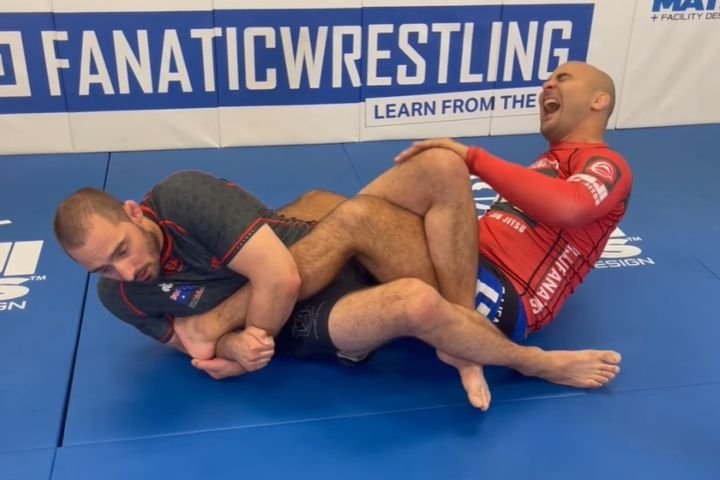
The saddle gets four names in four different gyms, and beginners usually learn only one of them before getting confused on a different mat. Inside sankaku describes the shape — “sankaku” is Japanese for triangle, and your legs form one around the opponent’s leg. Honey hole and 411 come from the American no-gi scene; the “4” and “1” refer to the numbered leg-entanglement system that Eddie Cummings and John Danaher popularized, where your legs trace a 4 shape and the opponent’s trapped leg completes the 1. Cross ashi garami is the more technical umbrella term, since “ashi garami” just means leg entanglement in general and the saddle is one specific version of it.
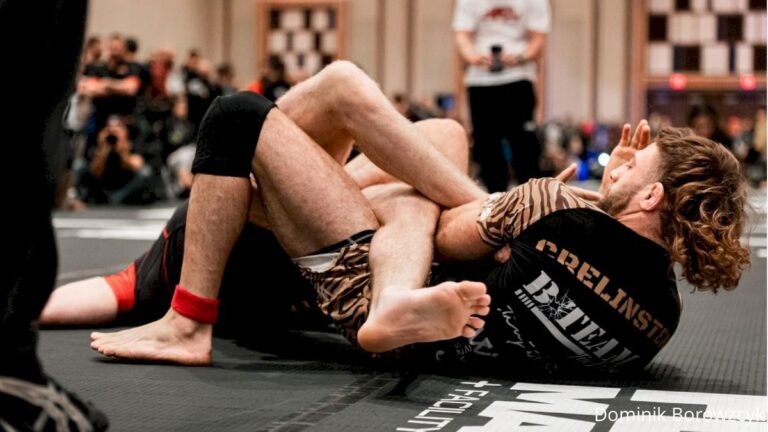
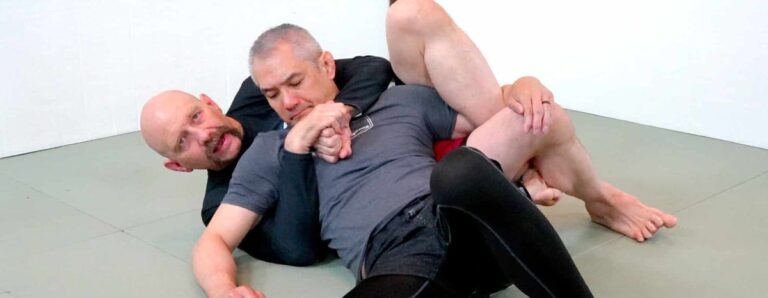
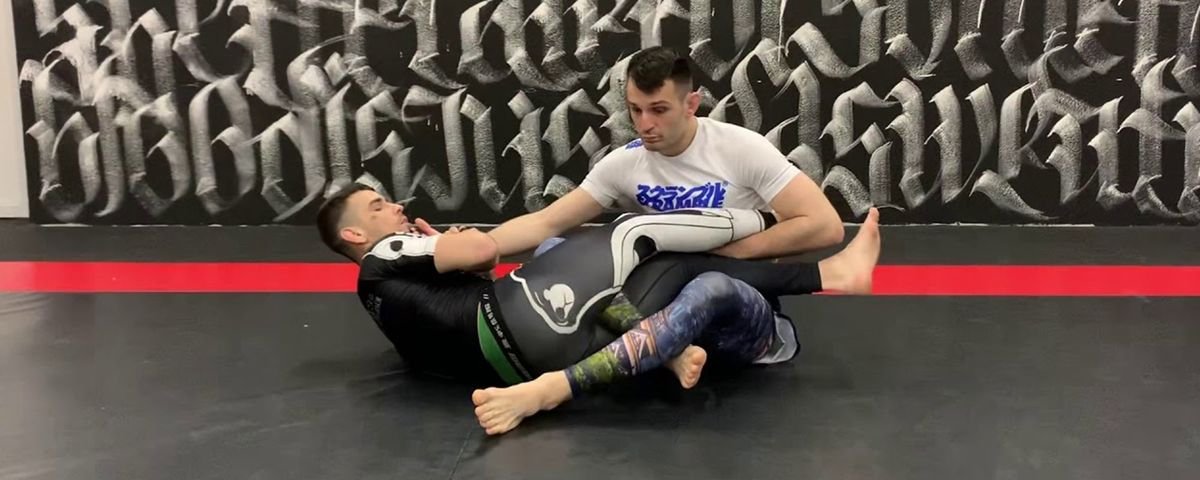
What actually matters is the mechanics, not the name. Your bottom leg goes across the opponent’s hip, your top leg locks over their trapped thigh, and your feet connect behind their knee line. Their leg is now isolated between yours with almost no room to rotate. Every major grappling ruleset allows it — IBJJF gi tournaments, where straight ankle locks and knee reaping are illegal, still permit the saddle itself, because the position doesn’t reap the knee on its own. That single fact is why competitors who compete in both gi and no-gi drill the saddle far more than 50/50, which offers a similar entry point but a much weaker submission rate once you’re actually in it.
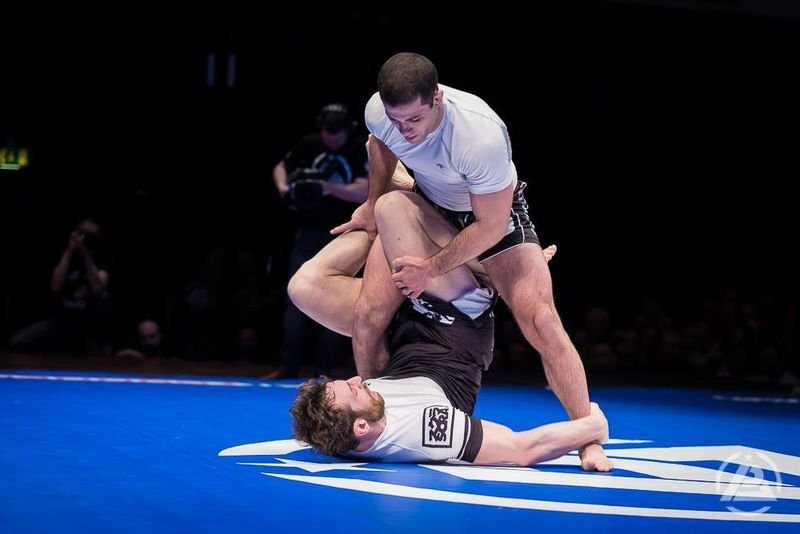
Entering the Saddle From Butterfly Guard
Butterfly guard is where most white belts first stumble into a leg lock by accident, and it’s also the cleanest entry to teach on purpose. Start seated with your hooks in, elevate one leg high on your opponent’s hip, and underhook their far leg with your same-side arm. From there, rotate your body until you’re perpendicular to them instead of facing them square — this is the step most people skip, and it’s the difference between an entry that works and one that gets stacked. Once you’re turned, lift your hips and bring your second leg behind their trapped leg to close the figure-four.
The detail that separates a clean entry from a scramble is timing the rotation to their weight shift. If you rotate while they’re still square to you, they’ll simply step over your leg and pass. If you wait until they post a hand to stop the sweep, their weight is already committed forward, and the same rotation that failed a second earlier now drops you straight into the saddle with their leg fully isolated.
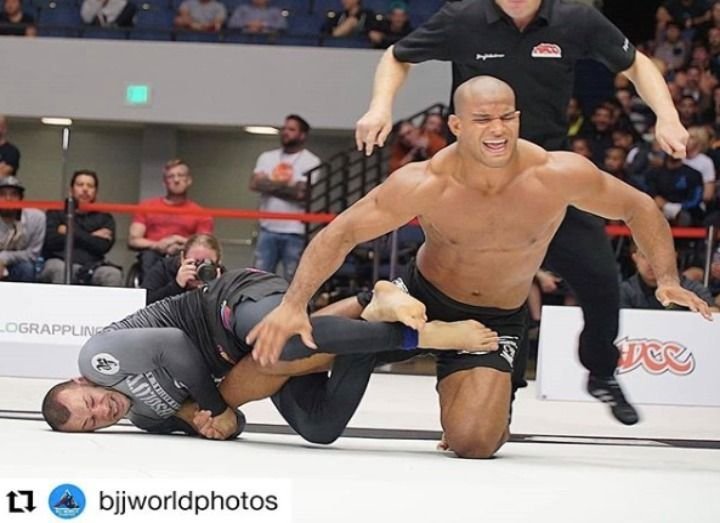
Entering the Saddle From the Dogfight and Scramble
The dogfight is closer to wrestling than jiu-jitsu, and that’s exactly why it produces so many saddle entries in modern no-gi. Both grapplers end up on their knees fighting for a single leg — one attacking with an underhook and a half-butterfly hook, the other posting to stay square and defend the takedown. From the attacking side, post your free hand on the mat, step to the outside, and tuck your head under their armpit as you roll through the scramble. As you come out the other side, grab behind their trapped knee instead of chasing their ankle.
Chasing the ankle is the single most common mistake in this entry. Grapplers who reach for the foot too early lose the roll and end up back in a neutral scramble, usually with their opponent’s other leg now free to defend. Grabbing behind the knee first locks the leg in place before you ever touch the foot, and the heel hook grip comes second, once the position is already secure.
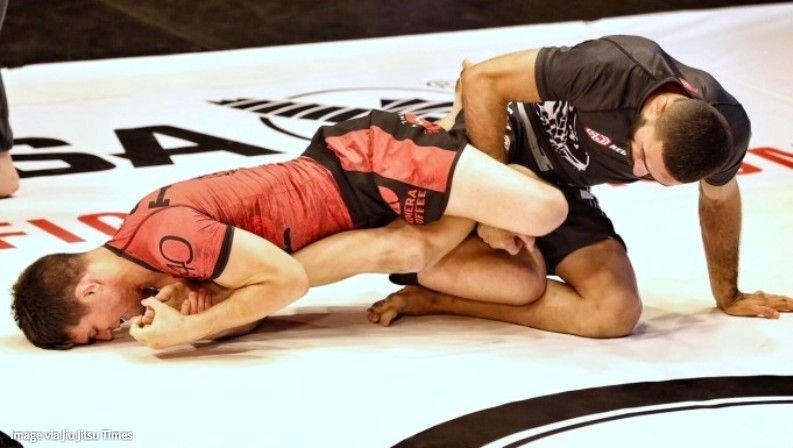
Entering the Saddle From Reverse De La Riva
Craig Jones built an entire section of his instructional around this single entry, and it’s become the standard route at the black belt level because it ambushes a pass that almost everyone in no-gi still relies on. Set your reverse De La Riva hook while your opponent attempts a knee-cut pass. As they drive their knee through, push their far hip away with your free hand to stall the pass for a half-second — that’s all the time you need. Invert onto your shoulder, pull your RDLR hook back toward your own body instead of releasing it, and reach through to grab behind their trapped knee. Lock your second leg into the triangle as you come back up to a seated position.
This entry works specifically because knee-cut passers commit their weight forward through the trapped leg. A defender trying to stop a knee-cut with a straight block gets passed; a defender who inverts underneath it gets the saddle instead. The RDLR-to-saddle sequence is one of the clearest examples in ashi garami of turning a defensive scramble into the stronger position.
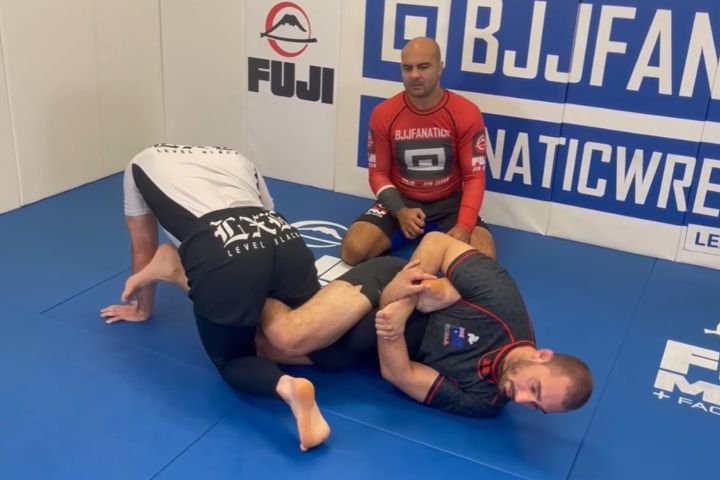
Controlling the Position
Getting both legs locked into the saddle is only half the job, and it’s the half that gets all the attention in instructionals because it’s the easiest part to film. The control details are what actually separate a finished submission from a stalemate that lets the bottom grappler spin out. Pin the hips first — if your opponent’s hips are free to rotate away from you, every second you spend setting up a finish gives them another chance to reorient and escape. Most blue belts get the legs locked and immediately go hunting for the foot, which is backward.
The opponent’s free leg is the second detail nobody drills enough. Left alone, that leg becomes a lever they use to push off the mat and create the exact rotation you’re trying to prevent. Pin it against your own hip or trap it with your top leg, and their base disappears. Pinching your knees together against their trapped leg finishes the job — it removes the last inch of wiggle room that lets an opponent shift their angle and relieve pressure on the heel. Grapplers who skip this step are usually the ones complaining that their opponent “always spins out of my saddle,” when the actual issue is that the hips were never controlled in the first place.

Submissions From the Saddle
The inside heel hook is the reason most people learn the saddle in the first place, and for good reason — it’s the highest-percentage finish in modern no-gi because the position removes the opponent’s ability to counter-rotate before the submission lands. Once your grips are set on the heel, the finish comes from rotating your own hips, not cranking with your arms.
The saddle also opens three finishes that get far less attention than the heel hook. The Aoki lock attacks the same leg with a different angle of rotation and works well when an opponent defends the heel hook by turning their foot inward. A kneebar becomes available the instant an opponent straightens their leg to defend the heel hook, which makes it a natural follow-up rather than a separate attack. The Estima lock variations, named for Victor Estima, target the ankle from an angle that most defenders never train against because it’s rare outside the saddle specifically. A grappler who only knows the heel hook from this position gets predictable; one who chains between all four finishes based on the defense in front of them is the one who actually taps people.
Why Modern No-Gi Leans on the Saddle Over 50/50
Craig Jones’s silver medal run at ADCC 2017 is the single event most credited with pulling the leg-lock world away from 50/50 as a starting point. His instructional “Down Under Leg Attacks,” released in the months right after that tournament, dedicated a full section to saddle entries specifically — and the timing wasn’t an accident. Competitors who watched him shut down higher-ranked opponents from a position most of them barely drilled went looking for the same system, and saddle-first leg-lock instruction has dominated the market ever since.
The 50/50 is a stalemate position by design. Both grapplers have equal access to each other’s legs, which means both grapplers are equally at risk, and a huge share of 50/50 exchanges end in a scramble back to neutral rather than a finish. The saddle isn’t built that way. Control comes first, and the opponent’s counter-offense is limited from the moment the position locks in. That’s not a small stylistic preference — it’s the actual reason gyms built around the Danaher leg-lock system stopped treating 50/50 as a primary target and started treating it as a position to pass through on the way to the saddle.

Drill the three entries above until one of them shows up without you thinking about it during live rolling — that’s the actual test of whether you’ve learned the saddle or just watched someone else do it. Once you’re landing it consistently, go back and read the heel hook and kneebar breakdowns on this site and start chaining finishes instead of defaulting to the first grip you find.
Sources
- How To Get Into The Saddle Position In BJJ — Evolve MMA, used for entry mechanics
- Ultimate Guide To The Inside Sankaku/411 In BJJ — Evolve MMA, used for position overview and submissions
- Technique Feature: Leg Locks Decoded — FloGrappling, used for leg-lock position history and context