Rubber Guard No-Gi: 7 Keys to Enter, Control, and Submit
Eddie Bravo submitted Royler Gracie — a four-time World champion — with a triangle choke at ADCC 2003. What made it remarkable wasn’t the result alone. It was the path: rubber guard, Mission Control, and a submission setup that Royler never saw coming from that position. That one match put 10th Planet Jiu-Jitsu on the map and turned the rubber guard from a niche experiment into a documented no-gi weapon.
Over two decades later, the rubber guard still appears in submission grappling at every level — EBI, NAGA, and local no-gi opens. If you train no-gi and haven’t worked this system, you’re leaving submissions on the table from a position most people think of as purely defensive.
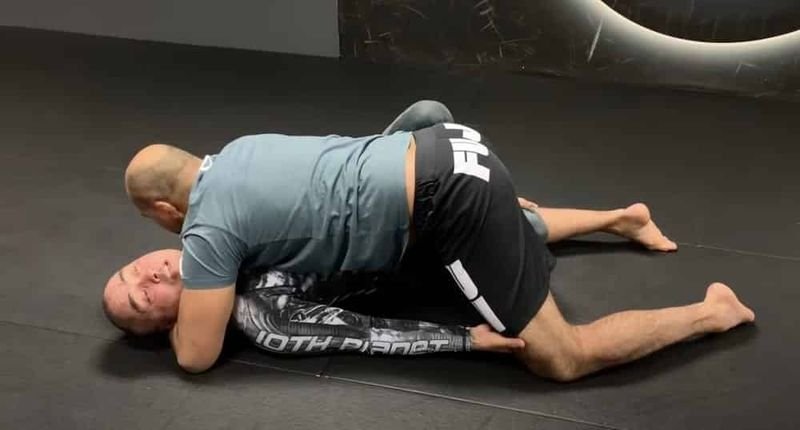
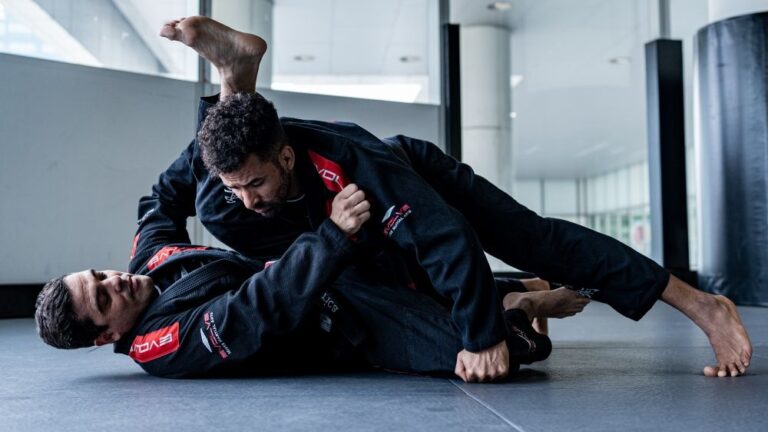
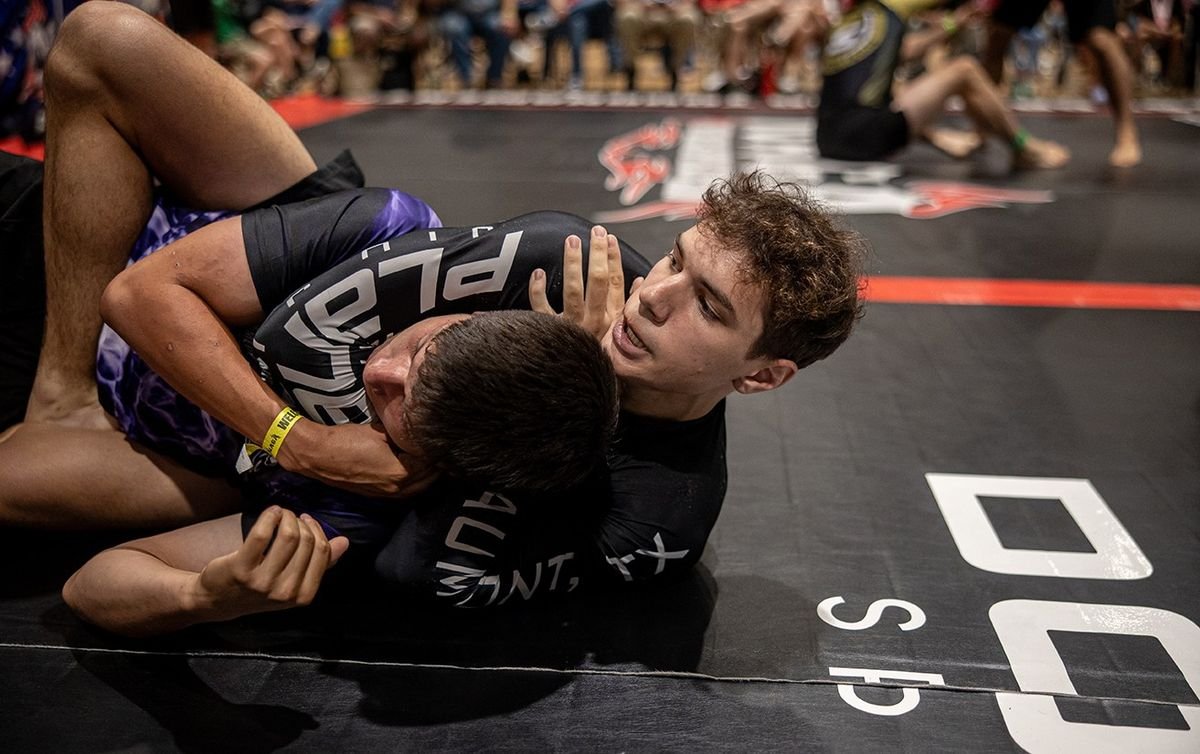
No-gi rubber guard used in competition — the system gives you submission threats from closed guard without relying on collar control.
The Rubber Guard No-Gi System: Where It Came From
The rubber guard didn’t start with Eddie Bravo. Nino Schembri — a creatively stylistic grappler from Brazil — was working versions of this high-guard control in the late 1990s before Bravo picked it up and systematized it. Bravo, then a purple belt under Jean-Jacques Machado, began developing it around 1999 specifically because he wanted a guard built for no-gi and MMA — environments where the collar grip disappears.
In gi BJJ, you control posture with the collar. In no-gi, that option is gone, and opponents know it. The rubber guard replaces the collar with your shin. When you clamp one leg behind the back of an opponent’s head and hold it there, you deny them the ability to posture up without fighting through that leg control. Every submission threat becomes easier when they can’t step back and reset.
Bravo named each position in the system in a way that created its own vocabulary — Mission Control, New York, Chill Dog, Zombie, Gogo Clinch — and built out the Eddie Bravo Invitational as both a proving ground and showcase for the 10th Planet approach. The system has been trained and competed at a high level for 25 years.
How Much Flexibility Do You Actually Need?
More than you probably have today. Less than you probably think. Most rubber guard skepticism comes from grapplers who tried the Gogo Clinch — the deepest position in the system, where your leg crosses entirely behind the opponent’s neck — and wrote off everything after failing to reach it. That’s the wrong entry point for a beginner.
Mission Control, where the system starts, requires only that you can get your shin across the opponent’s upper back and hold it without your hands gripping it shut. That’s a hip flexor and hamstring flexibility challenge, not an elite contortion act. Most people who train this consistently for 60 to 90 days can reach a functional Mission Control. The full Gogo Clinch is a different commitment — plan for six months to a year of specific flexibility work before it becomes a live weapon.
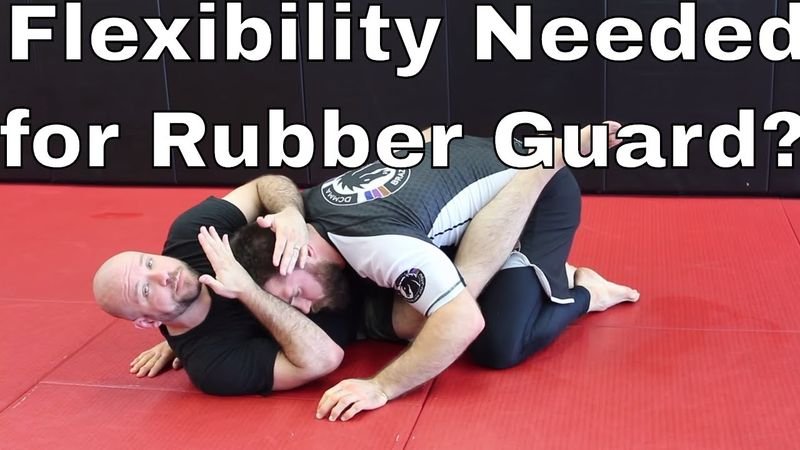
The setup requires consistent hip and hamstring work — Mission Control is the achievable entry before working toward deeper positions.
There’s also a legitimate workaround for tighter grapplers: the Chill Dog position, where you post one foot on the opponent’s hip instead of crossing behind their head. It’s less controlling, but it maintains the posture break and keeps your submission threats active while your flexibility catches up.
Mission Control: Breaking Posture and Owning the Guard
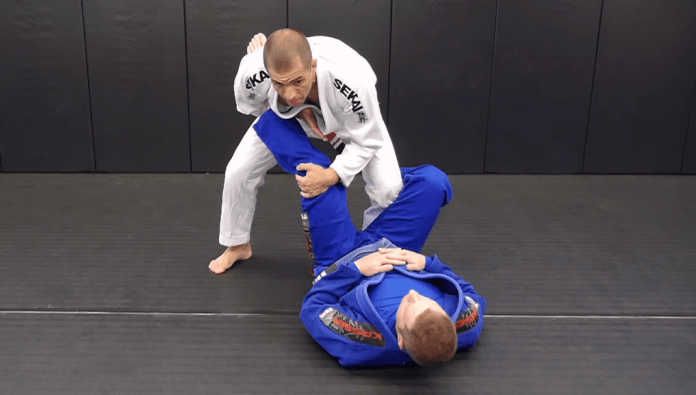
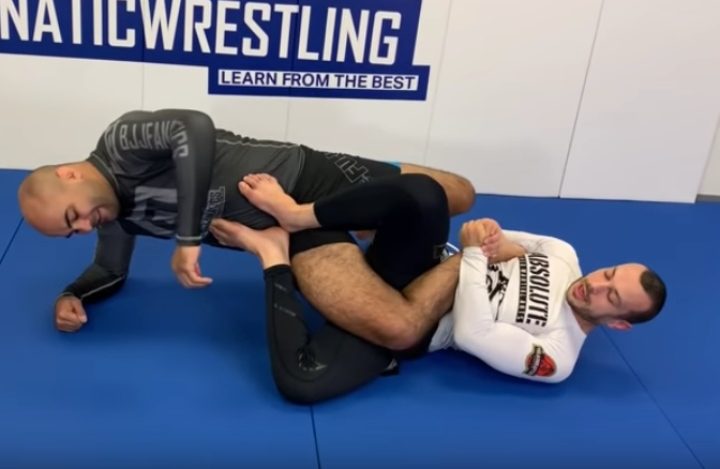
Mission Control is where everything in the rubber guard begins. From closed guard with posture broken, you angle your hips, shoot one leg high across the opponent’s back, and hook your shin behind their neck so it sits across their shoulder and upper back. Your opposite hand controls their wrist.
The control this creates is different from standard closed guard. In closed guard, a strong, upright opponent can often push on your hips and reset. Mission Control removes that option. The leg behind the neck keeps their head pinned down. Every time they try to posture up, the pressure on the back of their head increases and the angle gets worse for them. You’re not squeezing them in — you’re using their own movement against them.
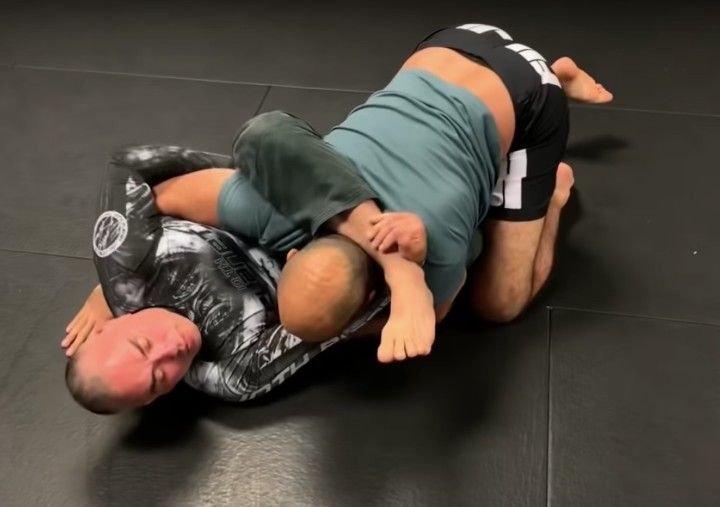
Mission Control — the shin-over-shoulder position breaks posture structurally, not just by force.
What happens next depends entirely on the opponent. If they sit passively, you transition to New York. If they reach across to clear your controlling leg, the triangle sets up immediately. The position is designed so that any response opens a submission angle. This is what makes rubber guard different from just sitting in closed guard and hoping — the control forces decisions, and each decision has a punishment attached.
New York and the Omoplata Threat
New York is the second checkpoint. From Mission Control, you grab your own ankle with the hand that was controlling the wrist. This tightens your controlling leg across their body and simultaneously traps their arm against your shin. The arm has nowhere to go.
The omoplata opens immediately from here. Swing your hips out, keep the arm pinned against your shin, and the shoulder lock loads. The mechanical advantage is better than a standard closed-guard omoplata because the posture is already down — you’re not fighting two problems at once. The shoulder rotation required to finish is already happening because of how Mission Control oriented their body.
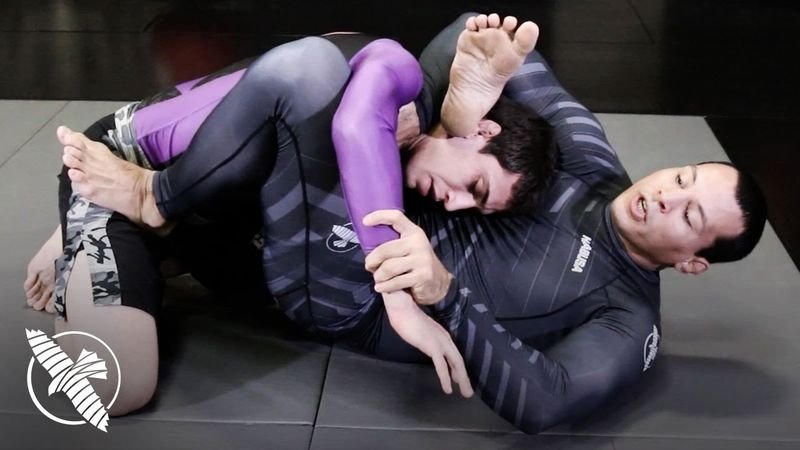
From New York, the omoplata loads because the opponent’s arm is already pinned and their posture broken.
When they roll to escape the omoplata — which experienced grapplers do reflexively — don’t release. The armbar waits on the other side of that roll. The rubber guard system is built so that defense creates the next attack. Follow the movement, stay connected, and the submission chain continues. For the full omoplata breakdown from no-gi positions, see our omoplata no-gi guide.
The Gogo Clinch and the Gogoplata
The gogoplata is the rarest submission in the rubber guard system — and the one that defines the position’s reputation. To reach it, your controlling leg has to cross fully over the opponent’s head and hook behind their neck. From there, you drive your shin directly into their throat and jaw. It’s called the Gogo Clinch, and it’s the deepest lock in the system.
The finish is a direct pressure choke using the blade of your shin against the trachea. It’s not a blood choke — it works by compressing the airway, not the carotid. When it lands correctly, the tap comes within seconds. Nick Diaz finished with it against Takanori Gomi in MMA in 2007, one of the few high-level gogoplata finishes on record in live competition.
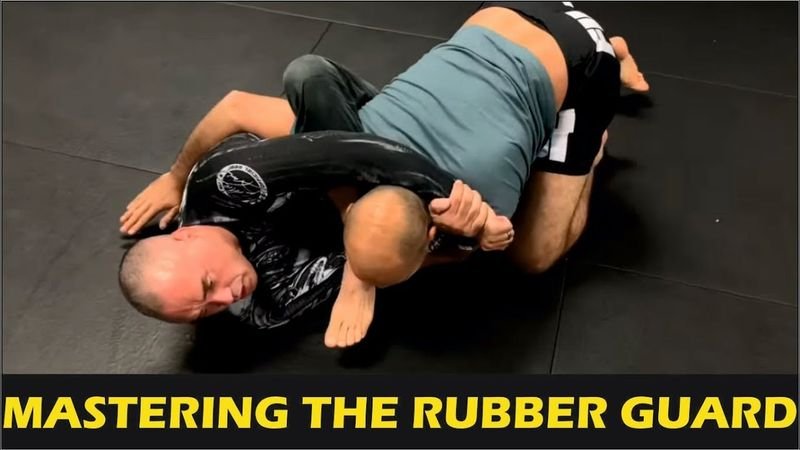
The Gogo Clinch requires the most hip flexibility in the system but opens the rarest submission in no-gi grappling.
Getting there consistently takes time. Plan on 12 to 18 months of dedicated flexibility training alongside technical drilling before the Gogo Clinch becomes a reliable live-rolling threat. Trying to force it before your hips allow it usually loses position. See our full gogoplata setup and finish breakdown for the flexibility protocol and finish mechanics.
Triangle Choke from Rubber Guard
The triangle is the most reliable submission in the rubber guard system. It’s also the one that made Eddie Bravo famous. From Mission Control, when the opponent reaches across to clear your controlling leg, their near arm crosses the centerline of your body — which is the triangle window opening.
Swing your hips, lock the triangle, and angle perpendicular. The key difference from a standard closed-guard triangle: you skip the hardest step. Mission Control already broke the posture. The opponent’s head is already low, the angle is already bad for them. The triangle closes faster, at a better angle, because of where the rubber guard put everything before you attacked.
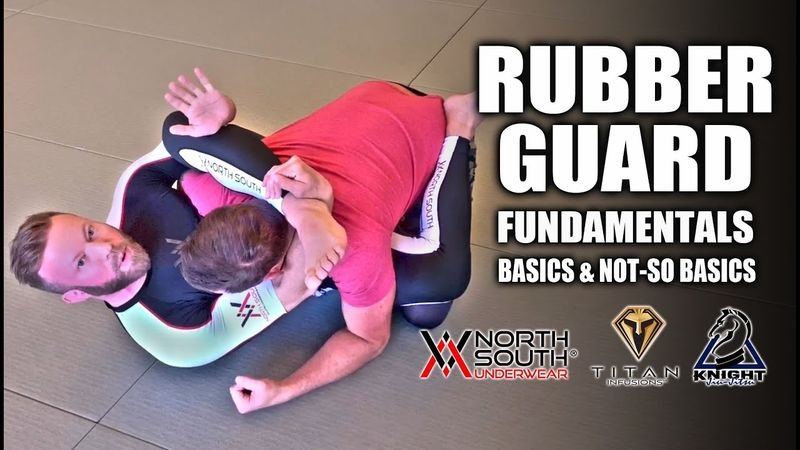
The triangle sets up directly from Mission Control — the posture break that was already done makes the lock faster.
Royler Gracie reached across to clear Bravo’s controlling leg. That move — totally understandable, often the right call in standard closed guard — was a mistake in rubber guard. The arm crossed, the triangle set, and the rest is history. See our triangle choke no-gi breakdown for the full mechanics and common finish errors.
Why Rubber Guard Still Works in Competition
The pushback against rubber guard usually sounds like this: high-level grapplers will posture out, so the whole system is compromised. The problem with that argument is that it applies equally to every guard in existence. Any guard can be passed by someone who has drilled the pass at a high level. The question is whether the threats coming out of the system are real enough to force reactions — and with rubber guard, they are.
At EBI events, 10th Planet practitioners have landed triangles and gogoplatas in competition. At NAGA tournaments and no-gi opens, Mission Control catches opponents who’ve never trained against it. The system rewards full commitment over time. Practitioners who learn the flowchart — not just one position — get submissions from it consistently.
10th Planet grapplers continue to finish submissions from rubber guard entries at competitive no-gi events.
Where rubber guard struggles: against opponents who’ve specifically trained passing it, and in fast scrambles where you can’t slow the pace. Where it thrives: against opponents who sit passively in your guard, grapplers who reach without thinking, and in overtime formats where you control the starting position.
The Biggest Mistake Rubber Guard Players Make
Staying in Mission Control too long. The position is controlling, which makes it feel safe — and safety is the trap. Mission Control is a launching pad, not a destination. Every second you spend in it without attacking gives the opponent time to study what you’re doing, adjust their base, and work the pass. A passive rubber guard is just a guard getting passed in slow motion.
The system is a flowchart. Every checkpoint connects to at least two attacks, and every failed attack connects to the next checkpoint. Grapplers who learn the system as branching transitions — not as a single position to hold — get submissions. Grapplers who sit in Mission Control and wait get passed.
Train with transitions as the primary focus. Enter Mission Control, immediately threaten the triangle, follow their reaction to New York, shoot for the omoplata, track their roll to the armbar. The rubber guard is a chain. One missed link doesn’t break it — stopping movement does.
Sources
- Wikipedia: Rubber Guard — History, positions, and notable practitioners of the rubber guard system
- Wikipedia: Eddie Bravo — Background on the 10th Planet Jiu-Jitsu founder and rubber guard developer
- Wikipedia: 10th Planet Jiu-Jitsu — System overview and competition history
- BJJ Fanatics: Rubber Guard BJJ — Technique breakdown and instructional context
- NAGA Fighter: Rubber Guard BJJ Technique — Competition context and entry mechanics overview