The Compression Math Behind a Properly Fitted Men’s Rashguard
Walk into any open mat and you can pick out the guys who bought their rashguard off a size chart from the guys who bought it by trial and error. The first group is constantly tugging at a riding-up hem or peeling a bunched collar off their neck between rounds. The second group forgot they’re wearing it fifteen seconds into the roll. The difference has almost nothing to do with brand loyalty and almost everything to do with a piece of math that most buyers never see: compression ratio, or how much smaller than your actual body measurements the garment is built to stretch around.
A men’s rashguard isn’t a fitted t-shirt. It’s a piece of engineered compression wear that has to survive being pulled, gripped, and stretched in every direction for six to twenty minutes without losing its shape, riding up over the stomach, or dragging across bare skin during a scramble. Get the compression math wrong and you feel it in the first exchange — not on wash number thirty.
What Compression Ratio Actually Means
Every rashguard fabric blend is rated by how far it stretches and how hard it pulls back. Most competition-grade blends run somewhere between 80/20 and 85/15 polyester-to-spandex, and that spandex percentage is the whole story. A higher spandex content gives the fabric more recovery — it snaps back to its original shape after being stretched around a shoulder or knee — while a lower spandex content feels lighter but loses its grip on the torso faster as the fabric warms up and loosens during a hard round.
Brands rarely print the spandex percentage on the size chart, which is exactly why the same size medium can fit completely differently between two companies. A chart built around a 20% spandex blend needs less negative ease — less built-in shrinkage relative to your body — than a chart built around 15%. If you buy by size letter alone without accounting for that, you end up guessing.
How Elite No-Gi Athletes Read Their Own Fit
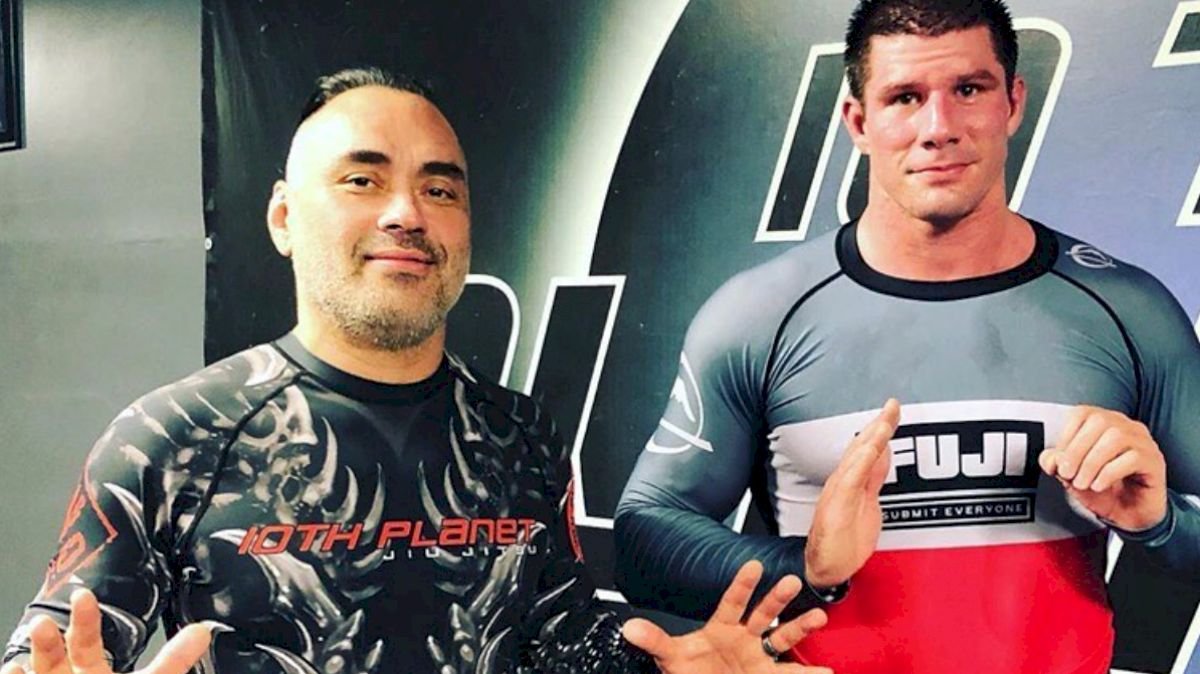
Watch a high-level competitor like Gordon Ryan warm up before a superfight and the rashguard barely moves independent of his torso — it moves with it. That’s not a sponsorship perk, it’s a fit decision made by someone whose grips get tested for six-figure prize money. Competitors at this level typically size down from what a standard height-weight chart recommends, because they want the fabric doing structural work: holding the torso compressed enough that an opponent’s grip finds less loose material to grab.
That single habit — sizing down one size from the chart recommendation when your build is lean-to-athletic, and staying true to size or sizing up slightly when your build is thicker through the torso — solves more fit complaints than any other adjustment.
The Underarm Gusset Nobody Checks Before Buying
Chafing complaints almost always trace back to one construction detail: the underarm gusset, the diamond-shaped fabric panel stitched into the armpit to allow the arm to raise overhead without pulling the whole side seam upward. Cheap rashguards skip the gusset and just run a straight side seam through the armpit. The first time you reach for an overhook or fight off a guillotine, that seam drags directly across bare skin for the rest of the round.
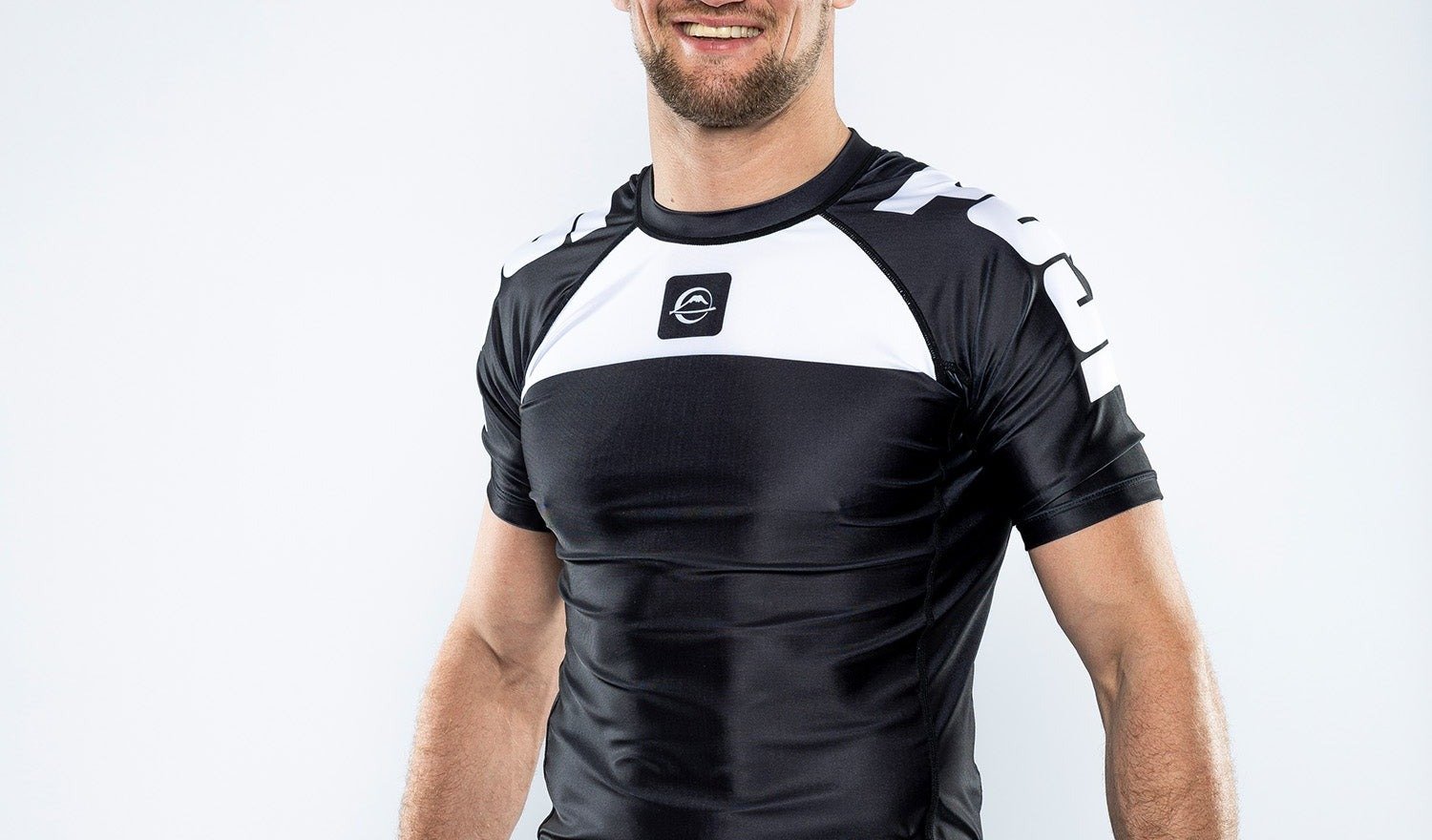
You can check for a proper gusset before buying by looking at product photos for a diamond or triangular seam under the arm rather than a straight vertical line. It’s a five-second check that tells you more about real-world durability than any marketing copy about fabric technology.
Case Study: Watching the Fit Under Load at PGF
Professional Grappling Federation events are a useful reference point precisely because the matches run long and the pace is high — if a rashguard is going to fail, it fails there. Competitors like Kyle Boehm and Ethan Crelinsten are worth watching specifically for how their rashguards behave during scrambles: the torso panel stays flush against the skin through takedowns and re-guards instead of ballooning out, which is the visual signature of a correctly compressed fit rather than a size that’s simply loose enough to move in.
Torso Length and the Riding-Up Failure Mode
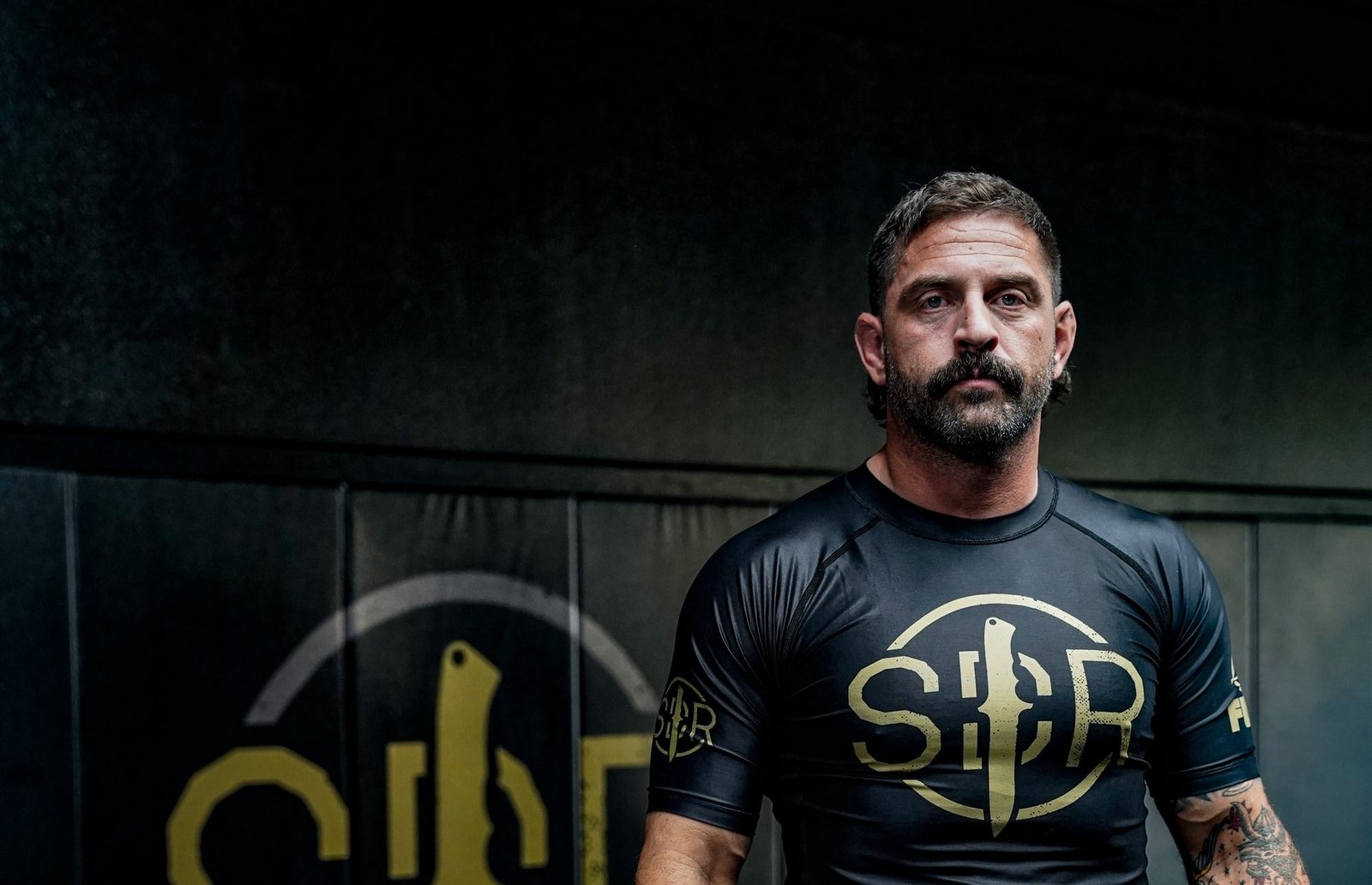
Sleeve length gets most of the attention in rashguard debates, but torso length causes more mid-round frustration. A rashguard cut too short rides up over the stomach the moment your hips extend into a bridge or a technical stand-up, exposing skin at exactly the moment you’re grinding against a mat or an opponent’s knee. Brands that size primarily off chest measurement without adjusting torso length for height leave taller men wearing a garment that’s technically the right circumference but two or three inches too short to stay tucked.
The fix isn’t complicated: if you’re above roughly six feet and a brand offers a tall or long-torso cut, take it even if the standard size fits your chest correctly. If no tall cut exists, size up one and accept the slightly looser sleeve in exchange for a hem that survives a full round without migrating.
Collar Construction: Where Grip Battles Actually Happen
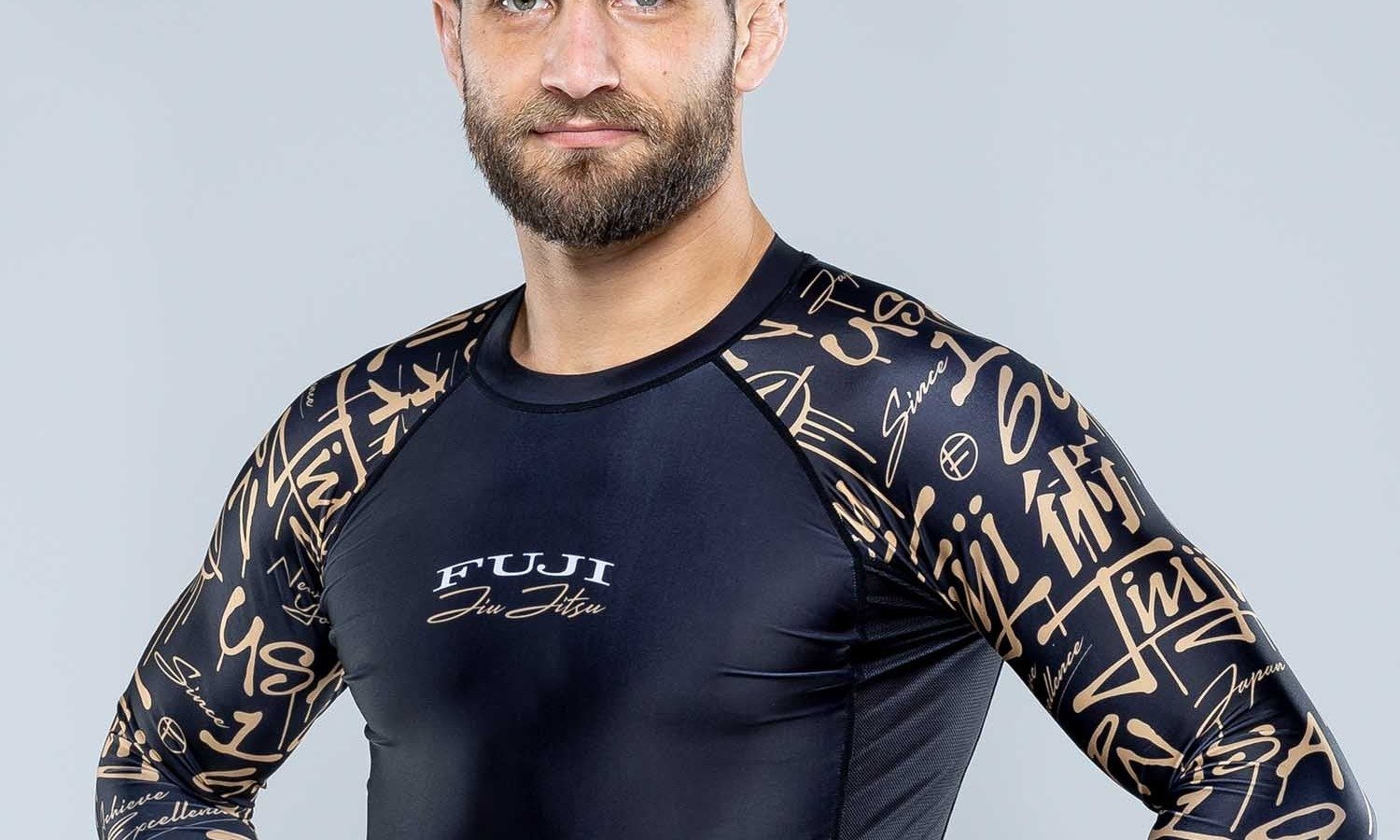
The collar is the single most grabbed piece of fabric on a no-gi competitor’s body, which is ironic given how little attention most buyers pay to it. Two constructions dominate: a rolled, stitched collar that sits flat and resists folding, and a raw-cut collar reinforced with a thin internal silicone or rubber strip that grips the skin and prevents rolling during collar ties and front headlock exchanges. The silicone-strip version costs more to produce and shows up almost exclusively on competition-tier rashguards rather than budget training gear.
Watching Fit Under Grip Pressure
Athletes like Andre Galvao and Nicholas Meregali spend enough time in collar ties and front-headlock control that their rashguard collars are effectively load-tested every match. A collar that folds or rolls under that pressure is a manufacturing shortcut, not a design choice — and it’s a detail you can usually spot in close-up event photography before you ever put money down.
Reading a Size Chart the Right Way
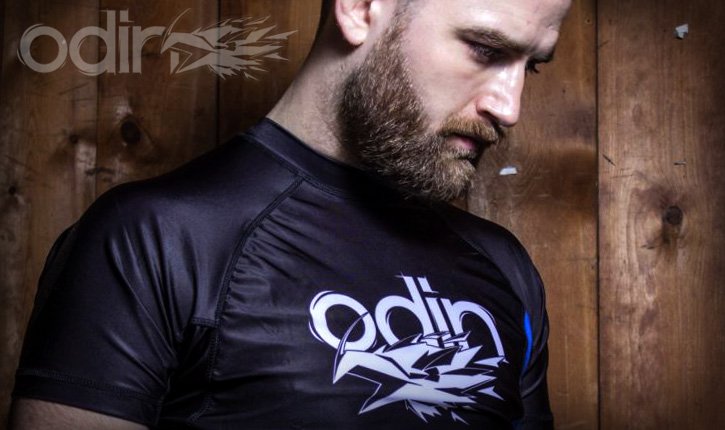
Most men make the same mistake reading a rashguard size chart: they find their height and weight on the grid and stop there. Height-weight matrices are a rough proxy at best because they can’t account for build. A lean 5’10”, 170-pound competitor and a stockier 5’10”, 170-pound competitor will need different sizes even though the chart puts them in the same box.
The more reliable numbers are chest circumference and torso length if the brand publishes them separately, because those two measurements are what the compression fabric is actually stretching around. When a brand only lists height and weight, treat the recommendation as a starting point and check reviews or event photos of competitors with a similar build for a second opinion before ordering.
It also helps to measure yourself the way the brand measured its sample garments, rather than guessing. Chest circumference should be taken at the fullest point around the ribcage with the tape snug but not compressing, and torso length should run from the top of the shoulder to roughly two inches below the natural waist — the point where a rashguard needs to stay tucked through a bridge or scramble. Five minutes with a tape measure before ordering saves a returned package and a wasted week of training in something that never should have fit in the first place.
Sizing Down Versus Sizing Up by Body Type
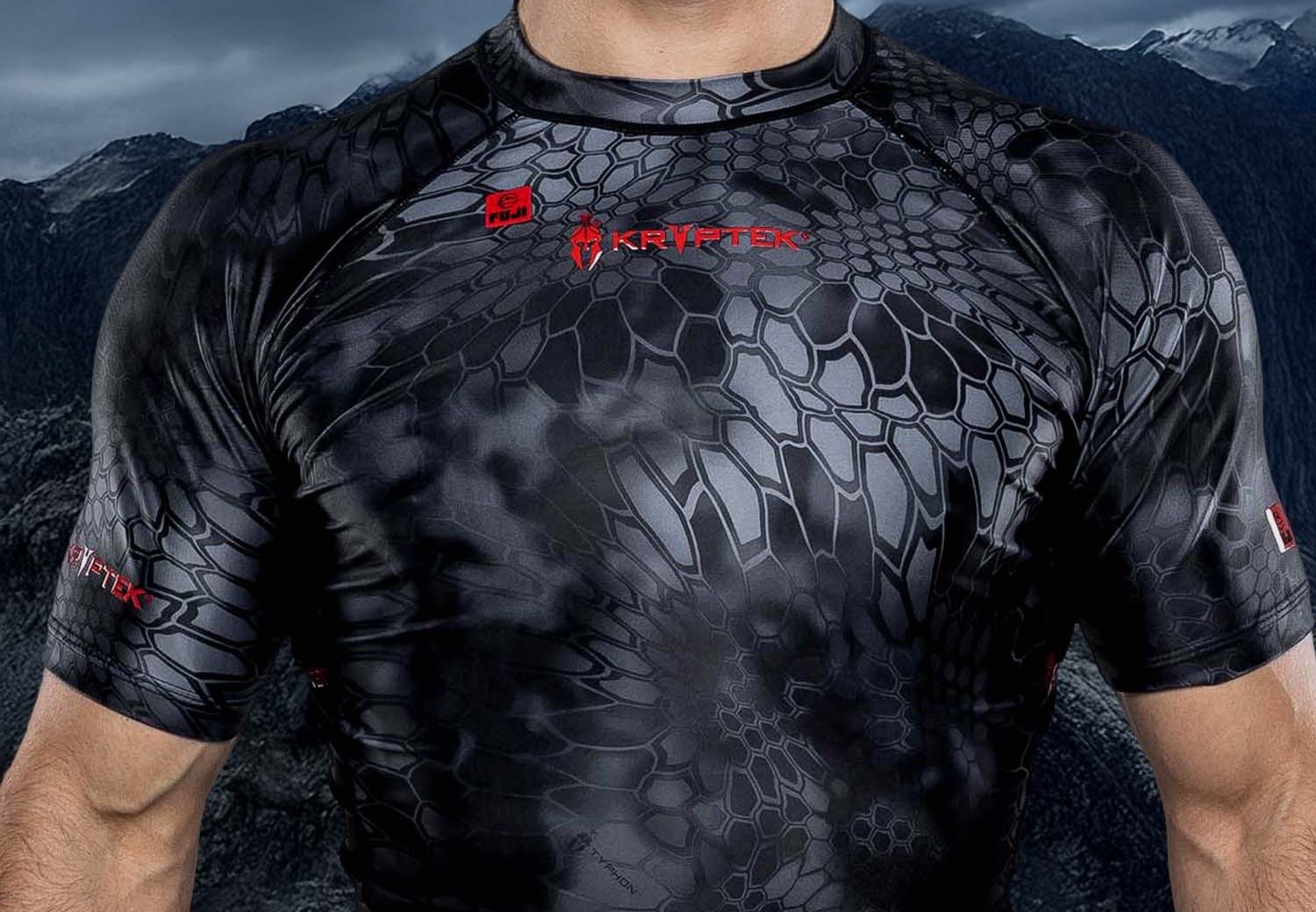
There’s no universal rule that beats knowing your own build. Leaner, longer-limbed grapplers generally benefit from sizing down one increment from the chart recommendation, because the extra compression keeps the fabric from bunching at the waist where there’s less natural muscle mass to fill it out. Thicker, more heavily muscled torsos usually do better staying true to the chart size or sizing up slightly, since a size-down on an already dense frame can restrict breathing during long exchanges and create pressure points at the shoulders.
Competitors like Tye Ruotolo and Kade Ruotolo, who compete at different weight classes with noticeably different torso builds, are a useful visual reference for exactly this split — the same brand, worn two different ways depending on the frame underneath it.
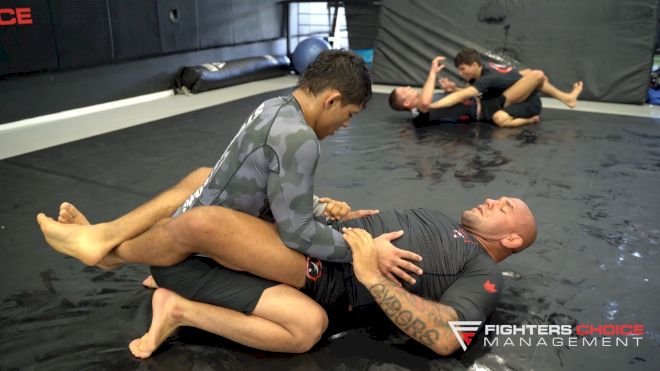
A rashguard that fits like compression gear disappears within the first minute of a roll. One that fits like a t-shirt reminds you it exists every time you move.
Signs Your Rashguard Fits Correctly Out of the Wash
Fresh out of the dryer, before it’s broken in through wear, a correctly sized rashguard should feel noticeably tight — tight enough that pulling it on takes a bit of effort and the fabric shows visible tension across the chest and shoulders. If you can pinch and lift more than an inch of loose fabric away from your stomach while standing relaxed, it’s too big. If you can’t raise both arms straight overhead without the hem lifting off your waistband, it’s too small or too short in the torso.
That narrow window between too loose and too short is exactly what the compression ratio math is trying to solve. Athletes like Mica Galvao, competing at lighter weight classes where every inch of loose fabric is something an opponent can grab, tend to run their gear noticeably tighter than recreational buyers assume is comfortable — and it’s worth erring in that direction rather than defaulting to a size that simply feels easy to put on.
Sources
Rash guard — Wikipedia
IBJJF — International Brazilian Jiu-Jitsu Federation
FloGrappling