No-Gi Grip Fighting: 7 Techniques for Controlling the Match
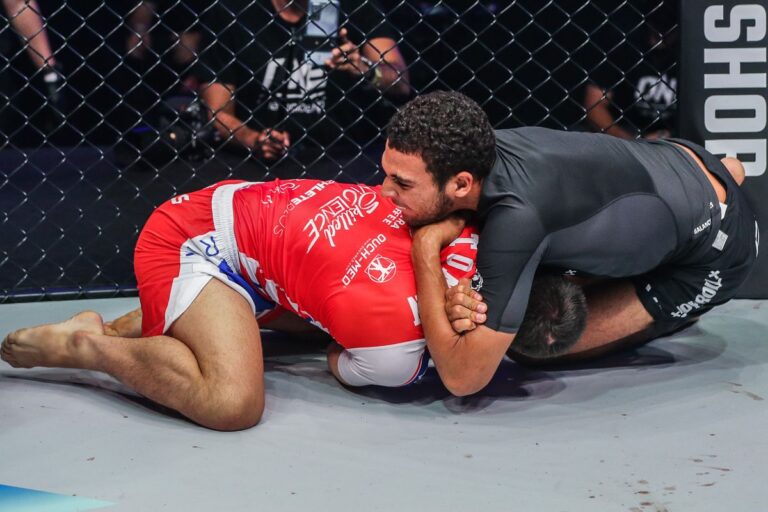
At the 2022 ADCC World Championships, Gordon Ryan won six consecutive matches, and in almost every one, the outcome was determined before a single submission attempt landed. The real fight happened in the neutral — in the hand-fighting exchanges that set up every takedown, level change, and guard entry. No-gi grip fighting is not a footnote to grappling. It is the opening argument of every match.
Why the Hand Fight Determines Who Gets the Shot
In wrestling, controlling the neutral is everything. The athlete who establishes dominant grip first controls where the match goes — to the mat via takedown, into the clinch, or into a guard pull. In no-gi BJJ, the absence of a collar and sleeve removes the gi’s built-in handles. Every grip has to be actively created and maintained against a resisting opponent.
The physics are straightforward: you cannot shoot a clean double leg if your opponent has your head in a collar tie. You cannot arm drag to the back if your wrist is being controlled. The hand fight determines the quality of every technique that follows it — which means no-gi grip fighting skill is one of the highest-leverage investments a grappler can make.
A 2019 analysis of high-level wrestling matches found that athletes who achieved dominant clinch position first won over 70% of subsequent exchanges. No-gi grappling operates on the same principle: small grip advantages accumulate into position advantages, and position advantages become finishing opportunities. The neutral is rarely 50/50, and every second you spend in a losing grip position is a second your opponent is building pressure you will have to spend energy escaping.
The Underhook: No-Gi’s Most Contested Position
The underhook is a single arm threaded under the opponent’s arm and over their shoulder, with your forearm driving up into their armpit and your hand pressing into their upper back or behind their neck. It is the single most contested position in no-gi grip fighting because it unlocks almost every attack pathway: single legs, double legs, body locks, trips, and direct back takes.
The mechanics matter more than the position itself. A high underhook — forearm deep in the armpit, your shoulder driving their arm upward — creates a level advantage that makes most underhook counters ineffective. A shallow underhook, with the hand resting at the lower back and the elbow flared outward, is easy to whizzer and can actually put you in a worse position than no grip at all.
Once you have the underhook, act immediately. Can you duck under for a single leg? Can you reach the far hip to lock a body lock? The athletes who consistently win on underhooks have a predetermined sequence ready the moment the position forms. The underhook is not a resting place — it is the first word of a sentence you need to finish quickly. For how underhook pressure directly sets up submission attacks, the breakdown of the Kimura trap in no-gi covers how grip control from the clinch flows into a complete attack system.
Collar Tie: Controlling the Head Controls the Body
The collar tie, borrowed from Greco-Roman wrestling, places one hand behind the opponent’s neck with the elbow driving down toward their opposite shoulder. The anatomical principle is simple: where the head goes, the body follows. A tight collar tie restricts the opponent’s level changes, sets up snap downs, and creates entries for the darce, guillotine, and front headlock position.
Placement determines effectiveness. The hand must be at the base of the skull — not the shoulder, not the middle of the neck. The elbow needs to be close to the opponent’s face, limiting their ability to duck under or change levels. A high, flared elbow turns the collar tie into a wasted motion that your opponent can step through without difficulty.
The most effective collar tie combination in no-gi is the collar-and-hip: one hand behind the neck, the other posted on the hip. This blocks the back step that opponents typically use to spin off a collar tie, and it sets up a direct snap down or a shift into the two-on-one (Russian tie). The collar tie is not a passive position — it is a control point you occupy while deciding your next move, with a clear follow-up already chosen.
Arm Drag: Turning a Bad Exchange into a Back Take
The arm drag is the most underrated technique in no-gi grip fighting. It requires no strength advantage, works against larger opponents, and converts a neutral or losing hand-fight position into a back take in a single committed motion.
The setup: from a neutral hand-fighting exchange, catch the opponent’s wrist with one hand and their tricep with the other. Pull the arm sharply across your body while stepping offline. Their commitment to the grip they just lost carries them past you, and your inside position opens the back. The whole movement takes less than a second when timed to their forward commitment.
Craig Jones built a substantial portion of his competitive game around arm drag to back take sequences. At ADCC 2019, multiple matches followed the same pattern — hand fight, arm drag, single leg to back. The arm drag works because it does not require you to generate force against the opponent’s resistance. It redirects the force they are already generating toward you. Against bigger, stronger opponents who want to overpower the clinch, redirecting beats matching force every time.
Wrist Control: Shutting Down Attacks Before They Start
Wrist control is the defensive weapon in no-gi grip fighting. Before an opponent can establish a collar tie or underhook, they have to reach for it. Intercepting that reach at the wrist — one hand on the back of their wrist, one hand on the inside — shuts down their setup before it forms and resets the neutral on your terms.
The principle mirrors the parry in boxing: contact the attacking limb as early and as lightly as possible. Wrist control does not win matches by itself, but it resets the hand fight when you are being dominated. It is how lighter grapplers stay competitive against heavier opponents who want to force a deep clinch and use their weight advantage to steer the match.
From wrist control, the standard counters are: release and shoot, release and arm drag, or ride the wrist into your own collar tie. Holding wrist control statically is a tactical error — a stalemate in grip fighting is a loss if you need to be attacking. The wrist control is the pause before the next exchange, not a destination. For how tight wrist grip mechanics create finishing opportunities from the ground, wrist locks in no-gi details how control at the wrist translates directly into submission setups.
Snap Down: Exploiting Opponents Who Drive In
The snap down is the correct response to an opponent who drives into you with head pressure. They commit forward — you redirect their head down and across while pivoting your feet offline, ending up behind or beside their head in the front headlock position. The front headlock opens the guillotine, the darce, the anaconda, and the arm-in guillotine — a sequence that coach Neil Melanson has developed into one of the most dangerous positions in no-gi grappling.
Execution: when you feel forward pressure on your upper body or neck, reach over the back of the opponent’s head, snap down and across, and pivot your feet to the side. The snap does not need to be violent. A sharp redirection while they are already committed forward is enough to break their base and put them below you with your hands controlling their head.
The snap down is context-dependent. It works when the opponent is actively driving. Against a patient opponent who is not committing forward, snapping at air puts you in a scramble position you did not choose, with your head down and your base broken. Read the pressure before committing — the snap down is a counter, not an initiation, and the timing window is the moment of their forward commitment, not before or after it.
Breaking Grips: Resetting When You’re Behind
Every grip fighter ends up on the wrong side of a dominant position. Grip breaking is not a glamorous skill — nobody posts highlights of a clean grip break — but it is what separates grapplers who can recover from those who spend entire rounds stuck in a losing position.
The most effective grip break in no-gi is the two-on-one (Russian tie): catch the opponent’s underhook arm with both hands — one at the wrist, one at the elbow — and peel it across your body. Two arms beat one in a pull contest. It is pure mechanical advantage, not athleticism, which means it works regardless of size differential.
For collar tie breaks, tuck your chin to compress their hand placement, step back to create angle, and use a short outward punch motion to break the grip at the wrist where it is weakest. Never pull straight back against a collar tie — that actually tightens their grip. The angle change creates the leverage the straight pull cannot.
Timing matters more than technique on grip breaks. The window to break a collar tie is the moment it forms — not after the opponent has established their weight and footing. A freshly placed collar tie breaks for almost nothing. An established one with body weight behind it costs significant energy to clear. React early, and breaking is cheap. React a second late, and you are spending energy you need for the rest of the round.
Grip Hierarchy: Which Position Beats Which
In no-gi, grip positions are not created equal. When two athletes meet in conflicting positions, the higher-ranked position tends to produce better outcomes in high-level competition — though execution quality at most training levels matters more than theoretical hierarchy.
A rough competitive ranking based on no-gi tournament outcomes:
- Body lock — highest control when achieved; requires successfully winning past the underhook
- Underhook — the most stable dominant position; controls level changes and sets up the full attack menu
- Two-on-one / Russian tie — dominates a single underhook; primary grip break and takedown setup position
- Collar tie — strong positional control, but vulnerable to arm drags and level changes
- Wrist control — defensive; neutralizes opponent’s setups without creating a dominant position
The practical takeaway for training: top competitors do not try to win every grip exchange. They identify which grip opens the attack path they have already planned, fight specifically for that one, and ignore the exchanges that do not serve their game. A focused hand fighter beats a reactive one, because the focused athlete knows where the sequence ends before the grip fight begins.
The grip is not the technique — it is the address on the letter. The right grip means your technique arrives where you sent it. Building no-gi grip fighting as a separate deliberate skill, not an afterthought, is what closes the gap between knowing submissions and landing them. For how grip control from the standing exchange flows into bottom game attacks, the deep half guard in no-gi covers how the transition from standing clinch into guard-based offense maintains positional continuity throughout the whole match.
Sources
- Grapplearts — No-Gi Gripfighting Sequence — Practical breakdown of grip sequences in no-gi with step-by-step technique explanations.
- Evolve University — Gripping Strategies for No-Gi BJJ — Tactical overview of the major gripping positions and when to use each.
- BJJ World — BJJ Grips and Grip Positions — Reference guide covering grip mechanics and positional transitions across both rulesets.
- MixedMartialArts.com — What You Need to Know About Grip Fighting in No-Gi BJJ — Editorial covering the strategic importance of grip positioning in competition.
Image credit: higashibrand.com