Snap Down No-Gi: 5 Keys to Winning from the Collar Tie
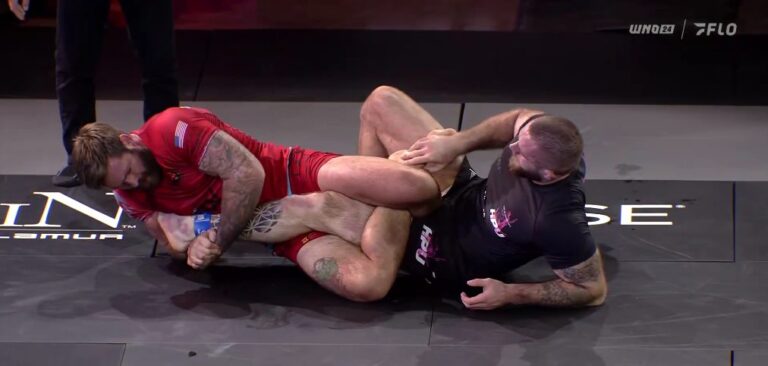
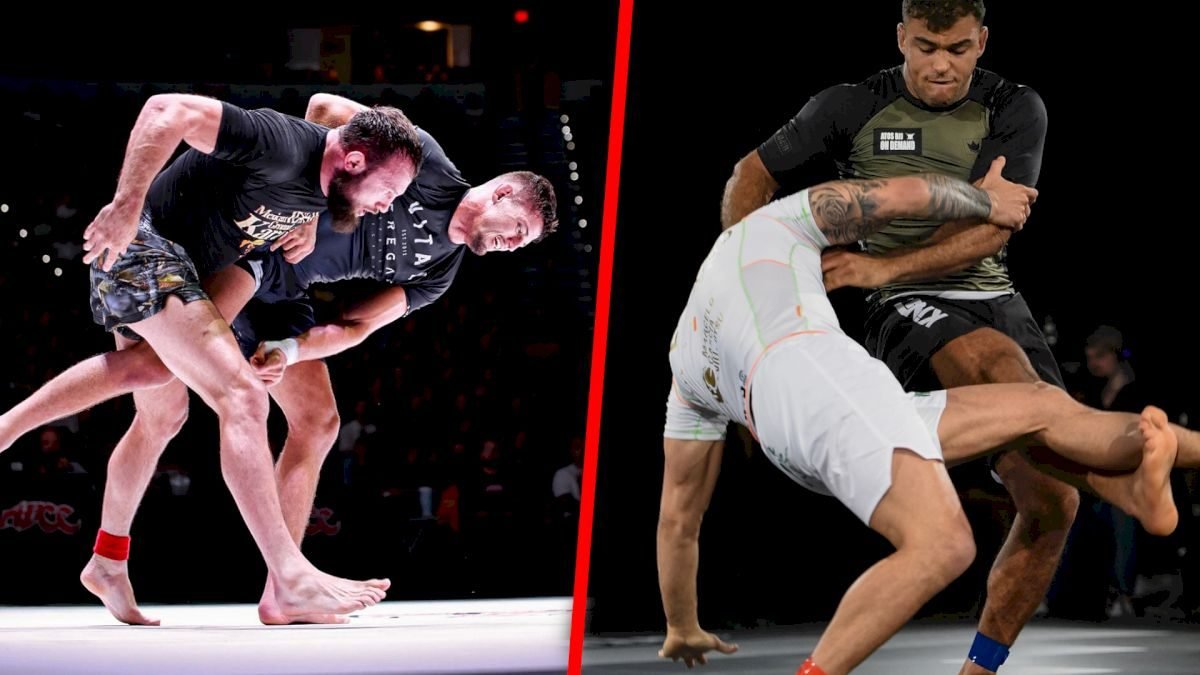
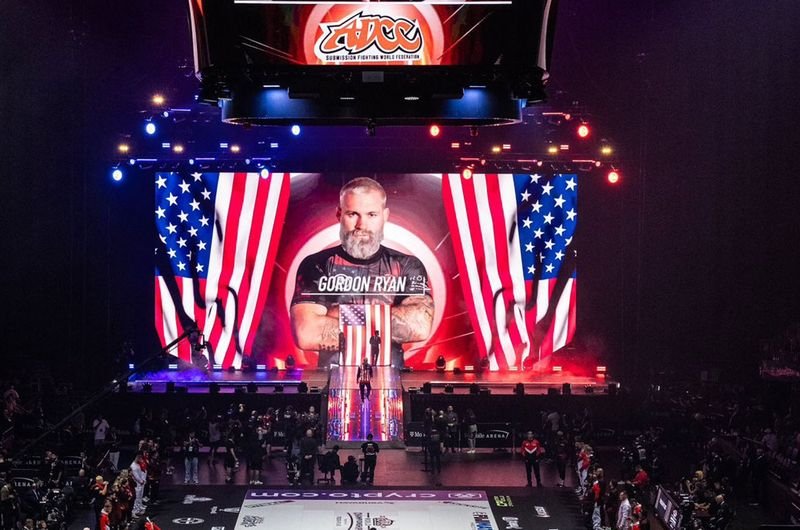
Wrestling coaches don’t talk about it as much as the double leg, but the snap down fills your win column faster than almost any other standing technique. At the 2022 ADCC World Championships in Las Vegas, multiple matches ended in chokes and back takes that began with nothing more exotic than a collar tie and a sharp downward pull. The snap down isn’t flashy. It’s repeatable — and in a sport dominated by leg lock specialists and guard pullers, a grappler with a reliable snap down stands out immediately.
For no-gi grappling specifically, the snap down solves a persistent problem: taller opponents who hold their head back and deny you the level change for a takedown. A snap down doesn’t need them to drop their level. It forces their head down, which is a simpler problem to solve from the collar tie.
What Is the Snap Down?
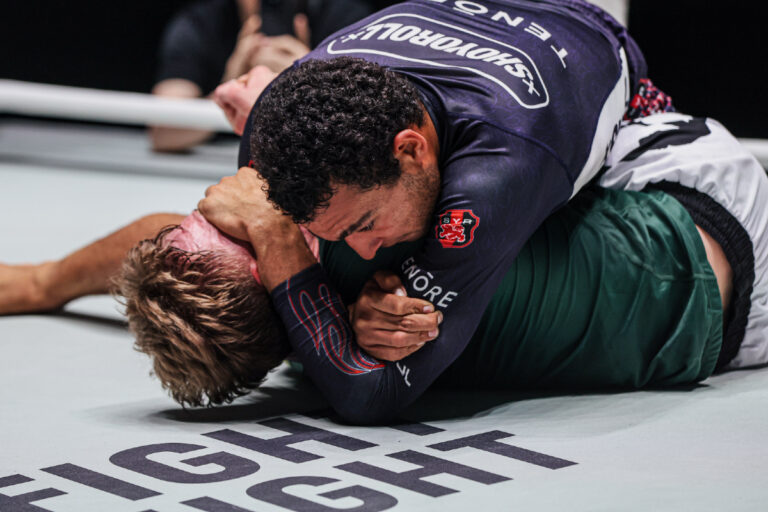
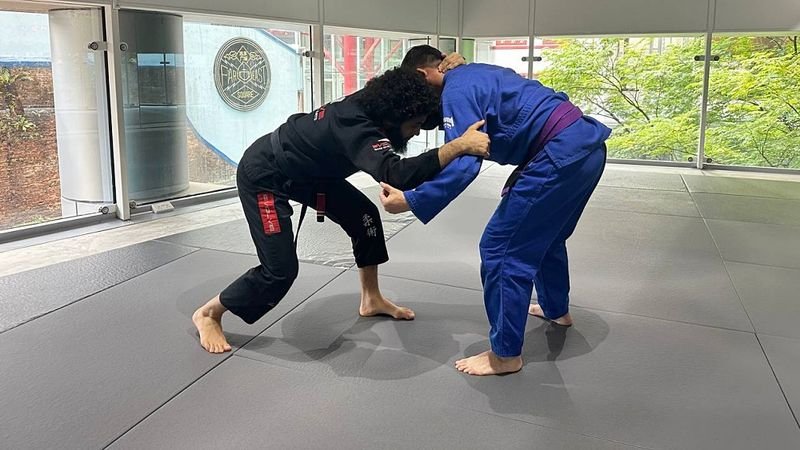
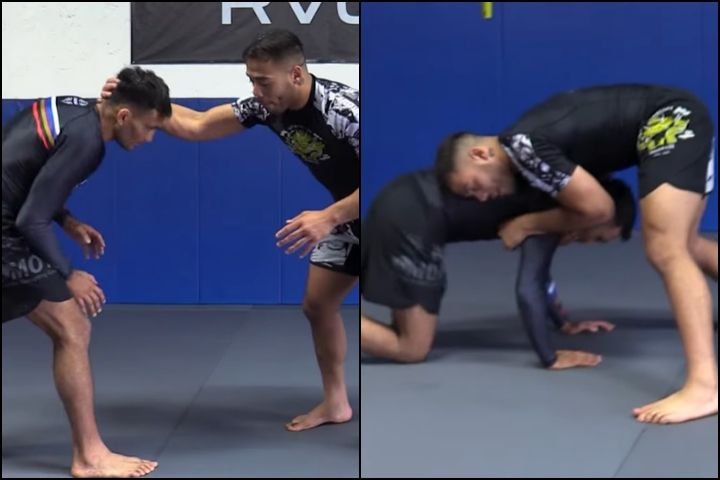
The snap down is a wrestling control technique applied from a collar tie — your hand on the back of an opponent’s head or neck — where you use a sharp downward-diagonal pull to break their posture, drop their head toward the mat, and follow immediately into the front headlock position.
It’s not a takedown on its own. The takedown, or submission, comes next. The snap down is the bridge from neutral clinch to positional control. Once you’ve dropped their head and secured the front headlock, you have options: arm-in guillotine, D’Arce choke, anaconda, or a spin-behind back take. That breadth is what makes it worth drilling hundreds of times — one entry, multiple finishes.
The snap down belongs to a family of techniques that includes the shrug, the duck under, and the arm drag — all built around redirecting force rather than overpowering it. Lighter grapplers who struggle to muscle through bigger opponents will find snap downs especially productive, since the leverage comes from angle and timing rather than strength.
Key 1: The Snap Is a Jab, Not a Throw
The most important mindset shift for snap down success: treat it like a jab, not a finishing move. Every article about the snap down describes how to perform the pull, but almost none explain that it’s designed to be repeated rather than completed in a single attempt.
When a snap down fully works, the opponent’s head drops to hip level and you enter the front headlock cleanly. That’s the best case. But the worst case — the opponent stays upright but takes a reactive step and tightens slightly — is still a win. The snap down accumulates fatigue and postural anxiety over the course of a match, making opponents more susceptible to later entries. The same move that fails three times in a row often lands cleanly the fourth time precisely because you’ve conditioned their reaction.
Drill snap downs in bursts of three to five rather than single reps. The rhythmic pressure pattern is the actual technique — not just the one-off motion your partner resists in isolation.
Key 2: Create a Separation Gap Before You Pull
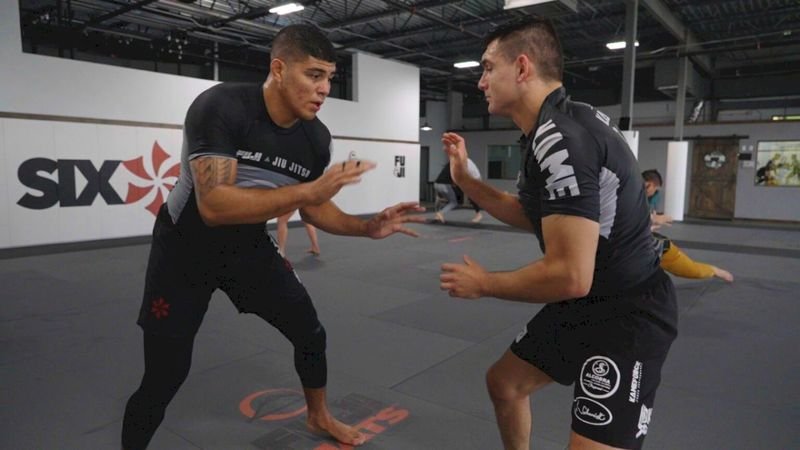
Almost every instructional source describes the snap down as “pull the head down.” That description creates the wrong motor pattern. The snap works via an accelerated motion, not a sustained yank — and to generate that acceleration, you need to create physical separation between your hand and the opponent’s head before the downward pull fires.
This means either backing your body up slightly, dropping your shoulder, or using a push-pull fake to create air gap between your grip and their neck. Once that gap exists, your arm closes it at speed. The weight of your arm, shoulder, and the drop of your body travels through the grip with real force. Without the separation, you’re pushing against a stationary wall with arm strength alone — which is easily resisted by anyone with a decent neck and base.
The chin-to-chest position of your own head at the moment of the snap is part of the coupling mechanism. Drop your chin as you pull. Your head weight adds to the downward impulse through your collar tie arm. Most BJJ-oriented instruction omits this detail entirely.
Key 3: Pull Perpendicular to Their Foot-to-Foot Axis
The direction of the pull matters more than the force behind it. Pulling straight down works against a shorter opponent, but against someone roughly your height — which is most of the time — a straight-down snap gives them an easy recovery: stand back up.
The snap down works because it puts the opponent off-balance in two directions simultaneously. To accomplish this, you pull along the line that’s perpendicular to their foot-to-foot axis. If their feet are roughly shoulder-width apart east-west, you pull diagonally toward north or south — down and across toward your lead foot.
That diagonal direction loads their weight onto one foot and breaks the triangle of their base. They’re now fighting gravity in two directions rather than one, which is substantially harder to resist under pressure. The diagonal snap also positions their head to the outside of your lead leg, which is exactly where you want it when entering the front headlock.
This is also why the snap down often involves a step to the side — you’re repositioning to make the perpendicular pull line available. Set the collar tie, step 45 degrees to one side, then snap along the diagonal you’ve just created.
Key 4: Manufacture the Opponent’s Push-Back Before You Snap
The snap down works best when your opponent is already pushing forward. When someone pushes into you, their weight is loaded toward their toes, their posture is already compromised, and their head and neck can be redirected downward with significantly less force than when they’re neutral or pulling away.
The problem: good grapplers don’t push forward carelessly. You have to make them do it. The most reliable method is a collar tie shove — you push forward into them briefly, they instinctively push back, and you fire the snap the moment that reactive force arrives. A fake forward step achieves the same thing. You’re not trying to move them; you’re creating the reaction you need.
Grapplers who try to snap a passive or retreating opponent will fail every time and conclude the move doesn’t work. It does — but the setup-to-snap sequence is the actual technique, not just the hand motion. In no-gi specifically, where opponents often drop their level to avoid collar tie control, manufacturing a reactive push-back before snapping is what separates grapplers who make the move work from those who abandon it after a few failed attempts.
Key 5: Take the Back First — Front Headlock Second
Every snap down article emphasizes the front headlock → guillotine path. That path is real and effective. But in no-gi grappling, the go-behind — stepping laterally to the back as the opponent turtles or tries to recover posture — is often the higher-percentage play.
Here’s why: if the snap fully worked and their head is at hip level, front headlock attacks require maintaining a head/neck grip under scramble pressure. The arm-in guillotine (crooked head lock) works especially well here when the opponent reaches for a double leg in panic — but that window closes quickly. If the snap partially worked and the opponent is ducking their head and trying to recover posture, their back is exposed during that recovery. A go-behind requires almost no grip — just a lateral step and a seat belt or body lock to secure the back position.
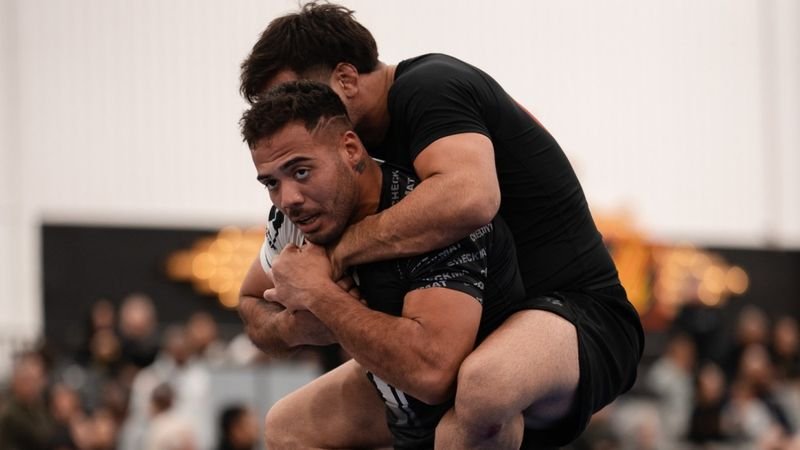
Train the reaction this way: if they go fully down to hands and elbows, attack the front headlock. If they posture up or begin to spin, go behind. Once you’ve taken the back, you’ll need to know how to close the rear naked choke before they stall or escape.
Three Snap Down Entries Beyond the Standard Collar Tie
The collar tie snap is the entry point, but the same mechanics transfer across other clinch positions.
From the arm drag. The arm drag and snap down work off the same principle — redirecting the opponent’s base — but the arm drag entry bypasses collar tie fights entirely. Get a wrist grip with one hand, pull the arm across your body, and as their shoulder follows, your other hand snaps down on the back of their head. Because you’ve already broken their shoulder position, the snap only needs to do half the work. The fireman’s carry can also flow naturally from this arm control position when the snap down doesn’t fully land.
As a counter to a shot. When an opponent drops for a double leg, their head comes forward and their posture breaks on its own. A sprawl combined with a snap down catches them mid-shot and deposits them directly into the front headlock with minimal effort required. The defensive snap down application is underused — most grapplers sprawl and try to stuff the shot with weight alone, but adding the snap accelerates the transition from defense to attack immediately.
From the over-under clinch. In a pummeling situation where you’ve established an overhook and underhook, the snap fires off the overhook side — pull down on the head with your overhook arm while stepping back. This is harder to hit cleanly but catches opponents who are focused on the body position battle rather than watching head pressure.
What to Do When the Snap Down Fails
No technique works every time. When the snap doesn’t fully land, you have three clean exits rather than one scramble to neutral.
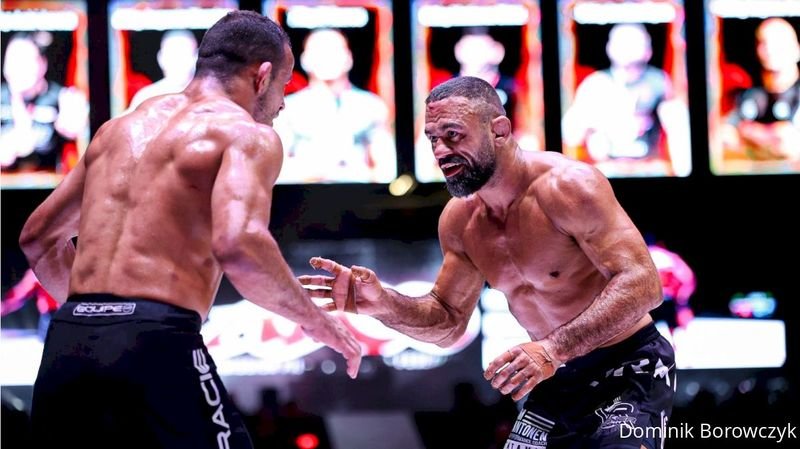
If they posture up hard after the snap, that upward force is your cue for the arm drag. The moment their posture fires back upward, their shoulder and arm come forward — redirecting that arm gets you to their back or at minimum breaks their base for a second snap attempt.
If they’re braced and stationary after a failed snap — they resisted but didn’t counter — don’t pull again on the same spot. Release the collar tie, step offline, and reset to a different angle. The snap down works off perpendicular force, so pulling again from the same position just re-braces them. Change the angle first.
If they shoot under your collar tie as a counter — common against grapplers who telegraphs the move — sprawl immediately and use the front headlock that forms naturally as their head comes forward. The counter-shot is actually one of the best gifts you can receive after a snap: their level change puts them in exactly the position you were trying to create.
Snap Down for BJJ — Lachlan Giles
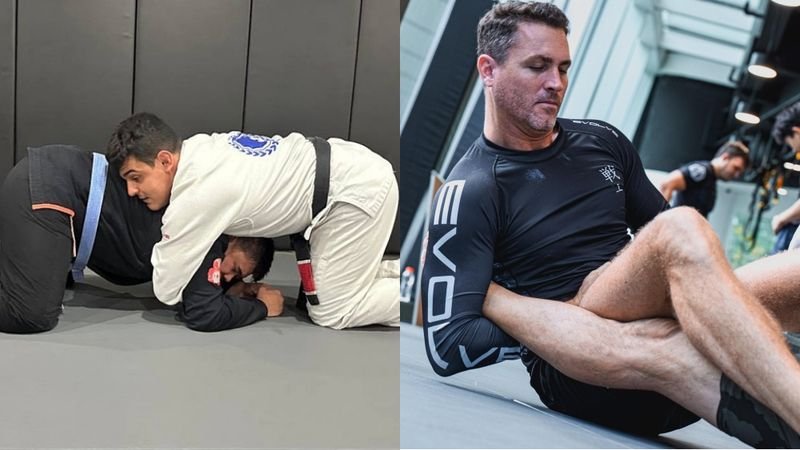
Lachlan Giles — who submitted three ADCC Absolute competitors in a single day in 2019 — covers the snap down mechanics with the kind of detail that separates grapplers who understand the technique from those who just imitate the surface motion.
The snap down won’t make your highlight reel. Opponents won’t see it coming the way they watch for a heel hook entry. But no-gi grapplers who’ve built a complete standing game — wrestlers who’ve transitioned to submission grappling, system-based players who want multiple entries to the front headlock and back position — almost all have it in the rotation. The technique is repeatable, low-risk, and connects directly to the highest-percentage finishes in no-gi: rear naked choke from the back, and guillotine or D’Arce from the front headlock series.
Sources
- Snap Down for BJJ — Lachlan Giles (YouTube) — Instructional breakdown of snap down mechanics for BJJ and no-gi grappling
- ADCC World Championships — Event records and match footage featuring wrestling-based entries in elite no-gi competition
- FloGrappling — Competition footage and analysis of submission grappling techniques including snap down applications
- USA Wrestling — Official federation guidance on collar tie mechanics, head control, and snap down application in freestyle wrestling