Double Leg Takedown: 7 Steps to a Perfect No-Gi Shot
At ADCC 2024, competitors hit 13 double leg takedowns across the bracket — more than any other single wrestling entry. There is a reason it shows up on the biggest no-gi stage in the sport: the double leg is the most direct way to close distance, take someone off their feet, and land in a scoring position. It is the first takedown most wrestlers learn and, for grapplers coming from a jiu-jitsu base, it is usually the fastest way to stop pulling guard and start winning the exchange standing.
This is a step-by-step breakdown of the double leg for no-gi — how the shot works, how to finish it three different ways, the setups that make it land, and how to defend it when someone shoots on you.
What Is a Double Leg Takedown?
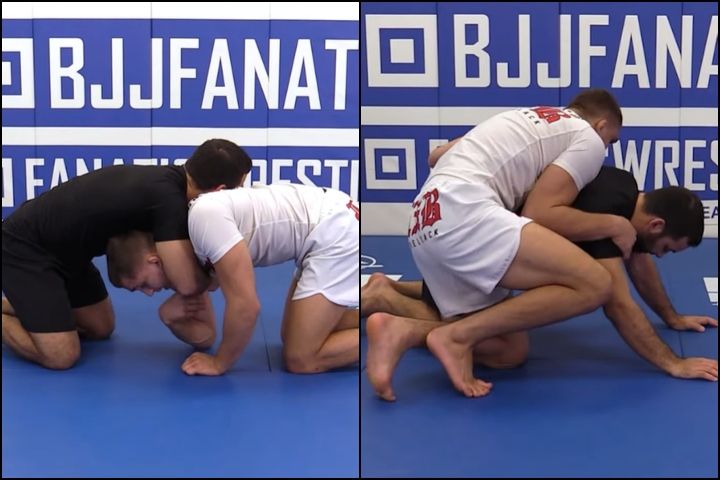
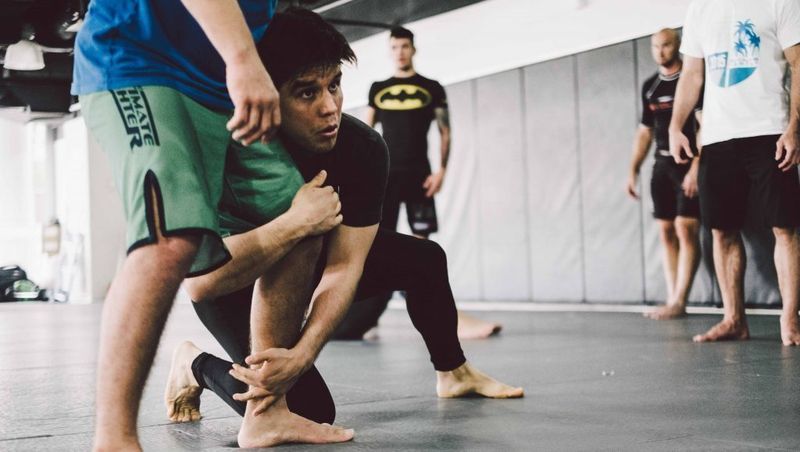
The double leg takedown attacks both of your opponent’s legs at once. You lower your hips below theirs, step in so your lead foot lands between their feet, and clamp both hands behind their knees or thighs. From there your legs and hips do the work — you drive forward and either run them straight back to the mat or turn a corner to dump them sideways.
Wrestlers break it into three beats: the shot, the connection, and the finish. Miss any one of them and the takedown stalls. The shot is your level change and penetration step. The connection is your hands and head locking onto the legs. The finish is the drive. Beginners tend to obsess over the finish, but the shot is where most double legs are won or lost — if you get in deep with your hips underneath your opponent, the finish is almost automatic.
Why the Double Leg Works So Well in No-Gi
Wrestling for BJJ has exploded over the last decade, and the double leg is the reason why. In the gi, your opponent can grab your collar and sleeve to post, frame, and kill your forward pressure before you ever reach the legs. Strip the jacket away and those grips disappear. There is nothing to hold your head down, nothing to anchor a whizzer as easily, and sweat makes every defensive grip slip.
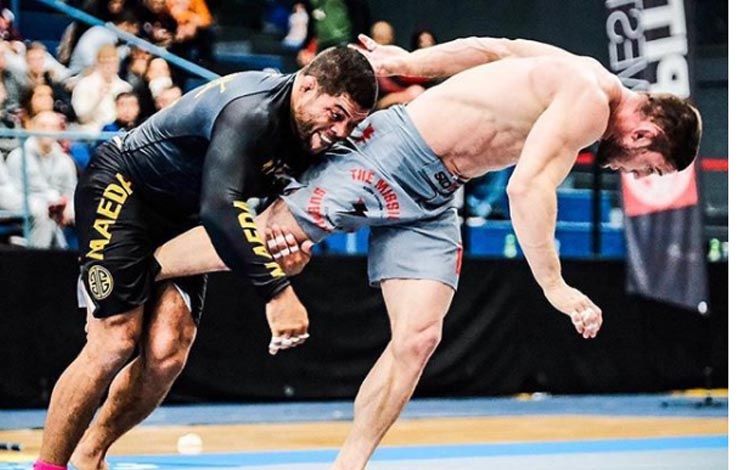
That is the trade-off no-gi grapplers live with. The same slickness that makes chokes harder to hold makes penetration steps easier to complete. You will see world-class competitors like André Galvão build entire matches around explosive level changes into the legs, precisely because the no-gi ruleset rewards the athlete who gets to the hips first. If you have been relying on guard pulls, adding one reliable double leg changes the math of every standing exchange.
How to Do a Double Leg Takedown: Step by Step
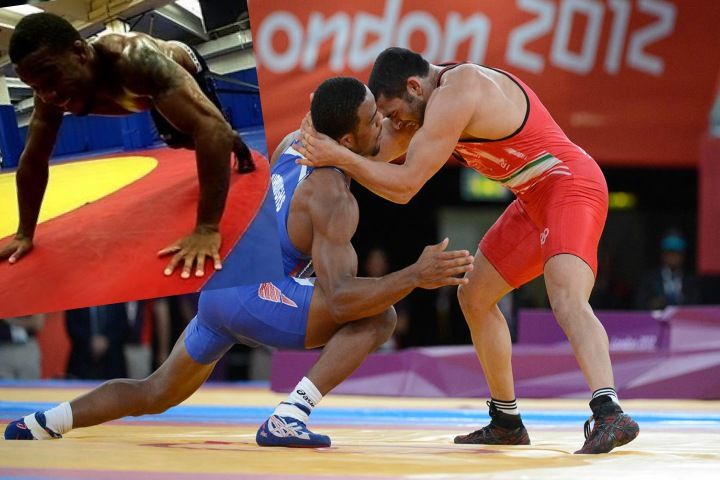
Here is the full sequence broken into the four moments that matter. Drill each one slowly before you chain them together at speed.
1. Change your level
Bend your knees and drop your hips straight down so your shoulders sit below your opponent’s chest. This is a level change, not a bow — your back stays relatively upright and your head stays up. Bending at the waist instead of the knees is the single most common reason a double leg gets stuffed, because it leaves your neck exposed for a guillotine.
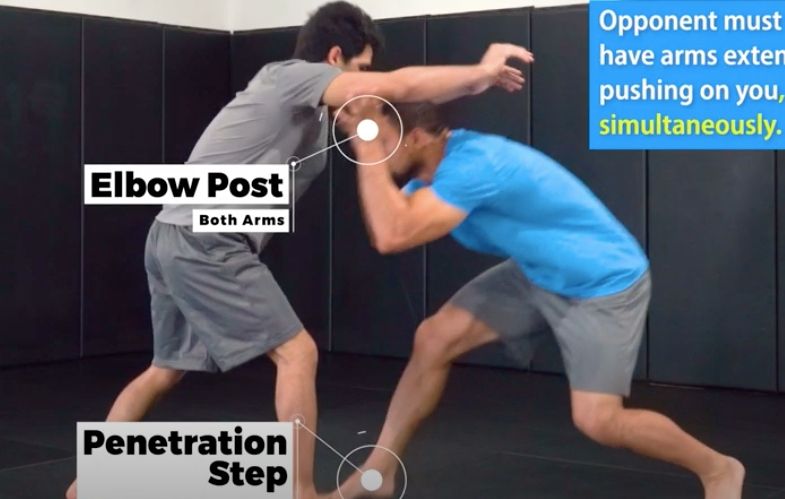
2. Take the penetration step
Drive your lead foot forward and plant it between your opponent’s feet, deep enough that your knee nearly touches the mat. This penetration step is the engine of the whole takedown. Your trailing leg follows to bring your hips underneath theirs. If your lead foot lands short — outside or in front of their stance — you have no base to drive from and you will get sprawled on.
3. Connect your hands and head
As you penetrate, wrap both arms around the outside of your opponent’s legs and lock your hands behind their knees or high on the thighs. Your head goes to the outside of their body, ear against their hip — never in the center, where it feeds a guillotine or front headlock. Squeeze your elbows in so their legs are trapped tight against your chest.
4. Drive through and finish
Now use your legs. Push off your back foot, keep your head up, and drive forward through your opponent. You are not lifting with your arms — you are running them off their base. As they fall, follow them down and land in a strong top position rather than crashing into their guard.
3 Ways to Finish the Double Leg Takedown
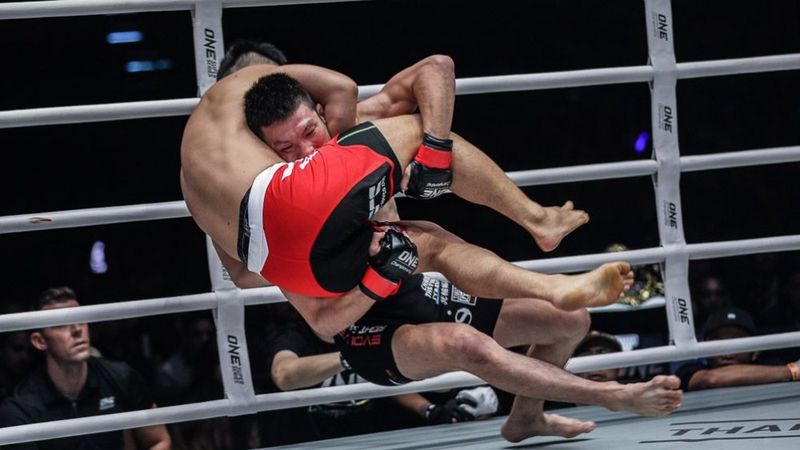
Getting to the legs is half the battle. How you finish depends on how your opponent reacts once you are connected. These are the three finishes worth drilling first.
Run the pipe. The simplest finish. Keep driving straight forward, run your opponent backward, and follow them to the mat as their feet leave the ground. This works best when you have penetrated deep and their weight is already moving back.
Turn the corner. If your opponent widens their base and stops your forward drive, stop fighting it. Step your outside foot around, pull their far leg toward you, and dump them to the side. You are changing the direction of the drive rather than powering through a braced opponent.
Lift and return. When you connect with your hips fully underneath, you can stand up, lift your opponent off the mat, and return them to the side. This is the highest-percentage finish for taller grapplers who can get low enough to load the weight, but it takes the most control — a sloppy lift hands your opponent a scramble.
Best Setups to Land the Double Leg in No-Gi
Nobody hits a clean double leg on a braced, ready opponent. You need a setup that gets their weight moving or their hands out of the way. The three that translate best to no-gi grappling are a collar tie snap, a level-change fake, and a reaction off their attack.
From a collar tie, snap their head down hard to bring their weight forward onto their toes, then shoot as they post back up. The fake works the opposite way: drop your level like you are shooting, watch them react down to defend, then change directions into a different attack — or shoot for real once they stop respecting the motion. And the highest-percentage entry of all is off their offense: when your opponent reaches to grab a collar tie or throws a lazy jab in MMA, that extended arm is your cue to level change under it and take the legs.
Double Leg Takedown Defense: How to Stop the Shot
You cannot attack the double leg well until you understand how it gets defended, and the defense makes you harder to take down. The first and best answer is the sprawl. The moment you feel someone shoot, kick both legs back hard, drop your hips onto their shoulders and back, and flatten them out. Weight kills the double leg — if your opponent can’t get their hips under yours, the takedown is dead.
Your second layer is the underhook and the whizzer. As they connect, fight to get an underhook on one side or throw a whizzer (an overhook with heavy downward pressure) on the other to stop them from turning the corner. From there you can circle away, peel their hands off your legs, and return to neutral. Good takedown defense is not one technique — it is the sprawl to blunt the shot, then hand-fighting to escape before they finish.
Double Leg vs Single Leg: Which Should You Learn First?
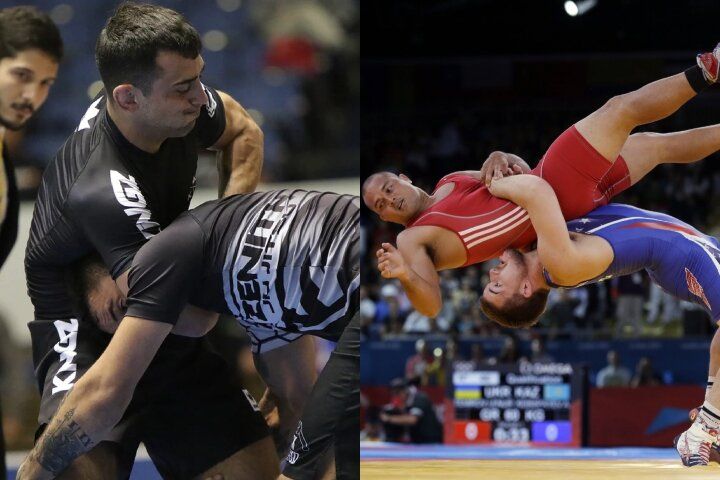
The double leg and the single leg are the two pillars of takedown offense, and grapplers argue about which to learn first. The honest answer: the double leg is the better first takedown for most no-gi players. It commits your opponent’s whole base at once, the finish mechanics are more intuitive, and there is less that can go wrong mid-shot than on a single, where a good opponent can hop, limp-leg, and counter.
The single leg earns its place once you are comfortable in scrambles, because it exposes you to fewer front headlock counters and chains beautifully into leg entanglements. Many grapplers shoot a double, have it defended, and transition to a single as their opponent sprawls — the two are partners, not rivals. If you can only drill one this month, drill the double leg. If you already have it, the single leg is your natural next step, and it flows well into positions like the single leg X guard.
Common Mistakes That Get Your Double Leg Stuffed
Most failed double legs come down to the same handful of errors, and every one of them is fixable in a few drilling sessions.
- Bending at the waist instead of the knees. This drops your head and feeds the guillotine. Change levels with your legs, keep your chest up.
- Shooting from too far away. If you have to lunge to reach the legs, you have already lost. Close the distance with a setup first, then shoot from inside range.
- Putting your head in the middle. Your head belongs on the outside of the hip. Center-line head placement is an invitation to a front headlock or guillotine.
- Stopping on contact. The shot and the finish are one motion. Grabbing the legs and then pausing lets your opponent sprawl. Drive through the contact, don’t celebrate reaching it.
- Reaching with the arms instead of driving with the hips. The double leg is a hip-and-leg movement. If your arms are doing the lifting, your position is wrong.
How Your Rashguard Affects Your Takedown Game
This gets overlooked, but gear matters more on takedowns than almost anywhere else in no-gi. A loose rashguard rides up the moment you shoot — it bunches under your opponent’s arms, gives them something to grab through, and exposes bare skin to mat burn every time you drive across the floor. A properly fitted compression top stays flat against your body, gives your opponent nothing to grip, and lets you slide through scrambles instead of catching on friction.
If your top is constantly shifting during hard rounds, it is worth reading up on how rashguard fit affects grip control before your next competition. Once you finish the double leg and take top position, the same principle applies to chaining attacks — a clean transition into a back-control finish or a straight ankle lock depends on gear that doesn’t fight you.
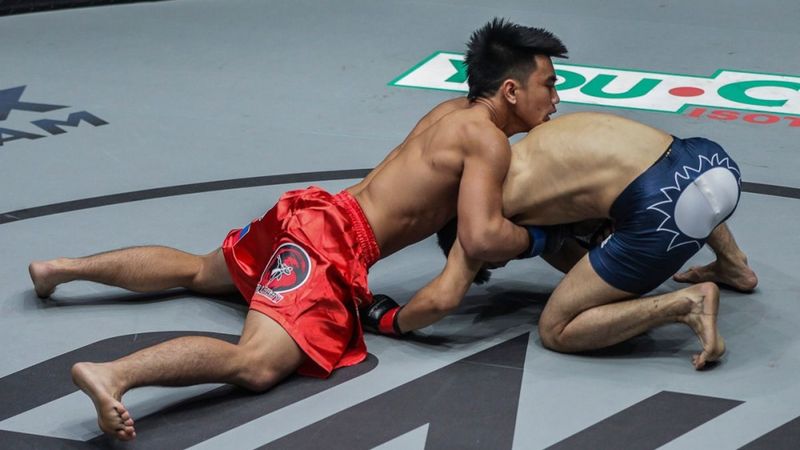
Watch: Double Leg Takedown for Beginners
This breakdown walks through the level change, penetration step, and finish at a pace you can drill along with:
Frequently Asked Questions
Is the double leg takedown legal in BJJ and ADCC? Yes. The double leg is legal in IBJJF no-gi, ADCC, and virtually every major grappling ruleset, and it scores as a takedown. The one caveat is that some rulesets restrict slamming, so finish by driving and following, not by lifting and spiking.
How long does it take to learn a double leg takedown? You can drill a functional double leg in a few weeks. Landing it on resisting, higher-level opponents takes months of live wrestling — the technique is simple, but the timing and setups are what separate a shot that lands from one that gets sprawled on.
Do I need a wrestling background to hit a double leg? No. Plenty of jiu-jitsu players learn the double leg from scratch as adults. A wrestling base helps with the reflexes, but the mechanics are learnable by anyone willing to drill the penetration step until it is automatic.
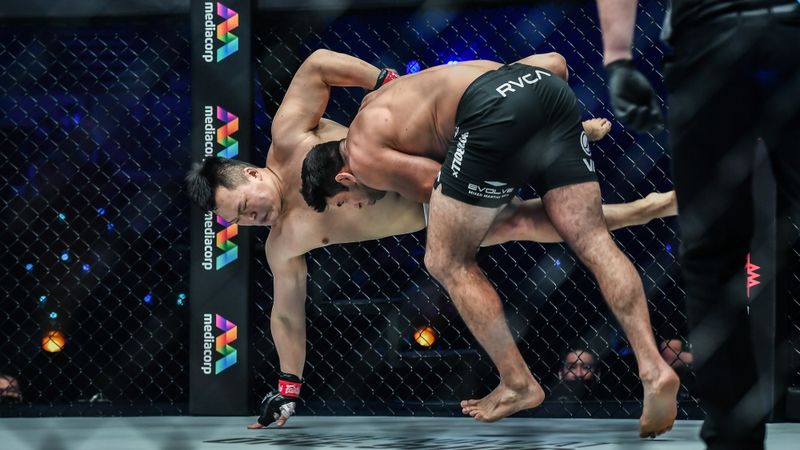
Pick one setup, one finish, and drill the penetration step until you can do it in your sleep. The grappler who owns a single reliable double leg controls where every standing exchange goes — and in no-gi, that control is worth more than a dozen half-learned techniques you never trust under pressure.
Sources
- ADCC 2024 Aftermath: Data Compilation and Analysis — BJJ Heroes — takedown frequency data from ADCC 2024.
- ADCC Rules & Regulations — ADCC News — official no-gi takedown scoring and legality.
- Takedown (grappling) — Wikipedia — overview of takedown mechanics and terminology.