
Loose Fabric, Free Grips: How a Baggy Rashguard Hands Control to Your Opponent
Ask most grapplers how a rashguard should fit and they’ll talk about comfort, chafing, or whether the sleeves ride up. All true, all worth caring about. But there’s a colder, more tactical reason fit matters in no-gi that almost nobody explains: loose fabric is a grip. Every fold that lifts off your skin is a handle your opponent can pinch, ball up, and use to steer you. In the gi you hand out collar and sleeve grips on purpose because the rules reward them. In no-gi, the whole point is that there’s nothing to hold — unless your rashguard is baggy enough to become the thing they hold.
This guide reframes the fit question entirely. Instead of asking “is this comfortable,” ask “what does this give my training partner?” Once you start reading a rashguard through the lens of grip control, sizing charts and seam placement stop being fussy details and start looking like a strategic choice you make before you ever step on the mat. (For the general fit standard this is built on top of, see our complete no-gi rashguard fit guide.)
Fabric You Can Pinch Is a Grip You Gave Away
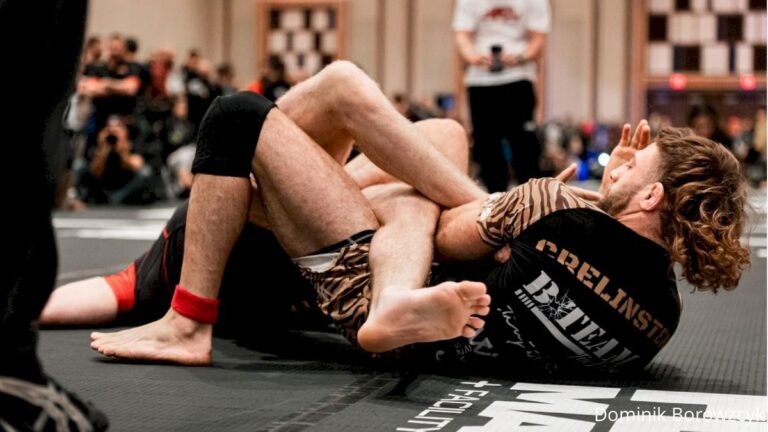
Grip fighting in no-gi is a fight over friction and leverage on bare surfaces — wrists, elbows, necks, the crook of a knee. A properly fitted rashguard adds almost nothing to that equation because it moves with your skin. There’s no slack to catch. A loose one changes the game. The moment a few centimeters of jersey lift off your lat or your bicep, your opponent has a fistful of fabric that behaves like a soft sleeve grip. They can’t cinch it as tightly as a gi sleeve, but they don’t need to. Even a loose gather of material slows your arm, telegraphs where your hand is going, and buys them the half-second they need to counter.
Watch where it hurts you most. Passing guard, a baggy panel across your back or ribs gives the bottom player something to pull as they recover guard or climb to your back. Defending, loose sleeve fabric lets an opponent control your posted arm without ever securing a real wrist grip. Scrambling, the extra material snags on their limbs and on the mat, costing you the explosiveness that scrambles are won with. None of these are dramatic, highlight-reel moments. They’re small leaks, and small leaks lose rounds.

What “Compression” Actually Has to Do
A rashguard earns the word “compression” when it holds itself against your body under load — not just standing in front of the mirror, but when you’re inverted, stacked, or being dragged across the mat by a heavier partner. That’s a real mechanical job. The fabric has to stretch enough to let you move through full range, then recover fast enough that it snaps back flat instead of bunching. When people say a rashguard “fits like a second skin,” the useful version of that phrase is about recovery, not tightness. Tight-but-cheap fabric that stretches out and stays stretched is worse than a moderately snug one that keeps bouncing back all class.
This is why blend and construction matter more than the number on the size chart. Most quality grappling rashguards run a nylon-and-spandex or polyester-and-spandex blend, usually somewhere around 15–20% elastane, because that’s the range where the garment can compress without choking your range of motion. Too little stretch and you’re fighting your own shirt every time you reach for an underhook. Too much cheap stretch with poor recovery and the thing turns into the loose grip-handle problem within a few months of washing.
The Squeeze Test Before You Roll
You can screen for grip-proof fit in the changing room without a training partner. Pinch the fabric at your forearm, your lat, and the center of your back and try to pull a fold away from your skin. On a rashguard that fits for no-gi, you’ll get almost nothing — a sliver of material and immediate tension. If you can gather a full pinch that stands up off the body, that’s exactly what an opponent will grab. Do the same at the shoulder seam and along the sleeve cuff, the two spots that lift first when you raise your arms overhead.
Sleeves: The Most Grabbable Real Estate You Own
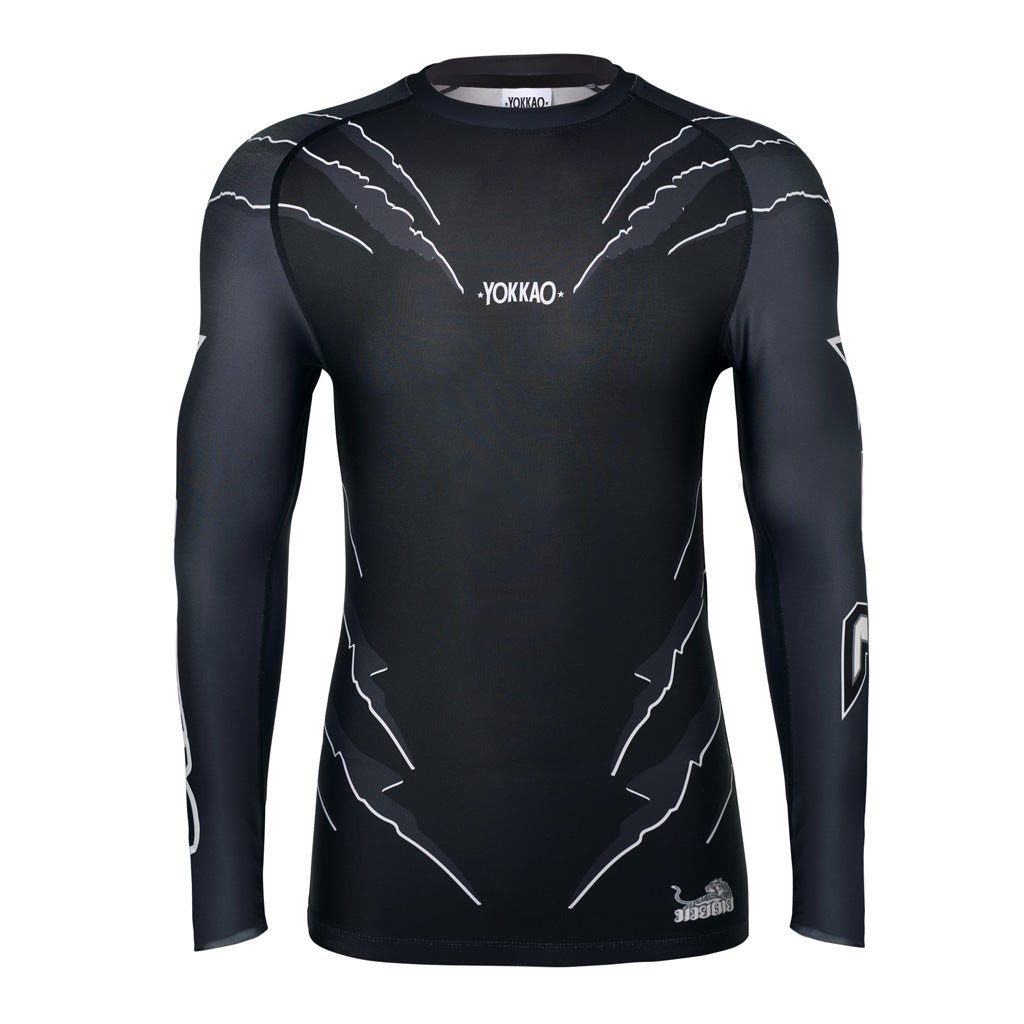
Your arms do the most work in a grappling exchange and they’re the surface an opponent reaches for first, so sleeve fit is where a rashguard is won or lost. A long-sleeve should end at your wrist bone and stay there. If it rides halfway up your forearm the instant you extend for a collar tie or a two-on-one, you’ve got loose fabric bunched at the elbow — a natural gather that a smart opponent will trap to control your arm. If the cuff is so loose it flaps, that flap is a target.
The fix is a sleeve that’s snug along its whole length with a cuff that grips your wrist lightly on its own. Short-sleeve and no-sleeve cuts sidestep the forearm-grip problem entirely, which is one honest reason a lot of competitors prefer them, but they trade away the skin coverage that protects against mat burn and ringworm. There’s no universally correct answer — just know that a long sleeve only pays off defensively if it actually stays put. A long sleeve that rides up is worse than a short sleeve, because now you’ve got both exposed skin and a grip handle.
Seams, Panels, and Where the Fabric Decides to Bunch
Two rashguards can share the same tag size and fit completely differently because of how they’re paneled. Flatlock and offset seams that follow the contour of your muscles keep the fabric anchored where it needs to stay flat — across the lats, around the shoulder cap, along the spine. Cheaper garments cut fewer, larger panels, which saves the manufacturer money and leaves you with wide sheets of jersey that pillow away from your body under torque. Under a body-lock pass or a stacking guard, that’s precisely the material that gathers into a grip.
Look at the back panel specifically. It’s the biggest single surface on the garment and the one you can’t see while you’re wearing it, which is why it’s the easiest place for slack to hide. A well-built rashguard uses a seam or a contoured back panel to pull the material taut across the spine so there’s nothing to grab when someone is riding your back or threatening a rear body lock. Run your hand down your own back after you put a new rashguard on. If you feel a loose sail of fabric, that’s the first place you’ll get controlled.

Reading the Size Chart Like a Grappler, Not a Shopper
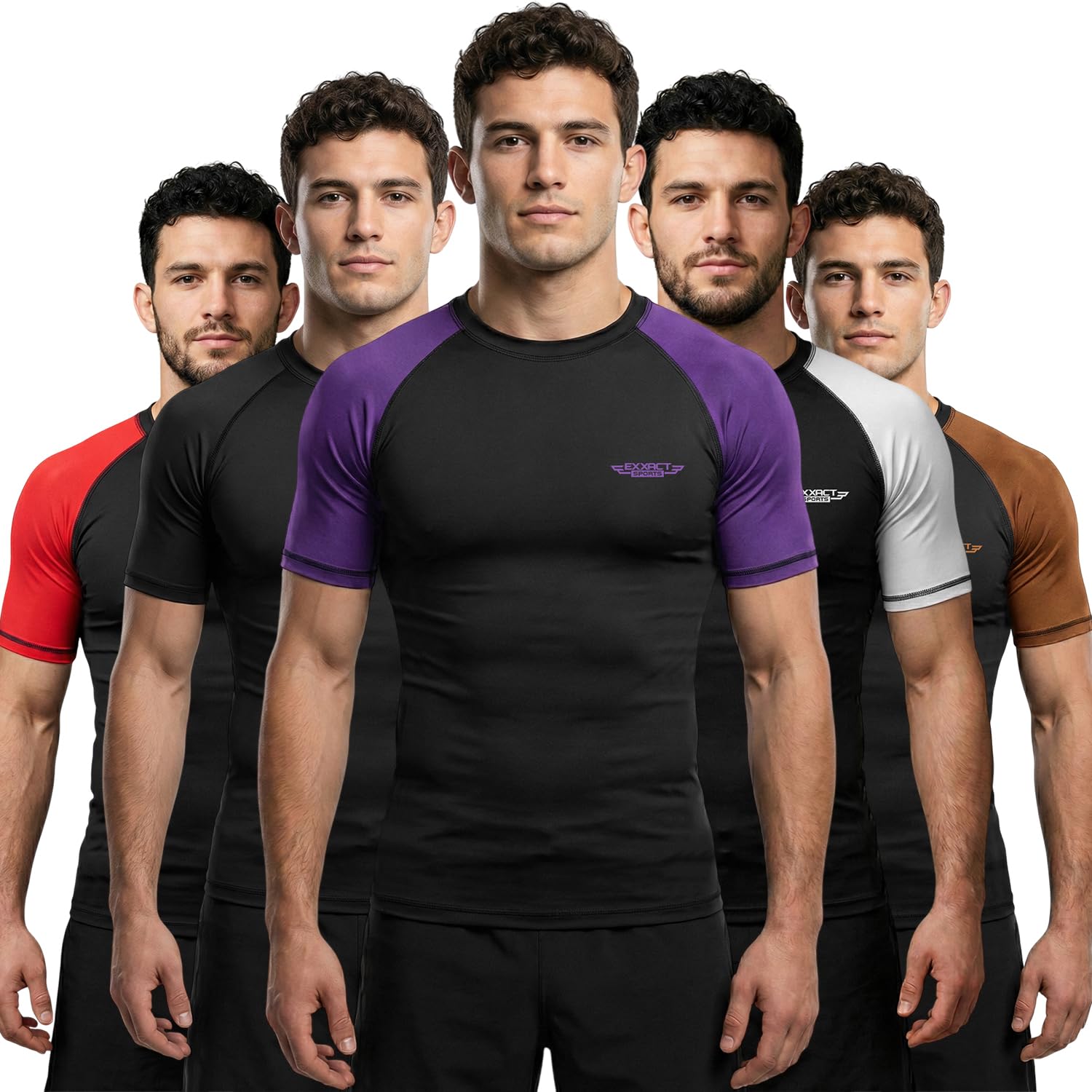
Manufacturer size charts are built around chest and height, which is a fine starting point and a poor finishing one. Two people with an identical chest measurement can carry it on completely different frames — long torso versus short, broad back versus narrow, heavy forearms versus lean. The chart can’t see any of that, so treat it as the opening bid. If you’re between sizes, size down for grappling far more often than you’d size down for a casual shirt, because the failure mode you care about is looseness, not tightness. A rashguard that feels a touch aggressive standing still usually settles into the right compression once you’re warm and moving. (For the full mechanics of why brands disagree on what “medium” means, see our rashguard sizing chart guide.)
The exceptions are torso length and shoulder width, the two dimensions charts handle worst. A long torso pulls the hem up and untucks the shirt every scramble, exposing your lower back and creating slack at the waist. Narrow shoulders in an otherwise correct size leave loose fabric bunching at the neck and delt. If you’re built outside the average the chart assumes, prioritize a brand that publishes real garment measurements — actual sleeve length and body length in centimeters — over one that only lists S/M/L. You’re fitting a tool for a job, not buying a look.
Fit Is a Living Thing — It Degrades
The grip-proof fit you buy on day one isn’t permanent. Elastane fatigues. Hot dryers, harsh detergent, and being wrung out and left balled up in a gym bag all accelerate the day your snug rashguard turns into a slightly loose one. The tell isn’t dramatic — the cuffs stop gripping your wrists, the back panel starts to pillow, the whole thing feels a half-size larger than it did. That’s the moment it re-enters grip-handle territory, and it’s why rotating several rashguards and washing them cold, then hanging them to dry, is genuinely a performance decision and not just laundry advice.
So when you evaluate a new rashguard, don’t just ask whether it fits today. Ask whether the construction — the blend, the seam density, the quality of the elastic in the cuffs and hem — looks like it will hold that fit through a hundred washes. Cheap garments give you a great first month and a mediocre year. That’s fine for a spare, but your primary comp-and-hard-rounds rashguard should be the one built to stay flat against you long after the honeymoon.

The One-Sentence Fit Rule
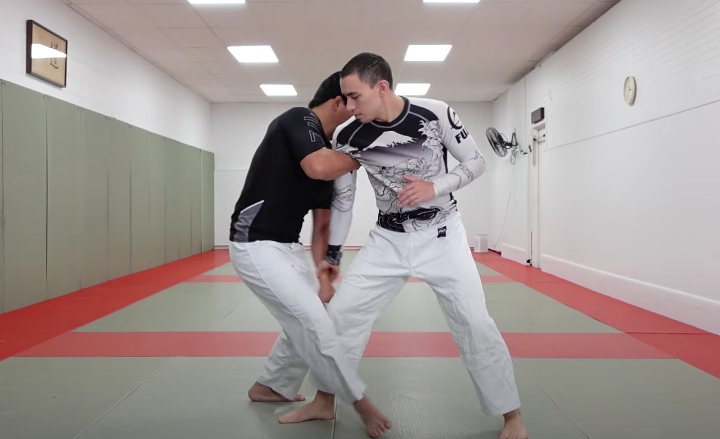
Strip away the sizing charts and the fabric science and the whole question collapses to a single test: can your training partner get a fistful of your shirt? If the answer anywhere — sleeve, back, ribs, hem — is yes, the fit is wrong for no-gi no matter how comfortable it feels. A rashguard’s job is to disappear so that the only things on the mat worth gripping are the ones nature gave you. Buy for that, wash for that, replace it when it stops doing that, and you take a small, invisible edge into every single roll.
Ready to upgrade? Compare compression no-gi rashguards and check the garment measurements, not just the size letter, before you buy.