Short Sleeve vs Long Sleeve Rashguard: Getting the No-Gi Fit Right for Each Cut
Most fit advice treats a rashguard as one garment: get the compression right, check the seams, make sure it stays put. That’s true as far as it goes, but it quietly assumes every rashguard fits the same way. It doesn’t. A short-sleeve and a long-sleeve version of the exact same model, in the exact same size, put fabric in different places and ask different things of the fit. The short-sleeve lives or dies at the bicep and the hem. The long-sleeve lives or dies at the forearm and the cuff. Buy one expecting it to behave like the other and you end up with a rashguard that technically fits but fights you every time you shoot, scramble, or frame.
This is a guide to that difference. Not “which sleeve length is better” — that’s a preference and a climate question — but how the fit target itself moves depending on the cut, and what to check on each so you don’t get surprised on the mat. (For the fundamentals that apply to both cuts — torso compression, collar, seams — see our complete no-gi rashguard fit guide.)
Why Cut Changes the Fit Problem
A rashguard works by compression. The fabric holds tension against your skin so there’s no loose material for a training partner to grip, and so sweat gets pushed to the surface instead of pooling. That tension has to be even. A short-sleeve and a long-sleeve distribute it over different amounts of your arm, which changes where the garment is most likely to fail.
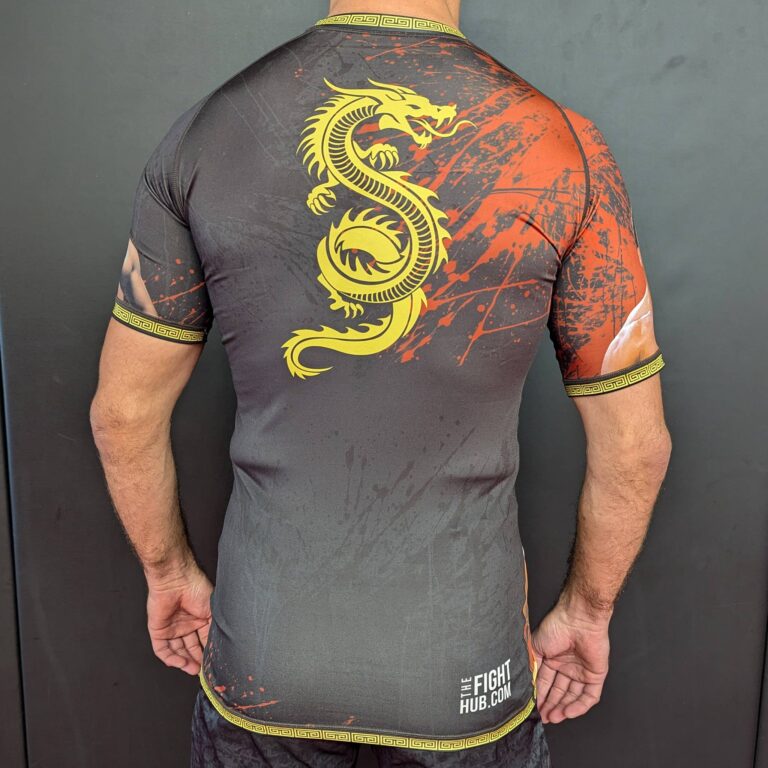
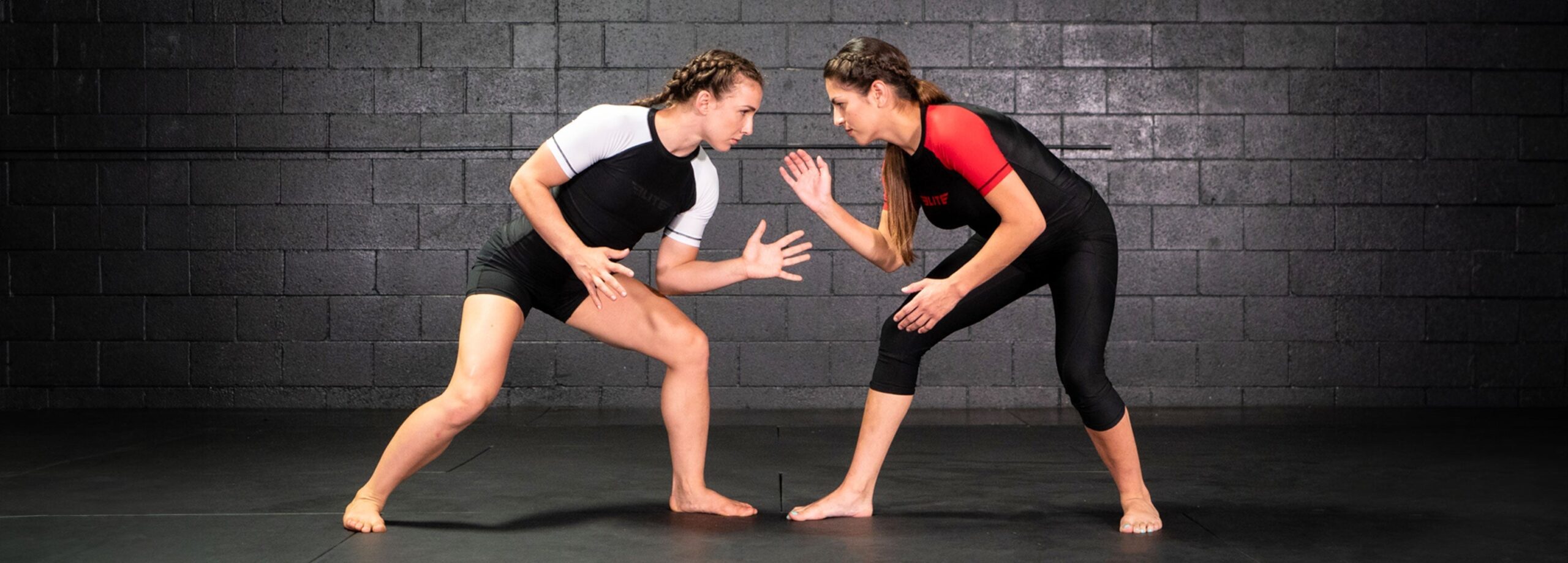
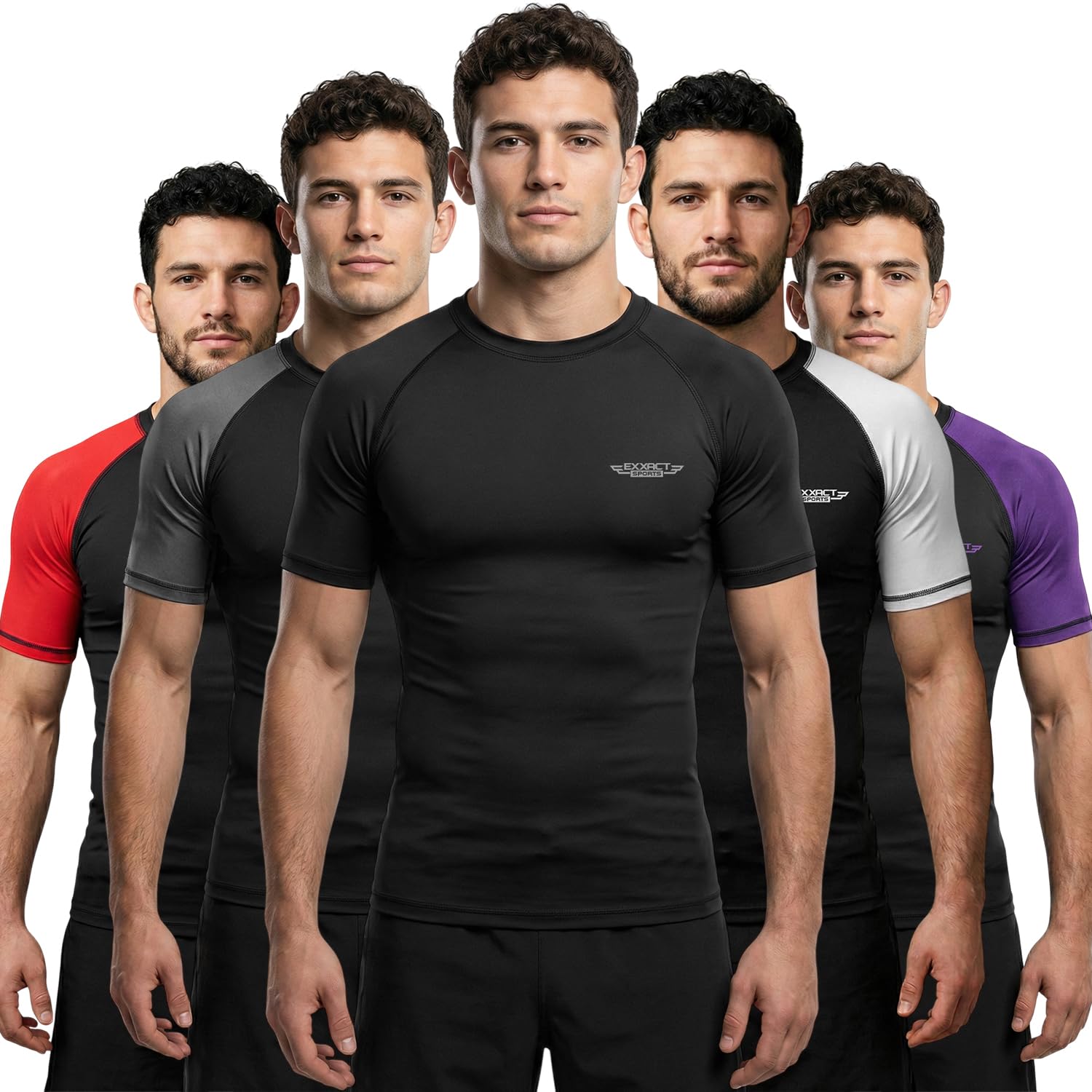
On a short-sleeve, the sleeve ends mid-bicep. All the anchoring happens across your torso, shoulders, and upper arm. There’s no forearm coverage doing any work, so if the torso is even slightly too big, the whole thing shifts and rides. The failure point is the sleeve hem digging into or sliding up your bicep during grip exchanges.
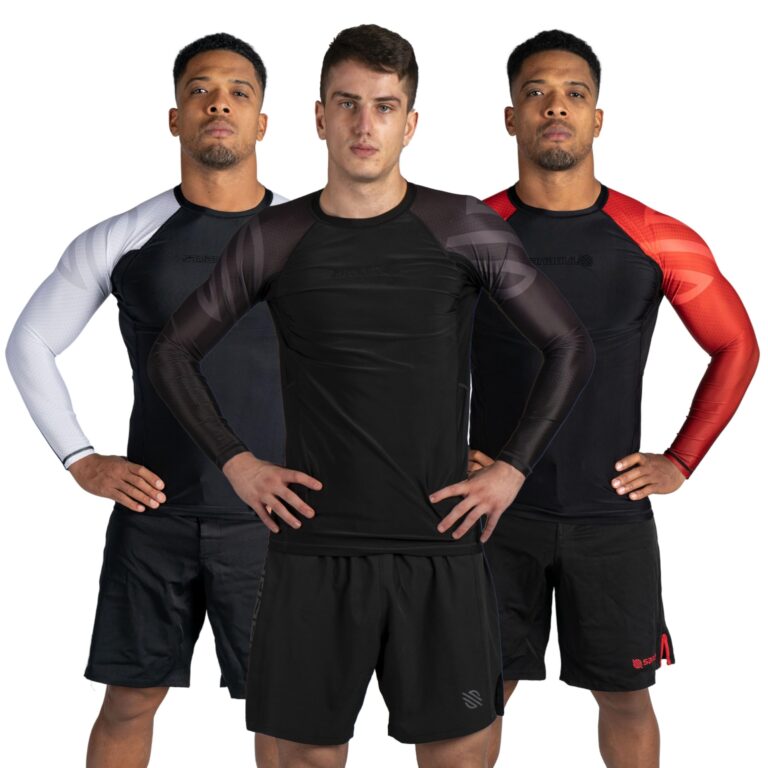
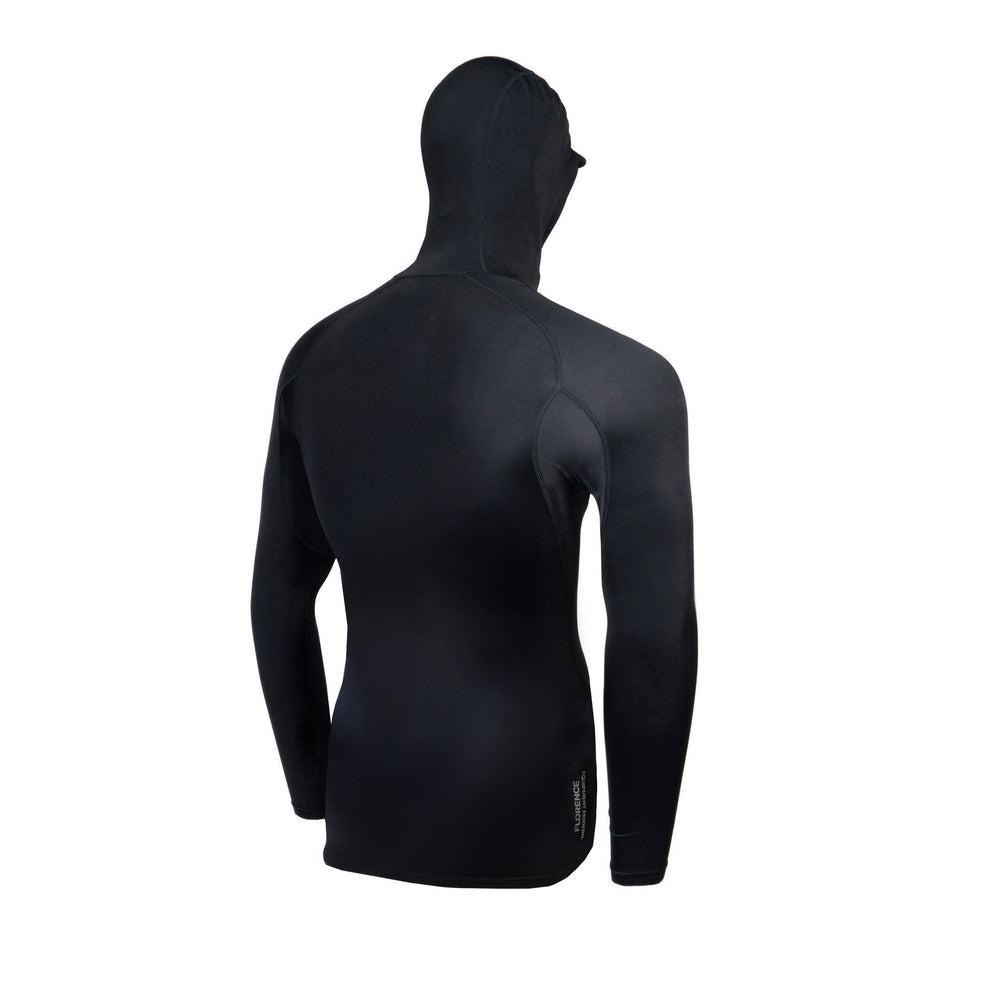
On a long-sleeve, the fabric runs all the way to your wrist. That extra length is more surface area holding the garment in place — which is why long-sleeves tend to stay put better — but it also introduces two new fit zones that don’t exist on a short-sleeve: the forearm taper and the cuff. Both are common places for a long-sleeve to feel wrong even when the chest fits perfectly.
So the same size number means two different fit conversations. Understanding which zones matter for which cut is the whole game.
Fitting a Short-Sleeve: It’s All About the Torso and Hem
Because a short-sleeve has nothing gripping your forearms, the torso does almost all of the anchoring. That makes chest and length measurements more important here than on a long-sleeve, not less. If you’re between sizes on a short-sleeve, this is the cut where sizing down (within reason) usually pays off, because a loose torso has nothing downstream to hold it in place.
The Bicep Hem
The single zone people ignore on a short-sleeve is where the sleeve ends. It should sit flat against your bicep with light compression — no gap you can hook a finger under, no band so tight it leaves a deep welt after a session. When you extend your arm to post or frame, watch what the hem does. If it crawls up toward your shoulder and bunches, the sleeve is cut too wide for your arm and that bunched fabric is exactly what an opponent’s hand finds during a grip fight.
Torso Length
A short-sleeve rides up from the bottom more readily than a long-sleeve, because there’s less garment anchoring the whole system. The hem at your waist should reach past your hipbone and stay there when you raise both arms overhead. If it exposes your lower back the moment you reach up, it will end up around your ribs after a few scrambles. Longer torso cuts, or a rashguard designed to tuck into your shorts, solve this.
Shoulder Seam
The shoulder seam should sit at the edge of your shoulder, not halfway down your upper arm and not up on your neck. On a short-sleeve this is easy to see because the sleeve is short — a seam that’s dropped low tells you the whole garment is oversized for your frame, and no amount of stretch will fix a cut that’s simply too big.
Fitting a Long-Sleeve: The Forearm and Cuff Decide Everything
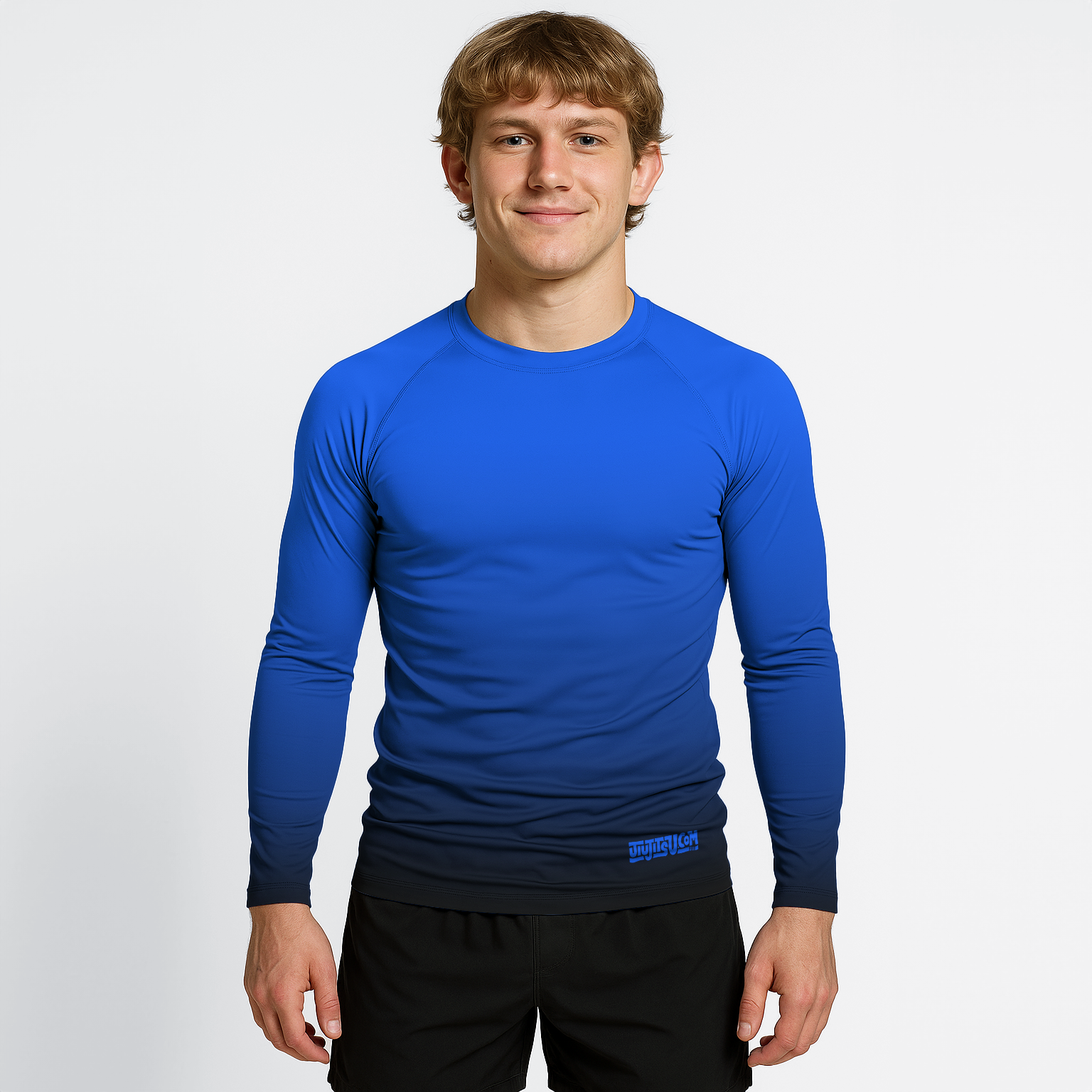
Long-sleeves are the more popular no-gi choice for a reason. Full arm coverage means better sweat management on a hot mat, more of your skin protected from mat friction and other people’s staph risk, and — because there’s more fabric under tension — a garment that generally stays anchored through a hard roll. But that coverage is only an advantage if the two new zones fit right.
The Forearm Taper
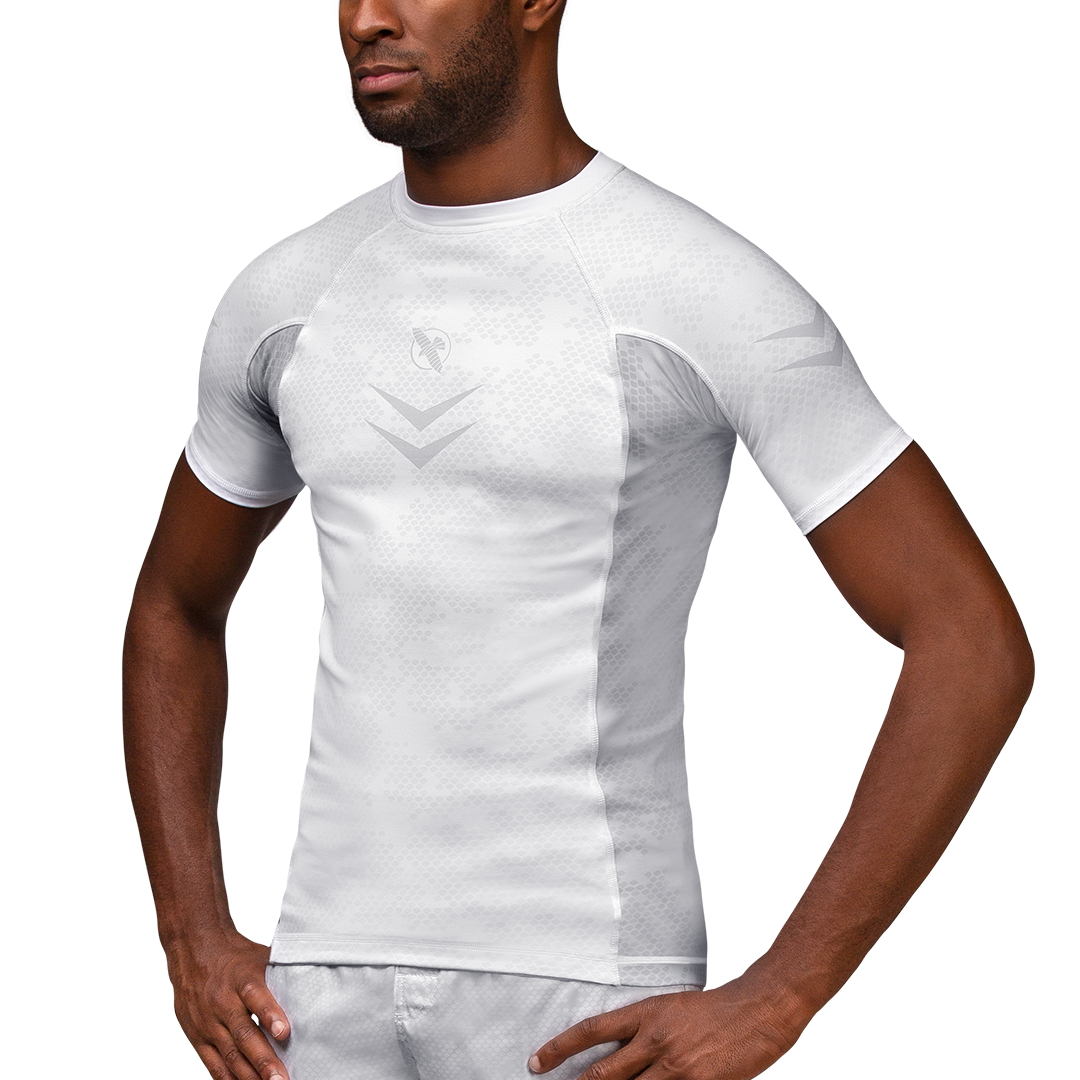
Your forearm narrows toward the wrist, and a good long-sleeve tapers with it. This is where cheap or poorly-cut rashguards fail: the sleeve is essentially a tube, so it fits the widest part of your forearm and leaves loose fabric near the wrist. That slack is a gift to anyone controlling your wrists for a grip or a submission setup. Run your hand down the sleeve — it should stay in contact with your skin the whole way, tightening slightly as it approaches the wrist, never ballooning.
The Cuff
The cuff is the long-sleeve’s version of the bicep hem, and it’s the most-overlooked fit point on the entire garment. It should grip your wrist firmly enough that the sleeve never retreats up your arm, but not so tight it cuts off circulation to your hand during long positional rounds. A cuff that slides back mid-roll leaves your forearm exposed and, worse, creates a wrinkle of loose fabric at the wrist — precisely where wrist control and certain locks are fought.
Sleeve Length
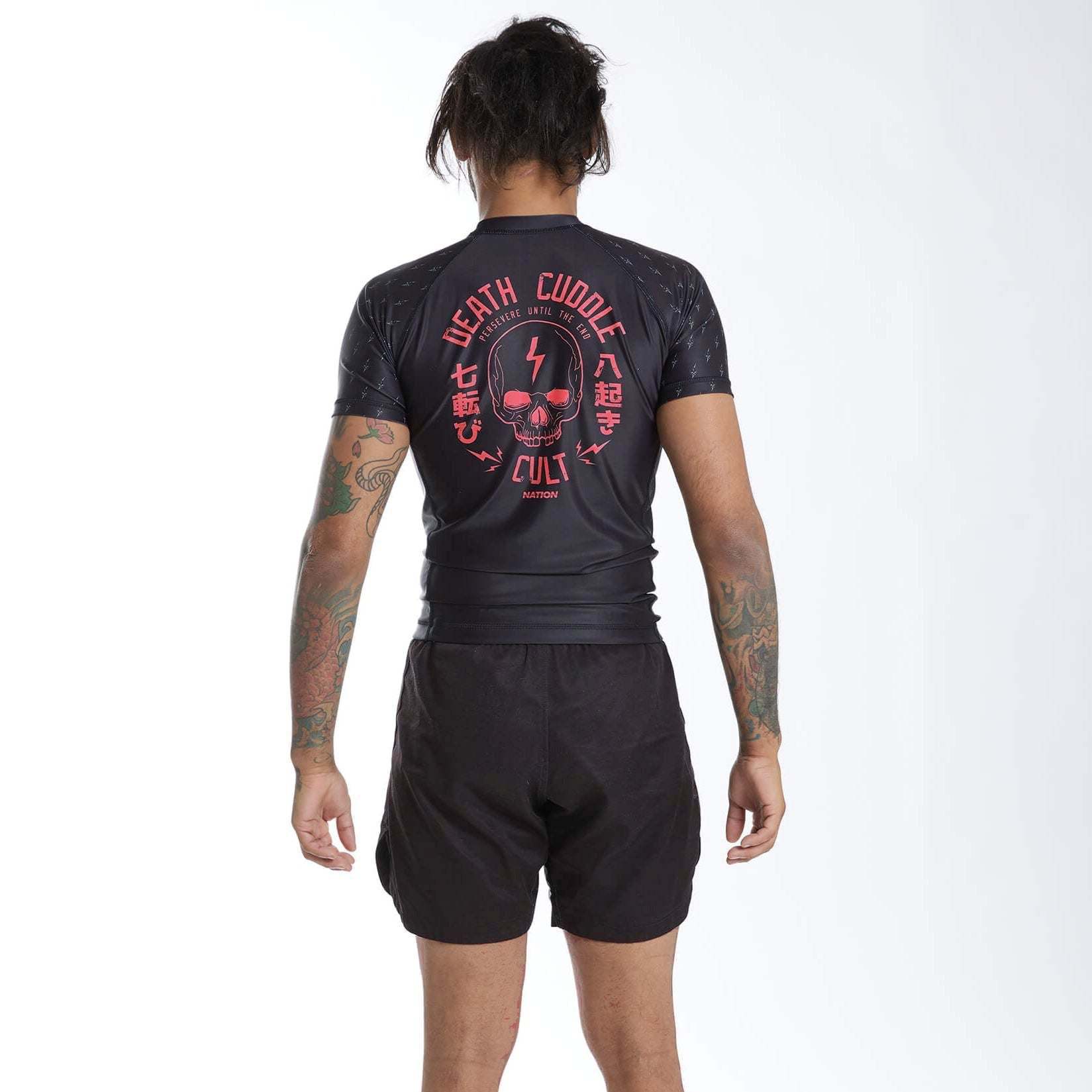
Long enough to reach the base of your palm when your arm is relaxed; not so long the cuff bunches over your hand. Remember that stretch fabric shortens under tension — when you fully extend your arm to post, the sleeve will pull back slightly. If it already sits at your wrist bone when relaxed, a hard extension can expose the forearm. Err toward a touch longer for a long-sleeve, because you have a cuff to keep the extra in place.
The Zones Both Cuts Share
Regardless of sleeve length, a few checks apply to any rashguard, and they’re worth running through in a mirror before your first roll rather than discovering mid-scramble.
- Neckline: flat against your collarbones, no gaping when you look down. A loose neckline is uncomfortable under chin pressure and collects sweat.
- Chest and back panel: smooth, no horizontal wrinkles pooling above your stomach when you stand relaxed. Wrinkles mean excess fabric.
- Range of motion: reach overhead, cross both arms, shoot a level change. Compression should hold you without restricting the movement or pinching at the armpit.
- The seams: flatlock stitching that lies flush, positioned off the high-friction lines of your shoulders and underarms so they don’t abrade during rounds.
Which Cut Should You Actually Buy?
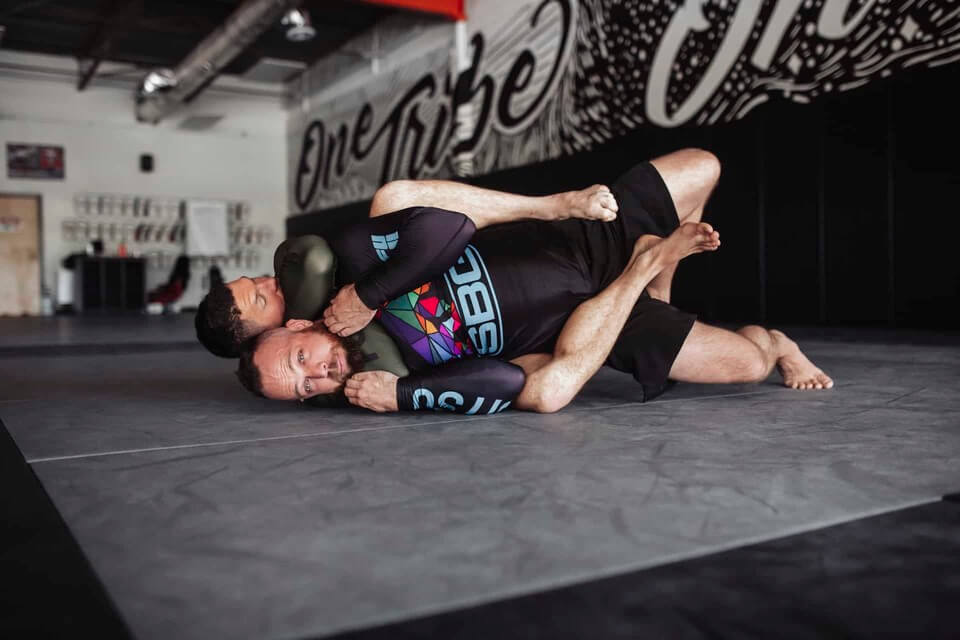
Once you understand that each cut fits differently, the choice between them gets clearer. It comes down to climate, coverage priorities, and how forgiving you need the fit to be.
Reach for a short-sleeve if your gym runs hot and humid and you overheat easily, if you find full sleeves restrictive, or if you simply prefer the feel. Just accept that the fit has less margin for error — a short-sleeve that’s slightly too big has nothing to save it, so nail the torso.
Reach for a long-sleeve if you want maximum skin coverage for hygiene and rash protection, if you compete under rules or in a division where full sleeves are standard, or if you’ve struggled with short-sleeves riding up. The extra fabric buys you stability — but only if the forearm and cuff are cut for your arm, not a generic tube.
Plenty of grapplers own both and rotate by season: long-sleeve in winter and for competition, short-sleeve for brutal summer rounds. If you go that route, don’t assume your long-sleeve size translates. Try the short-sleeve on its own terms, and check the hem and torso the way this guide describes.
The Bottom Line
A rashguard isn’t one fit problem — it’s two, depending on the cut. Short-sleeves are won or lost at the torso and bicep hem, where there’s no downstream fabric to rescue a loose fit. Long-sleeves add a forearm taper and a cuff that most buyers never think to check, and those two zones are exactly where a poorly-cut sleeve hands your wrists to an opponent. Match the garment to your climate and coverage needs, then size it for the zones that actually matter for that cut. Do that and the fabric disappears — which, on the mat, is the entire point of a rashguard.
Sources
- Rash guard — Wikipedia
- Compression garment — Wikipedia
- International Brazilian Jiu-Jitsu Federation (IBJJF)
- No-gi BJJ rashguards — Amazon search