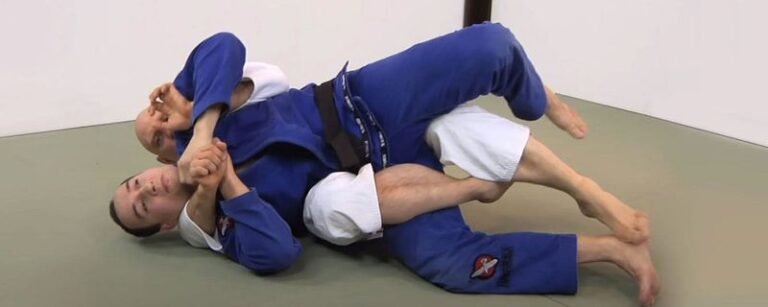
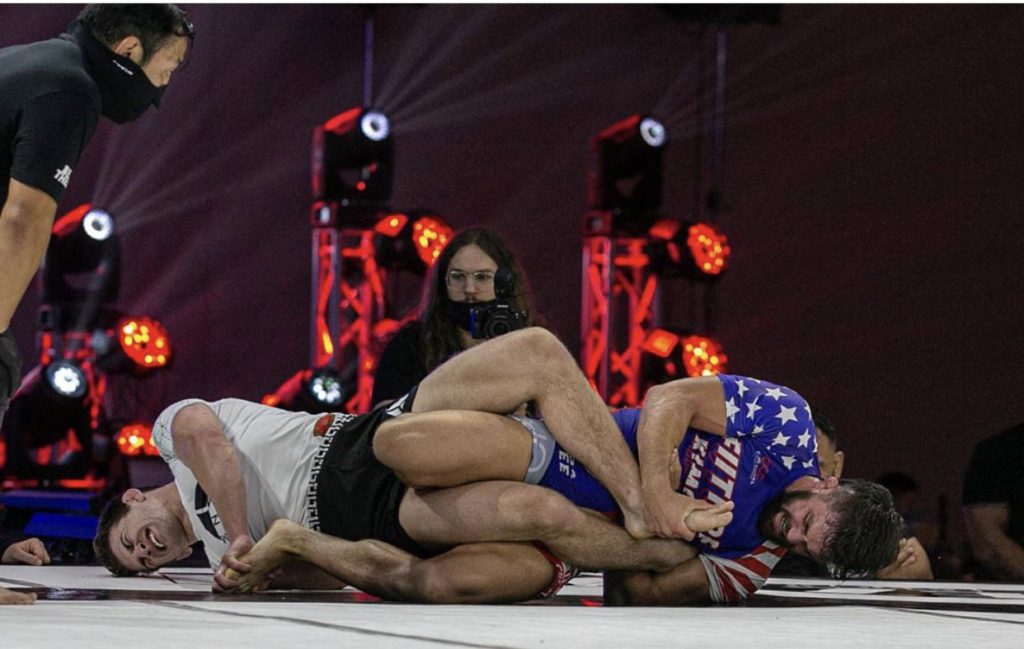
Ashi Garami: 6 Essential No-Gi Leg Lock Positions
At ADCC 2024, lower-body submissions accounted for 22% of all finishes — down from the 28-30% they held in the years right after 2016, according to BJJ Heroes’ event data. Read that as leg locks fading and you miss the point. The heel hook count dropped because defenses caught up, and the defenses caught up because everyone finally learned the position underneath the submission. That position is ashi garami. Master the entanglement and the finishes come free; chase the finish without it and you spend the match getting your leg pushed off.
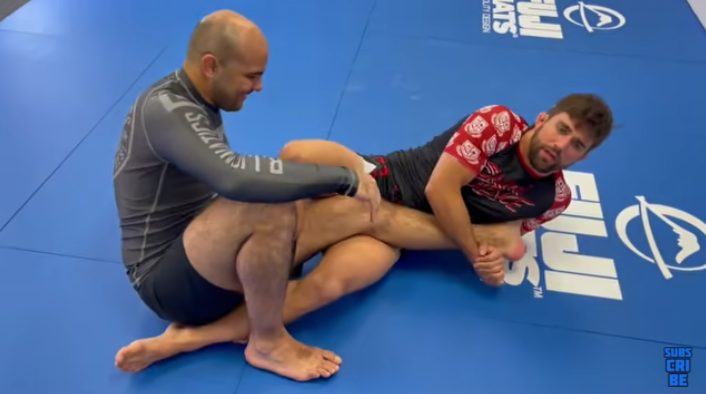
What Ashi Garami Actually Means
“Ashi garami” translates roughly to leg entanglement, and that is the whole job of the position: use both of your legs to trap one of theirs so it cannot rotate, retract, or run. The submission — a heel hook, an ankle lock, a kneebar — is only the last two seconds. The other three minutes are control. A useful way to think about it: ashi garami is to leg locks what the mount is to the arm bar. Nobody expects to armbar a resisting opponent from open guard, yet plenty of white belts try to heel hook one without ever securing the entanglement first.
Three control points decide whether your ashi garami holds. Your outside foot pins their hip so they can’t stand or backstep. Your inside knee stays pinched to kill the space they need to spin out. And your top leg controls the line of their trapped knee, which is what stops them from simply pulling the leg free. Lose any one of those and the position leaks. Coach Rory van Vliet frames it simply in this Evolve breakdown: stay glued, and the escapes disappear.
The 6 Essential Ashi Garami Positions in No-Gi
There is no single ashi garami. It is a family, and each member trades off control, mobility, and which finishes it opens. You do not need all six on day one, but you should be able to name where you are and where you are going.
1. Straight Ashi Garami (Single Leg X)
The entry point for the entire system. Your legs form a figure-four around one leg with your outside foot on the hip — this is the same frame no-gi players call single leg X when they use it to sweep. It offers the least breaking power of the group but the easiest entry, and it feeds directly into the straight ankle lock. Most sequences start here and climb toward a more dominant entanglement.
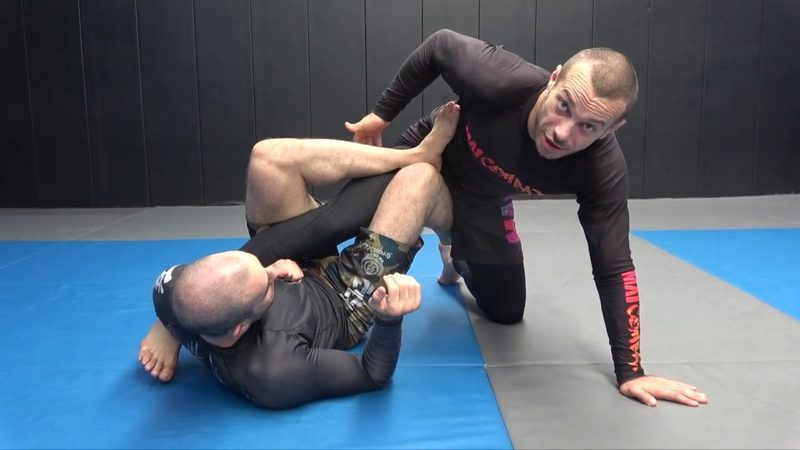
2. Outside Ashi Garami
Here you wrap the leg from the outside, far leg draped over the thigh and near leg clamped under the calf. It is a strong holding position and a natural launch pad for the outside heel hook. The trade-off: because the knee is turned outward, the joint is more resistant than it is from an inside position, which is exactly why the elite game keeps migrating inward.
3. 50/50
The only fully symmetrical entanglement — whatever you can do to your opponent, they can do to you. That mirror quality made 50/50 infamous as a stalling position in the gi, but in no-gi it is a live heel-hook battle where the faster, more precise athlete wins the exchange. Craig Jones has built entire matches around out-racing people to the heel from here.
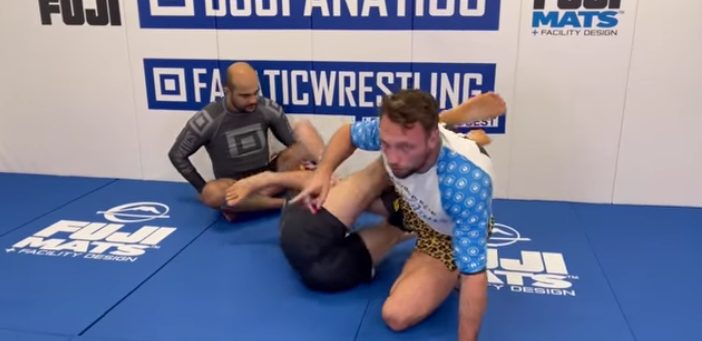
4. Cross Ashi Garami
A transitional entanglement where your legs cross the body on a diagonal, bridging outside ashi and the saddle. It shows up constantly as the position you pass through while re-pummeling for something deeper, and Garry Tonon has finished more than a few inside heel hooks straight out of it.
5. Inside Sankaku (The Saddle)
Also called the 411 or honey hole, the saddle forms a triangle with your legs inside your opponent’s trapped leg while their knee is reaped inward. It is the most powerful controlling position in leg locking because it attacks the ankle and the knee at once and gives the opponent almost nothing to fight against. The overwhelming majority of inside heel hook finishes at elite events come from here.
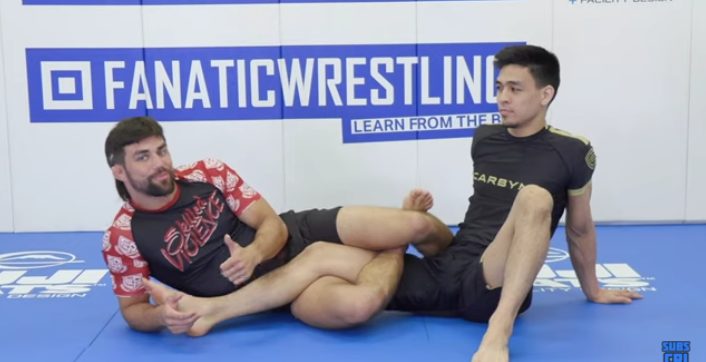
6. Reaped / Reverse Ashi
The deepest end of the family, where the trapped leg is reaped hard across your centerline. It offers total knee-line control and the nastiest inside heel hooks in the sport, and it is also the position most restricted by rulesets — which brings us to the part beginners skip at their own risk.
If you want a single reference for how these positions stack up, this is the short version most coaches would agree on:
| Position | Control Level | Primary Finish | Difficulty |
|---|---|---|---|
| Single Leg X (straight ashi) | Low | Straight ankle lock | Beginner |
| Outside ashi garami | Medium | Outside heel hook | Beginner |
| 50/50 | Medium (symmetrical) | Inside heel hook | Intermediate |
| Cross ashi garami | Medium-High | Inside heel hook | Intermediate |
| Inside sankaku (saddle) | High | Inside heel hook / kneebar | Advanced |
| Reaped / reverse ashi | Highest | Inside heel hook | Advanced |
Why Ashi Garami Took Over No-Gi Grappling
The modern leg-lock era did not appear by accident. John Danaher and his students — the group nicknamed the Danaher Death Squad — built a positional hierarchy for the legs that mirrored the classic hierarchy for the upper body, and Garry Tonon, Gordon Ryan, and later Craig Jones and Lachlan Giles proved it under the brightest lights. Giles’ 2019 ADCC run is the cleanest example: competing under 77kg in the absolute division, he heel-hooked Kaynan Duarte and Mahamed Aly — both far bigger men — on his way to bronze. He did not out-muscle them. He out-positioned them into ashi garami and let the entanglement do the work.
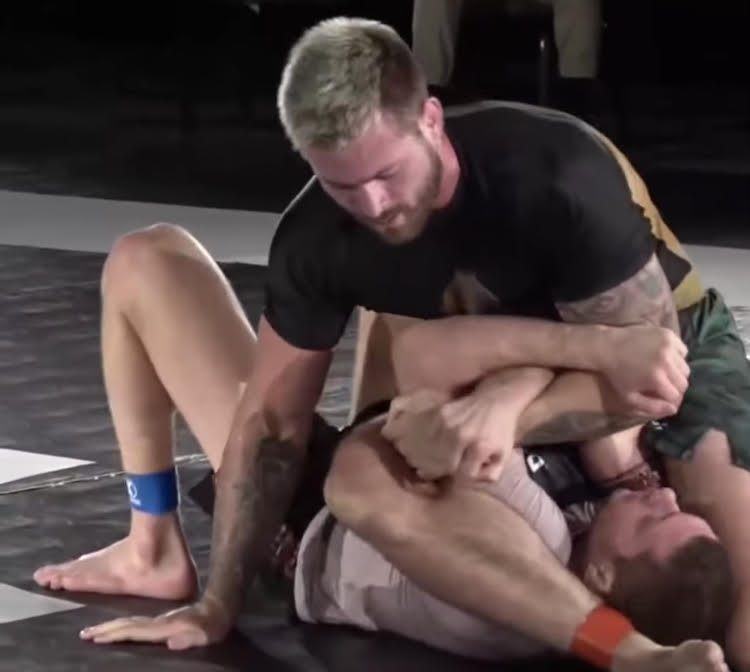
The no-gi format is what made this possible. Without sleeves and lapels to grip, upper-body control gets slippery and the legs become the most reliable handles on the mat. That is why leg entanglements exploded in submission-only promotions like WNO, Polaris, and EBI long before the gi world caught up. If you train no-gi and you are not comfortable in ashi garami, you are ceding half the match.
Which Submissions Come From Ashi Garami?
Every leg attack in no-gi traces back to one of these entanglements. The straight ankle lock lives in single leg X and standard ashi. The toe hold and the calf slicer appear as secondary attacks when opponents defend the primary threat. And the heel hook — the most feared finish in the sport — is strongest from the inside positions where the knee is turned in and the joint has nowhere to hide. The pattern that separates good leg lockers from frustrated ones is simple: they chain these finishes together instead of forcing a single one. Threaten the heel, and when the defender clears it, the ankle or toe hold is already there.
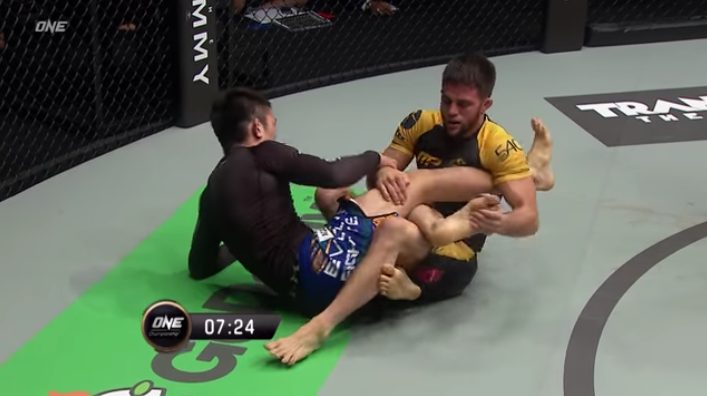
Knee Reaping and Heel Hook Rules You Cannot Ignore
Ashi garami sits at the center of the sport’s most-debated rules. Reaping the knee — turning the opponent’s foot across your centerline so their knee points away from their body — was banned outright in IBJJF competition for years and remains restricted at lower belts. Heel hooks and reaping are only legal for brown and black belts in IBJJF no-gi, and the full ADCC ruleset allows them across the board, which is a large part of why the position looks so different between the two circuits. Before you drill the saddle or any reaped entanglement, learn your promotion’s rules cold. A heel hook applied with speed can tear ligaments before your training partner feels the pain and taps — this is the one submission where ego costs knees. Rotate slow in the room, and save the fast finish for competition.
How to Escape Ashi Garami
Getting caught in ashi garami is not a sentence, but the clock matters — the deeper the entanglement, the smaller your window. The reliable escapes share a theme: deal with the entanglement before you deal with the submission. Clearing your trapped heel to the outside of their hip, hiding the heel by pointing your toes, and turning into your opponent rather than away all buy time. The cleanest long-term answer is to pass out of the position entirely, forcing them to release the legs to defend the pass. Panic-yanking your foot straight back does the opposite; it feeds the rotation and finishes the lock for them.

Building Ashi Garami Into Your Game
Start with one entanglement, not six. Single leg X is the honest beginner’s home because it doubles as a sweep, so the reps carry over even before your leg attacks work. Add outside ashi next for the holding power, and only move to the saddle once you can control a resisting partner in the first two. Drill the transitions between positions more than the finishes themselves — the athletes who tap people are the ones who never lose the leg during the scramble, not the ones with the flashiest heel hook. Good ashi garami is quiet. If your entanglement is loud and frantic, it is leaking, and a calm opponent will feel the gap and slip out.
The leg-lock game is still the fastest-growing corner of no-gi, and the athletes who own the middle of it own the finishes at the end of it. Pick your first entanglement this week, live-drill the escapes with a partner who knows them, and build outward from there. For the finish that ashi garami sets up more than any other, read our full breakdown of the no-gi heel hook next.
Sources
- BJJ Heroes — ADCC 2024 After Math, Data Compilation and Analysis — submission and leg-lock finish statistics from the 2024 event.
- Evolve MMA — Basic Ashi Garami Positions Explained — control principles and position variants.
- ADCC Official — Competition Rules — heel hook and reaping legality under the ADCC ruleset.
Browse our top-rated rashguards and no-gi gear at the RashguardGuy shop →