Protecting a Damaged Ear in No-Gi: Why Ear Guards Still Matter After Cauliflower Ear Sets In
The sequence is familiar to almost every no-gi grappler with enough time on the mat: you ignore ear guards for months, train consistently, and then one session something goes wrong. A scramble puts your head in the wrong position, a training partner’s shoulder catches your ear on a shot, or a clinch drill generates more contact than expected. By the time you’re packing up your bag, the ear is warm and visibly swelling. That moment — not before it — is when most no-gi grapplers first start thinking seriously about ear protection.
What rarely gets examined clearly is what ear guards actually do once injury is already in the picture. There is a meaningful difference between using ear guards to prevent a first hematoma and using them to manage an ear that has already experienced trauma. There is a further difference between either of those and protecting an ear that has fully calcified into permanent cauliflower ear. Each stage represents a different vulnerability, and understanding how ear protection functions at each stage changes how you should approach choosing and wearing it during no-gi training.
The Mechanics of Ear Injury in No-Gi Grappling
The outer ear — the part you see, called the auricle or pinna — is structurally unusual. Unlike most soft tissue in the body, auricular cartilage lacks its own direct blood supply. Instead, it receives oxygen and nutrients through the perichondrium, a thin membrane that sits between the cartilage and the overlying skin. Under normal training conditions, this structure is resilient. The problem arises from shearing force: when the ear is compressed and then pulled or twisted laterally, the skin and perichondrium can separate from the cartilage beneath them. Blood fills the resulting space. This is an auricular hematoma, and it is the mechanism behind almost all cauliflower ear development in grappling.
In no-gi specifically, the positions that generate this shearing force appear frequently. Head-to-head clinch work, wrestling shots where the defending athlete drives their head into the aggressor’s chest or shoulder, tight turtle defense, and close scrambles all create the type of contact patterns that cause auricular trauma. The absence of a gi collar does not reduce this risk — and in environments where athletes train heavily against wrestlers or sambo practitioners, the intensity of head contact is often higher than in gi-focused BJJ training. The ear is exposed in ways that are not always obvious until the first injury makes them visible.
The Timeline That Determines Whether Damage Becomes Permanent
When an auricular hematoma forms, the clock starts immediately. Blood pooling between the perichondrium and cartilage begins to coagulate within hours of the initial injury. Over days and weeks without intervention, this coagulated blood is replaced by fibrous tissue, the cartilage is deprived of the nutrient supply it depends on, and the irregular calcification that produces permanent cauliflower ear takes hold. Once that process is complete, it is not reversible without surgical intervention.
The intervention window is real and it is short. Most sports medicine practitioners working with combat athletes consider the first 24 to 48 hours critical. During that period, the hematoma is still fluid, the tissue is still responsive, and the outcome is genuinely malleable — either through compression that limits further expansion, or through drainage performed by a medical professional. Beyond that window, the options narrow significantly. Decisions about drainage should always involve a physician; attempting self-drainage carries real infection risk that makes an already problematic injury substantially worse.
This is where ear guards enter the picture even for grapplers who have already been injured. A grappler who experiences a hematoma on Tuesday and wants to return to training Thursday is managing a risk calculation in which their ear, still acutely injured, is being brought back into an environment where it can get hit again. Ear guards at this stage do not reverse Tuesday’s injury. What they do is dramatically reduce the probability that Thursday’s training creates a second hematoma on top of the first — and that compounding is precisely how what starts as a minor incident turns into significant, permanent deformation.
What Ear Guards Actually Do for an Injured Ear
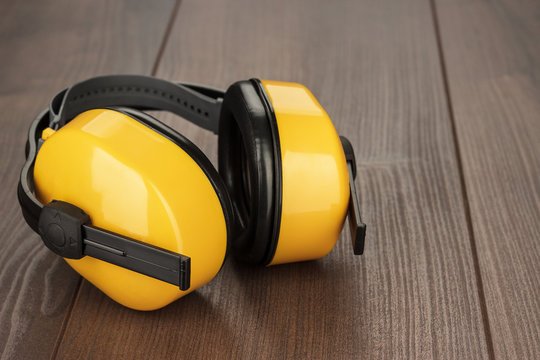
For a healthy, uninjured ear, the primary function of an ear guard is to distribute contact forces across the cup surface rather than concentrating them on the ear’s cartilage and perichondrium. The cup absorbs and spreads impact, and the strap system keeps the cup in position when contact actually occurs. For an ear that has already been injured, this function changes in ways that are worth understanding explicitly.
In the acute phase — when the ear is still swollen and the hematoma is still fluid — any additional contact with the damaged tissue carries a high risk of restarting and worsening the inflammation cycle. An ear guard functions almost like a protective shell here: not to compress the hematoma back into shape, but to keep contact from reaching the inflamed tissue at all. The cup creates physical distance between the ear and the training environment. Even a glancing contact that a healthy ear would absorb without consequence can significantly worsen an acute hematoma. The guard’s job at this stage is to prevent that contact from occurring.
In the subacute phase — several days post-injury, once acute swelling is beginning to resolve but tissue is still healing — there is a secondary benefit to wearing ear guards that grapplers rarely anticipate: it removes the need for compensatory movement patterns. A grappler protecting an injured ear during live training instinctively adjusts their head position to shield the damaged area. These adjustments are subtle but real, and they introduce mechanical problems and openings that experienced training partners will exploit. A poorly positioned head in a clinch, an instinctive flinch during a scramble, a moment of hesitation before committing to a shot — all of these trace back to the grappler managing their ear exposure consciously or unconsciously. Wearing an ear guard removes the need for that compensation. You can train closer to your actual mechanics because the ear is covered and you are no longer instinctively managing its exposure.
Protection After Cauliflower Ear Has Calcified
Once cauliflower ear has fully calcified — a process that unfolds over weeks to months depending on the number and severity of injuries — the underlying vulnerability shifts. The ear is no longer at risk of hematoma in the same way, because the structural gap between perichondrium and cartilage has been replaced by fibrous tissue. But a calcified ear introduces a different kind of fragility: the cartilage is now rigid rather than pliable, and significant impact can cause it to fracture. The ear is also physically larger and more irregular in shape, which means it makes contact with training partners more frequently and across a wider surface area during clinch and scramble work.
For grapplers with established cauliflower ear, ear guards shift from a hematoma-prevention tool to a shock-absorption and fracture-mitigation tool. The cup needs to cover a different geometry, but the mechanical logic is unchanged: intercept and distribute forces before they concentrate on vulnerable cartilage. Grapplers with significant calcification who train in high-contact no-gi environments — shark tanks, competition preparation cycles, hard rounds with wrestlers or judoka — are managing genuine fracture risk without ear protection, even if they are no longer worried about developing new hematomas. The nature of what they are protecting against has changed; the argument for consistent protection has not.
How Ear Shape Changes Affect the Fit Equation
One practical complication that arises once cauliflower ear has changed the shape of an ear is that standard sizing may no longer work correctly. Ear guard cups are generally designed around the geometry of a normal, healthy auricle. When an ear has developed significant calcification — becoming larger, more irregular, and protruding differently from the side of the head — a standard cup may bridge over the ear rather than making full contact with it. The gaps that result from this poor fit are not minor inconveniences. They are the specific areas where contact lands during scrambles, because the cup’s edge becomes a lever point that can concentrate force rather than distribute it.
Grapplers with significant cauliflower ear benefit from specifically evaluating ear guard cup size and adjustability rather than defaulting to a medium or standard fit. Adjustable strap systems that allow the angle of retention to be customized provide more flexibility in getting a cup to sit flush against an irregular ear surface. Larger cups are more forgiving of anatomical variation simply by covering more area. If a guard feels like it is sitting on top of the ear rather than cupping around it, that is a meaningful fit problem — and in no-gi training conditions that include hard head contact, a poorly fitting guard provides substantially less protection than one that actually conforms to the ear’s current shape. Testing sizing carefully before committing to a guard that will see daily training use is worth the effort when the ear’s geometry has already changed.
Building Ear Protection Into the Training Cycle
The behavioral pattern that produces most cauliflower ear in no-gi is consistent: grapplers do not wear ear guards until they have already been injured, and by then some damage has been done. This is partly an information problem. Most grapplers understand abstractly that hard training can cause cauliflower ear, but the timeline from first hematoma to permanent deformation is shorter than many expect, and the conditions that create hematoma risk are present in ordinary training sessions, not just exceptional ones.
High-risk training contexts in no-gi include anything involving sustained head-to-head contact: wrestling-heavy sessions, clinch drilling, guard retention against aggressive passers, and live training where partners are actively seeking underhooks or working from back-exposure positions. These are also the contexts that produce the most athletic development — and that is precisely why the ear risk accumulates there. The grapplers getting the most out of their training are often the ones spending the most time in high-contact positions, accumulating the most exposure. The athletes who consistently train hard and consistently protect their ears are not the majority. They are the ones who understood the risk clearly enough, usually after a first injury, to make a different calculation about what they were willing to train through unprotected.
If you have already experienced an auricular hematoma — whether it resolved cleanly or has started to calcify — the question is not whether ear guards are relevant to your training. They are more relevant than they were before the first injury, not less. The ear’s vulnerability profile has changed, and the protection that ear guards provide needs to be understood in terms of what your ear is actually at risk for now: a recurrence of acute trauma if tissue is still healing, ongoing calcification from repeated untreated injuries, or fracture risk in an already-hardened ear. The specific function of the guard shifts across those stages, but the argument for consistent protection gets stronger at each one, not weaker.
Sources
Image credit: stock.adobe.com