No-Gi Knee Injuries: 7 Keys to Recover
“I would say about 50% of the time I see them in competition it results in an injury to the opponent,” Lachlan Giles told FloGrappling about heel hooks — then described putting one on at an ADCC trials match where his opponent tried to roll out instead of tapping. “I felt the knee go and he was in severe pain for some time after the incident.” That opponent needed about six months before he was back on the mat. Giles is one of the most technically careful leg lockers in the sport, teaching the position for a living, and the injury still happened — because the other guy chose not to tap. The knee is the joint where that choice matters most in no-gi.
Why Leg Locks Made the Knee No-Gi’s Most Dangerous Joint
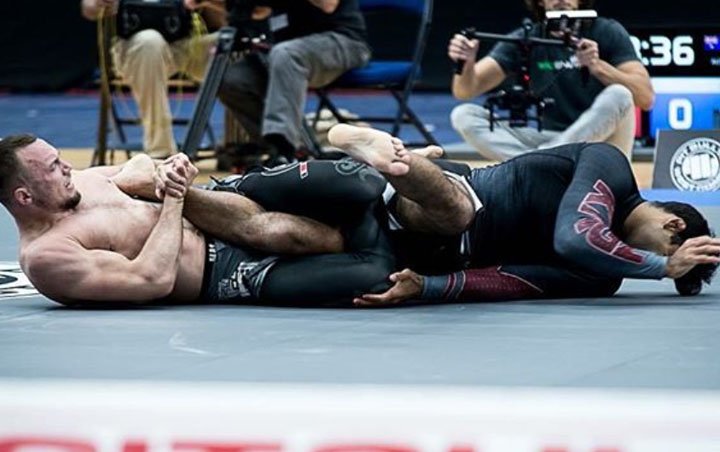
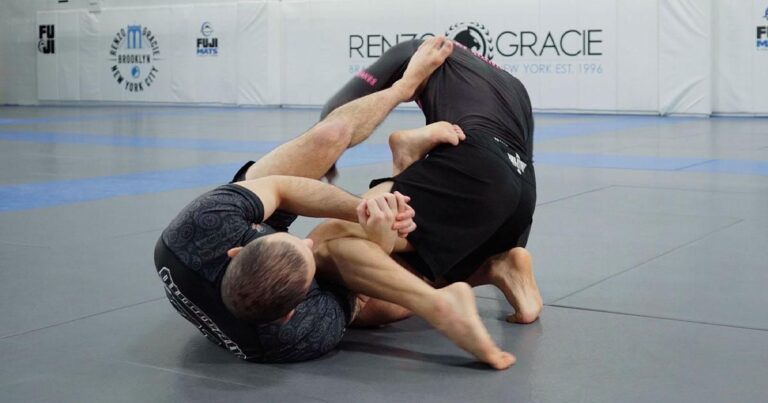
At ADCC, leg lock finishes nearly tripled as a share of submissions between 2014 and 2024, and the knee absorbed almost all of that growth. That’s not an accident of rule sets — it’s a byproduct of no-gi itself. Gi grapplers can stall a leg entanglement by grabbing a pant cuff or collar and buying a half-second to recognize danger. No-gi strips that fabric away, so the foot and lower leg lock directly onto bare skin with nothing to slow the rotation down. Once a leg entanglement like ashi garami, 50/50, or saddle is set, the knee is the first joint in the chain that has to give.
The mechanism matters more than the position name. An inside heel hook isolates the heel and rotates the lower leg internally relative to the thigh — the exact loading pattern the ACL exists to resist. A straight kneebar hyperextends the joint front-to-back, the same motion as an armbar but on a joint with far less natural range. Knee reaping, now legal in most no-gi rule sets, can stress the ACL even with no submission applied at all, just from the angle the leg gets trapped at mid-pass. None of these require explosive force. They require time, bad positioning, and a slow tap.
The Three Knee Injuries No-Gi Grapplers Actually Get

ACL tears announce themselves with what sports medicine calls the classic triad: an audible pop, rapid swelling within one to two hours (the knee filling with blood, not just fluid), and a feeling the joint will give out from under you on any pivot or cut. Surgery follows in 80-90% of active grapplers because the ACL has poor blood supply and doesn’t heal reliably on its own if you intend to keep competing. Minimum return to live rolling after reconstruction is 9-12 months.
MCL sprains come from lateral pressure — getting driven sideways while the foot is planted, which happens constantly in scrambles and guard passing, not just submissions. They grade in severity: Grade 1 is mild inner-knee tenderness with no instability and you can train modified in 2-4 weeks; Grade 2 brings real swelling within a day and 6-8 weeks before progressive loading; Grade 3 is a complete tear with the knee visibly giving way, and that’s 3-6 months, sometimes with surgery. The tell that separates a Grade 2 from a Grade 1 on your own couch, before you see anyone: can you still feel the inner knee line distinctly swollen the next morning.
Meniscus tears are the one everyone misdiagnoses as “just sore” for too long, because the symptoms are quieter than the other two. Swelling is slower — 6 to 24 hours instead of two — and instead of the knee buckling, you get locking or catching along the joint line, a sensation that the knee won’t fully straighten or bend past a certain point. That’s a twisting-under-load injury, the kind you get from a knee slice pass or a bottom position where your foot is pinned and your torso rotates anyway.
The Heel Hook Tap Window — Why a Beat Too Long Costs a Season
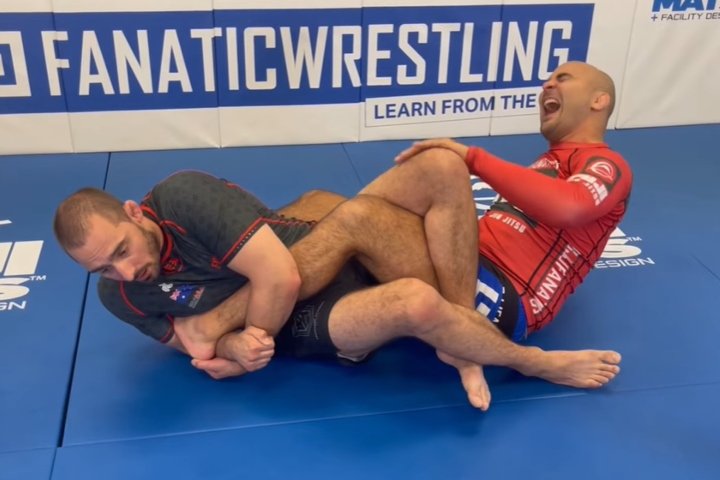
The reason heel hooks injure more often than armbars or triangles isn’t that they’re applied with more force. It’s that athletes often don’t perceive imminent damage until after the ligament is already compromised. An armbar gives you a sharp, unambiguous warning in the elbow well before the joint fails. A heel hook can feel like pressure, then rotation, then it’s already torn — there’s no clean line between “uncomfortable” and “damaged” the way there is with a straight joint lock.
That’s what makes the instinct to roll out instead of tap, like the grappler in Giles’s story, so costly. Rolling with the rotation instead of tapping into it buys you maybe half a second of escape attempt and trades it for months. The rule that actually protects your knee isn’t “tap late if you think you can escape” — it’s tap at the first moment you register torque you didn’t create yourself, before you’ve had time to evaluate whether it’s dangerous. By the time you can tell, you’ve usually waited too long.
When Knee Pain Means a Doctor, Not Just Rest

Most grapplers can tell the difference between “rolled on it wrong, sore for a few days” and something structural — if they’re honest about what actually happened in the roll. See a doctor rather than self-treating if any of these apply:
- You heard or felt a pop at the moment of injury, with or without pain immediately after.
- The knee swells visibly within two hours — that’s blood in the joint, not the slower inflammation of a soft-tissue strain.
- The knee buckles or gives way under your own bodyweight when you try to stand or walk on it.
- It locks, catches, or won’t fully straighten or bend — a meniscus sign that often gets waved off as “just stiff.”
- You can’t bear weight on it at all, even partially, more than a few minutes after the roll ends.
If none of those apply and it’s just generalized soreness along the joint line that eases within a day or two, you’re probably looking at a mild strain or Grade 1 sprain — ice, compression, and a few days of modified training. The costly mistake is treating a Grade 2 or 3 injury like a Grade 1 because the first 24 hours didn’t feel as bad as you expected.
Nicky Ryan’s Three Years With No ACL
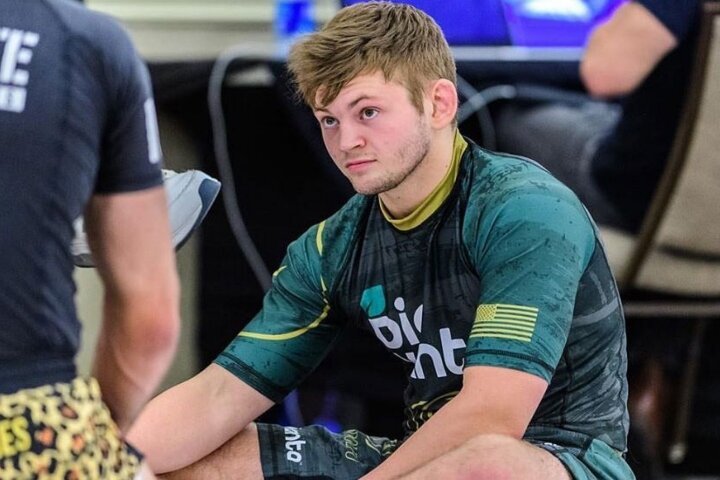
B-Team co-founder Nicky Ryan tore his ACL training a week before ADCC 2022, lifting opponent Kenta Iwamoto from a rear bodylock. In his own words: “he hooked the outside of my leg and we just felt something pop.” The pain was brief enough that he considered finishing the session. The next day told a different story: “it was super sore. I was limping around and couldn’t do a full squat.” He competed at ADCC anyway and wasn’t formally diagnosed with a full tear until after the event.
What followed wasn’t a recovery story — it was almost three years of competing with no ACL at all. Ryan later described the toll heading into the Craig Jones Invitational: “it just completely ruined my camp. Like, I pretty much didn’t train for like the last three weeks.” The instability didn’t stay on the mat, either: “It gets sore and on days where I really like scrap, especially if I’m wrestling, it’ll be buckling when I’m just walking around the house.” He finally scheduled reconstruction in early 2025. Ryan is one of the most technically sound grapplers in the sport and he still spent three years managing a knee that could buckle doing nothing more dangerous than walking — that’s the real cost of “training through it” at the elite level, not just the amateur one.
The Return-to-Training Checklist No One Follows

Calendar-based recovery (“the doctor said 12 weeks, it’s been 12 weeks”) is how grapplers reinjure the same knee. The staged version that actually holds up:
- Phase 1 — Control: swelling down, full passive range of motion, quad firing again without pain. No rolling, no resistance drilling.
- Phase 2 — Build: progressive strength work on the quad, hamstring, and hip abductors; light bike or pool work for conditioning without impact.
- Phase 3 — Reload: running, cutting, and direction-change drills reintroduced; upper-body and seated technique training resumes fully.
- Phase 4 — Return criteria: objective strength testing shows the injured leg at 90%+ of the uninjured one, not “it feels pretty good.” This is the step almost everyone skips.
- Phase 5 — Live leg entanglement last: drilling and positional sparring resume before any live rolling that includes ashi garami, 50/50, or heel hook exchanges — those come back only after Phase 4 is objectively cleared.
For a full ACL reconstruction, that whole arc runs 9-12 months before live leg-entanglement rolling is appropriate — not before you feel ready, which usually happens months earlier than the tissue actually is. This breakdown from a physical therapist who also competes covers the staged version well:
Training Around a Knee Injury Without Losing Your Game

A knee injury doesn’t have to mean three months off the mat entirely — it means three months off the leg. Upper-body control work (headlock defense, collar-tie fighting, arm drags, seated grip fighting) loads almost nothing through the knee and keeps your hands sharp. Submissions that don’t require base changes — chokes from a stable top position, kimura trapping, anything you can drill from your knees or seated — stay fully available. What goes away entirely is anything that loads the knee under rotation: no live leg entanglement, no knee slice passing, no standing takedowns that require a planted, loaded leg.
The gear question comes up constantly during this phase, and it’s worth separating from the injury conversation: a hinged brace is rehab equipment for a joint that’s already compromised, not prevention for a healthy one. Our kneepad and joint support guide covers what to actually wear once you’re cleared to drill again. If the injury came from a heel hook or kneebar specifically, it’s also worth revisiting your own leg lock defense before you return — most grapplers get caught in the same entanglement the same way twice. And if you’re managing a knee injury alongside something else common in no-gi, our guides on turf toe and rib injuries use the same staged-return logic.
Sources
- FloGrappling — Lachlan Giles Explains The True Danger Of Heel Hooks — injury-rate estimate and the ADCC trials incident.
- BJJEE — Nicky Ryan Reveals How He Tore His ACL — direct quotes on the injury mechanism and onset.
- BJJEE — Nicky Ryan Shares Details Of Upcoming ACL Reconstruction Surgery — quotes on three years competing without an ACL.
- BJJ Rehab — ACL Tear in BJJ — ACL vs. meniscus symptom differentiation and heel hook/reaping mechanisms.
- Grapplers PerformX — BJJ Knee Ligament Injuries Guide — MCL grading system and recovery timelines.
- BJJ Heroes — Are Heel Hooks The Key To ADCC Success — leg lock submission rate growth at ADCC 2014-2024.