Ashi Garami: The Complete Guide to Leg Entanglements in No-Gi BJJ
Ashi garami is the cornerstone of modern no-gi leg lock systems — the entry point for inside heel hooks, outside heel hooks, and a web of dangerous lower-body submissions that have redefined competitive grappling over the past decade. Whether you’re watching an ADCC superfight or drilling in the gym on a Tuesday night, understanding ashi garami means understanding how the leg lock game actually works. This guide breaks down every major variation, how to enter them, which submissions each position unlocks, and critically, how to defend and escape when you find yourself on the wrong side of the entanglement.
What Is Ashi Garami? The Fundamentals Explained
Ashi garami (足絡み) is a Japanese term meaning “leg entanglement.” In the context of modern no-gi BJJ and submission wrestling, it refers to a family of leg-controlling positions where the attacker uses their own legs to trap, isolate, and submit the opponent’s leg. Think of it as the lower-body equivalent of having your opponent’s arm trapped in a triangle — except the ligament damage from a properly applied heel hook can happen in fractions of a second.
The position came to prominence through Sambo practitioners and was later systematized by coaches like John Danaher, whose Danaher Death Squad athletes turned ashi garami into an art form. Today, no serious no-gi competitor ignores the leg entanglement game — and no training room is complete without regular drilling of these positions.
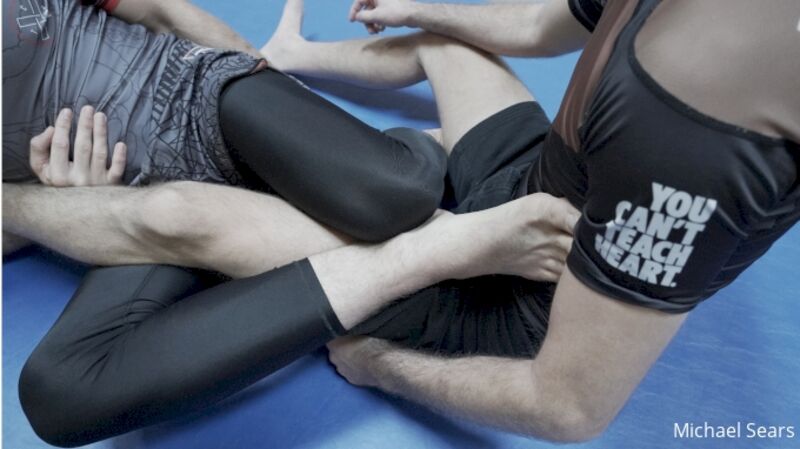
The defining characteristic of any ashi garami is leg control: you are using your legs to manage your opponent’s legs in a way that isolates one limb, exposes the heel, and prevents them from stepping or rotating out of danger. The specifics of how your legs are positioned determine which variation you’re in — and which submissions become available.
The Main Ashi Garami Variations You Need to Know
Most people learn “ashi garami” as a single move, but it’s better understood as a family of related positions. Each variation creates different threats and requires different defensive adjustments. Here’s a breakdown of the core positions.
Standard Ashi Garami (Irimi Ashi)
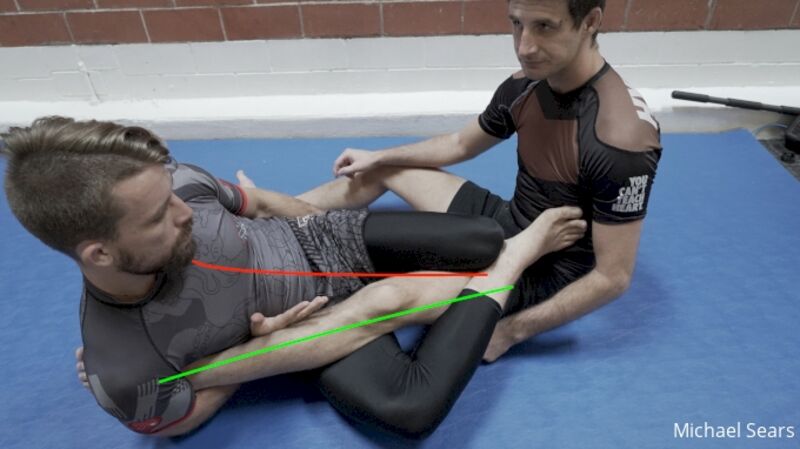
This is the entry-level position. You enter from inside your opponent’s guard or after they take a leg. Your inside knee pinches the inside of their thigh while your outside leg wraps around and clamps down, with your foot planted on their hip. This creates a strong outside heel hook threat as well as the straight ankle lock (achilles lock).
Standard ashi garami is the gateway position — relatively low-risk to enter, strong control, and a launching pad for more advanced entanglements. Most beginners learn this first because it offers tight control without immediately exposing the attacker to dangerous counters.
Outside Ashi Garami
If you take your inside leg and thread it over to the outside of the trapped leg (connecting with your other hook on the same side), you’ve entered outside ashi garami, sometimes called “double outside ashi.” This variation gives tremendous control over the opponent’s leg and is a primary position for the outside heel hook. The straight ankle lock becomes harder to finish from here because your foot placement changes, but belly-down finishing sequences are more accessible.
Outside ashi garami is often considered safer for beginners because the leg lock threats are somewhat slower to materialize than from inside positions, giving training partners more time to feel and tap. That said, at high levels of competition, it’s still a serious threat.
Inside Sankaku (Cross Ashi / Saddle)
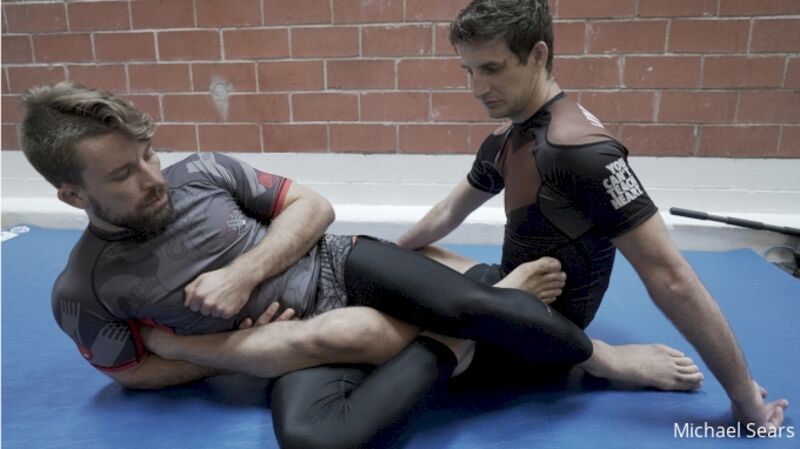
Here’s where things get serious. Inside sankaku — also called the “saddle,” “honey hole,” or “4/11” — is a leg triangle configuration where both of your legs wrap around your opponent’s leg from different angles, trapping it between them. The knee line control is exceptional, which makes the inside heel hook devastatingly effective from this position.
The inside heel hook from the saddle has become one of the most feared submissions in no-gi grappling. It acts on the medial structures of the knee — the ACL, MCL, and surrounding ligaments — and can cause damage before a training partner even feels the warning signs. This is why inside heel hooks are typically reserved for experienced practitioners who understand the speed and severity of the technique.
50/50 Guard
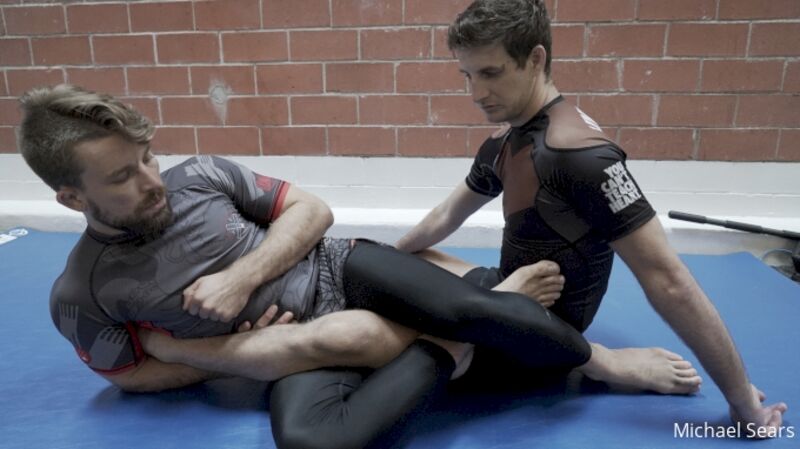
50/50 is the infamous mutual entanglement where both athletes have ashi garami on each other simultaneously. Each person has a leg lock threat on the other, which creates a chess match of superior positioning and finishing mechanics. The outside heel hook is common from 50/50, and transitions to the saddle or back takes are the most productive offensive sequences.
50/50 has earned a controversial reputation in sport BJJ for its tendency to produce stalling matches between equally skilled leg lockers. But used offensively — with intent to transition and finish — it’s one of the most powerful positions in no-gi grappling. At ADCC 2024 in Las Vegas, a significant percentage of leg lock submissions came through 50/50 entries and transitions.
Entries Into Ashi Garami: How the Best Grapplers Get There
Knowing the position is one thing. Getting there against a resisting opponent is another. The best no-gi grapplers chain entries together from common positions — never relying on a single path.
From Guard
The most natural entry point. When an opponent is passing your guard or you’re playing guard off your back, their legs are right in your workspace. Single leg X guard (a position often confused with ashi garami, though the opponent must be standing for true single leg X) transitions smoothly into an ashi entanglement as they post or drop to the mat. Reverse de la Riva guard also offers clean transitions into inside sankaku by pummeling the foot inside the knee line.
From Passing Attempts
When you’re the passer, your legs are close to your opponent’s legs — which means ashi garami entries are available. As covered on our complete leg lock guide, transitioning from a toreando or knee slice pass into ashi garami can catch opponents who aren’t expecting the switch from a top passing mentality to a leg attacking mentality.
From Takedowns
Single leg takedowns are natural springboards into ashi garami. If your opponent sprawls hard or tries to scramble away, their leg is already isolated — a quick level change and leg pummeling sequence can land you directly in standard ashi. Our guide to wrestling takedowns for BJJ covers how to set up the single leg in ways that leave leg lock entries open.
Submissions Available from Ashi Garami Positions
Each ashi garami variation opens different submission doors. Here’s a clear map of what’s available from each.
Straight Ankle Lock (Achilles Lock)
Available from standard ashi garami, this is the most fundamental leg lock submission. Your forearm or wrist drives into the achilles tendon while you bridge and extend your hips. The ankle hyperextends. It’s the first leg lock most practitioners learn because it offers relatively clear feedback — your opponent can feel it coming and tap safely.
Competition rules: Legal for white belts in IBJJF no-gi; legal for all levels in most submission wrestling rulesets including ADCC.
Kneebar
Control the leg, use your body as a fulcrum across the knee joint, and hyperextend the knee by pulling the foot toward you. The kneebar works from several ashi garami positions and is especially accessible when transitioning between entanglements. Like the armbar, it’s a straight joint lock — forceful but generally slower to materialize than rotational attacks. ADCC rules allow kneebars at all levels.
Toe Hold
Grab the foot, use your arm like a figure four, and rotate the heel away from you — attacking the ankle and knee from the outside. Toe holds are legal for blue belts and above in IBJJF no-gi and at all levels in most open submission wrestling events. They can be applied mid-transition, making them tricky to defend when you’re already moving to escape an ashi position.
Outside Heel Hook
Your forearm hooks around the heel, your elbow points away from the opponent, and you rotate the foot outward (laterally). This attacks the lateral structures of the knee — the LCL and popliteal ligaments. The outside heel hook is available from standard ashi garami, outside ashi, and 50/50. It’s the most common heel hook seen in competition and is generally considered more technical than the inside version.
Inside Heel Hook
The same grip, but the rotation goes inward (medially), attacking the ACL, MCL, and meniscus. It’s available primarily from inside sankaku / the saddle. The inside heel hook is considered the most dangerous submission in no-gi grappling — it can cause severe, irreversible knee damage quickly and without obvious pain feedback. According to the FloGrappling Leg Entanglement Encyclopedia, inside sankaku creates the “most colorful example of a knee reap due to the internal rotation it forces on the defender’s knee.” Treat this submission with absolute respect in training.
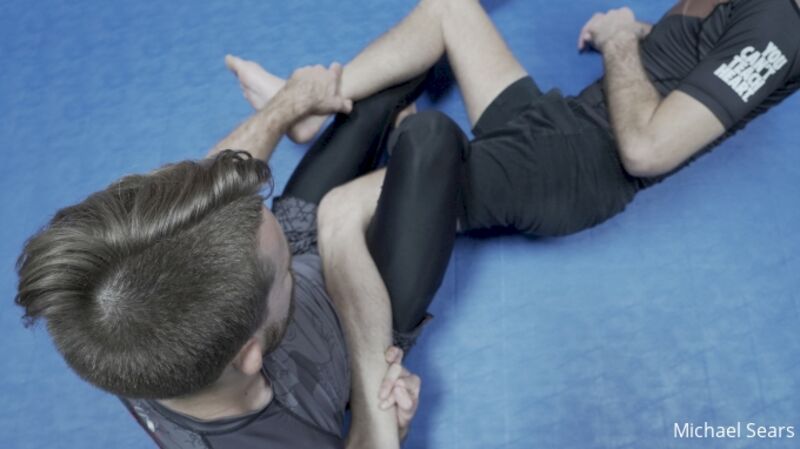
Ashi Garami Defense: How to Protect Your Knees
The best time to defend ashi garami is before you’re in it. Awareness of entries — particularly from guard passing and takedown scrambles — lets you deny the leg pummeling before it gets established. Once you’re in the entanglement, your options narrow fast.
The Knee Line Rule
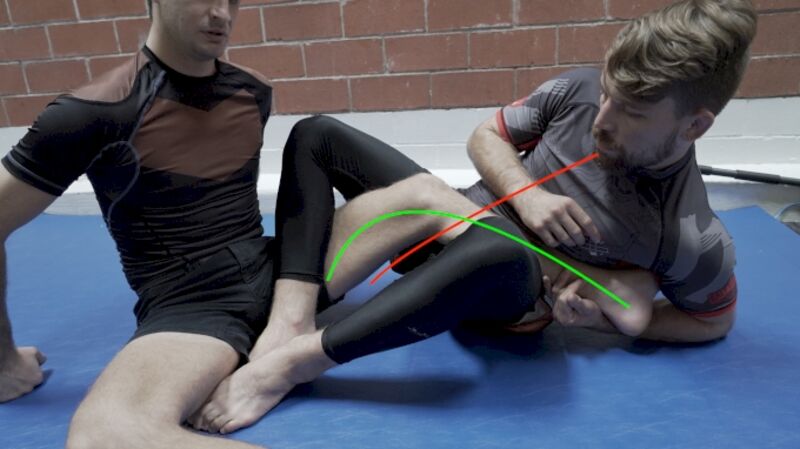
The critical concept in ashi garami defense is protecting your knee line. If your knee is pointing in the same direction as your toes (aligned), your knee structures are much harder to attack rotationally. The moment your knee rotates inward or outward out of alignment with your foot, the ligaments become exposed.
When caught in an ashi position, your first priority is never to pull your foot straight back — this feeds the heel hook. Instead, work to realign your knee, bring your heel close to your own body, and look for a full rotation out of the position.
The Electric Chair Counter (for Standard Ashi)
When your opponent is in standard ashi garami below you, the electric chair stretch — pushing their shin away while pulling their hip with your own foot — can break the entanglement and create a sweep opportunity. This requires good hip flexibility and timing.
Shell Defense and Rotation
Against inside sankaku, the rotation defense requires you to invert hard toward your trapped side, keep the heel tight, and continue rolling through the position in the direction of the attack rather than against it. This is a high-level defensive concept that requires significant drilling to execute under pressure.
The Nicky Ryan vs. JT Torres match at WNO 23 demonstrated how quickly high-level practitioners can re-pummel from cross ashi into a dominant single leg X, catching even experienced leg lockers off guard with positional counters.
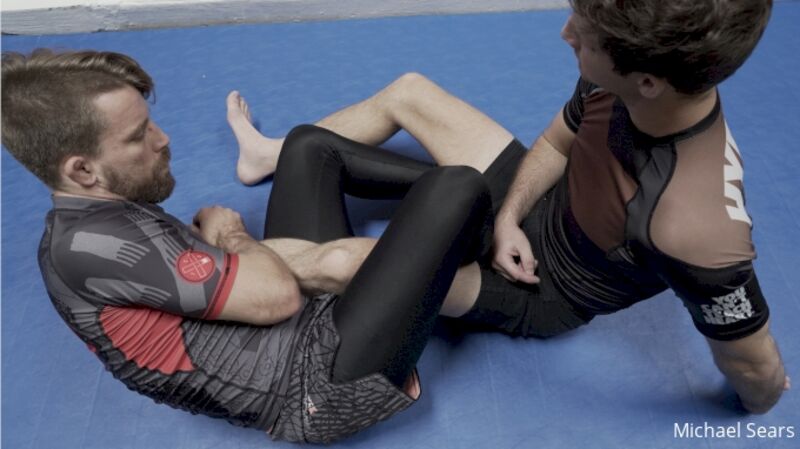
Training Ashi Garami Safely: A Practical Framework
Leg locks, especially heel hooks, carry real injury risk if trained carelessly. Here’s a framework for building your ashi garami game without wrecking your training partners.
Start with Position, Not Submission
Drill the entries and the positional holds before you add finishing pressure. Learn to get into standard ashi garami, feel the control, and release — before ever cranking on a finish. This builds the positional awareness that actually makes you dangerous.
Use the “Touch and Let Go” Protocol
When drilling heel hooks with new partners, adopt a touch-and-go approach: get the grip, get the position, feel the alignment — then let go and reset. This allows both athletes to understand where the danger is without anyone getting hurt.
Tap Early, Tap Often
Unlike chokes, where you have seconds before unconsciousness and no lasting damage, heel hooks can damage ligaments well before you feel pain. The standard advice: tap when you feel the grip and torque, not when you feel pain. If you’re feeling pain from a heel hook, you may already have a problem.
Build Your Gear Appropriately
No-gi training with frequent leg lock drilling puts stress on your knees and ankles. A solid pair of compression shorts, supportive spats, and — for athletes with previous knee issues — a quality neoprene knee sleeve can make a real difference. Check the no-gi competition gear guide for recommendations across all training scenarios.
The Meta: How Ashi Garami Has Evolved at the Elite Level
The leg lock meta is not static. Elite athletes and coaches are constantly finding new counters to previously dominant positions, and those counters then get counter-countered. The evolution documented by FloGrappling — where Nicky Ryan’s re-pummel counter to the saddle became a known quantity at WNO 23, only to be answered by Deandre Corbe’s hip-movement-based escape at WNO 24 — illustrates how fast this meta moves.
At ADCC 2024, the leg lock game reached a new peak. Athletes across all weight classes deployed inside and outside ashi garami with high-level entries, transitions, and finishing mechanics. The tournament proved that leg locks are no longer a specialty — they’re table stakes for any serious no-gi competitor.
Looking ahead to ADCC 2026 in Poland, the expectation is that the leg lock game will be even more refined. Athletes who grew up training against leg locks from day one will bring a new level of both offensive creativity and defensive resilience.
Ashi Garami in the Rules: What’s Legal Where?
Ruleset awareness matters if you compete. Here’s a quick breakdown:
- IBJJF No-Gi: Heel hooks legal for brown/black belt adults since 2021. Knee reaping allowed. White, blue, and purple belts still restricted.
- ADCC: All leg locks legal, including inside heel hooks. All levels.
- EBI / WNO / Polaris: All submissions typically legal. Check individual event rules.
- NAGA / local tournaments: Varies significantly — always check the ruleset before competing.
The trend in no-gi competition rules is toward broader legality. The IBJJF’s 2021 rule change was a landmark moment, and most submission wrestling promotions have always allowed the full spectrum of leg attacks. If you’re training no-gi seriously, you need to be training ashi garami — regardless of what level you compete at.
The Bottom Line on Ashi Garami
Ashi garami is not a single move — it’s a system of lower-body control that unlocks the most potent submissions in no-gi grappling. Standard ashi, outside ashi, inside sankaku, and 50/50 each create distinct threats and require distinct defensive responses. Mastering the positional hierarchy, understanding which submissions are available from each variation, and building a safe, deliberate training culture around these techniques is what separates athletes who actually submit people with leg locks from those who just try to yank on heels.
Invest time in your ashi garami game. The modern no-gi meta demands it — and the athletes winning at the highest levels of ADCC, WNO, and EBI have built their entire games around leg entanglement mastery.
Sources
- FloGrappling – The Official FloGrappling Leg Entanglement Encyclopedia
- FloGrappling – The Evolution of a Meta: How This Leg Lock Is Changing Before Our Eyes
- ADCC Official – ADCC Rules
- Evolve Daily – BJJ 101: Heel Hooks
- FloGrappling – The New IBJJF Rules for Heel Hooks and Leg Reaping in 2021
Browse our top-rated rashguards and no-gi gear at the RashguardGuy shop →