The Two-Rashguard Rule: Separating No-Gi Training and Competition Gear in 2026
Most no-gi grapplers buy one rashguard and run it through everything — drilling, hard sparring, competition day, repeat. That approach works fine until it collides with reality: showing up to an ADCC qualifier or a local submission-only event in gear that has shed half its compression after six months of daily training and fifty wash cycles. The question of which are the best rashguards for BJJ and grappling in 2026 has a more useful answer than most buying guides deliver — but it requires asking a better question first.
The better question is: what is this rashguard actually for? Serious no-gi athletes who compete at ADCC qualifiers, WNO regional events, or even recreational submission tournaments tend to split their gear into two distinct categories. Not just different price tiers — different tools designed for different jobs. Understanding that distinction changes how you buy gear and, more importantly, how long that gear stays functional.
Why One Rashguard Cannot Do Both Jobs
A five-day training week runs a rashguard through twenty or more sessions a month. Every session involves real mechanical stress: mat friction during guard passing, grip pressure in leg entanglement exchanges, localized wear at collar and cuff from clinch work and defensive scrambles. Then add the wash cycle that follows every session — which any responsible hygiene protocol demands — and you are running fabric through industrial-grade wear conditions that most premium competition rashguards were never built to withstand.

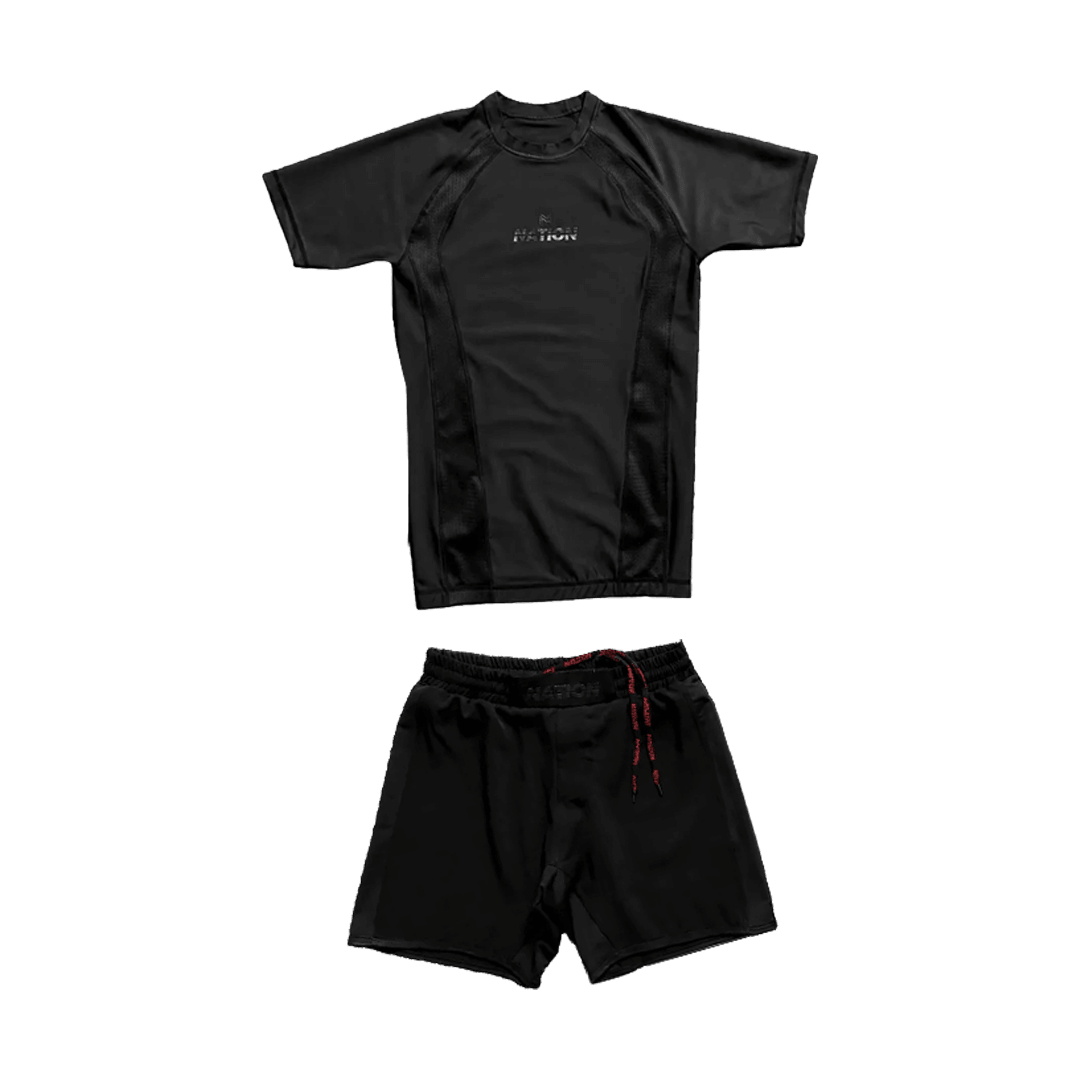
Training rashguards are built for repetition. The spec that matters most in this context is not compression level or fabric sheen — it is how the garment holds up after repeated mechanical stress and wash cycles. Brands that have genuinely understood this — Tatami Fightwear, Scramble, Gold BJJ, Storm Kimonos — produce training-tier rashguards using heavier polyester-spandex blends, typically 87/13 or 85/15 ratios, that prioritize seam integrity and colorfastness over peak performance feel. These garments do not have the slick second-skin compression of a competition piece. They are not supposed to. They are supposed to still be fully functional at month nine.
Competition rashguards operate on a completely different timeline. If you compete four times a year, your competition rashguard goes through four events. It spends the rest of its life stored clean, washed cold, and line-dried. Under those conditions, even a lighter-weight competition fabric holds its shape and compression for years. The problem begins when grapplers run a ninety-dollar competition rashguard through daily training and expect it to stay competition-tight after six months of that treatment. It will not, and that is not a manufacturing defect — it is a use-case mismatch.
The Technical Difference: Fabric Weight, Blend, and Compression
Competition rashguards typically run lighter — 80/20 polyester-spandex blends are standard in the mid-tier, with some premium designs using nylon-spandex constructions for an even sleeker, more elastically responsive feel. That lighter build maximizes compression and skin adherence across a single tournament day. It breathes better, wicks sweat faster, and moves with the body more freely during explosive scrambles. What it does not do is survive the cumulative stress of daily training without degrading faster than a purpose-built training alternative.
Training rashguards run heavier. The added polyester weight translates to longer fiber life, better resistance to pilling from mat contact, and more tolerance for the occasional machine-dry cycle that any athlete doing daily sessions will eventually face. The difference is not dramatic to the touch at point of purchase, but it becomes measurable over a full training year. A quality training rashguard in the forty-to-sixty dollar range, washed correctly and rotated through a small fleet, should remain fully functional through eighteen months of daily training. A competition rashguard put through the same volume may lose meaningful compression in six.
Seam Construction and Daily Comfort
Seam construction matters more in the training context than most grapplers realize. In a two-hour drilling and sparring session, any raised seam against the skin creates friction points — at the collar, under the armpit, along the shoulder panel. Flatlock seaming, where the seam is laid flat rather than standing ridged against the fabric, is standard on quality training rashguards for exactly this reason. It is a functional feature, not a cosmetic one, and it becomes obvious in a session that runs long.

Competition rashguards sometimes trade flatlock construction for multi-panel designs built to maximize compression gradient across specific muscle groups — a valid engineering decision for a tournament context. For daily training over months, however, that construction creates low-level irritation that athletes notice but cannot always name. When grapplers describe a rashguard as feeling rough during hard rounds, they are almost always describing seam friction from a competition-oriented garment being used in a training context it was not designed for.
The Psychology of Keeping Competition Gear Separate
There is a performance dimension to keeping competition rashguards separate that goes well beyond fabric weight and seam type. Athletes who compete consistently describe a recognizable experience: putting on gear reserved specifically for competition creates a psychological cue that is meaningfully different from the daily ritual of preparing for training. Sports psychology research on performance cueing and pre-competition routine consistently supports the value of distinct competition rituals, and gear selection is one of the more controllable variables in building that kind of intentional pre-match state.
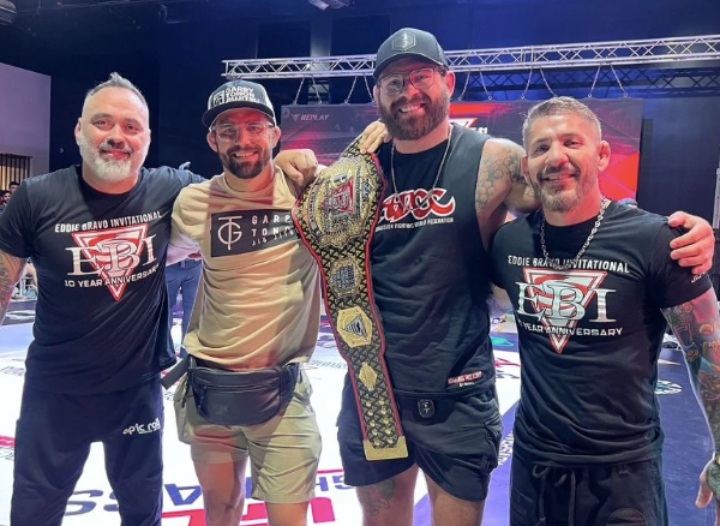
Watch footage of elite no-gi competitors like Gordon Ryan, Craig Jones, or Kade Ruotolo across their training room posts versus their competition appearances. The gear is visibly different — and not solely because of sponsorship requirements. Training footage shows heavier, more worn-in garments. Competition appearances feature the clean, compression-tight look of gear that has not been through two hundred wash cycles. That contrast is not accidental. It reflects a deliberate gear management approach shared across the top tier of no-gi competition.
When a competition rashguard only comes out for tournaments, pulling it on signals something distinct. The fabric feels different because it has held its compression. The visual identity of the piece is associated with performance rather than daily routine. That psychological cue is part of the competitive toolkit, and it is available to any grappler who manages their gear with intention — not just elite athletes with multi-brand sponsorship wardrobes.
Building a Two-Tier Kit for 2026
The structure that works for serious no-gi competitors is practical and straightforward: a training fleet and a competition tier. The training fleet is three to four rashguards rotating through the weekly wash cycle. Each gets worn, washed cold on a full cycle, and fully dried — ideally line-dried to protect the elastane — before the next session. Rotation prevents any single garment from going through back-to-back sessions without complete recovery time, which is the most common cause of premature elastic breakdown outside of heat drying.
In 2026, the price range that delivers reliable training-tier performance runs between thirty-five and sixty dollars. Tatami’s standard rashguard lines, Scramble’s training options, and Gold BJJ’s core range all sit in this bracket with reliable sublimation printing, flatlock construction, and the fabric weight to handle genuine abuse. At this price point, there is no practical argument for running a single training rashguard ragged. Two rotators in the fleet cost less than one premium competition piece and survive longer in aggregate because neither is absorbing back-to-back daily punishment.
The competition tier is one to two rashguards. These get washed only after each use — cold water, gentle cycle — and are always line-dried. Stored flat or rolled, not hung on a hook, which creates long-term shoulder-seam stress. Hyperfly’s ProComp line, Manto’s competition offerings, and Shoyoroll’s premium releases occupy this bracket at sixty-five to one hundred dollars, with the fabric specification and compression profile built to perform across a full day of multi-match tournament competition. Treated correctly, pieces at this tier stay functional for multiple seasons despite the higher initial price.
The Care Variable That Determines Longevity
Machine drying on any heat setting degrades spandex elastane faster than any other single factor in rashguard care. Cold washing is effectively benign — the elastane tolerates it well. Heat is the problem. Grapplers who report that a rashguard lost its compression in three months are almost universally machine drying, usually on warm or hot. The fabric has not uniformly deteriorated — the elastane has been heat-damaged in a way that cannot be reversed by subsequent cold washing. That is not a defect in the product. It is a care failure, and it is the most preventable source of premature rashguard replacement in the sport.
Line drying is non-negotiable for competition rashguards. For training rashguards, it is strongly preferred with exceptions only for genuine time pressure. If machine drying happens regularly because there is not enough time to line-dry between sessions, the answer is a larger training fleet — not accepting accelerated compression degradation as an unavoidable cost. A four-rashguard training fleet that always line-dries will outlast and outperform a two-rashguard fleet that machine dries weekly, in both longevity and cost per wear over a twelve-month cycle.
Matching the Brand to the Role

The brands that have genuinely solved the training-competition divide offer distinct product tiers rather than a single universal rashguard marketed for both. Hyperfly does this clearly — their standard line runs heavier and is positioned for training volume, while the ProComp series is built with a lighter competition fabric and higher compression gradient. Tatami separates their Nova and Recharge lines along similar logic. When a brand offers only one rashguard type at one compression level and markets it simultaneously as competition-ready and training-tough, that is a positioning claim, not a technical one. No single construction is genuinely optimal across both demanding contexts.
The best rashguards for BJJ and grappling in 2026 are not a product — they are a system. A system built around the actual demands of daily training volume and peak competition performance, structured around the care habits that preserve the technical properties of the fabric over time. The no-gi athletes competing at ADCC, WNO, and the FloGrappling circuit already think in these terms. Building your own kit around the same logic, even at a recreational or regional competition level, is how you stop replacing gear ahead of schedule and stop walking into important matches in equipment that already peaked three months ago.
Sources
FloGrappling — Premier no-gi competition coverage and elite athlete documentation.
ADCC Submission Wrestling World Championship — Wikipedia entry on the top-tier no-gi grappling event series.
BJJ Rashguards on Amazon — Training and competition rashguard options for no-gi grapplers.