K Guard BJJ: 7 No-Gi Setups That Hunt Heel Hooks
The K guard BJJ position is the open guard that won Lachlan Giles an ADCC absolute medal at 77kg — by heel hooking three world-class heavyweights in a row. That single tournament rewrote the no-gi guard playbook. Before 2019, K guard was a niche curiosity Lachlan kept tucked inside his own academy. After 2019, it became the dominant entry to the leg-lock game in modern no-gi grappling, and every serious leg locker on the planet started learning it.
This guide breaks down seven K guard setups that work in real no-gi rolling — the same entries Giles drilled before ADCC, the same backside 50/50 traffic pattern Craig Jones taught to half his B-Team squad, and the same back-take threats Gordon Ryan punishes when opponents shell up. Every setup here ends in either a tap, a sweep, or a positional upgrade. Memorize the K position once, and you stop chasing seven different leg-lock entries — you funnel into one.
What Is K Guard in BJJ?
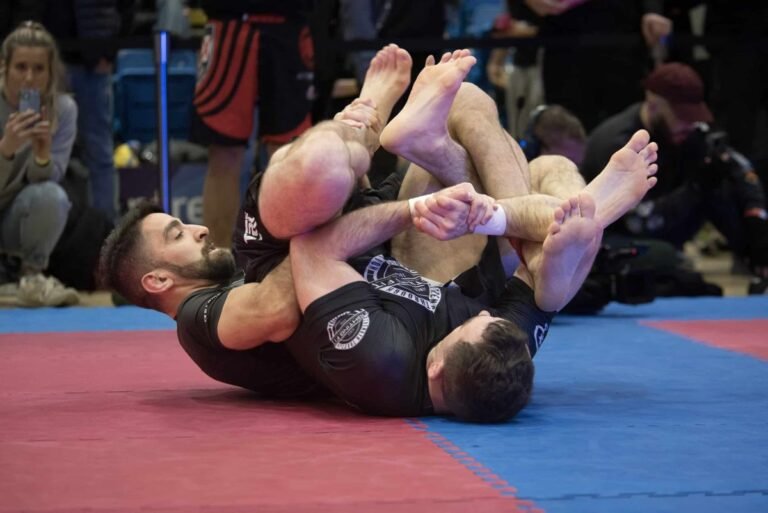
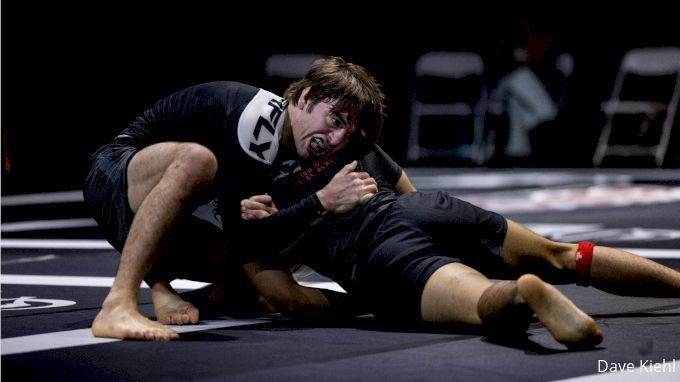
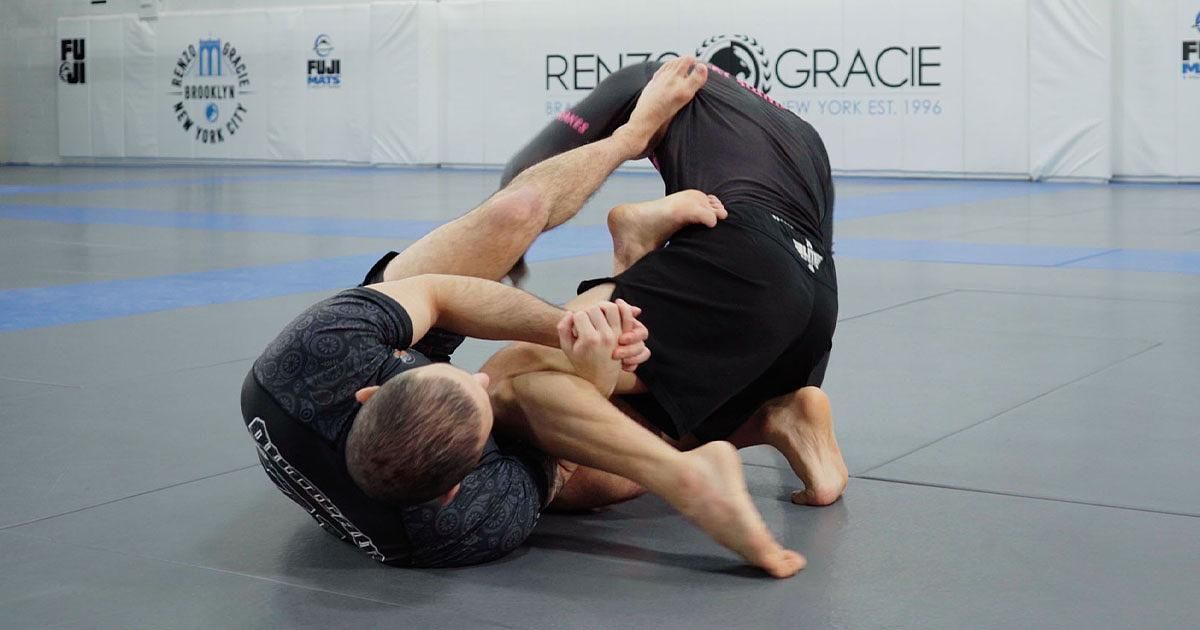
K guard in BJJ is an open-guard position where you lie on your side with one knee shielded across your opponent’s hip and the opposite shin trapped under their leg or stuffed behind their knee. Your top arm cradles their lead leg, your bottom arm under-hooks toward their far hip, and your body forms the letter K — one leg stacked vertical, one leg horizontal. From there you have a direct line to inside heel hooks, backside 50/50, sweeps, and back takes.
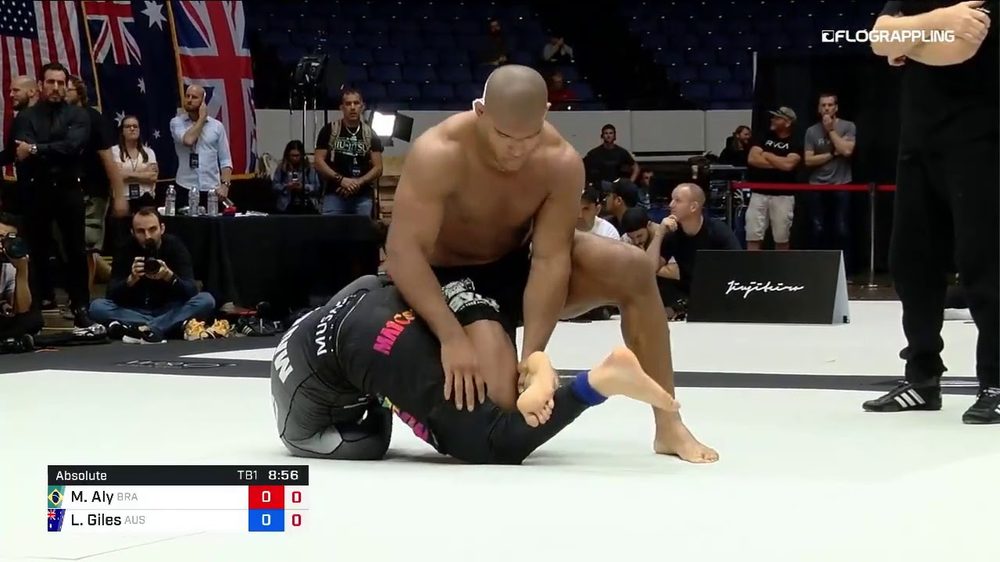
The position took its name from Eduardo Telles, who first sketched the shape in the early 2010s. Lachlan Giles is the one who built the modern system around it — his 2019 ADCC run finished Kaynan Duarte, Patrick Gaudio, and Mahamed Aly in the absolute division, all by inside heel hook off K guard entries. That run pushed the position from “interesting” to “mandatory” inside the leg-locking meta.
Why K Guard Dominates No-Gi
Strip the gi, and three things break for the bottom player: no lapel grips, no spider hooks anchored on sleeves, and no slow grip-fighting battles. K guard ignores all three. It works off underhooks and shin position — both of which are gi-agnostic and actually stronger when sweat makes everything slick. That is why the position quietly took over no-gi while staying secondary in the gi.
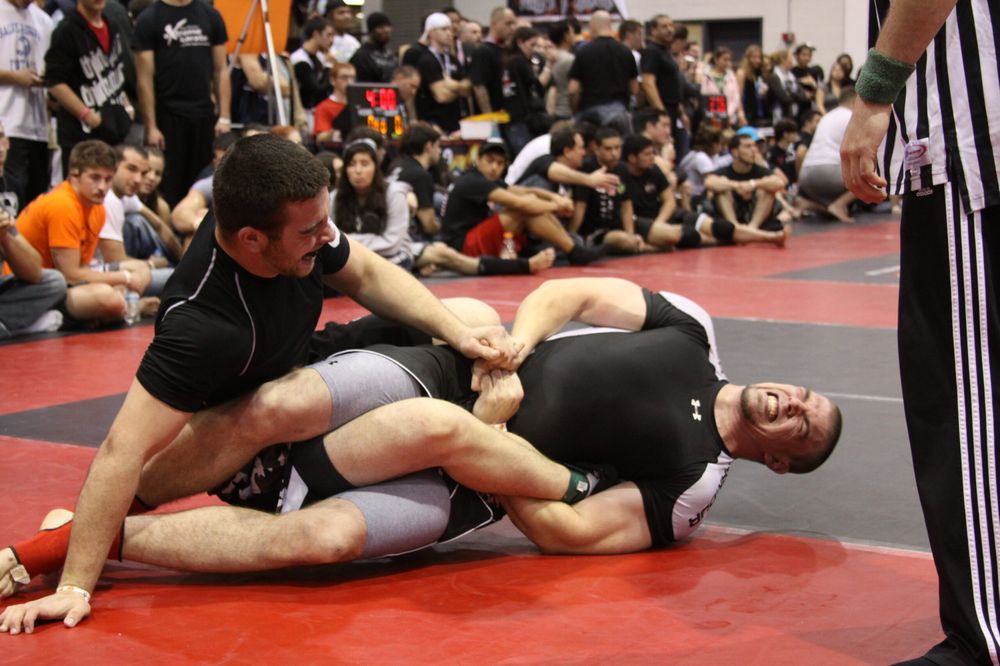
The other reason K guard rules no-gi: it solves the heel-hook entry problem. Most leg lockers stall at the same spot — they get to ashi garami, get controlled, and either rip the heel or lose the position. K guard sidesteps that whole sequence. You enter the leg already past your opponent’s hip line, with their leg cradled and their base broken. From there the entanglement is downstream, not the destination.
The 7 K Guard Setups That Work in No-Gi
These seven cover roughly 90% of high-level K guard offense. Drill them in this order — the first three open the position, the next two finish from it, and the last two recover when an opponent reads the heel hook and starts defending early.
1. K Guard from Closed Guard (The Posture-Break Entry)
Closed guard is the most natural feeder. Your opponent postures up to start passing, plants both palms on your chest, and bases out. The instant their weight settles back, swim your right arm under their left thigh, kick off the closed guard, and rotate your hips so your left shin posts vertical against their right hip. Your right knee drops to the mat. The K is locked. Most opponents do not see this entry coming because closed guard has been “dead” in no-gi for a decade — they assume you will pull butterfly. NAGA’s K guard breakdown calls this the “second life” of closed guard, and it is the easiest entry to drill solo.
2. K Guard from Reverse De La Riva (The RDLR Funnel)
Reverse De La Riva is the bridge guard between open and K. When your opponent kneels in front of you and you have your RDLR hook in, you already own the leg you want. Switch your top arm from an inside grip to an over-the-knee cradle, pull their lead leg toward your chest, and dump your bottom hook to the mat so your shin lands across their thigh. The K is built. This is the entry Lachlan teaches first in his Submeta course because it solves the problem of “what do I do when my opponent kneels and stalls” — a default posture against modern no-gi guard players.
3. K Guard from Butterfly Guard (The Hip-Switch Entry)
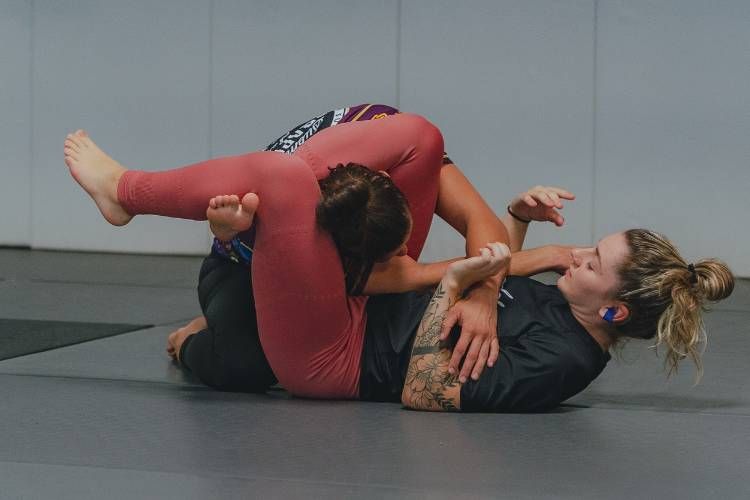
Butterfly is the easiest entry for taller grapplers — long levers make the shin position natural. Sit up into butterfly, get an underhook on the side you want to attack, and when your opponent overhooks to defend the sweep, drop your hips backward at a 45-degree angle. Kick out your outside butterfly hook and let it fall onto their thigh as a knee-shield. Your underhook arm switches to cradling their lead leg. The mistake most guard players make: they try to enter K from a flat back. K guard requires the side-lying angle that butterfly already gives you for free.
4. K Guard to Backside 50/50 Heel Hook (The Lachlan Special)
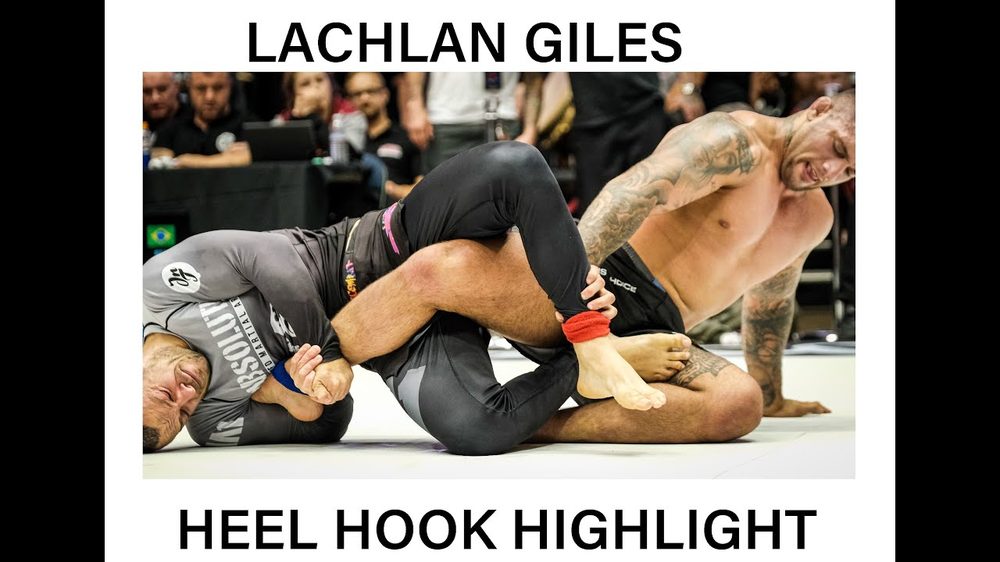
This is the finish that won ADCC 2019. From K position, throw a hard underhook at your opponent’s far leg while your top arm controls the near foot. Triangle your legs around their attacking leg, then rotate underneath them until you come up on the far hip — your back is flat to the mat, your hips facing away from theirs, and their leg trapped between your knees in a reverse 50/50 configuration. Drop your shoulder to the mat, isolate the heel, and finish with a Kani Basami rotation. The control is brutal because your opponent cannot stand up, cannot scoot away, and cannot reach your hands to peel the grip. For the full breakdown of finishing positions, our guide on heel hook BJJ no-gi setups walks through the saddle, 50/50, and backside 50/50 finishes side by side.
5. K Guard to Saddle (The Inside Sankaku Drop)
Not every opponent will let you enter backside 50/50. When they post their free hand and try to stand out, drop into saddle instead. From K position, leg-drag their near leg across your body using the cradle arm, then pinch your knees together as their leg slides through. Your right leg goes over their hip, your left leg goes under and triangles. You are now in inside sankaku — also called the saddle — with their leg isolated and their heel exposed. The finish is the same inside heel hook, but the entry is faster and the control is tighter when your opponent has a long, athletic frame.
6. K Guard Sweep with the Underhook (The Sit-Up Counter)
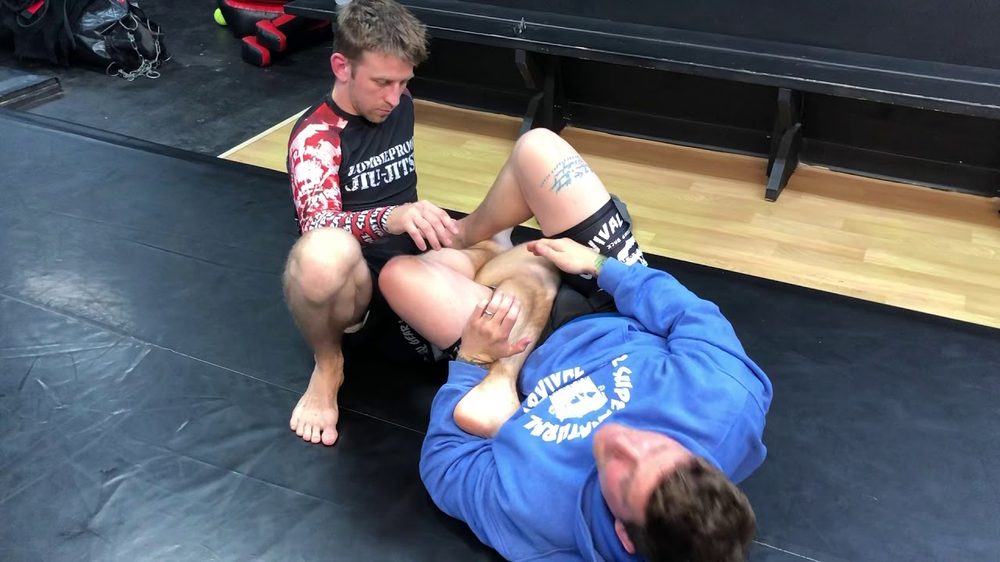
Your opponent reads the heel hook and tries to peel your knee away from their hip. The moment they reach down to defend, they have given up the upper-body fight. Drive your underhook deep, post your free hand on the mat behind you, and sit straight up into their hip. The K guard configuration means you are already half-elevated — the sit-up is almost mechanical. If they sprawl, you take their back. If they fall to the side, you ride them down and land in mount. Modern no-gi rules at most ADCC-format events award sweep points for landing in any dominant position, not just guard pass — this one cashes both ways.
7. K Guard to Back Take (The Flatten-Out Counter)
When an opponent is leg-lock smart, they will flatten their hips and stuff their feet behind them — taking the heels out of reach. That is a defensive position, not a recovery position. From K guard, slide your outside knee across their back, hook your bottom leg in front of their far hip, and turn them onto their stomach. Your underhook arm rotates to a seatbelt grip across their shoulder line. You are now riding their back with both hooks threatening. This is the entry Craig Jones drills against grapplers who have memorized leg-lock defense but never trained back defense against the same passer.
Lachlan Giles and the ADCC Moment That Made K Guard Famous
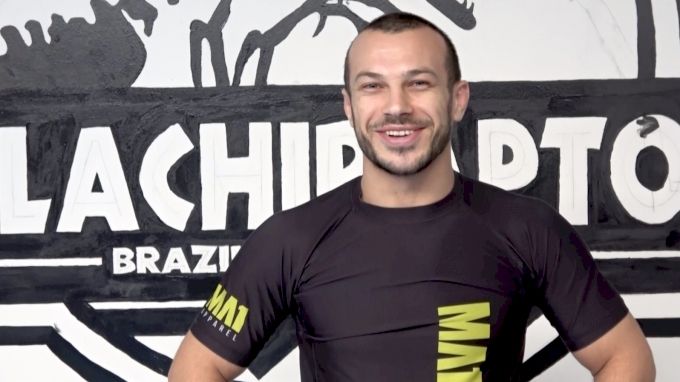
Lachlan Giles weighed 76kg at ADCC 2019. He drew into the absolute division — no weight classes, anyone could enter — as a last-minute alternate. Most observers wrote him off as a feel-good story. He inside-heel-hooked Mahamed Aly in 4 minutes 25 seconds. He inside-heel-hooked Patrick Gaudio in 1 minute 18 seconds. He inside-heel-hooked Kaynan Duarte in under three minutes. All three were former IBJJF world champions in the heavyweight division. All three came at him with the same plan — pass guard, get to top, grind him out. None of them reached the second minute. The K guard entry chain Giles built — closed-to-RDLR-to-K-to-backside-50/50 — bypassed every passing system the gi-trained heavyweights had drilled. That tournament is why his No-Gi Open Guard Volume 1 instructional on BJJ Fanatics is still the top-selling K guard course six years later.
K Guard vs. Half Guard: How They Are Different
The two get confused because both involve your shin near your opponent’s leg while you lie on your side. The difference is the goal. Half guard is a sweep guard — you trap one leg and elevate the opponent to land on top. K guard is an entry guard — you trap one leg and disengage your hips backward to set up leg locks, back takes, or sweeps that finish without coming up on top. Half guard rewards strong underhooks and a heavy chest. K guard rewards a strong cradle arm and a willingness to invert. The two pair beautifully — many top no-gi players use half guard as a feeder into K when their opponent posts on the head to flatten them out.
The K Guard Mistakes That Cost You the Heel Hook
Most failed K guard attempts share three errors. First, the bottom shin sits flat on the mat instead of post-vertical against the opponent’s hip — without that shin wall, the opponent walks their hips backward and frees the cradled leg. Second, the cradle arm grabs the ankle instead of the knee. Ankle grips slip on sweaty no-gi opponents and let them pull the leg out before the entanglement locks. Cradle the knee, not the foot. Third, grapplers wait too long to enter the backside 50/50 — they hold K guard like it is a destination, the opponent posts up, and the window closes. K guard is a hallway, not a room. Move through it inside three seconds or your opponent passes.
K Guard in Modern ADCC, CJI, and Submission-Only Rules
Every major no-gi ruleset in 2026 allows inside heel hooks at adult brown and black belt — IBJJF finally aligned with ADCC, EBI, CJI, and Polaris on this in late 2024. That means K guard now has legal finishing power in essentially every meaningful competition format. Submission-only rulesets are where the position shines hardest because there is no points pressure forcing you out of the entanglement. Sub-only also rewards the slower setup chains — closed guard to RDLR to K — that get rushed under IBJJF point timers. For competitors in no-gi leg lock formats, K guard is the position that ties the whole offense together.
Lachlan Giles K Guard Tutorial
Lachlan’s free YouTube breakdown covers the closed-guard-to-K entry and the backside 50/50 finish in seven minutes. If you only watch one K guard video this year, this is it:
Drilling K Guard Solo (Without a Partner)
K guard responds well to solo drilling because the shape is so specific. Lie on your right side, post your left shin vertical, drop your right knee to the mat, and reach your left arm across your body as if cradling a leg. Hold the position for ten seconds. Now rotate your hips so the K inverts — left shin flat, right shin vertical — and hold again. Three sets of ten reps each side, three times a week, will build the hip mobility that makes the position feel automatic in live rolls. Most grapplers who fail at K guard fail at the hip rotation, not the technique itself. Your hips have to move sideways, not up — and that is a movement pattern almost nobody trains outside of dedicated leg-lock systems.
Build Your K Guard This Month, Not This Year
The position has a reputation for being advanced. It is not. K guard has fewer moving parts than a deep half guard and a shorter entry chain than a berimbolo. What it requires is repetition on the side-lying angle and a willingness to invite the leg lock instead of waiting for it. Pick one entry from this guide — closed guard is the easiest — drill it for fifteen minutes after every class for two weeks, and you will hit your first competition heel hook off K guard inside a month. That is the same path Lachlan teaches his own students, and the same path that produced an ADCC absolute medal at 77kg.
Sources
- No-Gi Open Guard Volume 1: K Guard by Lachlan Giles — Eight-volume instructional covering every K guard entry, sweep, and finish from the ADCC 2019 system.
- K-Guard by Lachlan Giles on Submeta — Subscription instructional with updated entries against modern guard-passing systems.
- Lachlan Giles FloGrappling Profile — Match history including the 2019 ADCC absolute division medal run.
- What Is K Guard BJJ — NAGA Fighter — Position definition and historical origin from Eduardo Telles.
- Ashi Garami BJJ Breakdown — BJJ Fanatics — Backside 50/50 and saddle position references.
- K Guard Overview — Digitsu — Technical breakdown of K guard mechanics and grip configurations.
Browse our top-rated rashguards and no-gi gear at the RashguardGuy shop →