No-Gi Competition Ear Guards: What the Rules Allow and How to Actually Prepare
Training with ear guards is a habit. Competing with them is a decision you need to make before you step on the mat — not when your opponent is already shooting for a takedown. Most no-gi grapplers who use ear guards consistently in the gym have never stopped to think through what changes at a tournament: whether they are even allowed, how they will hold up under real competition conditions, and whether the ear guard they have been training in is actually the right tool for the job. That gap between training habits and tournament reality is where ears get damaged.
What Major No-Gi Organizations Actually Permit
The first question most grapplers have is straightforward: can you even wear ear guards at a tournament? Across most major no-gi organizations, the answer is yes — though it is rarely stated clearly, which creates unnecessary confusion leading up to competition day.
ADCC, the most prestigious no-gi grappling organization in the world, does not prohibit ear guards in its published ruleset. Competitors at ADCC Worlds have worn them without issue. EBI and Submission Underground operate with similarly permissive approaches to protective gear — the focus is on athlete safety, and ear guards fall squarely within that frame. Combat Jiu-Jitsu, which incorporates open-palm strikes into the ground game, permits ear guards as well, though some athletes avoid them for tactile reasons specific to that format.
Where it gets more complicated is at local and regional events. Smaller organizations often lack formal equipment policies, leaving decisions to individual referees or tournament directors on the day. If you are competing at a local submission-only event or a regional no-gi bracket, contact the organizer directly before you arrive. The last thing you want is an equipment dispute at the registration table while you are trying to warm up and cut weight.
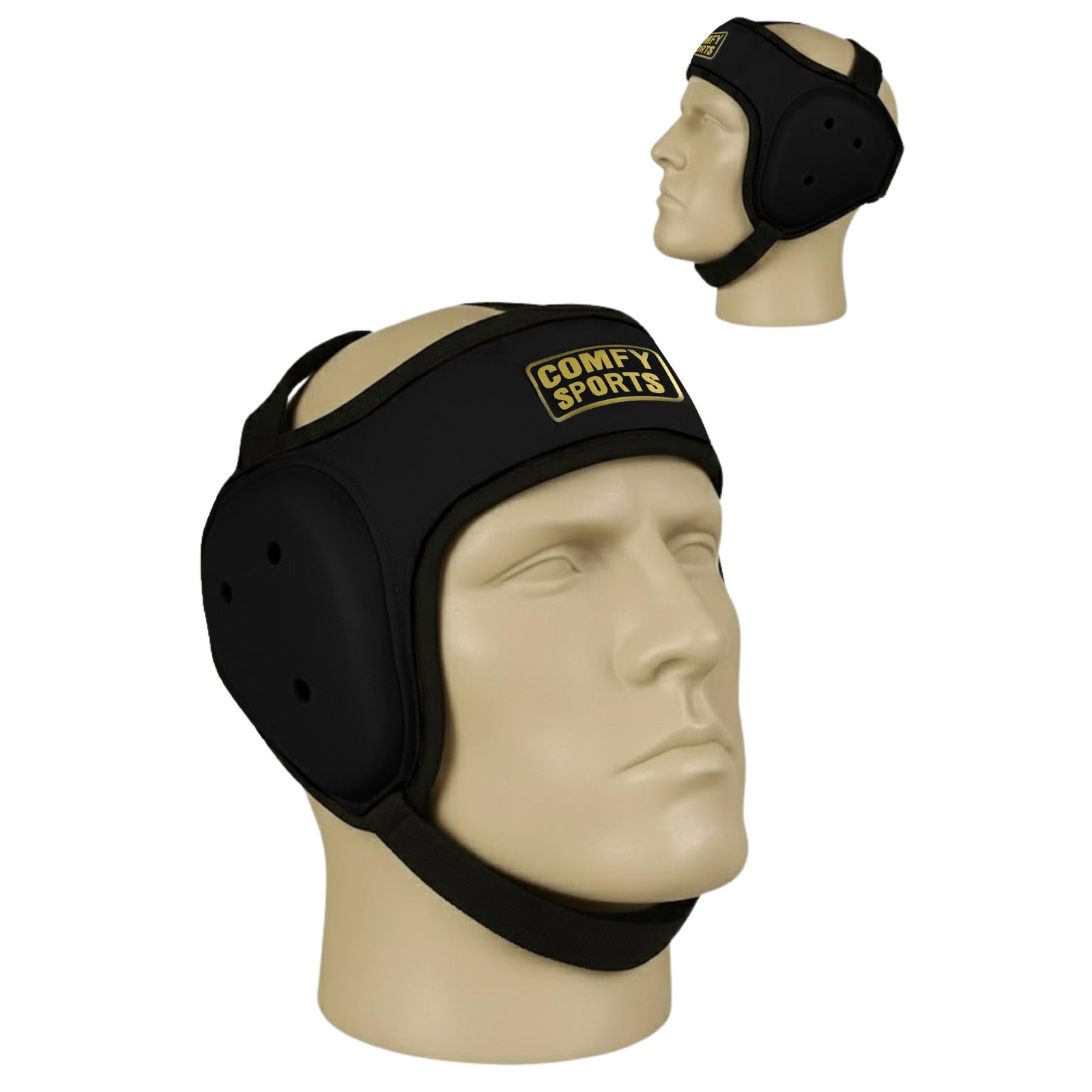
IBJJF no-gi divisions have generally allowed ear guards when they do not interfere with the match. The practical test most referees apply is simple: does the equipment pose a risk to the opponent? A standard no-gi ear guard with smooth edges and a secure fit passes that test reliably. Anything with hard protrusions or sharp hardware is a different story — but those do not exist in legitimate ear guard design anyway.
Why Tournament Rolls Carry More Ear Trauma Risk
Even grapplers who train intensely every day tend to underestimate the physical difference between a hard gym roll and a competition match. It is not just the stakes that change — it is the specific body mechanics that shift under competitive pressure, and those mechanics are the ones that create ear trauma.
In training, you know your partners. You know how hard someone closes a headlock, whether they crank a guillotine or just hold it, how explosive their takedown attempts get during hard rounds. That knowledge lets you anticipate and adjust your head positioning before contact escalates. At a tournament, you are rolling against a stranger whose tendencies you cannot read, and they are going as hard as they know how. Head position, ear-to-mat contact, neck cranking pressure — all of it intensifies when neither athlete is modulating effort based on a training relationship.
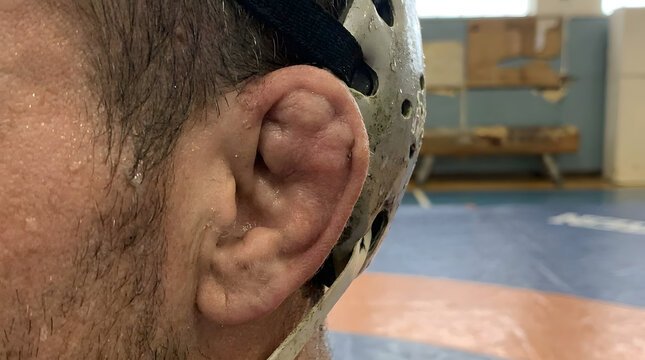
Adrenaline also changes how you process physical feedback during a match. During a gym roll, you feel pressure building on your ear and adjust. During a competition match, that feedback signal is buried under adrenaline and strategic focus. Grapplers have walked off competition mats with ears visibly swollen without having noticed the trauma happening in real time. The ear does not complain loudly enough to break through competition-level tunnel vision.
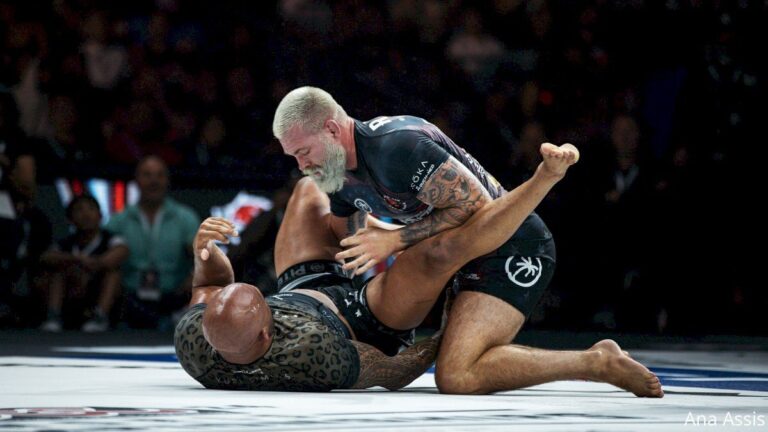
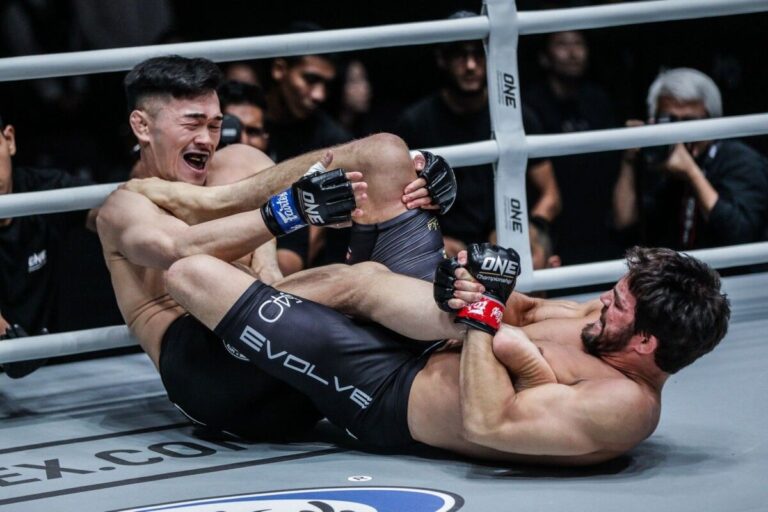
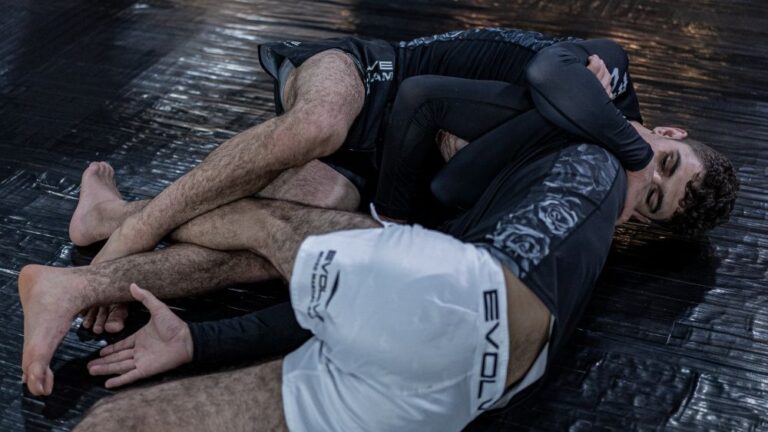
Referee stoppages add another risk factor that simply does not exist in training. When a match pauses and restarts from standing, both athletes are often already engaged in a clinch or scramble. The restart — where both competitors immediately fight for position — is exactly the kind of sudden, uncontrolled head-to-head contact that causes auricular hematoma. Training rolls build organically from neutral. Competition scrambles can spike instantly from a standing restart instruction.
The Retention Problem Under Real Competition Conditions
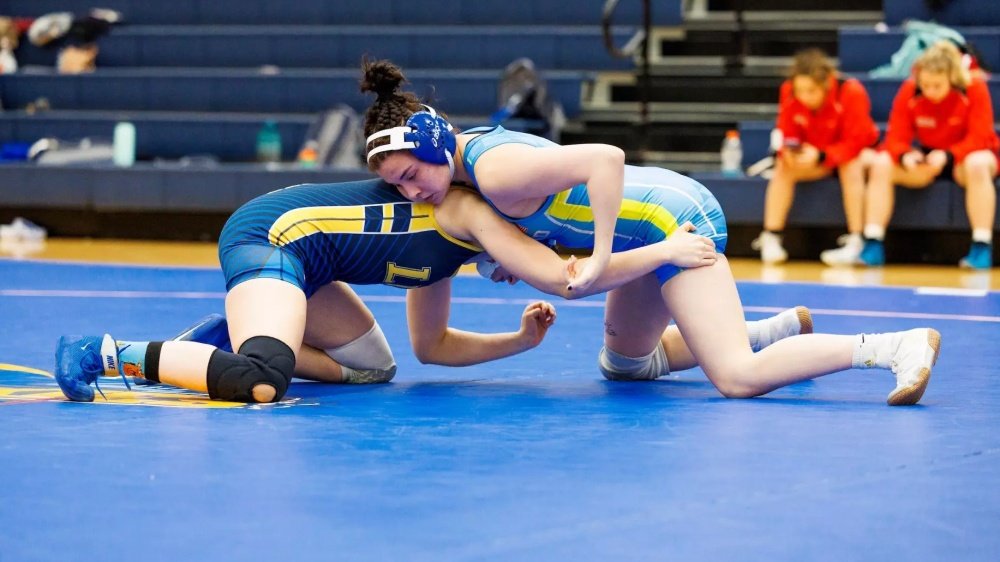
Many grapplers discover at a tournament that an ear guard that worked perfectly in training does not hold up the same way under competition conditions. Sweat volume is the primary culprit. Training sessions produce sweat gradually over an hour or more. A competition match produces extreme sweat rapidly — in some athletes, an acute sweat response that turns a grip surface slick within the first two minutes of hard effort.
An ear guard that relies heavily on friction against skin for retention — wrap-style designs and thin headbands especially — can start to migrate under that kind of sweat load. What began as a secure fit during warmup feels loose by the middle of a scramble. By the end of a headlock exchange, it may be sitting halfway across your scalp providing protection to nothing useful.
The headlock exchange is the other major retention stress test specific to competition. In the clinch, head-to-head pressure, arm frames across the face, and rolling neck cranks all pull at an ear guard from multiple angles simultaneously. A well-designed ear guard with a strap that loops beneath the chin or around the base of the skull survives this. A simple band stretched across the crown of the head frequently does not — and it tends to fail at exactly the moment of maximum contact.
If an ear guard comes off mid-match, pause and notify the referee immediately rather than continuing. Most organizations allow a brief equipment adjustment. Continuing to roll without your ear guard in place — particularly if you have vulnerable or previously damaged ear tissue — is exactly the scenario that leads to the damage you were trying to prevent. Treat a dislodged ear guard the same way you would treat an untucked rashguard: stop, fix it, then continue.

How Competitive Grapplers Actually Handle Ear Protection
At the elite level of no-gi submission grappling, ear guards are less common than you might expect — not because they are prohibited, but because many high-level competitors have accepted cauliflower ear as an occupational reality. Athletes who compete regularly at ADCC Worlds and top-tier invitational events have typically accumulated years of high-volume training before reaching that stage. Many have already developed some degree of ear calcification. At that point, the conversation shifts from prevention to management, and the case for wearing ear guards becomes less urgent for them personally.
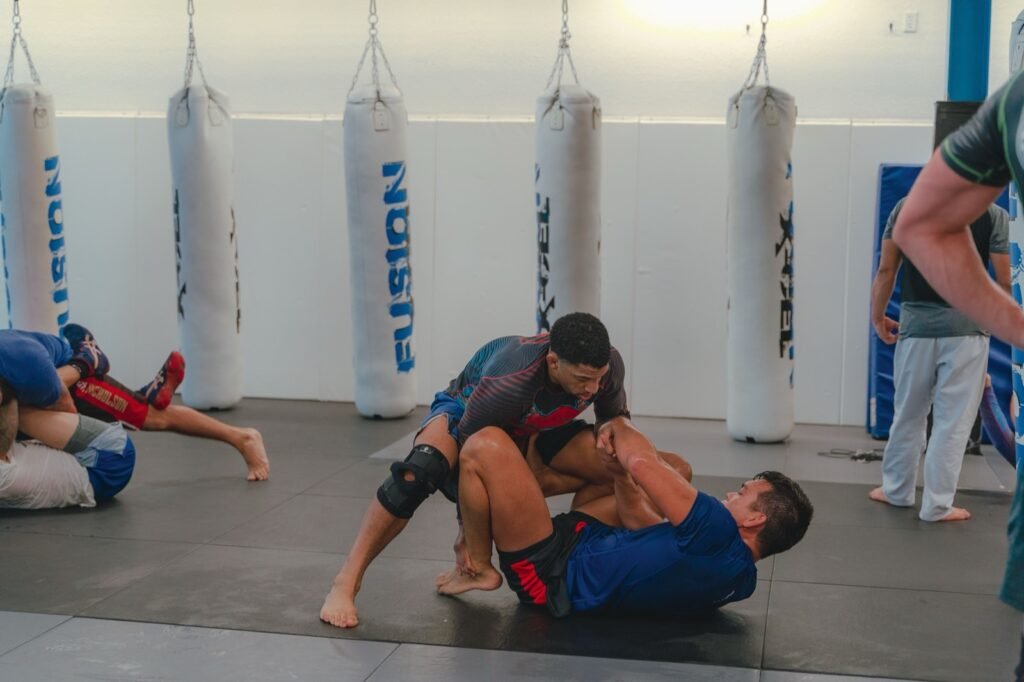
What you will observe among competitive grapplers who do wear ear guards at tournaments is a consistent pattern: they train with the same ear guard they compete with, and they have worn it long enough that it functions like a second skin. There is no break-in happening on competition day, no uncertainty about how it sits, no fumbling with the retention mechanism during warmup. The ear guard is background noise — not a variable they are actively managing while trying to game-plan.
Athletes who switch to a supposedly better or more secure ear guard specifically for competition day — without having trained in it — often find that the unfamiliar fit is more disruptive than protective. The unconscious micro-adjustments you make when wearing familiar gear do not happen with a new model. That small gap in adaptation creates distraction during a match when attention needs to be elsewhere entirely.
Selecting an Ear Guard with Competition in Mind
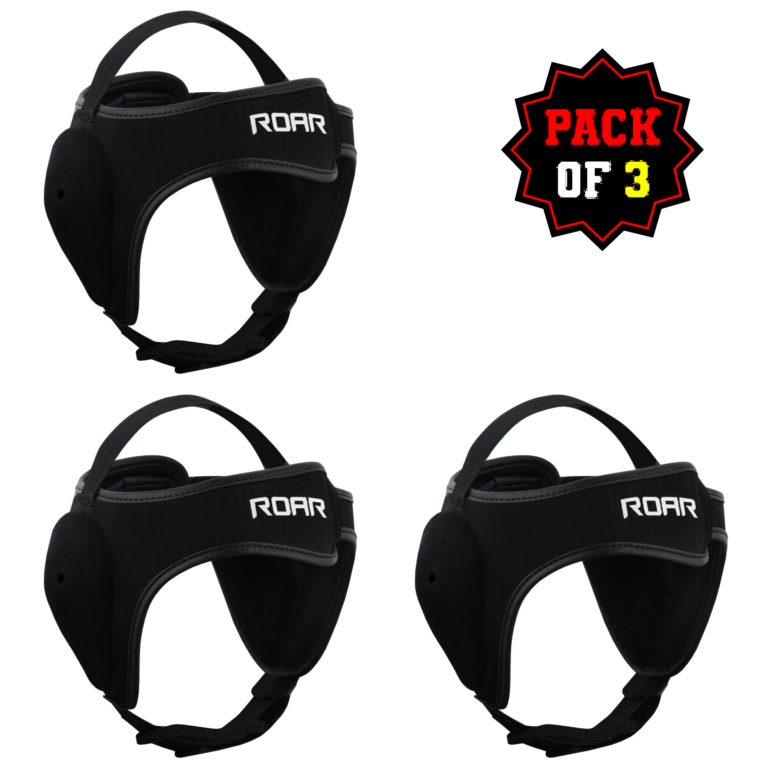
If you are going to compete in no-gi and want ear guard protection that actually holds up, the selection criteria shift compared to what you would prioritize for a casual training environment. Retention architecture becomes the single most important factor — ahead of comfort and ahead of protection profile depth.
Look for designs that use multiple anchor points rather than a single band. A strap that loops under the chin or around the base of the skull gives the ear guard a second fixed point, which dramatically improves stability during the dynamic head movement that competition produces. The chin anchor also prevents the guard from riding up when pressure comes from below — a common failure mode during sprawls and headlock defenses where upward force is applied to the crown of the head.
Build break-in time into your competition prep. Whatever ear guard you plan to compete with should have at least three to four weeks of regular training sessions on it before the event. You want the retention system stretched and shaped to your specific head geometry, and the fit familiar enough that you stop thinking about it during live rounds. Treat it the same way you would treat new wrestling shoes or a new rashguard — broken in well ahead of the competition, not the week of the event.
Making Competition-Day Ear Protection Automatic
The grapplers who show up to tournaments with a functional ear guard setup did not figure it out on competition morning. They built the habit in training and carried it over. That transfer is straightforward in theory and harder in practice — mainly because competition day introduces a full checklist of logistics that push smaller items toward the bottom of the bag.
Build your competition gear list in training, not the night before an event. If your ear guard is already part of what goes in your bag every session, it goes in your bag for competition without conscious thought. If you grab it only occasionally, it will stay home on the day you need it most. The habit you build in the gym is exactly the habit you will execute when your focus is split across logistics, warmup, and match preparation.
Treat competition not as a break from training protection habits but as the highest-stakes test of them. You have already done the work to build consistent ear guard use through your regular training sessions. Carrying that into the tournament setting protects both your ears and your long-term ability to keep training. The ear you protect at this weekend’s event is the same ear that lets you roll comfortably for years to come.
Sources
Wikipedia: ADCC Submission Wrestling World Championship — Background on the organization, ruleset structure, and event history for the sport’s premier no-gi competition.
Wikipedia: Cauliflower Ear — Overview of auricular hematoma development, risk factors, and medical management relevant to contact sport athletes.
FloGrappling — Coverage of elite no-gi submission grappling events including ADCC, EBI, and Submission Underground.