How to Choose a No-Gi Rashguard for BJJ and Grappling in 2026
No-gi grapplers spend more time thinking about the gi they don’t wear than the shirt that’s actually against their skin for every round. A rashguard is background equipment right up until it isn’t — it bunches under a pass, chafes raw through a five-minute round, or splits a seam mid-scramble. Picking a good one has less to do with brand loyalty and more to do with three things: how compression is supposed to fit, what the fabric is actually made of, and how long a shirt survives the wash before it starts smelling regardless of how often it’s cleaned.
What a Rashguard Is Actually Built to Do
Rashguards started as surf gear, built to stop board wax and sand from tearing up skin on long paddle-outs. Grapplers adopted the same fabric for a different kind of friction: mat burn, forearm-across-face scrambles, an opponent’s collar-tie dragging across bare skin during a no-gi round. The compression layer does a second job too — it keeps muscle vibration down over a long tournament day, and it wicks sweat away from skin fast enough that damp fabric isn’t sitting against you between matches. That last part matters more than most people think. A rashguard that traps moisture instead of moving it is doing the opposite of its job, and it’s a bigger factor in mat-borne skin issues than most gyms give it credit for.
Most competition-grade rashguards also carry a UPF rating somewhere between 40 and 50, which is a leftover from the surf-gear roots but genuinely useful for anyone training outdoors or competing under stadium lighting rigs that run hot. Some brands add an antimicrobial finish to the fabric to slow bacterial growth between washes, though that treatment fades faster than the fabric itself and shouldn’t be the reason a shirt gets skipped from the wash. A rashguard doing its wicking job correctly is also the first line of defense against the skin infections that spread fast in a shared training space — ringworm, staph, the usual suspects every gym has dealt with at least once. For the fuller picture on how gear choices affect skin health mat-side, Skin Infections in No-Gi Grappling: How Your Gear Choices Make the Difference covers it in more depth than fits here.

Compression Fit vs. Loose Fit — How Tight Is Too Tight
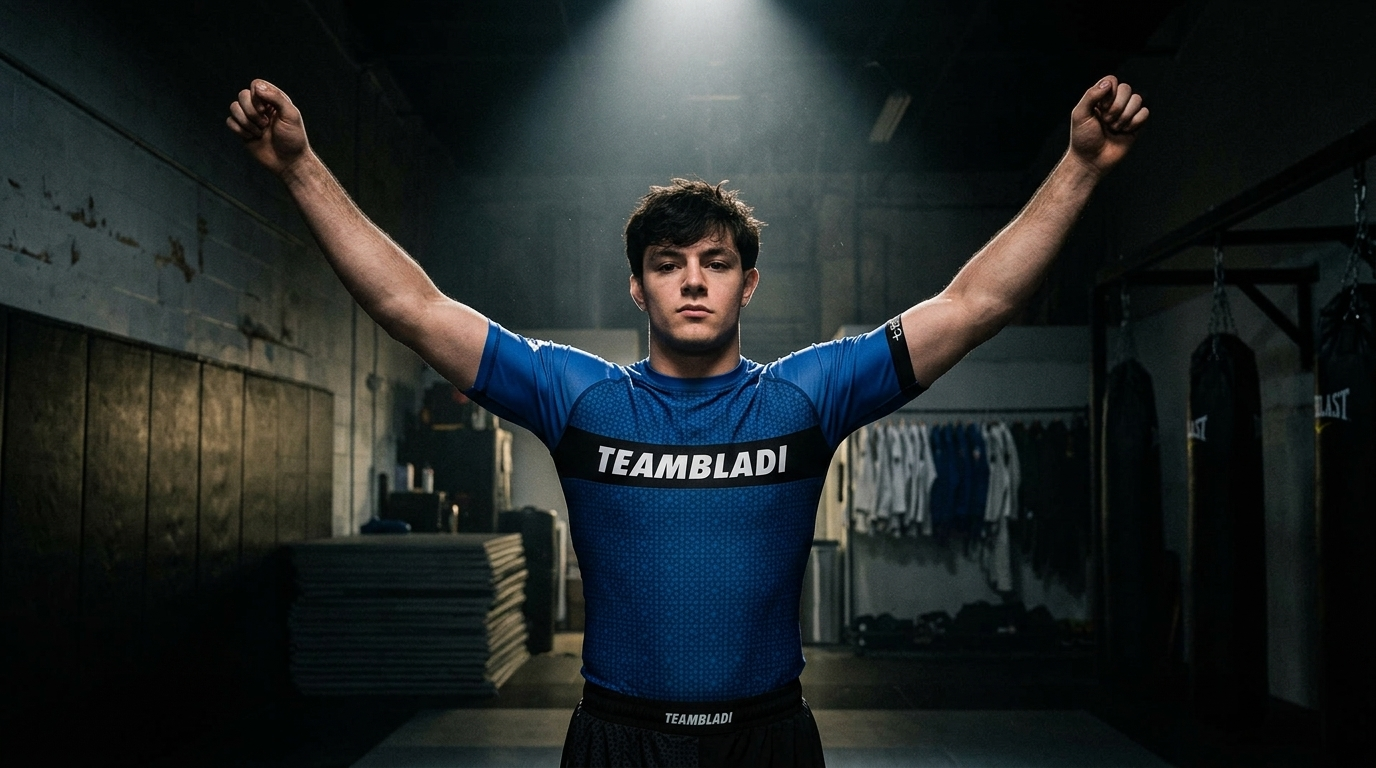
A rashguard should sit close enough that there’s no loose fabric for an opponent to bunch into a grip during scrambles, but it shouldn’t feel like a tourniquet across the ribs when you’re trying to breathe through a hard third round. The test most competitors use is simple: raise both arms straight overhead. If the hem rides up past the belly button or the shoulders pull tight enough to restrict the reach, the size is wrong. Rashguard sizing charts are built around chest circumference, not the shirt size printed on a T-shirt tag, and most competition-grade brands run a size smaller than casual athletic wear because the whole point is compression, not drape.
Torso length trips up more buyers than chest size does. Taller grapplers with long torsos often find a shirt that fits perfectly across the chest rides up out of the waistband within a few minutes of live rolling, which defeats the whole point of a fitted layer. If a brand publishes a torso-length measurement alongside chest circumference, use it — and if it doesn’t, read a few reviews from taller buyers before assuming the size chart tells the whole story. This is the same logic that applies to everything else in a gear bag: buying on assumption instead of measurement usually means buying twice.
Reading a Sizing Chart Correctly
Measure around the fullest part of the chest with a soft tape, not a guess based on how a hoodie fits. Compare that number directly to the brand’s own chart rather than assuming sizes are standardized across companies — a medium from one manufacturer can measure closer to a small from another. If the measurement falls between two sizes, sizing up is usually the safer call for anyone who trains long-sleeve rashguards regularly, since overhead reach and shoulder rotation suffer more from a shirt that’s too small than one that’s slightly loose.
Sleeve Length and What Competition Rules Actually Require
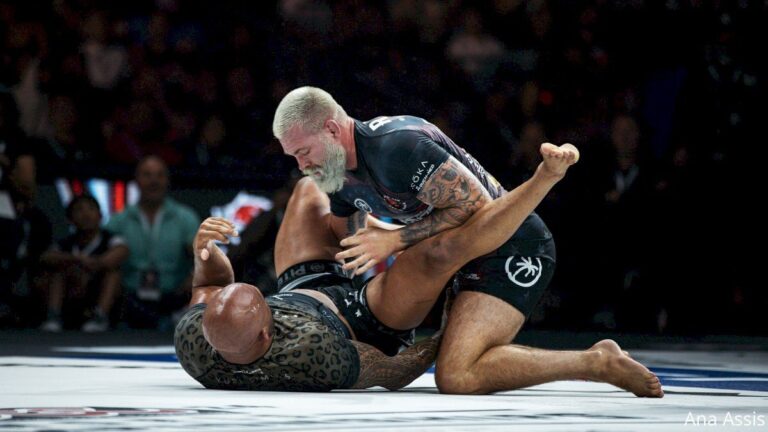
Both short and long sleeves are legal across IBJJF and ADCC no-gi divisions, and the choice usually comes down to preference rather than rule compliance. What does matter, on a long-sleeve rashguard, is where the cuff sits. Excess fabric bunched past the wrist bone gives an opponent something extra to grab in a grip exchange that’s already tight on legal handholds in no-gi. A properly fitted long sleeve ends right at the wrist, tight enough that it doesn’t slide up the forearm during a scramble but doesn’t bunch into a grippable fold either. Grapplers who compete in both gi and no-gi divisions often keep their no-gi rashguards slightly more compressive through the forearm than their gi undershirts for exactly this reason.
Short sleeves solve the wrist-cuff problem entirely and run cooler in a hot gym, which is why plenty of competitors keep both cuts in rotation and pick based on the season rather than a fixed preference. Whichever sleeve length gets chosen, it should match the fit of the shorts or spats underneath — a compression top over loose board shorts looks fine on the walkout but creates the same grip-target problem a bunched sleeve does. BJJ Spats: The No-Gi Grappler’s Guide covers what to look for in the bottom half of that kit, since the two pieces really do need to work as a system rather than being bought separately without a second thought.

Fabric Weight, Stitching, and Why Cheap Rashguards Fail Fast
Fabric weight for competition rashguards typically runs somewhere between 150 and 190 grams per square meter — light enough to move, dense enough to hold compression through a full training session without going sheer. Below that range, the fabric stretches out permanently after a handful of washes and starts feeling like a loose undershirt within a month. The blend ratio matters just as much as the weight. A nylon-elastane mix recovers its shape after stretching far better than a straight polyester-spandex blend, which is why cheaper rashguards tend to sag at the collar and cuffs long before the print fades. Anyone who wants the material-science version of this — denier counts, why certain blends resist odor better, how weave pattern affects stretch recovery — can find it in The Science of No-Gi BJJ Gear: Fabric That Wins Rolls, which goes deeper into the textile side than a buying guide really should.
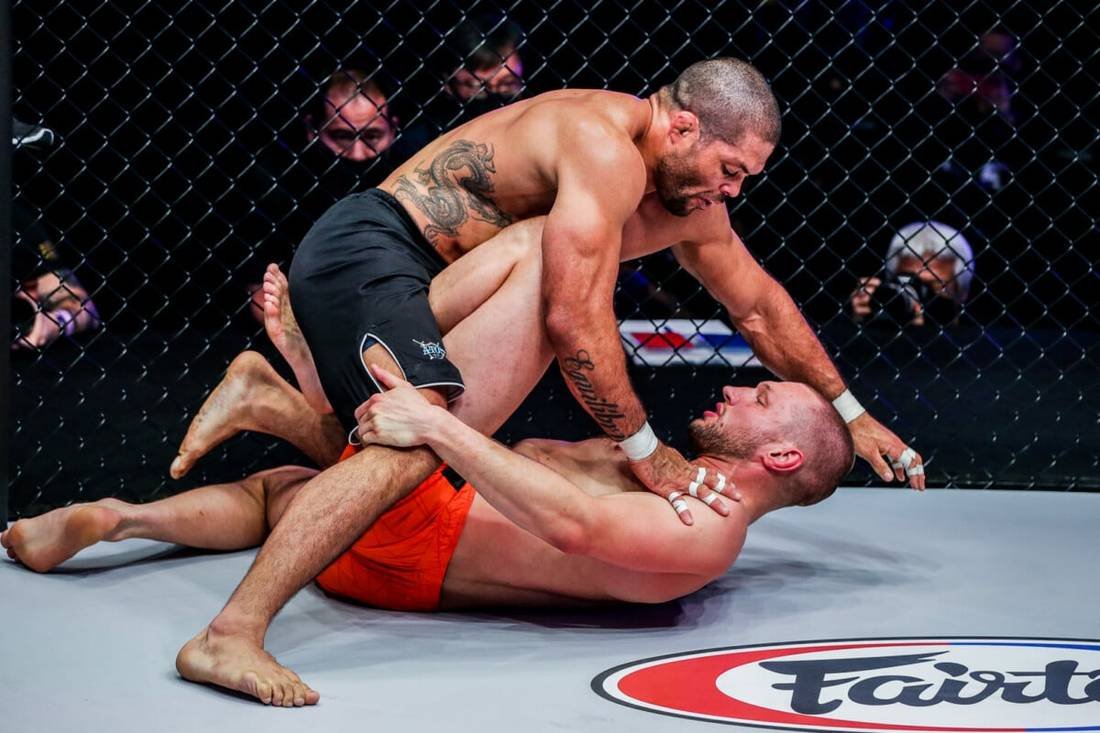
Stitching is the other tell. Flatlock seams lie flush against the skin and are what any rashguard built for actual training should use — overlock seams, the raised ridge stitching common on cheap import shirts, will saw against skin during long mat time and are usually the first thing to fray. Printing method matters for longevity too: sublimated designs are dyed into the fibers themselves and won’t crack or peel, while screen-printed graphics sit on top of the fabric and start flaking within a season of regular washing. Sublimation costs a manufacturer more up front, which is one of the more reliable signals that a shirt was built to last rather than to hit a price point — a graphic that’s still crisp after fifty washes almost always means sublimated print underneath it.
How Many Rashguards a Regular No-Gi Grappler Actually Needs
Anyone training no-gi three or more times a week needs at minimum four to five rashguards in rotation, not two. The math is straightforward: a rashguard needs a full 24 hours to dry out completely and for its elastane to recover between wears, and going back on the mat in a shirt that’s still damp from the night before is both uncomfortable and a fast track to fabric breakdown. Elastane loses roughly half its recovery capacity after repeated hot-water washes and machine drying, which is the real reason a rashguard that looked fine at six months suddenly feels baggy at nine — it’s not the size that changed, it’s the fiber.
Washing and Care That Actually Extends Life
Cold water, inside out, and skip the fabric softener — softener coats synthetic fibers with a film that blocks the wicking properties the fabric was built for, which defeats the entire purpose of the shirt. Machine drying on heat is the single fastest way to break down spandex fibers; air drying flat or on a hanger takes longer but preserves both the compression and the print far longer than a dryer cycle ever will. If a gi is being washed in the same load with bleach or a heavy-duty detergent, rashguards should go in a separate, gentler cycle — bleach breaks down elastane even faster than heat does.
Between washes, letting a rashguard sit balled up in a gym bag is close to the worst thing that can happen to it short of the dryer. Trapped moisture in a closed bag is exactly the warm, damp environment bacteria and fungus need to take hold, and it doesn’t take long in a Taipei-summer gym bag for that to become a smell that survives the next wash. Pulling gear straight out of the bag and hanging it, even for an hour before it goes in the hamper, cuts down on both the odor buildup and the skin-infection risk that comes with letting damp fabric sit against gear that never fully dries between sessions.
Every rashguard eventually gets retired — that part isn’t avoidable. What actually varies is the timeline. A shirt bought on fit, fabric weight, and stitching quality, then cared for with cold washes and air drying, can stay in honest rotation for two years or more. One bought on graphic design alone, in the wrong size, and thrown in the dryer every week rarely makes it past a single training cycle.
Sources
- Wikipedia: Rash guard
- IBJJF — International Brazilian Jiu-Jitsu Federation
- Compression garments and recovery from exercise-induced muscle damage: a meta-analysis — PubMed