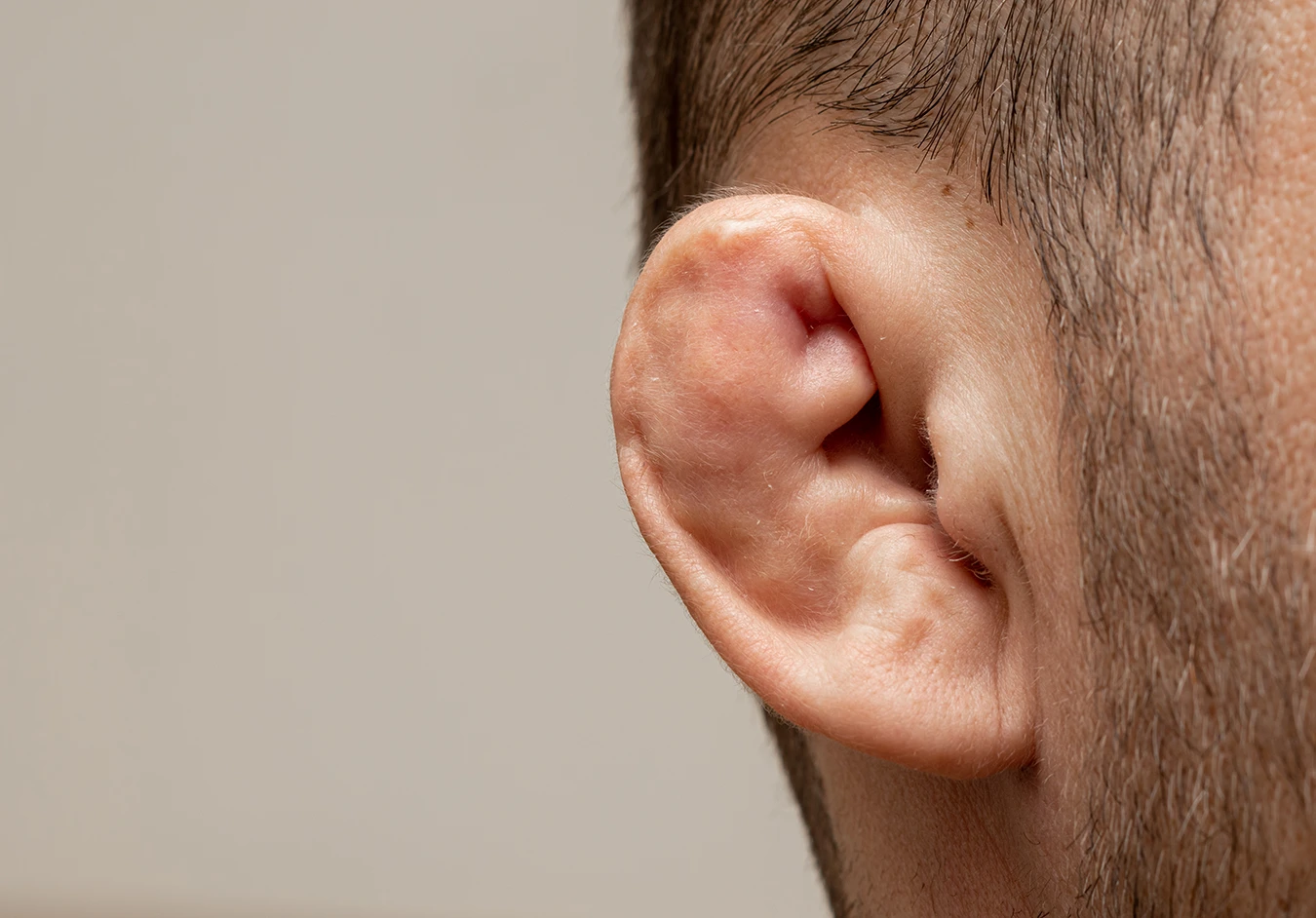
Cauliflower Ear in No-Gi: The Biology Every Grappler Should Understand
Most grapplers hear the same advice when they first ask about ear guards: just wear them, or your ears will end up looking like that. The product question gets answered. The mechanism never does. Understanding what actually happens inside the ear during no-gi training — the specific tissue failure, the sequence of events, the window during which that sequence can still be interrupted — changes how grapplers think about protection. It makes the decision to wear an ear guard feel less like a vague precaution and more like a direct response to a known biological process.
The Anatomy That Creates the Vulnerability
The outer ear, or auricle, is shaped by elastic cartilage. Unlike bone, cartilage has no direct blood supply. It depends entirely on a thin layer of connective tissue called the perichondrium that wraps around it. The perichondrium carries oxygen and nutrients to the cartilage and is responsible for its structural maintenance.
This arrangement creates the core vulnerability behind cauliflower ear. When force separates the perichondrium from the cartilage beneath it — through a direct blow, sustained friction, or repetitive pressure — blood from the surrounding tissue fills the gap. That accumulation is called an auricular hematoma, and it marks the beginning of a cascade that, without intervention, ends in permanent structural deformity.
What Makes This Different from a Normal Bruise
A bruise in muscle tissue involves bleeding into tissue that retains its own blood supply and healing capacity. The muscle heals, the blood reabsorbs, and the structural damage resolves. Auricular cartilage does not have that capacity. When the perichondrium separates, the cartilage below it loses access to its nutrient source.
The body responds by sending fibroblasts — cells that produce collagen — into the hematoma space. Those cells are performing a standard repair response to tissue injury. The collagen they lay down organizes into fibrous tissue, and over weeks that fibrous tissue calcifies. The result is the characteristic hard, irregular thickening that defines cauliflower ear.
The deformity is not passive damage that accumulates slowly from the outside. It is the body’s own repair process, triggered by a specific anatomical separation, producing a structural change that cannot be reversed without surgery once calcification has set in.
How No-Gi Training Creates the Conditions
No-gi grappling creates ear exposure differently than most other contact sports. A boxer’s ear is at risk primarily from direct impact. A no-gi grappler’s ear is at risk from a combination of sustained pressure, mat friction, and shear force that occurs across every position and transition in a typical session.
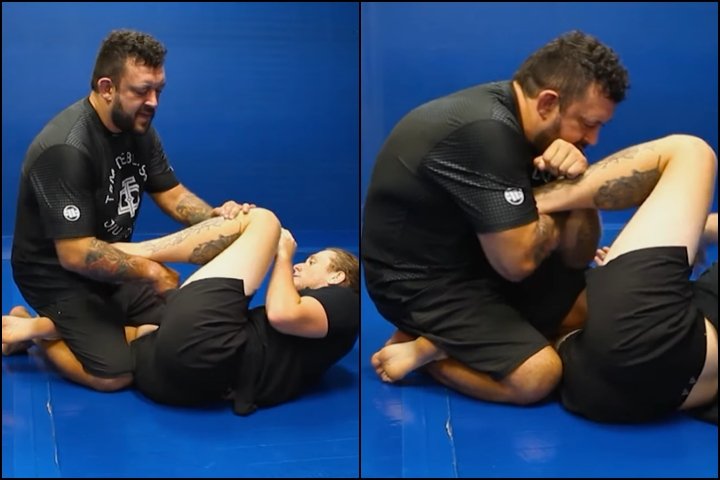
Turtle position is one of the most consistent sources of exposure. When a grappler turtles to avoid a takedown or reset from bottom, one ear sits against the mat. Over the course of a round, that ear may press against the surface dozens of times, each contact generating low-grade friction and compression. Individually, none of these contacts causes acute damage. Cumulatively, they produce micro-separations of the perichondrium that prime the ear for a hematoma with very little additional force required.
Clinch work produces a different type of exposure. In over-under or body-lock positions, the ear sits against an opponent’s chest, shoulder, or ribcage for the entire duration of the exchange. This is sustained compressive force — not impact but continuous loading — held through multiple scrambles and position changes within a single round. The ear does not get a break between attempts. It remains in contact with surfaces and opponents for extended stretches within every session.
The Role of Shear Force in Perichondrial Damage
Shear force — force acting parallel to a surface rather than perpendicular to it — is particularly effective at separating the perichondrium from the underlying cartilage. Direct compression can cause damage, but shear is what most efficiently pulls the two layers apart.
In no-gi training, shear arises in specific movement patterns. Sprawling is a reliable one: as the hips drive back to defend a takedown, the head drops and one ear drags across the opponent’s hip or the mat surface. The body is moving in one direction while the ear maintains contact with a surface moving in another. That differential creates shear.
Guard recovery creates a similar dynamic. When a bottom player attempts to hip escape while an opponent’s chest rests on their head, the ear can drag across the mat in a direction opposite to the hips. Guillotine defenses and neck crank sequences involve the ear pressed against an opponent’s forearm while the head rotates — the rotation is the shear element. None of these movements feel dramatic in the moment. They are standard no-gi transitions that every grappler performs throughout every session. That is precisely why the risk accumulates without any single injury standing out as the obvious cause.
The Timeline From Trauma to Permanent Change
The cascade from first perichondrial separation to permanent deformity moves faster than most grapplers expect. Within the first 24 hours of an injury, blood continues to accumulate in the space between the perichondrium and cartilage. The ear may appear swollen or feel warm; it may show no external signs at all if the accumulation is small.
Between 48 and 72 hours, fibroblast activity begins. The body is already in the process of organizing the hematoma into fibrous tissue. This is the critical window for intervention. Compression applied during this period — from a well-fitted ear guard worn during subsequent training, from a medical compression wrap applied after drainage, or from both — can physically prevent the space from remaining open and allow the perichondrium to reattach to the cartilage before fibrosis begins.
After 72 hours, the organizing hematoma becomes increasingly resistant to non-surgical treatment. The fibrous tissue being laid down is structurally incorporating into the ear. Calcification can begin as early as one to two weeks after initial trauma. Once calcification occurs, the structural change is permanent.
Why Draining Without Compressing Fails
Medical treatment of auricular hematoma involves drainage — removing the accumulated blood — followed by compression held in place for days. The compression is not supplementary to the drainage. It is the mechanism that allows the treatment to work. Without it, the perichondrium re-separates immediately. The space refills, sometimes faster the second time because the injury site is already sensitized and the tissue planes have been disrupted.
For no-gi grapplers who drain an ear and return to training without adequate compression, re-accumulation is effectively certain. The same positions and movements that created the initial injury — turtle, sprawl, clinch exchanges — recreate the exact pressure conditions needed to re-open the space. Draining alone addresses the symptom. Compression addresses the structural problem. A grappler who drains without compressing has removed the fluid from a space that will immediately begin to fill again the moment training resumes.
How Ear Guards Break the Cycle
An ear guard works by maintaining compression against the outer ear throughout training. This addresses the cascade at its first step. When the perichondrium is held firmly against the cartilage by external compression, the force required to separate them increases significantly. Friction, sustained pressure, and moderate shear from typical no-gi positions may still occur, but the guard limits the relative movement between the two tissue layers — the movement that causes the separation.
This is why fit quality matters beyond comfort. A guard that cups the ear with sustained, even compression addresses the mechanism. A guard that sits loosely reduces the impact force reaching the ear but does not provide meaningful compression to the perichondrium. The difference between the two is not aesthetic — it is the difference between actually protecting the tissue and simply absorbing some of the blow before the real damage occurs.
Prevention, Recovery, and Maintenance — Three Different Use Cases
There is a meaningful biological distinction between wearing an ear guard before any injury, immediately after a first injury, and after cauliflower ear has already calcified. Each represents a different relationship between the gear and the underlying tissue.
Before any perichondrial separation, an ear guard functions as true prevention. The perichondrium never separates. No hematoma forms. The cascade does not begin. This is the most effective use of the gear by a wide margin.
After a first injury that was treated with drainage and compression but not fully resolved, the guard functions as maintenance compression. The goal shifts to preventing re-accumulation while the tissue heals. In this case, the guard needs to be worn consistently across drilling and live rolling — not only during hard rounds, but in any training context that recreates the original pressure conditions. The 48-72 hour biological window is still relevant here; wearing the guard immediately after noticing the ear has taken trauma keeps the tissue compressed during the period when fibroblast activity is about to begin.
After calcification has set in, the ear guard serves a third purpose: protecting already-hardened tissue from additional trauma and protecting the unaffected ear from beginning its own cascade. This is a legitimate use of the gear, but it is categorically different from prevention. The biological window for non-surgical intervention has closed on the affected ear. The value now is entirely protective — preventing new damage and limiting further deformity.
What the Biology Means in Practice
Understanding the mechanism does not change which ear guard to purchase. It changes when to wear it and how consistently. Grapplers who understand that the perichondrium separates gradually — not in a single catastrophic moment — recognize that drilling at lower intensity does not eliminate the risk. Friction and sustained pressure occur during drilling just as they do during live rounds. The intensity is lower; the ear contact with the mat, with a partner’s body, and across standard position transitions is the same.
The biology also makes clear why waiting to see visible swelling before adding compression is waiting for the cascade to start. The 48-72 hour window begins at the point of first perichondrial separation, not at the point of visible hematoma. A grappler who trains hard, notices the ear feels warm or slightly different afterward, and wears an ear guard for the next session may still be within the protective window. One who waits three days to decide the swelling is significant is not.
No-gi grappling specifically generates the conditions for cumulative perichondrial trauma — extended mat-contact positions, sustained clinch exchanges, and repetitive shear-generating transitions across every session. An ear guard addresses the mechanism directly. The biology explains why that mechanism works, why timing matters, and why the window for prevention is shorter and more specific than most grapplers assume until after it has closed.
Sources
- Cauliflower Ear — Wikipedia
- National Center for Biotechnology Information — Auricular Hematoma Research
- American Academy of Otolaryngology-Head and Neck Surgery
Image credit: audibel.com