No-Gi Baseball Choke: 7 Keys to the Finish
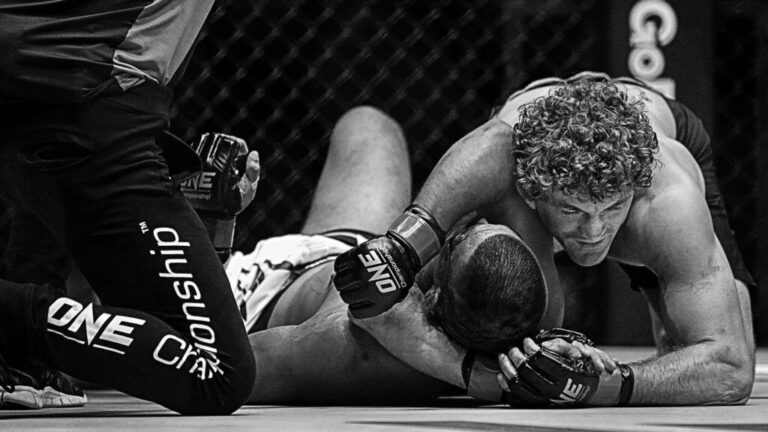
In December 2022, Vitaliy Mironyuk caught Kim Jin-Kuk with a baseball choke at Road FC 62 in Seoul — a finish rare enough in MMA that clips of it circulated on BJJ forums for weeks afterward. The choke started life in the gi, built around a two-handed collar grip American grapplers thought looked like gripping a bat. Take the collar away and most people assume the choke disappears with it. It doesn’t. It just needs a different anchor.
What the Baseball Choke Actually Is
Judo players call it Ura-Juji-Jime — a cross-grip strangle that’s been in the Kodokan syllabus since Kyuzo Mifune’s era. BJJ picked it up decades later and renamed it after the grip shape: one hand palm-up, one hand palm-down, both gripping close together behind the opponent’s neck like you’re choking up on a bat. The mechanics make it a combined choke and strangle — one forearm presses the trachea while the other closes off blood flow through the carotids, so it can put someone out even if they manage to protect their airway.
The move stayed a curiosity until 2013, when fresh black belt Magid Hage used it to submit Zax Maxwell and put Clark Gracie to sleep at the Abu Dhabi World Pro Trials in San Diego. Both finishes were in the gi, but the clip made the choke mainstream, and no-gi grapplers spent the next decade figuring out how to keep the mechanics without a collar to grab.

Why It’s Different Without the Gi
Strip the collar out of the equation and the choke has to come from somewhere else. Most no-gi black belts build it off a gable grip — palms locked together, forearms crossed behind the neck — or an S-grip, where the fingers hook into each other instead of locking flat. Both give you the same crossing-forearm pressure the gi grip creates, just anchored to your own hands instead of fabric.
That trade-off cuts both ways. You lose the mechanical advantage a fistful of collar gives you, but you gain a grip that can’t be stripped by grabbing the fabric — because there isn’t any. Sweaty no-gi rashguards make the choke slide around more before it locks, so most instructors teach grinding the forearms in tight before committing to the squeeze, rather than expecting the grip to bite instantly the way a gi collar does.
The Setup From Turtle and Top Side Control
Eli Knight, who has a full instructional built around the no-gi version, teaches it primarily against turtle — a position most grapplers treat as purely defensive, which is exactly why the choke catches people. Once your opponent turtles, thread one arm under the chin and the other over the far shoulder, lock your hands into a gable grip, and you already have the finishing position before they’ve registered the danger.
From top side control or knee-on-belly, the entry looks different but the destination is the same. Get your near-side arm across the neck, your far-side hand grips through to meet it, and you walk your hips toward their head as the grip tightens. The turtle position entry tends to catch newer opponents off guard precisely because they think curling up ends the exchange — it just changes which choke is coming.
Grip Mechanics: Building the “Bat” Without a Collar
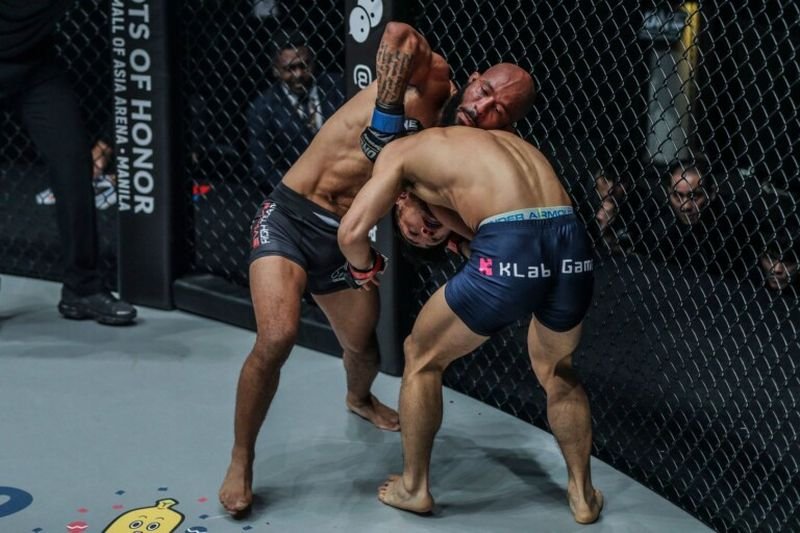
The detail that separates a choke that lands from one that slips is hand placement, not raw strength. Your first hand goes in with a thumb-in grip tucked right behind the ear. The second hand comes in four fingers first, palm up, as close to the first grip as you can physically get it — the tighter those two grips sit next to each other, the less slack the choke has to close before it bites.
Grapplers who’ve drilled both the D’arce and the baseball choke will recognize the family resemblance. The D’arce choke traps an arm along with the neck and finishes with a similar arm-triangle mechanic; the baseball choke skips the arm entrapment entirely and goes straight for a clean two-on-neck grip, which is part of why it can appear from more positions than the D’arce can.
Finishing Details: Hip Movement Does the Work
Grip strength gets too much credit for how this choke actually finishes. Once your forearms are set, the finish comes from moving your hips away from your opponent’s hips while turning your belly to face the same direction as theirs. That rotation does what your arms alone can’t — it converts a loose grip into a tight one without needing to re-grip or crank harder.
Skip the hip movement and you’re relying on forearm strength against someone’s neck muscles, which is a fight you’ll eventually lose against a bigger or more experienced opponent. Grapplers who finish this choke consistently describe it less as squeezing and more as rotating away — the choke tightens itself as a byproduct of the position change, similar to how a well-set north-south choke finishes off body positioning rather than grip strength alone.
Where It’s Actually Landed in Competition
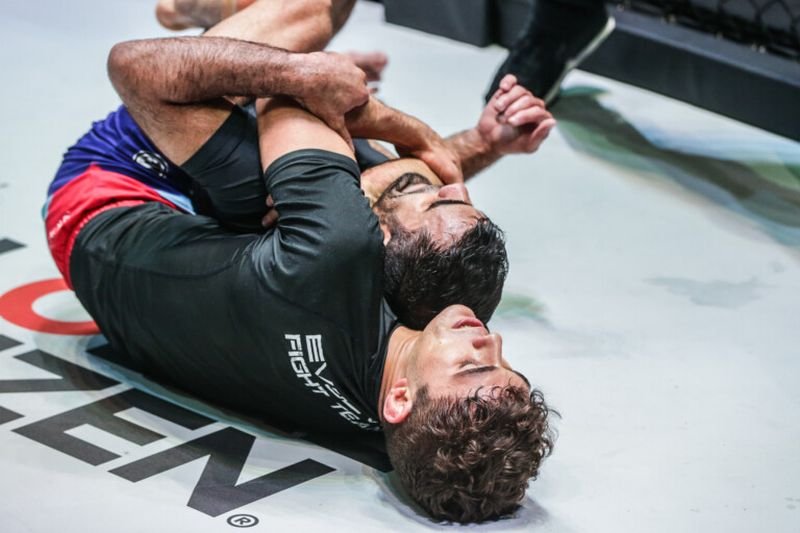
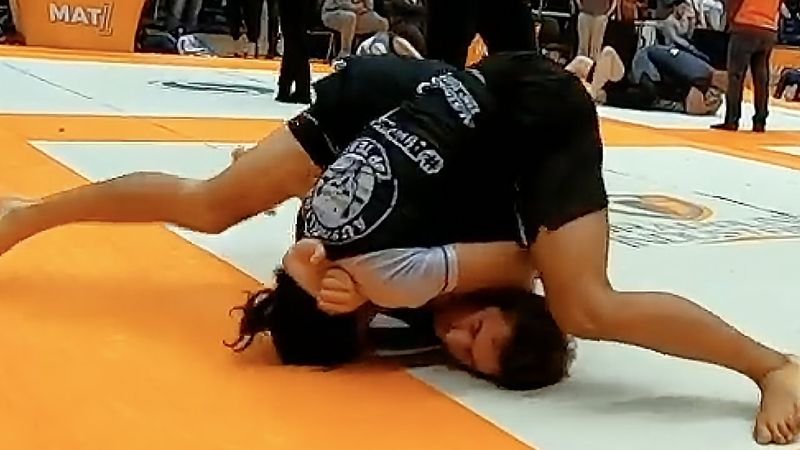
Outside the Mironyuk finish, the clearest recent example comes from the women’s no-gi ranks: Olivia Brown won a No-Gi Worlds title with the exact grip described above, catching her opponent off guard with a choke most competitors never drill because they assume it needs a collar. Finishes like hers are why the technique keeps resurfacing in highlight reels years after Hage first popularized it — it’s rare enough that very few grapplers have built a real defense against it, gi or no-gi.
That rarity is the whole appeal. Most black belts have seen ten thousand reps of guillotines and rear-naked chokes defended in drilling. A tight baseball choke grip is still something most training partners haven’t felt before, and unfamiliar pressure buys you the extra half-second a finish needs.
There’s a gear side to this too, and it matters more in no-gi than most people expect. A rashguard that bunches or rides up around the collar changes exactly how much friction your forearms get against an opponent’s skin during the grinding phase before the grip locks — a compression-fit rashguard that stays flat against the shoulders and neckline gives you cleaner contact than a looser cut that slides. It’s a small detail, but grapplers chasing a grip-dependent finish like this one tend to notice fit issues that guard players never do.
Is It Legal? Checking the Ruleset First
Blood chokes and air chokes are both legal under every major no-gi ruleset — ADCC, EBI, WNO, and standard IBJJF no-gi divisions all permit the baseball choke without restriction, since it doesn’t involve the neck-cranking mechanics that get slicers and can openers banned at lower belt levels. The one place to double-check is local gym or smoker-event rules for white and blue belt divisions, where some organizers restrict blood chokes generally out of caution for inexperienced competitors who tap late.
Worth knowing before you drill it: because the choke closes fast once the hip rotation kicks in, tap early in practice. The combined blood-and-air mechanism means there’s less warning than a pure air choke gives you — you don’t get the slow, obvious airway-closing sensation of something like a guillotine. Training partners who’ve been caught by it describe the finish as sudden rather than gradual, which is exactly why so many people go out before they realize they should have tapped.
Common Mistakes That Let Opponents Escape
The single biggest error is setting the grip too wide. If there’s daylight between your two hands, you’ve built a loose collar out of your own forearms instead of a tight bat grip, and any opponent with functional neck strength will find room to breathe through the gap. Close that gap before you commit your hips to the finish, not during it.
The second mistake is skipping the walk. Grapplers who try to finish this choke from a static position — arms locked, hips still — are betting everything on grip strength, and that bet loses more often than it wins. The hip rotation isn’t optional technique flavor; it’s the actual mechanism that closes the choke.
A less obvious mistake: going for the finish before the base is secure. From turtle especially, opponents who feel the grip forming will often try to roll through the choke to escape to their back. Without hip and base control locked in first, that roll can dump you off the position entirely — you lose both the choke and the top spot.
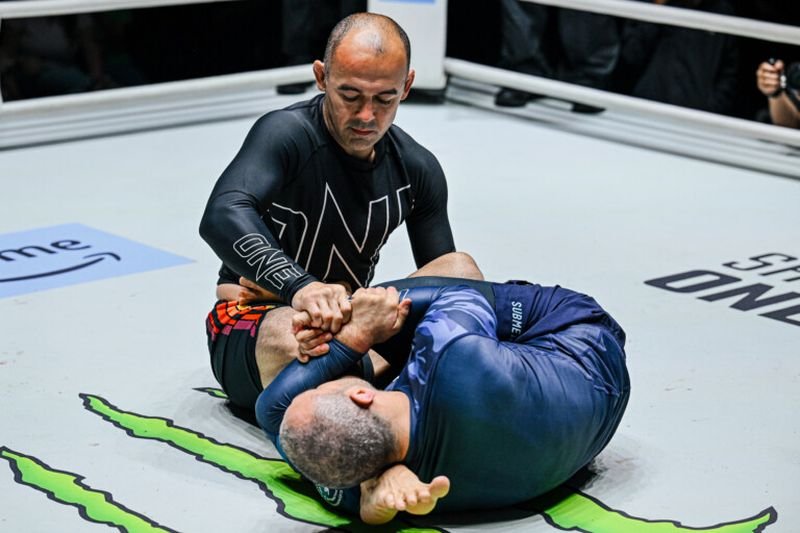
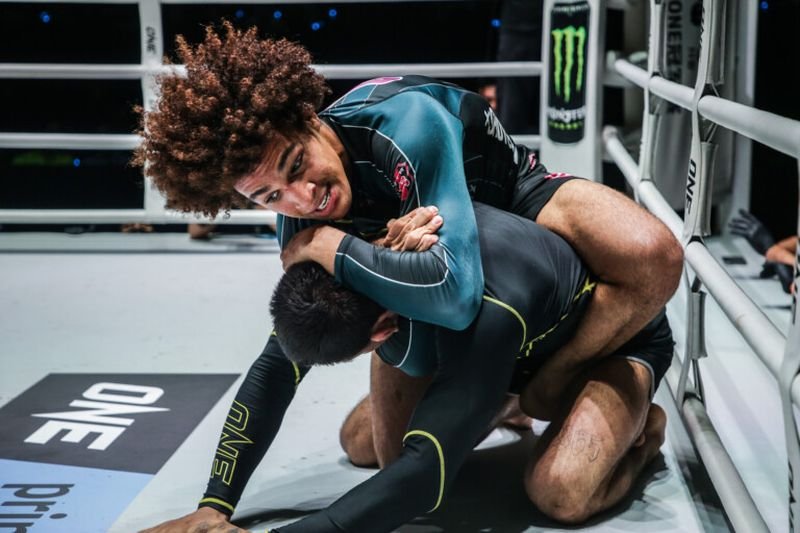
Positional control errors compound fast once a choke this specific is in play. Grapplers who grind out top position the way Kade Ruotolo does — settling weight before committing hands to the finish — rarely fall into any of the three mistakes above, because their base is never in question by the time the grip goes on.
Defending the No-Gi Baseball Choke
Even the finishing details change shape depending on entry. A standing reverse version of the grip — caught mid-lock below at a Grappling Industries event — shows how far grapplers have pushed this choke beyond its turtle and side-control roots. If you’ve only ever drilled it from the ground, it’s worth seeing how the same hand placement translates when both competitors are on their feet.

The defense window is early, not late. The moment you feel a second hand joining a grip near your neck, get your chin down and your hand inside the developing grip before the hands lock together — once both palms are set and close, the defense gets exponentially harder. Turning into the choke rather than away from it also buys space, since the grip depends on your neck staying in a fixed line relative to your opponent’s hips.
If the grip is already locked and tight, fighting the hands directly rarely works — they’re too close together to peel apart one at a time. Better odds come from attacking the base: hip escape hard toward the space behind your opponent’s far knee before they’ve completed the hip rotation that finishes the choke. Once that rotation is done, you’re defending a finished position instead of a developing one, and those are much longer odds.
Eli Knight’s breakdown above is the clearest no-gi instructional available on this specific grip, and it’s worth watching the turtle-position entry in particular — it’s the setup most training partners will never see coming, precisely because it doesn’t look dangerous until it already is.
Most submissions in no-gi grappling reward the person with the tighter fundamentals. This one rewards the person willing to drill something nobody else in the room has bothered to learn. Add it to your game and you’ll find it lands more from sheer unfamiliarity than from any wrestling match of pure strength — right up until everyone in your gym has felt it once and starts defending it on reflex.
Sources
- BJJ Eastern Europe — MMA Fighter Pulls Off Rare Baseball Bat Choke Submission — coverage of Vitaliy Mironyuk’s finish over Kim Jin-Kuk at Road FC 62.
- Evolve MMA — BJJ 101: Baseball Choke — grip mechanics and the Ura-Juji-Jime/judo background of the technique.
- Wikipedia — Ura Juji Jime — the judo cross-choke this technique is adapted from.