UFC BJJ 12’s Leg Lock Night Ends in Scorecard Controversy | No-Gi Weekly Oct 5–11, 2026
Gilbert Burns retired from the UFC in April, signed with UFC BJJ a month later, and tapped to a heel hook in 4 minutes and 34 seconds against a debuting black belt. That is the fastest way to summarize what UFC BJJ 12 did to the leg lock era’s biggest holdout: even a former title challenger with 20 years on the mats is not safe once the shots start landing this clean.
Four Leg Locks in Seven Fights
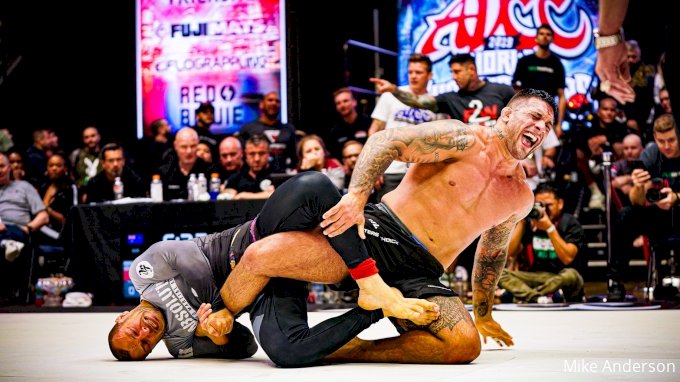
Gabriel Almeida opened the middleweight bout by failing a guillotine attempt, got taken down by Burns off the scramble, then reversed into top position, attacked the neck, and switched to a tight figure-four on Burns’s left leg. Burns tapped at 4:34 of round one. It marked Almeida’s first UFC BJJ appearance and his first ranked scalp against a name that spent a decade competing in the UFC’s Octagon.
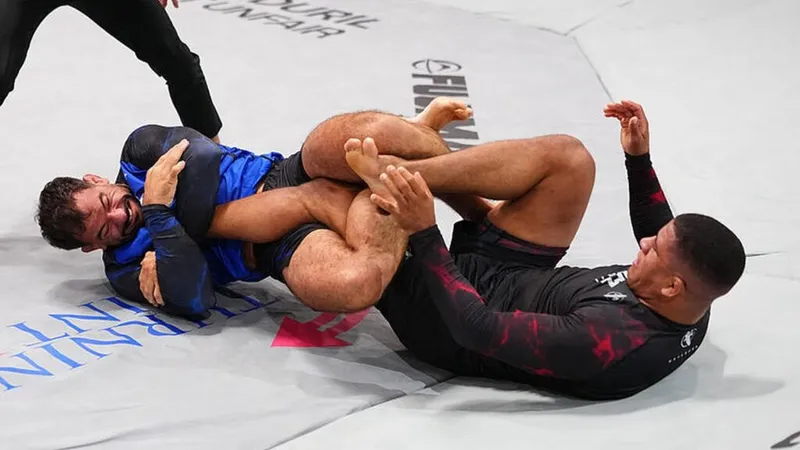
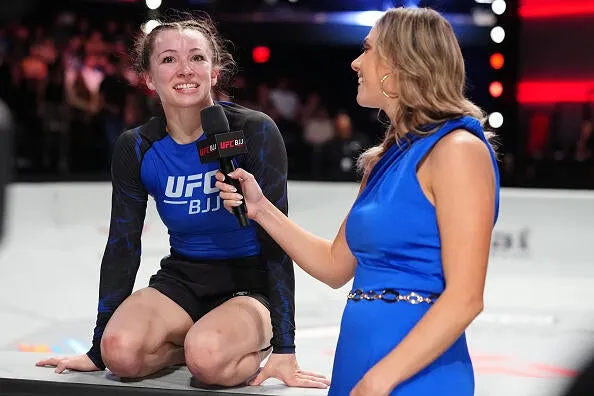
Three other fights went the same route. Kade Anastasios caught Ataide Rafael in a heel hook at 4:19 in the welterweight bout, and Raphael Ferreira finished Kyle O’Hare the same way at 3:14 in the featherweight slot. Landon Elmore closed out his lightweight bout with a straight ankle lock on Max Livingston at 3:42, a finish the Hayabusa-sponsored Elmore has now used to end three of his last four appearances. Thaynara Victoria rounded out the submission card differently, pulling guard against Danielle Kelly and forcing an armbar tap at 2:53 of round one in the women’s strawweight matchup.
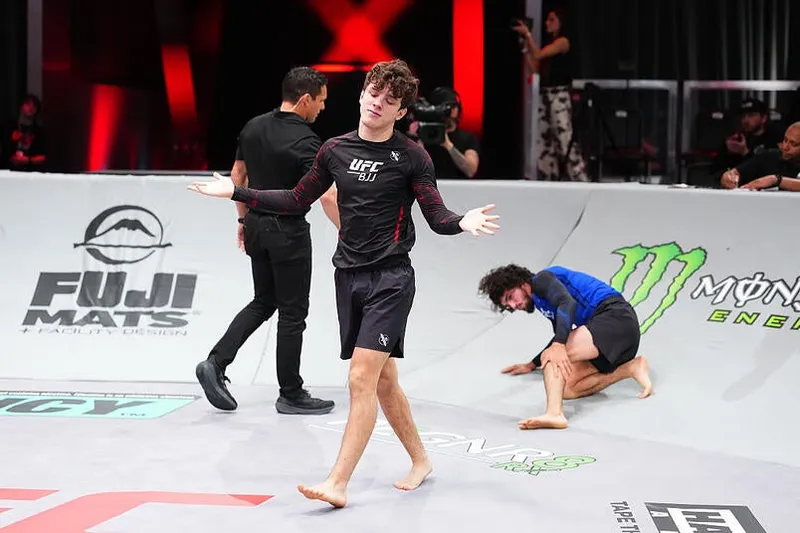
Four leg attacks and one arm attack out of five finishes tells you where the meta sits right now. Grips are tighter, entries are faster, and fighters with a wrestling or MMA background — guys like Burns who built careers on takedowns and top pressure — are discovering that stalling in a bad position against a leg lock specialist is a losing bet in regulation no-gi rounds. If you want the mechanics behind why this finish keeps landing in high-level competition, our heel hook setup breakdown covers the grip sequencing Almeida and Anastasios both used.
Worth noting on the Almeida finish specifically: it wasn’t a scramble-born lucky grip. Burns shot first, Almeida stuffed it into a front headlock, and when the guillotine didn’t bite he rode the failed attempt straight into an outside ashi entry — the same entry sequence most coaches teach as the “safe” route into a heel hook because it keeps the hips stacked and reduces the knee-shear risk to the attacker. Burns had his hand on the mat trying to post out of the figure-four for a full two seconds before tapping, which tells you he recognized the position and still couldn’t build the frame to escape it. That’s the detail that should worry anyone who thinks a strong base alone is enough leg lock defense.
Moura Becomes the First UFC BJJ Double Champion — But Not Everyone Agrees
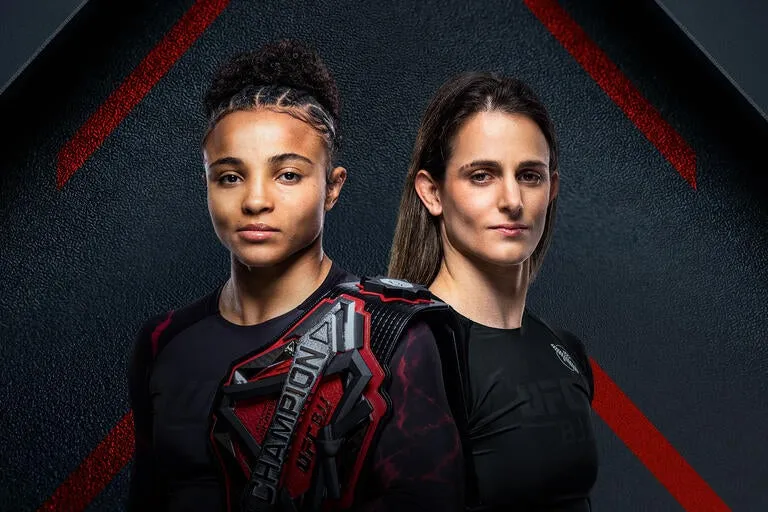
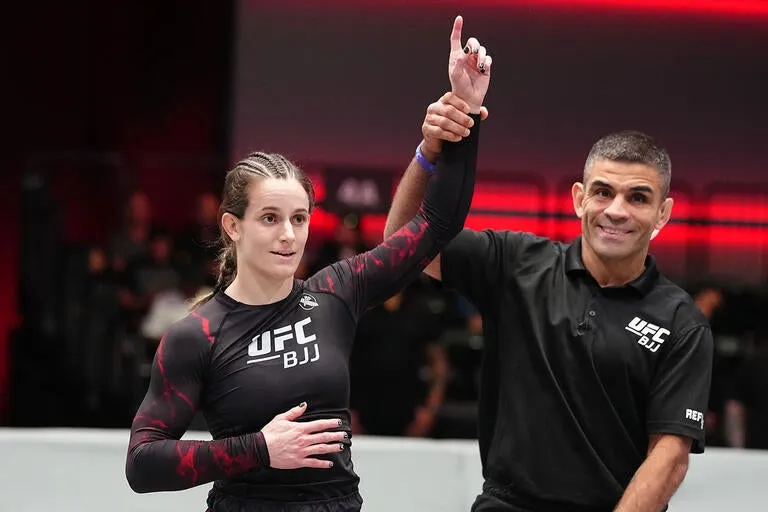
The main event carried more weight than any heel hook on the card. Cassia Moura walked in as the reigning bantamweight champion and walked out with the flyweight belt too, the first fighter in UFC BJJ history to hold two titles at once. The 20-year-old’s split decision over Adele Fornarino looked, on paper, like a clean coronation.
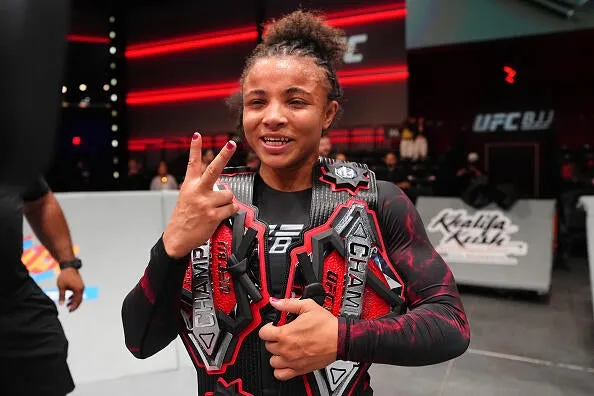
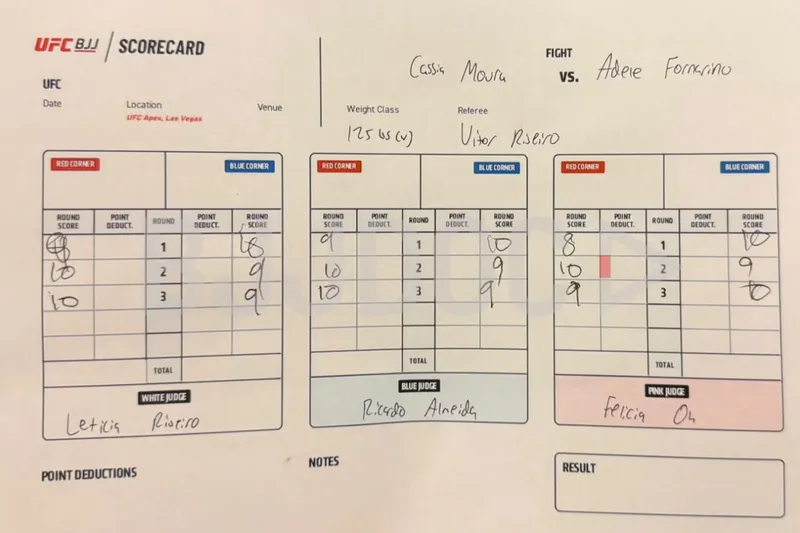
The tape tells a messier story. Fornarino built a dominant position in round one and had Moura close to tapping when an eye poke disrupted the sequence and the round was waved to a restart. Judge Letticia Ribeiro’s scorecard, posted publicly after the fight, shows round one originally marked 10-8 in Fornarino’s favor before being revised to 9-9 — a two-point swing that mattered in a fight decided by split decision. ADCC champion Craig Jones, who has financial skin in the women’s no-gi scene through his own events, posted the altered card and said flatly that UFC BJJ’s judging pool is steered by people “lacking deep jiu-jitsu roots.” He didn’t name names lightly — he called out specific UFC BJJ officials by name in the same post.
This is not the first time a UFC-adjacent grappling promotion has taken heat over how it scores rounds instead of letting finishes decide things — Gordon Ryan’s camp raised similar questions after the brawl that broke out at ADCC 2026 in Krakow this past September, where three competitors were suspended partly over frustration with how matches were being officiated. The common thread: when a sport built on finishes starts leaning on decisions, every close one gets picked apart frame by frame, and trust erodes fast if the explanation doesn’t hold up.
Canuto Claims the Vacant Lightweight Title
The co-main carried less controversy and more substance. Renato Canuto took the vacant lightweight belt from Ethan Crelinsten by unanimous decision across three rounds of genuine scrambling — repeated submission attempts from both men, no finish, but a clearer case for the judges than the main event gave them. Canuto’s win fills a belt that had sat empty since the division’s previous champion moved up in weight, and it puts a fresh name at lightweight heading into UFC BJJ’s next card.
Danielle Kelly’s armbar loss to Thaynara Victoria closes out a rough stretch for one of the sport’s more recognizable crossover names — Kelly has split her last several appearances between grappling superfights and UFC BJJ cards, and a first-round submission loss against a hungry strawweight is the kind of result that reshapes a ranking fast.
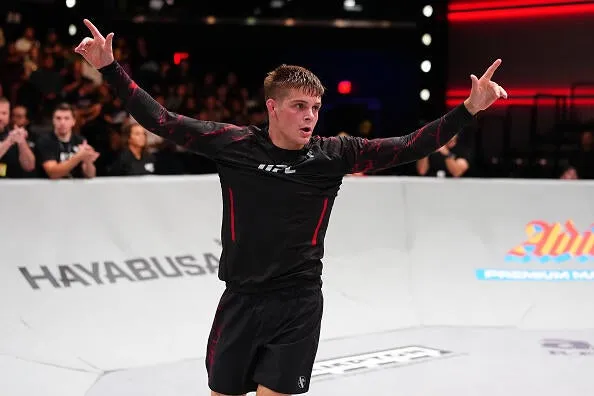
John Chandler closed the night the way he opened his UFC BJJ run — grinding out a decision. His unanimous decision win over Raphael Gomez pushes him to 2-0 inside the promotion, and while it’s the least dramatic result on a card full of fast finishes, a clean 2-0 start is still a 2-0 start.
Smaller Mats, Same Weekend
UFC BJJ 12 wasn’t the only thing on the no-gi calendar this week. The 2026 IBJJF Pan No-Gi Championship wrapped its final day on October 5 in Secaucus, continuing storylines we’ve already covered from Pawel Jaworski’s heel-hook-heavy run to the black belt podiums. Saturday, October 10 brought a trio of smaller regional opens — the ADCC Spain Madrid Open in Torrejón de Ardoz, the Adriatico BJJ Cup in Bari, and the Alaska State Adult No-Gi Submission Grappling Championships in Anchorage — a reminder that the ADCC brand’s licensing push has pushed regional no-gi tournaments into places that had zero competitive grappling scene five years ago.
That expansion matters more than it looks on a results page. Every new regional open is another batch of white and blue belts buying their first no-gi rashguard, researching sizing for the first time, and figuring out the difference between a competition cut and a training cut before they ever set foot on a big stage. The Madrid Open alone has grown its entry count every year since the ADCC brand started licensing regional opens to local promoters in 2024, and Spain’s expanding no-gi scene means more first-time competitors showing up without a clue about IBJJF-style compression requirements versus the looser standards most regional opens actually enforce. If that’s you, our straight ankle lock defense guide is a good place to start before your first tournament — leg entanglements are exactly where cheap, loose-fitting gear gets you stuck.
What This Week Means for Your Game
The through-line from Las Vegas to Anchorage is the same: leg locks aren’t a fringe skill anymore, they’re the default finishing route at every level of competition. Four of seven UFC BJJ 12 fights ended below the waist. If your own leg lock defense still starts and stops at “don’t let them get my foot,” this is the week to go fix that — not after you’ve tapped to one in a tournament you paid to enter.
There’s a gear angle here too that most grapplers overlook until it costs them a position. In a leg entanglement scramble, loose fabric around the calf and ankle gives your opponent something to grab onto that isn’t skin — which actually helps them control the limb they’re attacking. A properly compressed rashguard and spats combo reduces that extra material, which is part of why competition-cut gear fits noticeably tighter than training gear. We break down exactly what that fit should feel like in our no-gi rashguard fit guide if your current kit is doing you any favors in a scramble like the ones that ended four fights in Vegas this week.
On the judging side, Moura-Fornarino is a case study worth remembering the next time you’re scoring a close round yourself, whether that’s at your gym’s in-house tournament or just settling an argument about a match you watched together. A round that looks 10-8 in real time rarely gets revised down without a clear, stated reason — and “the judge changed her mind” isn’t one. Expect this one to keep generating commentary through the week, especially if UFC BJJ issues any kind of statement on the scorecard discrepancy before the next card.
Sources
- UFC BJJ 12: Moura vs Fornarino Results — UFC.com official results
- Gabriel Almeida Submits Gilbert Burns With First-Round Heel Hook At UFC BJJ 12 — MiddleEasy
- Craig Jones Calls Out UFC BJJ Ref After Adele Fornarino Gets Eyepoked and Robbed on the Scorecards — BJJ Doc
- 2026 Pan IBJJF No-Gi Championship Results and Podiums — FloGrappling