Gordon Ryan ADCC Brawl: 3 Banned, Explained
Fifteen against three isn’t a scuffle, it’s a mugging with a scoreboard. That’s roughly the math Gordon Ryan described from the mat area at Tauron Arena on September 12, when a routine opening-round submission turned into the ugliest scene ADCC has produced in years. The match itself lasted a few minutes. What happened after it lasted through the weekend’s headlines, cost two athletes their tournament runs, and put ADCC’s ability to police its own crowd on trial in front of the sport’s biggest audience.
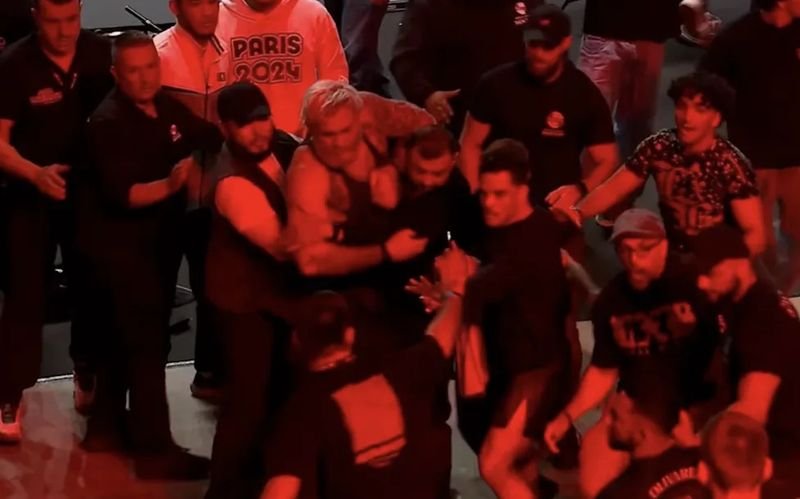
Gordon Ryan in the middle of the scrum that broke out matside at ADCC 2026.
What Caused the Gordon Ryan ADCC Brawl
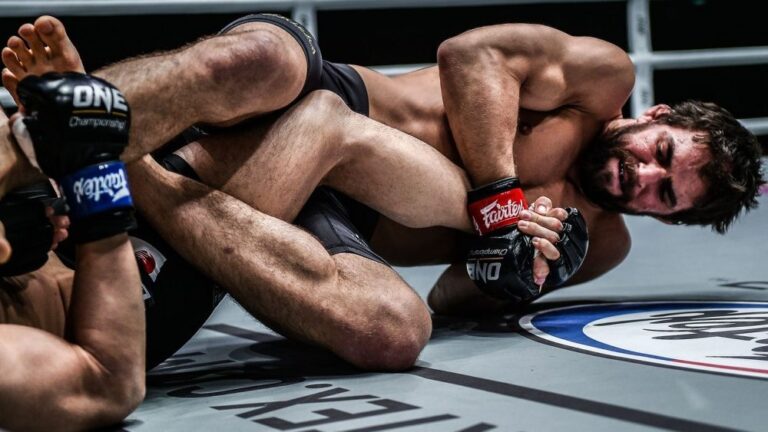
The trouble started inside the match, not after it. Dorian Olivarez, an 18-year-old black belt training under John Danaher, was working from mount against Bekzat Kapashov of Kazakhstan’s Top Team when, according to Olivarez, “he grabs my hand, puts it in his mouth and then bites down on my finger.” Officials paused the action, reviewed it, and let the match continue anyway rather than issuing an immediate disqualification. Olivarez finished the job moments later with a submission win.
That decision to let a bite go unpunished mid-match is the detail everyone with a stake in the sport should be asking about. A clean stoppage there ends the story with one disqualification and no video going viral for the wrong reasons. Instead, the match ended on Olivarez’s terms, and a sizable contingent from Kapashov’s corner treated that as unfinished business.
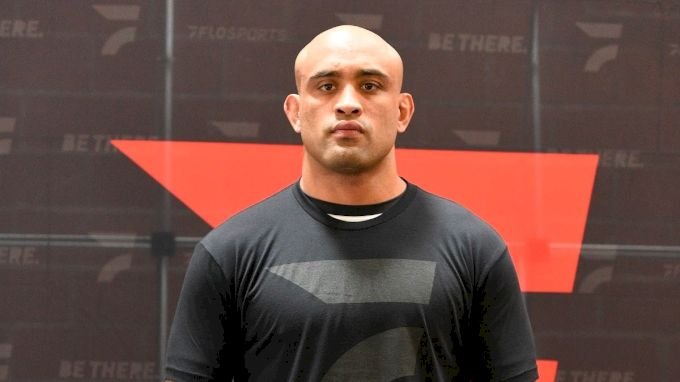
Context matters here, because Olivarez isn’t some anonymous name on a bracket sheet. He won the ADCC East Coast Trials at seventeen, became the first athlete to sit inside the top ten rankings of both FloWrestling and FloGrappling at the same time, and took lightweight gold at the 2024 IBJJF No-Gi World Championships in dominant fashion. John Danaher promoted him to black belt in January 2025 — a fast track that tells you how highly his own coaching staff rates him. None of that excuses what happened in the stands, but it explains why a corner packed with family and training partners was invested enough to lose its composure the moment the final horn sounded.
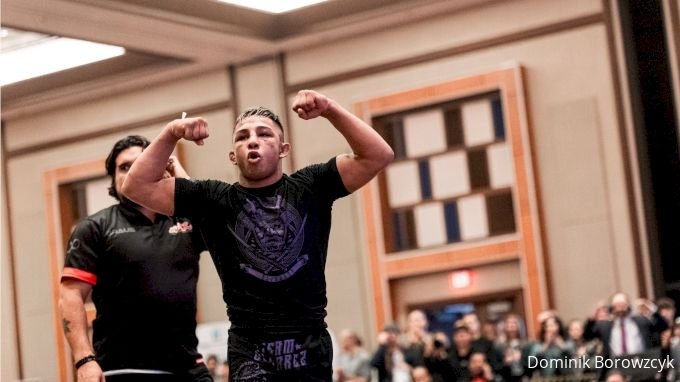
Dorian Olivarez, the 18-year-old Danaher black belt at the center of the incident.
How the Brawl Unfolded at Tauron Arena
Within seconds of Olivarez’s hand being raised, a group Ryan estimated at fifteen people moved on his corner. Ryan, coaching from the adjacent mat, crossed over to back up Olivarez and two other teammates he named as John and Mike. That’s when the numbers flipped against him personally. “They all turn towards me, immediately tackle me,” Ryan said afterward. “Five or like six guys started hitting me in the head. One guy started soccer kicking me, a couple of guys punching me.”
Video of the incident, filmed from multiple angles by fans in the arena, shows a chaotic pile near the scoring table before ADCC staff and other competitors pulled bodies apart. The whole thing ran under two minutes from first contact to separation, which sounds short until you remember one of the world’s most decorated grapplers spent most of it on the ground taking unanswered shots.
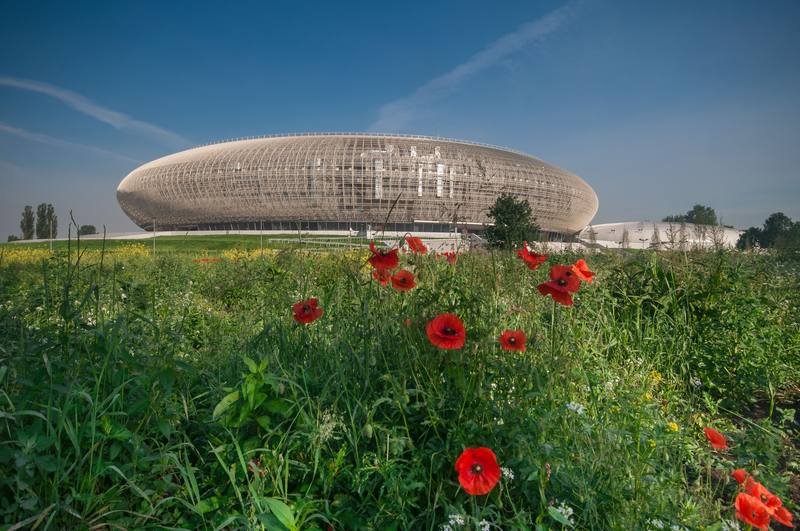
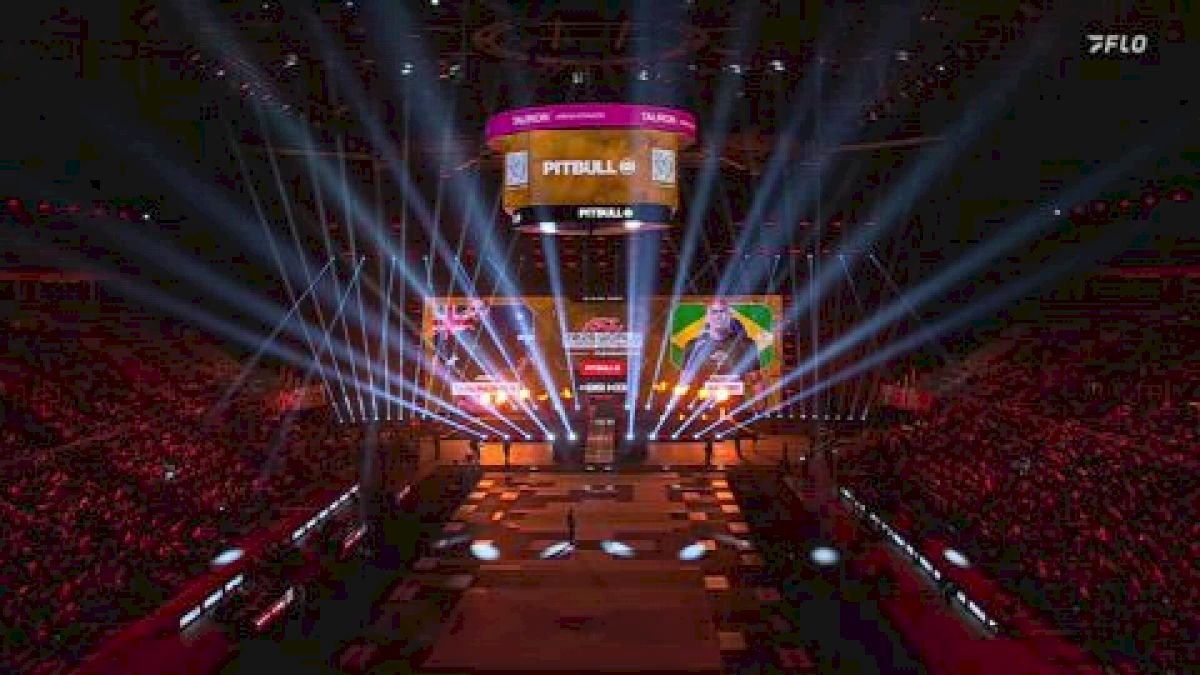
Tauron Arena in Krakow, hosting ADCC for the first time in the event’s history.
Who Got Banned From ADCC After the Brawl
ADCC didn’t wait for a formal hearing to act. Within a day of the incident, the organization confirmed three separate punishments. Dorian Olivarez was disqualified from the tournament and handed a one-year ban from ADCC competition, despite having won his match on the mat. Bekzat Kapashov received the identical penalty: disqualification and a one-year ban, tied directly to the biting incident that started the whole sequence. Mike Olivarez, Dorian’s father and cornerman, drew the harshest sanction of the three — a two-year suspension and a ban from attending or coaching at future ADCC events.
Owen Jones, who had already been eliminated earlier in the day in the -66kg bracket, was reinstated as Olivarez’s replacement once ADCC pulled both competitors from the tournament. That’s a small mercy for Jones, but it doesn’t undo the fact that a Kazakh grappler in his teens is out of the biggest event on his calendar for something that started before he ever set foot on the mat that day.
Gordon Ryan’s Reaction Wasn’t What You’d Expect
Most multiple-time ADCC champions getting jumped by a dozen strangers would come out swinging at the organization, the opponent’s camp, or both. Ryan did the opposite. His public statement treated the whole thing like a bar story rather than an assault: “Thanks to the Kazakh guys for the scrap. That was fun.” He didn’t call for further bans beyond what ADCC had already issued, and he didn’t ask for medical sympathy despite taking direct kicks to the head.
That reaction tells you something about where Ryan sits in the sport right now. He’s beaten essentially every rival ADCC could put in front of him, so a scrap with strangers barely registers next to his usual stakes. Whether that’s admirable toughness or a bad precedent for how seriously grappling treats crowd violence is a fair question — and one ADCC hasn’t really answered.
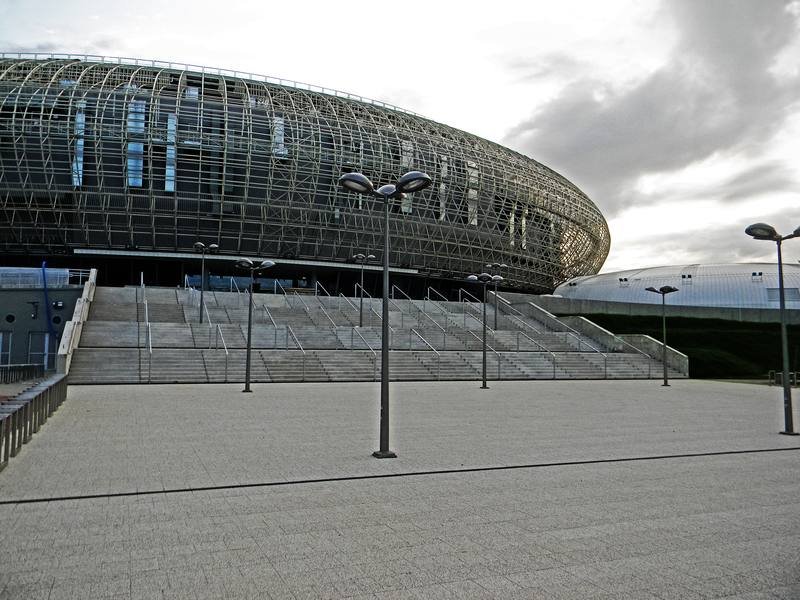
The Krakow venue drew close to 12,000 fans for ADCC’s first European return since 2017.
What This Means for ADCC’s Security Going Forward
ADCC has run without a serious crowd-control incident since expanding into arenas the size of Tauron. That streak is over, and the fix isn’t complicated: matside access needs to be restricted to credentialed corners, not open to a competitor’s entire travel party. Fifteen people getting within arm’s reach of a mat mid-tournament is a venue-management failure before it’s anything else. UFC and other combat sports settled this years ago with hard barriers and security staff between the crowd and the competition area — grappling promotions running arena-scale events are going to need the same thing.
There’s also a competitive fairness question buried in here. Olivarez won his match and still lost his tournament spot over conduct that happened after the final whistle. That’s defensible as a deterrent, but it sets a standard where a competitor’s own fans, not just the competitor, can end his run. Expect ADCC to clarify its corner-conduct rules before the next cycle, because right now the penalty structure punishes athletes for crowds they don’t fully control.
The Rest of ADCC 2026 Got Buried by the Brawl
It’s worth remembering an actual world championship happened around this mess. Felipe Pena became the first competitor in ADCC history to win the absolute division twice, and Victor Hugo added another gold to a resume that already included back-to-back IBJJF world titles. Yuri Simoes finished Kaynan Duarte in the superfight. On the women’s side, Helena Crevar, Ana Carolina Vieira, and Jasmine Rocha each took home gold in their divisions, and Pawel Jaworski won the up-to-88kg bracket in front of a home Polish crowd. Europe walked away with eight medals overall, its strongest showing in the event’s history, while South American athletes still topped the count with nine. Any one of those storylines would normally lead the week’s grappling news — our full ADCC 2026 Krakow roundup covers the brackets in detail. Instead, a fifteen-on-three scrum at the scoring table is what everyone’s talking about.
Is Gordon Ryan Facing Any ADCC Punishment?
No — and that’s worth spelling out, because his name is the one driving search traffic on this story. Ryan wasn’t a competitor in the Olivarez-Kapashov match; he was coaching from an adjacent mat and crossed over to help his corner once the confrontation started. ADCC’s disciplinary action targeted the two athletes who fought in the bout plus Mike Olivarez, who was identified as an active participant in the post-match scuffle. Ryan hasn’t been named in any suspension, fine, or formal warning tied to the incident, and nothing in his own statement suggests ADCC approached him about one.
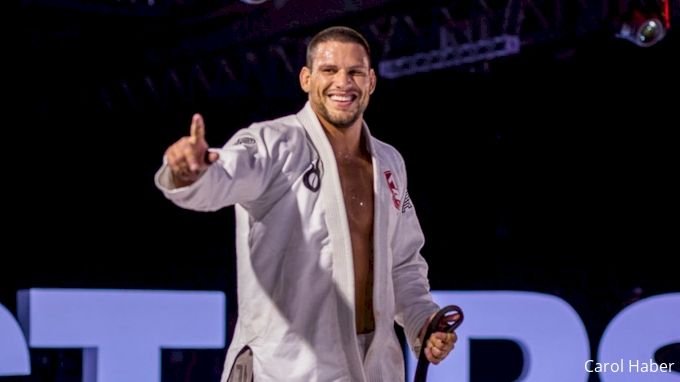
Yuri Simoes, who submitted defending champion Kaynan Duarte in the tournament’s marquee superfight.
Victor Hugo, +99kg gold medalist, retired from ADCC competition after his 2026 win.
Felipe Pena, the first grappler in ADCC history to win the absolute bracket twice.
Ryan’s camp will keep running through opponents no matter what happened matside — his kimura trap system alone has ended more careers than most gyms’ entire curriculums. But the sport’s growth into bigger arenas means bigger crowds, and bigger crowds mean incidents like this one stop being freak occurrences and start being a scheduling risk. Watch the next weekly recap for whatever rule change ADCC announces in response, because one is coming.
Sources
- Gordon Ryan issues statement on ‘fun’ ADCC 2026 brawl, two BJJ stars suspended — Yahoo Sports/MMA Mania — Ryan’s full quotes and the suspension details.
- Dorian Olivarez Explains ADCC DQ; Owen Jones Reinstated — FloGrappling — Olivarez’s account of the biting incident and the tournament fallout.
- Gordon Ryan attacked in massive brawl at ADCC 2026 — Yahoo Sports/MMA Mania — video and description of the brawl itself.