Ezekiel Choke No-Gi: 7 Keys to Finish from Mount
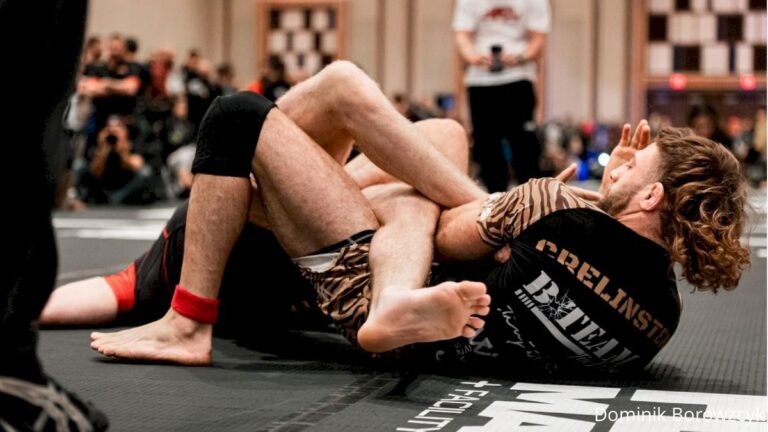
The Ezekiel choke has one of the lowest recognition rates of any submission on the mat. That gap between recognition and execution is exactly what makes it dangerous — and it widens in no-gi, where opponents feel more comfortable on the bottom of mount because they can’t see a sleeve setup coming. Aleksei Oleynik finished 12 opponents with this exact choke across professional MMA — the all-time record in the sport. None of those opponents saw it coming either.
What Makes the Ezekiel Choke No-Gi Different Without the Sleeve
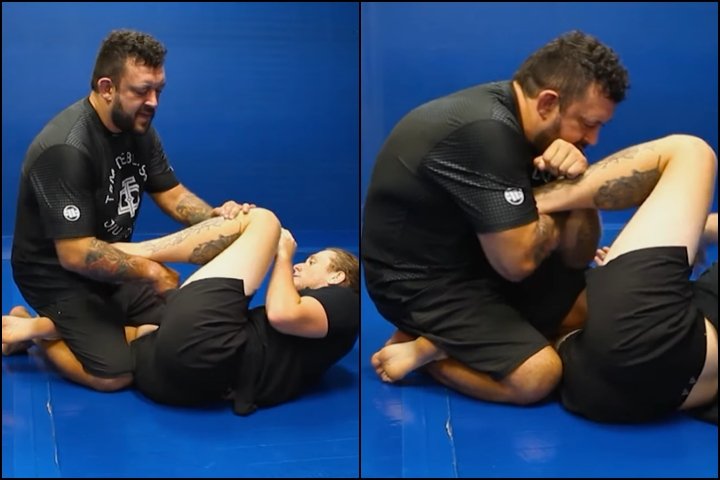
In the gi, the setup is comparatively forgiving. You slide your hand inside your own sleeve, creating a rigid wedge that doesn’t slip no matter how much your opponent bucks. In no-gi, there’s no sleeve to anchor against. You’re using the crook of your forearm against the side of their neck, and your free hand grips your own bicep or wrist. The pressure has to come from your body weight and proper arm alignment — not a mechanical sleeve lock.
This changes two things. First, the timing window is shorter. In the gi, opponents sometimes give you five or six seconds to settle the grip before they realize what you’re doing. In no-gi, an experienced grappler will recognize the forearm crossing their neck and immediately tuck their chin. You have to establish the inside position before they recognize the threat.
Second, the grip slips on sweat. Every detail matters more when you’re twenty minutes into a roll. The figure-four has to be tight and locked before you apply pressure, not after. This is why the order of operations matters more in no-gi than in the gi version.
The No-Gi Grip That Actually Holds
The grip is where most people go wrong. You have two main options depending on body type and sweat levels.
The first option is the wrist-to-bicep grip: your choking hand goes under the opponent’s chin, and your free hand grabs the wrist of your choking arm from the outside. This is the standard no-gi version — compact, easy to lock, and workable even with sweaty forearms. The second option is the palm-to-palm Gable grip, which works better on opponents with longer necks or when the standard grip keeps slipping off. Less common, but worth drilling for that specific matchup.
For both grips, the forearm of your choking arm does the actual choking — it presses against one carotid, while your bicep closes the other side. The grip just locks the system in place. Regardless of which version you use, you need to drive your choking arm deep under their chin before locking. Shallow positioning means they can tuck; deep positioning means they can’t.

Ezekiel Choke from Mount: 7 Steps to the Finish
High mount is where this choke lives. Here is exactly how it comes together.
Step 1 — Establish high mount. Your knees should sit near their armpits. The higher you are, the harder it is for them to frame, bridge, or create elbow-to-knee escape angles. Hooks under the armpits cut off the first layer of defense before the choke even starts.
Step 2 — Settle your weight. A cross-face or chest-to-chest pressure slows them down. A flat opponent who is trying to survive gives you time to set the grip. A framing, bridging opponent forces your timing and makes the setup harder to complete cleanly.
Step 3 — Feed your choking arm under their chin. Drive the forearm down and across the throat, like you’re trying to get your elbow to the mat on the far side of their head. Don’t let your elbow float. This is the detail that separates finishes from failed attempts.
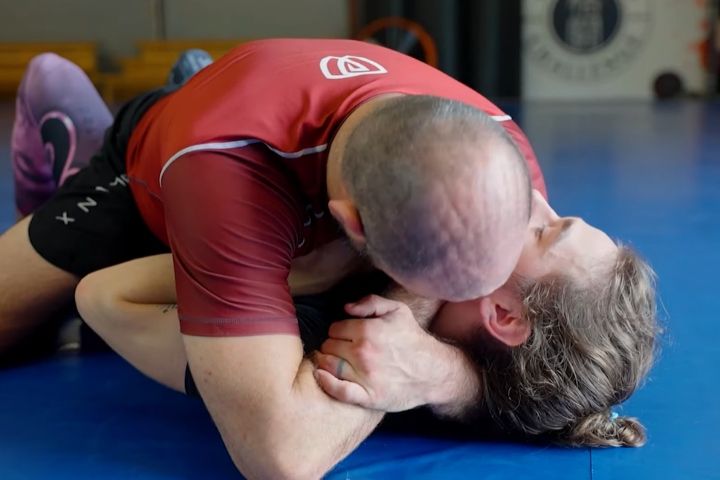
Step 4 — Keep your head low. Your forehead or temple presses against their cheekbone or temple. This prevents them from turning away from the choke and eliminates the only real escape angle at this stage.
Step 5 — Thread the free arm and lock. Your free hand comes up and over their head, grabbing the wrist of your choking arm from the outside. Lock it tight before you apply pressure — not after.
Step 6 — Squeeze with your whole body. Drive your elbows toward each other and forward with your chest. The mistake most grapplers make is squeezing only with their hands. The real pressure comes from your whole upper body folding inward.
Step 7 — Hold and wait. A proper blood choke takes about four seconds under full pressure. If they tap before three seconds, the grip is exactly right. If nothing happens after eight seconds, something has drifted — usually the choking arm has gone shallow.
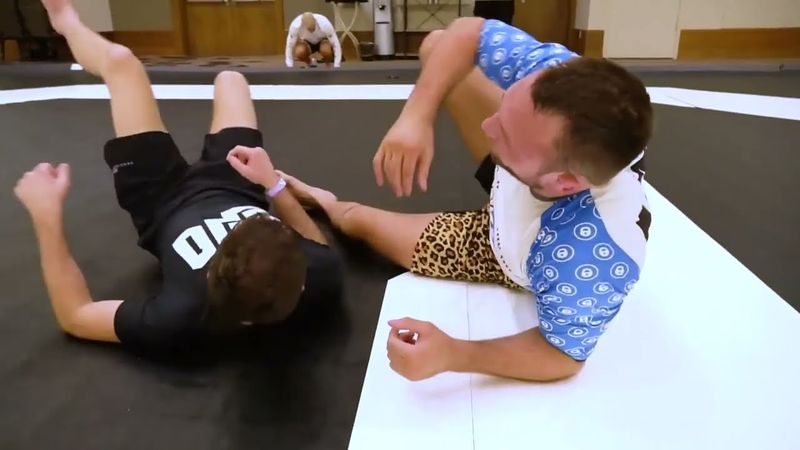
Bottom-Mount Ezekiel — When You’re on the Receiving End of a Pass
Here’s the setup that most people don’t drill: you can apply the Ezekiel from the bottom of mount. Your opponent is settled in mount trying to consolidate position. You shoot your choking arm under their chin from below — your forearm crosses their throat from the front, and you lock the wrist with your free hand. The choking mechanics are identical to the top version, but the direction of pressure flips: instead of driving down with your chest, you’re pulling inward toward yourself.
This works because opponents in mount are focused on defending sweeps and hip escapes. Nobody consistently drills defending a choke from the bottom of mount — partly because most instructors don’t teach it, and partly because the mechanic sounds wrong before you’ve felt it. That gap in their defensive repertoire is your opening.
Craig Jones covers the rear variation — where the setup happens from back control rather than mount — in his work with BJJFanatics. The mechanics mirror the bottom-mount version: your arm goes under their chin, you lock with the free hand, and the pressure comes from pulling inward rather than pushing outward. If they recognize the rear naked choke and clear your arm forward, the arm is already in position for the Ezekiel transition.
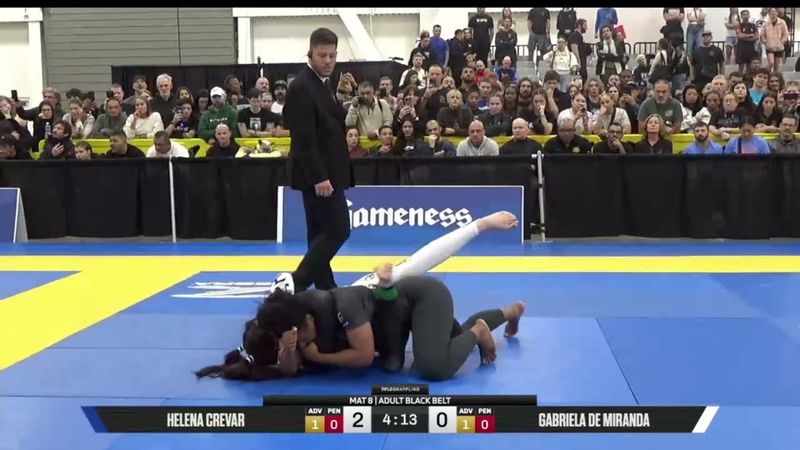
Aleksei Oleynik and What MMA Proves About This Choke
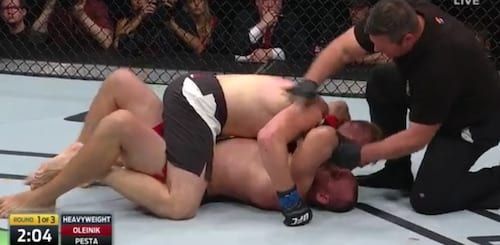
Aleksei Oleynik holds the record for the most Ezekiel choke finishes in professional MMA — 12 victories across multiple organizations, according to fight record data from Sherdog. He finished Derrick Lewis at UFC 229 with it. He finished Fabricio Werdum in Russia. He caught multiple opponents who were considered too experienced and too defensively sound to fall for a mount submission they’d never drilled against.
What made Oleynik’s version effective in MMA isn’t hard to trace. In MMA, opponents in the bottom of mount are focused on covering up against elbows and ground-and-pound. The defensive arm position they use to protect their face — elbows in, arms up — is the same frame your choking arm threads through to establish the grip. The choke uses their defensive posture as the setup.
In no-gi BJJ, the same logic applies. Opponents defending the armbar and the Americana create the arm position the Ezekiel needs. The choke isn’t fighting their defenses — it’s exploiting them.
3 Grip Errors That Kill the Finish
The no-gi Ezekiel fails for one of three reasons in almost every case.
The first error is setting the outside arm before the inside arm is deep enough. When the forearm isn’t past their chin, they tuck and your choking arm slides off the throat before any pressure builds. Lock the inside arm deep first, then bring the outside arm over. In the wrong order, you’re building a frame they can escape from rather than a vice they can’t.
The second error is letting your elbows drift apart during the squeeze. The finishing pressure comes from driving your elbows toward each other and downward. When elbows float up or out, you lose carotid compression and they have time to defend. Think of it as squeezing an accordion inward from both sides, not pulling a rope from the middle.
The third error is gripping the hand instead of the wrist. Grabbing fingers gives you no leverage and collapses when they create any pressure. Lock on the forearm near the wrist — this gives your choking arm a rigid anchor point and keeps the system from folding when they squirm or bridge.

How to Defend When Someone Has the No-Gi Ezekiel on You
The first line of defense is the chin tuck — get it before the forearm is across your neck, not after. If your chin is down and your neck is compact, the choking arm can’t cross the throat cleanly. The moment you feel someone’s arm crossing your neck from mount, tuck hard and turn into the choking arm. This is the same direction you’d move to relieve the pressure, not away from it.
If the grip is already locked, your window is narrow. Bridge hard toward the choking-arm side, not away from it. The bridge forces them to post with their arms, which loosens the grip just enough to create an escape angle. Combine the bridge with a shrimp motion and work toward a mount escape before the pressure fully locks in.
If you don’t get the early escape, your time is limited. A correctly set no-gi Ezekiel cuts blood to the brain in under ten seconds. Once the pressure is fully applied, you’re not going to think your way out.
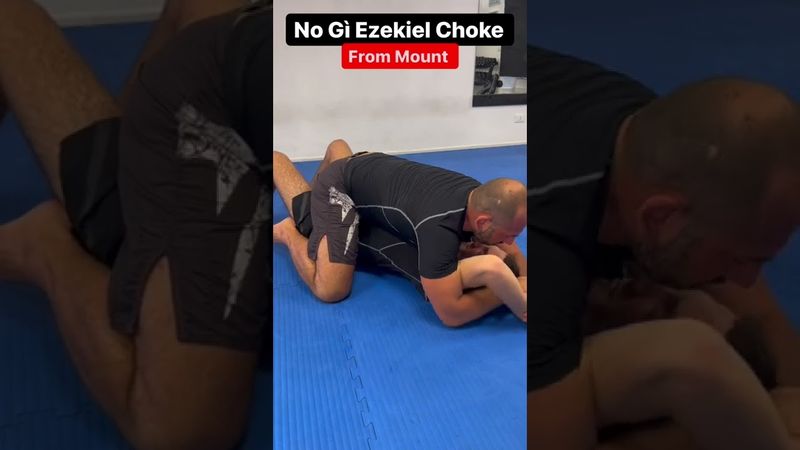
Building the Ezekiel Into Your Top Game
The choke pairs naturally with fighters who already use the Americana from mount as a primary attack. When your opponent defends the Americana by pulling their elbow in and fighting your wrist control, they’re creating the exact arm channel the Ezekiel needs. The transition is fast enough that many no-gi grapplers build it as a primary entry rather than a backup.
It also connects from back control. The rear naked choke attempt that gets defended — where they pull your arm forward and away from their neck — puts your arm directly in position for the rear Ezekiel transition. If they clear the RNC but push your arm forward into their neck space, slide it under their chin and lock.
The Ezekiel isn’t a specialty move that lives on the edge of your game. It’s a finish that grows in the gaps between what people know how to defend — and in no-gi, those gaps are wider than most grapplers realize.
Sources
- BJJEE — Get The No-Gi Ezekiel Choke From Mount Every Time — technique breakdown with positional details
- Low Kick MMA — Ezekiel Choke: BJJ Technique Explained — history, gi vs no-gi comparison, Oleynik context
- Sherdog — Aleksei Oleynik Fighter Record — 12 Ezekiel choke finishes across professional MMA career