Crucifix No-Gi: 7 Submissions to Master the Position
Trap both arms and a grappler is finished — they have nothing left to post, frame, or hand-fight with. That is the whole idea behind the crucifix. It is one of the few positions in submission grappling where you neutralize both of your opponent’s arms at once, and in no gi it becomes even nastier because there are no sleeves or lapels for them to grab and stall with. This guide breaks down how to get there off the turtle, how to lock it down, seven ways to finish, and how to climb out when you are the one stuck.
What Is the Crucifix in No-Gi?
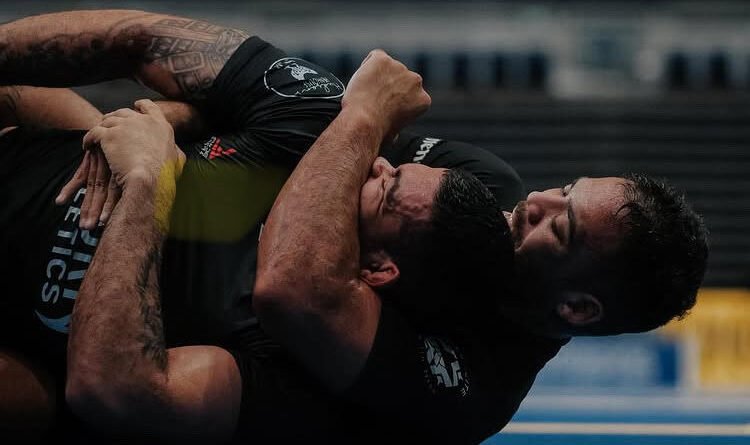
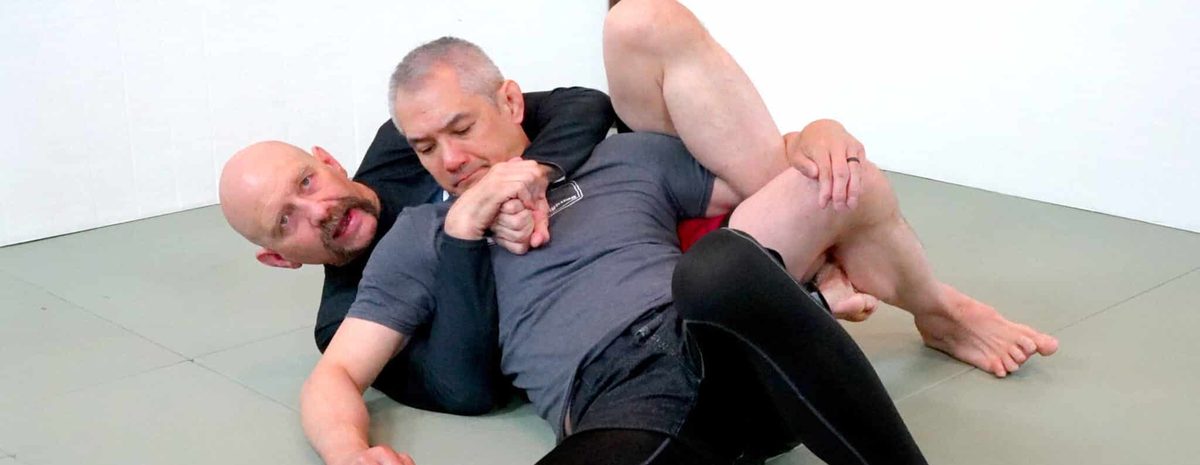
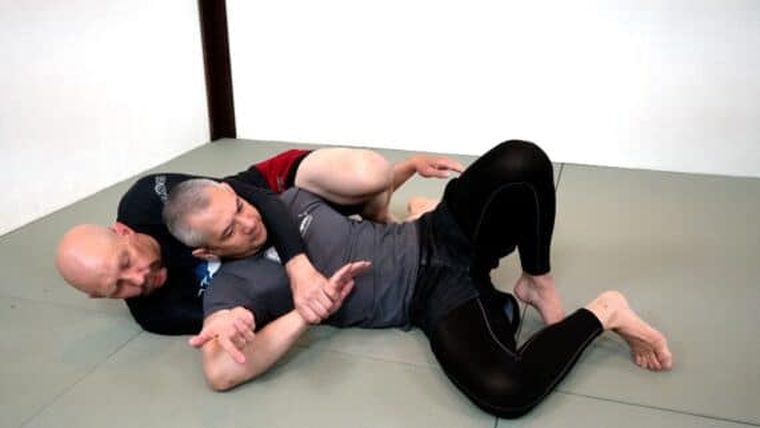
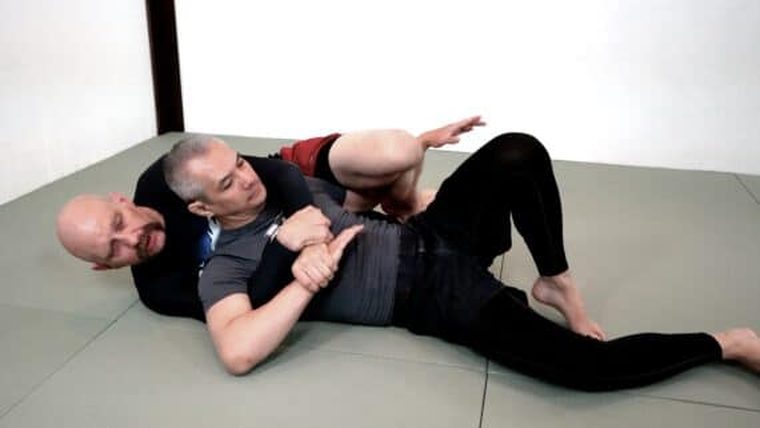
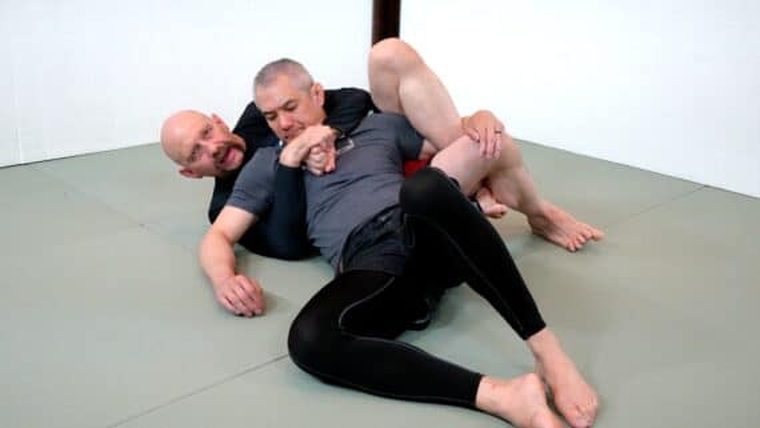
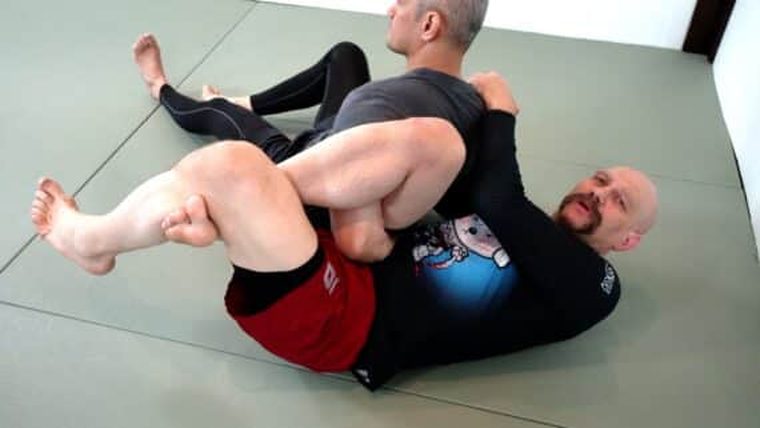
The crucifix no gi is a back-and-side control hybrid where you isolate both of your opponent’s arms — one arm is wrapped by your upper body, the other is pinned between your legs and figure-foured. Your torso sits perpendicular to theirs, forming a rough “T” shape, which is where the name comes from. Their arms are splayed out like they are on a cross, and that is exactly the point: an arm that is trapped cannot block a choke or fight a wrist.
Stephan Kesting of Grapplearts compares it to the rear mount, but with a cruel upgrade. In back mount your opponent still has two free hands to peel grips and hide their neck. In the crucifix both hands are gone. That single difference is why high-level turtle players fear it more than a straight back take.
How to Enter the Crucifix From Turtle
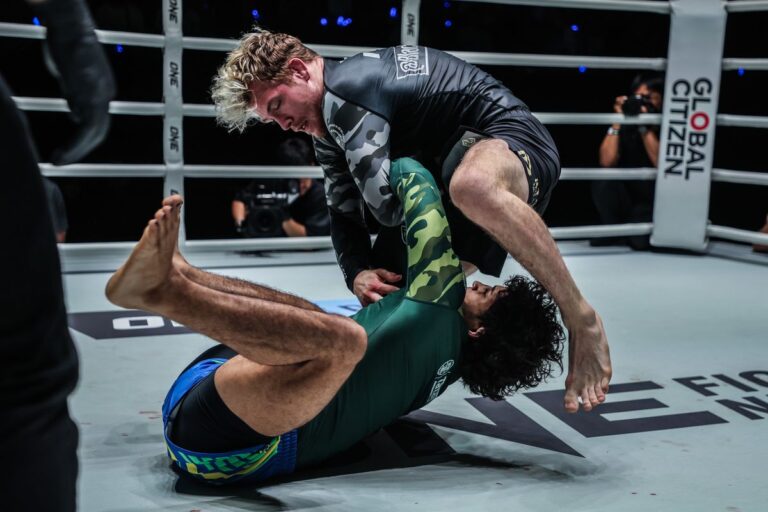
The turtle is the crucifix’s natural feeding ground. When an opponent shells up after a stuffed shot or a scramble, their far arm is usually planted on the mat holding them up — and a planted arm is a trappable arm. Start from a chest-to-back position with a seatbelt grip, then thread your near leg over their far arm, hooking your foot toward their bicep. As you sit back and rotate underneath, that leg drags the arm out and pins it, while your arms collect the second arm up top.
Timing beats strength here. You want to attack the arm the instant they post it to base, not after they have settled into a tight turtle. If you wait, they tuck both elbows and the door closes. Drill the entry off your own failed single leg — the moment you lose the takedown and they turn to turtle is your window.
Entering From Back Control and Side Control
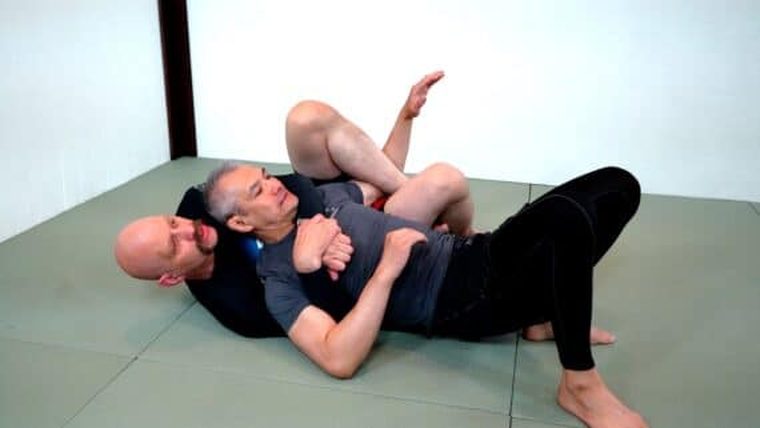
The turtle is not the only door. From a locked back mount, if your opponent starts turning in and exposing an arm to escape, you can dump that arm between your legs and transition straight into the crucifix rather than losing the back entirely. It turns their escape attempt into your attack.
You can also arrive from top side control. Underhook the far arm, slide your hips up toward their head, feed their near arm between your legs, and figure-four your legs to lock it. From there you rotate to their back and the position is yours. The kimura trap is another common on-ramp — once you have that kimura grip, sweeping them over or spinning through often deposits you right into a crucifix with the arm already isolated.
Locking the Position: Arm and Leg Control
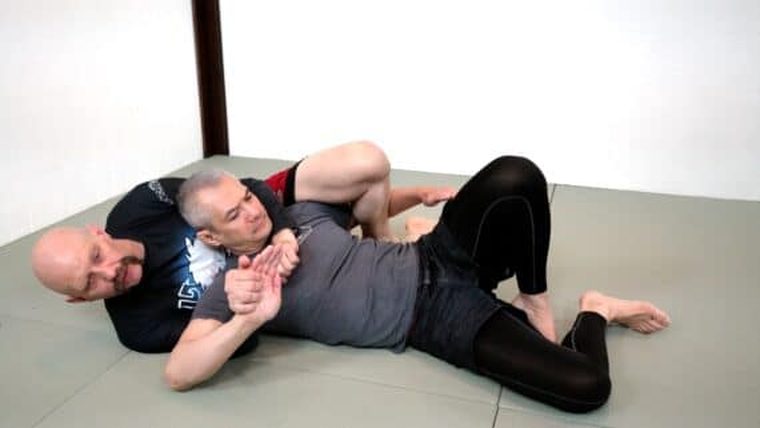
Getting to the crucifix is half the battle; holding it is the other half. Two grips do most of the work. The seatbelt controls the upper arm and shoulder, and the motorcycle grip — where you grab the trapped wrist and twist your hands like you are revving a throttle — kills any chance of them ripping the top arm free. Keep your elbows tight and your chest heavy so they cannot bridge into you.
Down below, the figure-four of your legs is what makes the crucifix so hard to survive without the gi. There is no fabric to grab, but there is also nothing for them to grab back. Squeeze your knees together and point the toe of your trapping leg toward their head — sloppy leg control is the number one reason the position falls apart at white and blue belt.
7 Submissions From the Crucifix Position
Once both arms are dead, the finishes come in waves. If they defend one, you flow to the next — that is the crucifix’s real power. Here are the seven highest-percentage attacks in no gi.
- Short choke — with the top arm trapped, drive your forearm across their exposed neck and use your own bicep and their shoulder as the second side of the strangle. It is the fastest tap available from the position.
- Kimura — the trapped top arm is already bent and defenseless. Feed a figure-four grip and rotate the wrist behind their back for a shoulder lock. See our full no gi kimura breakdown for the grip mechanics.
- Armbar on the leg-trapped arm — extend the arm you are controlling with your legs and bridge your hips into the elbow for a straight armbar.
- Neck crank — pull the far arm across their face and lever the head, forcing a tap from pressure on the cervical spine. Use it sparingly and release early in training.
- Leg triangle — reconfigure your legs around the trapped arm and neck to build a triangle, then finish the strangle from the crucifix without giving up your arm control.
- Omoplata — when they fight the top-arm attacks, swing into a shoulder lock on the leg-side arm using your legs as the fulcrum.
- Wrist lock — the sneaky one. With the motorcycle grip already in place, a small torque on the trapped wrist ends the match while they are busy defending the choke.
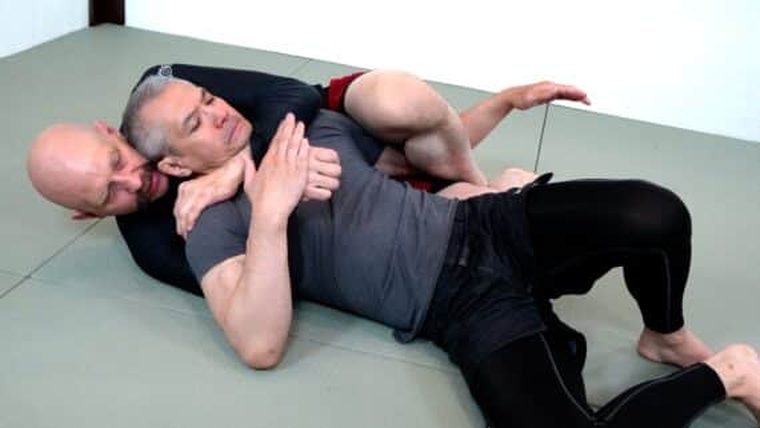
The choke and the kimura are the bread and butter — land those two consistently and you have a complete crucifix game. The rear naked choke is a useful comparison point: the crucifix short choke is essentially a strangle you finish when the back take stalls out.
Defending and Escaping the Crucifix
If you find yourself flattened out with both arms trapped, do not panic and do not straighten out — that is what feeds the choke. The most reliable escape is the tuck and roll. Elevate your hips, scoot them back underneath you, and turn your body to strip the top arm free while tucking your chin to protect your neck.
The priority order matters: neck first, then the trapped arm. Use both hands to pop their controlling arm over your head, pull it down as you drive up, then release the leg-trapped arm and turn into side control. The escape demands hip mobility and spatial awareness, which is why drilling it cold — before you are exhausted mid-roll — pays off. Prevention is better still: the second you feel an arm about to get threaded, pull your elbows to your ribs and deny the entry.
Why the Crucifix Hits Harder in No-Gi
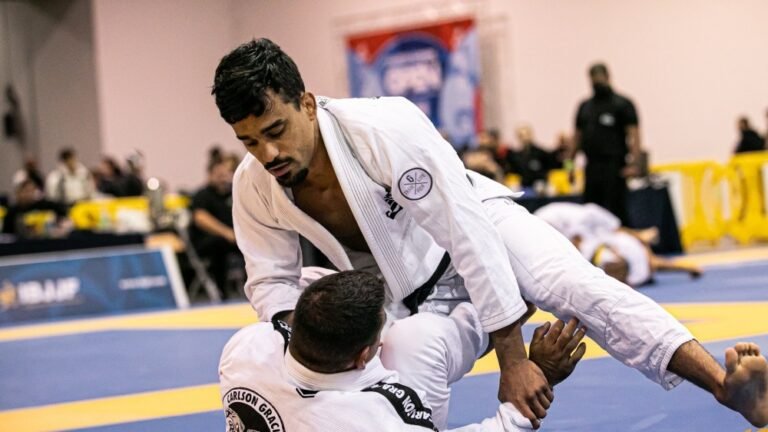
Here is a mild hill to die on: the crucifix is actually a better position in no gi than in the gi, even though most people think of it as a gi technique. In the gi, the defender can post a hand on your pant leg or grab their own collar to stall and buy time. Strip the fabric away and those stalls vanish. There is nothing to grip, nothing to frame with a fistful of cloth, and sweat only makes the trapped arm harder to rescue.
The trade-off is that your own grips get slipperier too, which is exactly why the motorcycle grip and tight leg figure-four matter so much. Nail the control and no gi turns the crucifix from a gi-club curiosity into one of the highest-percentage turtle attacks you own. It pairs naturally with a leg-lock game — many players who chase the heel hook off the turtle scramble use the crucifix as their upper-body counterpart.
Common Crucifix Mistakes to Avoid
Three errors sink most crucifix attempts. First, chasing the submission before the position is locked — grippers who reach for the choke while their leg control is loose simply get bucked off. Lock first, finish second. Second, flattening the opponent out completely, which paradoxically gives them the space to bridge and roll. Keep them slightly on their side. Third, ignoring the trapped wrist; a live hand is a defending hand, so pin it with the motorcycle grip before you do anything else.
One more: do not marry a single finish. The crucifix rewards the player who threatens the choke, feels the defense, and slides to the kimura or wrist lock without hesitation. Static crucifix players get stalled out. Fluid ones get taps.
Add the Crucifix to Your No-Gi Game
Most grapplers walk past the crucifix because it looks like an old-school gi trick — and that is exactly why it will surprise your training partners on the mat. Start by drilling the turtle entry off your own failed shots, add the short choke and kimura as your two anchor finishes, then layer in the triangle and wrist lock once your control is airtight. Master the position and every turtle in the room becomes a submission waiting to happen. For your next step, pair it with a strong back-take game so you always have a second door when the first one closes.
Sources
- Grapplearts — Controlling and Submitting from the Crucifix Position — Stephan Kesting’s no-gi crucifix control and submission breakdown.
- Evolve MMA — BJJ 101: The Crucifix — Entries and fundamentals of the crucifix position.
- BJJ Fanatics — Submissions From the Crucifix — Overview of finishing options from the position.