Rear Naked Choke No-Gi: 7 Setups That Force the Tap
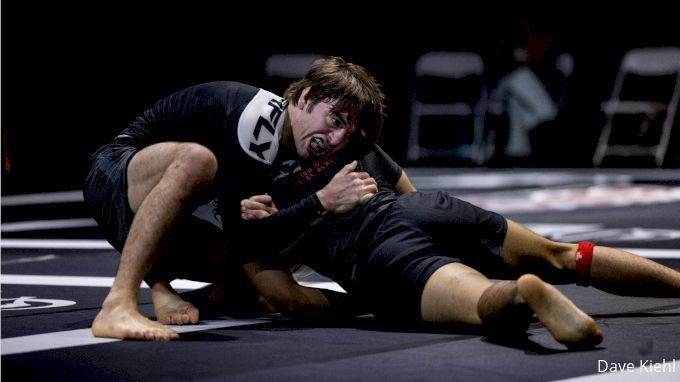
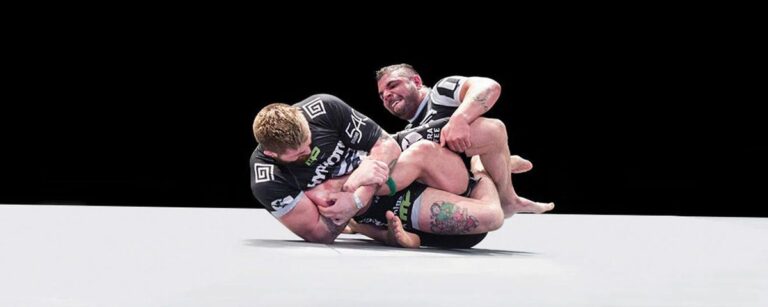
The rear naked choke no-gi is the highest-percentage submission in modern grappling, and the math isn’t close. At ADCC 2024 in Las Vegas, back-takes were recorded 43 times across the bracket and the rear naked choke finished more athletes than any other technique on the mat. Strip away the gi and the neck is suddenly the cleanest target on the body — no collar to grip in defense, no lapel to wedge under the chin, just skin, sweat, and 8.9 seconds of consciousness once the figure-four locks in.
Why the Rear Naked Choke No-Gi Hits Harder Than Any Other Submission
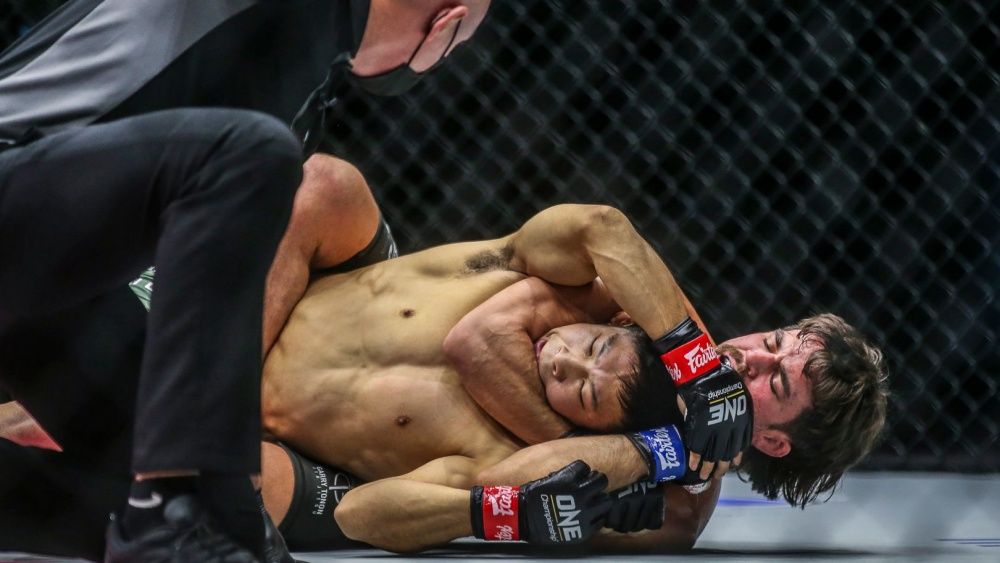
Strip away the kimono and roughly thirty percent of the gi submission menu disappears overnight. The bow-and-arrow, cross-collar, ezekiel, baseball, loop — all dead the moment somebody puts on a rashguard. The rear naked choke goes the other direction. It actually gets easier in no-gi because the forearm slides under a sweaty chin instead of catching on a stiff collar, and the defending hand has no fabric to pin the choking elbow against.
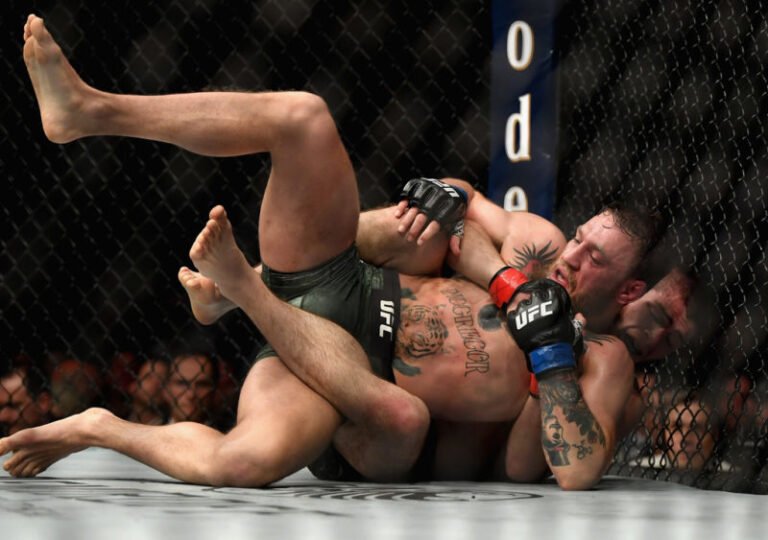
There’s a reason roughly 82 percent of rear naked choke finishes at the highest level happen in no-gi rule sets. Gordon Ryan built a seven-time ADCC career on it. Demian Maia has nine UFC rear naked choke wins, an all-time record built almost entirely on back-take entries into the same finish. The truth is, most no-gi grapplers spend too much time hunting flashy leg entanglements when the highest-percentage tap in the sport is sitting behind the opponent’s neck.
1. The Seatbelt Grip and Hooks Foundation
Every rear naked choke no-gi attempt lives or dies on the seatbelt. One arm crosses over the shoulder, the other comes under the armpit, and the hands clasp on the chest with the over-arm gripping the under-wrist. Get this backwards and the opponent will roll into your weak side every time. Once the seatbelt is locked, the bottom hand drives the over-shoulder forearm tight under the jaw — that’s the position you build the finish from.
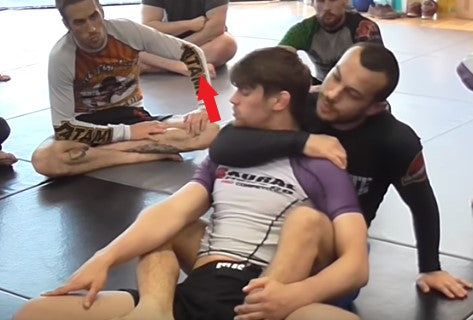
Hooks versus body triangle is the eternal back-control argument. Hooks (feet inside the thighs) give you mobility and a fast escape if the position turns bad. The body triangle (one shin laced behind the opposite knee) gives you crushing chest-to-back connection but locks you in if the opponent stacks. For no-gi, the body triangle wins more finishes simply because it removes the opponent’s ability to flatten their hips and stuff your arm.
2. The Strangler’s Arm — Sliding the Forearm Under the Chin
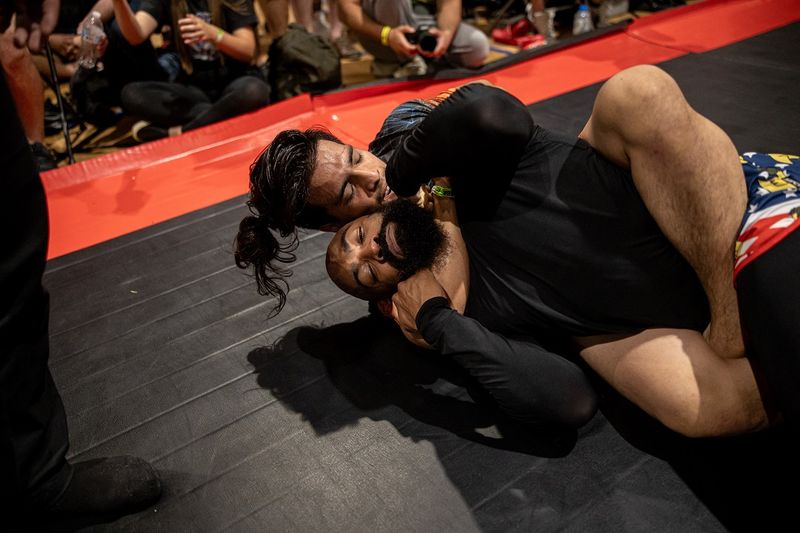
Once back control is secured, the rear naked choke entry is a four-count motion: pin the head with your top hand, drop your strangling elbow, walk the forearm across the throat, cup the bicep on the far side. The biggest no-gi-specific mistake is grabbing too high — most beginners reach for the shoulder and end up with a face-crank instead of a blood choke. The crook of your elbow has to land directly under the chin, with the bicep on one side of the carotid and the radius bone on the other.
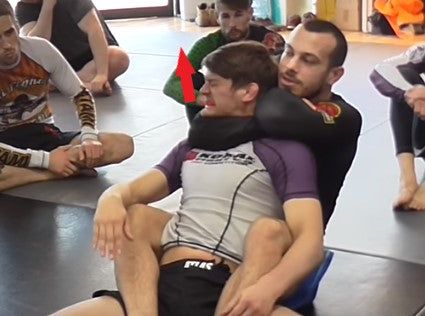
Defenders almost always grab the strangling wrist with two hands. Counter that by walking your free hand to the opponent’s forehead and using their own resistance to pull your choking arm deeper. John Danaher has called this the “fight the wrist, win the neck” exchange — every second the opponent spends defending one hand is a second your other hand owns the strangle.
3. Lock the Figure-Four and Strangle, Not Crank
With the strangling arm under the chin, the free hand slides behind the opponent’s head and the strangling hand grabs the bicep of the free arm. That’s the figure-four — also called the palm-to-bicep grip. From there, the back of the free hand presses forward into the back of the skull while the strangling elbow pulls back toward your own ribs. The opponent’s neck is now compressed between two converging vectors of force.
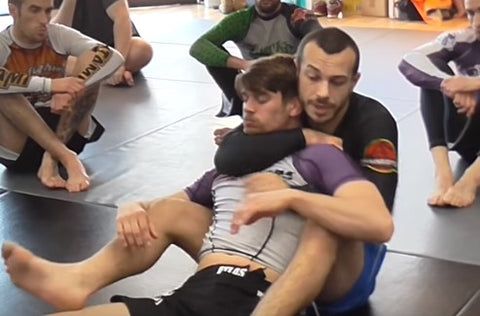
A correctly locked rear naked choke is a strangle, not a neck crank. The pressure cuts off the carotid arteries on both sides of the neck and shuts down blood flow to the brain — that’s why it averages 8.9 seconds to render an opponent unconscious, regardless of grip variation. If you’re cranking the jaw or compressing the windpipe, you’re either fighting an opponent with a defensible chin tuck or you missed the under-chin slide on step two. Reset and re-enter rather than muscle through a crank that won’t finish.
4. The Finish Mechanics — Squeeze With Your Back, Not Your Biceps
Arm strength loses rear naked chokes. The squeeze has to come from a chest expansion: elbows pull toward each other across the opponent’s neck while the shoulder blades pinch together behind your own spine. Picture the same motion as a barbell row. Bicep-only attempts gas out in fifteen seconds and the opponent simply waits for the grip to slip.
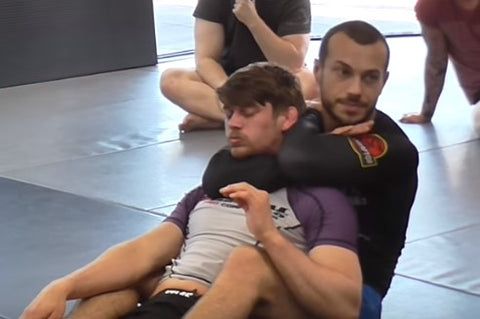
Head position matters as much as grip pressure. Drop your forehead to the side of the opponent’s head opposite your strangling arm — ear to ear — and use it as a wedge to keep them from turning into the choke. If they turn into the elbow, the choke loosens. If they turn away from it, you gain another quarter-inch of penetration and the carotid pressure spikes. This is the same back-attack system the crucifix position feeds into when the opponent rolls to escape.
5. The Body Triangle Variation for Heavier Opponents
Hooks alone fail against bigger opponents who can simply hip-out and dump you. The body triangle solves that problem by replacing both hooks with a leg-on-leg lock — one shin laced behind the opposite knee, foot tucked underneath. It functionally turns your legs into a closed guard wrapped around the torso, which is why the position holds even when the opponent stands up.
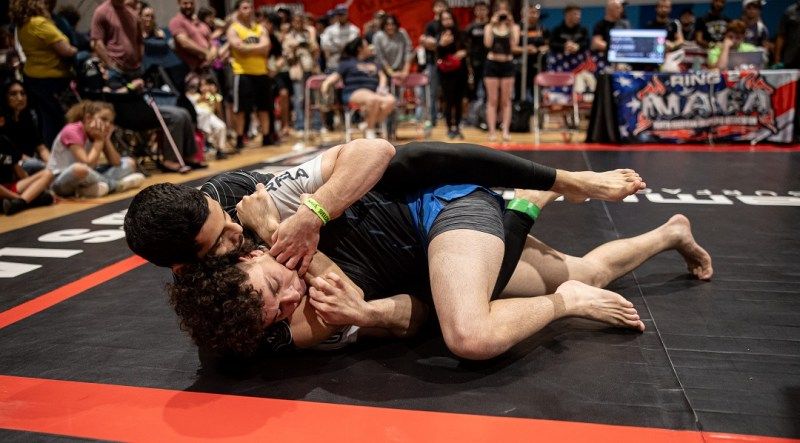
The trade-off is real. Brandon Royval recently described Tatsuro Taira’s body triangle as “a whole different feeling” from any BJJ black belt he’d faced — because the position pins the ribs at full extension. The defending hand can pry at the ankle, but the lock geometry means the opponent has to fight gravity and your hips at the same time. Once the body triangle is set, the rear naked choke entry becomes a matter of patience, not athleticism.
6. Hunting the Back-Take From Turtle and Scramble Positions
Most no-gi rear naked chokes don’t start from clean back control — they start from a scramble. The opponent turtles after a takedown defense, you chest-press them flat, and the back exposure opens up. Marcelo Garcia built an entire ADCC legacy on this single transition: cup the far hip, walk to the back, kick the near leg out, and slide the seatbelt in before the opponent can rebuild base. The north-south to back exchange is the cleanest no-gi entry that exists.
The arm drag is the other reliable no-gi back entry. From open guard, pull the opponent’s wrist across their centerline, pop up to your hip, and chase the back as they post their hand on the mat. Gordon Ryan’s matches at the last three ADCC events show this entry attacking three times more often than any takedown-based back-take. The arm drag works in no-gi specifically because slick skin makes the wrist hard to defend once it’s already been pulled across.
7. Defending the Rear Naked Choke No-Gi
Defense starts before the seatbelt is set. The moment back exposure happens, fight to keep two hands inside the seatbelt — once the over-shoulder arm reaches across to grab the under-wrist, the position is sealed and the choke is coming. If you’re already late, the priority order is: chin tuck, two-on-one wrist defense, shrimp the hips toward the strangling side, then bridge over the strong shoulder to expose the back-takers’s hip.

Neck strength is the underrated defensive layer. Wrestlers train it because pinning happens at the neck and a strong sternocleidomastoid buys real seconds against a choke that’s already in. Three sets of neck harness work twice a week — bridges, side-to-side, slow controlled flexion — adds measurable resistance to the carotid pressure that finishes most rear naked chokes. For a deeper look at how grip strength feeds into choke defense, the triangle choke defensive frames apply almost the same upper-body principles.
The John Danaher Rear Naked Choke System
John Danaher’s instructional approach to the rear naked choke remains the clearest video breakdown of the technique. He treats the choke as a sequence of locks: head trap, arm wedge, figure-four close, posterior chain squeeze — each step solving a specific defensive frame before the next layer goes on. The tutorial below works whether you train no-gi exclusively or split time with gi grappling, because the mechanics of carotid compression don’t change with the uniform.
Putting the Rear Naked Choke No-Gi Into Live Training
Drilling the rear naked choke in isolation builds the wrong muscle memory. Most rooms practice the finish from a static back-mount where the partner offers no defense — that’s why the technique looks flawless in drilling and falls apart in live rolls. The fix is to start every rep from a scramble position: north-south, turtle, half-mount escape, or arm-drag entry. Force the back-take to happen under pressure, and the choke entry stops being optional.
Set a weekly count. Two rounds per training session where the only legal submission is the rear naked choke no-gi. Hunt back exposures aggressively, accept the bad outcomes, and within sixty days the body triangle finds itself reflexively. Comp wins follow because rear naked choke entries off scrambles are the single most rule-set-agnostic skill in submission grappling — they work at ADCC, IBJJF no-gi, EBI overtime, and inside an MMA cage with strikes flying.
Sources
- BJJ Heroes — ADCC 2024 Data Compilation — submission and back-take statistics from the 2024 ADCC World Championship.
- Evolve Daily — BJJ 101: How To Perform The Rear Naked Choke — technical breakdown of the seatbelt grip, hooks, and figure-four mechanics.
- Rear Naked Choke (hadaka jime) — historical origins from judo and the 8.9-second time-to-unconsciousness reference.
- Elite Sports — Mastering the Rear Naked Choke for BJJ and MMA — biomechanics of carotid compression versus windpipe pressure.
- Bloody Elbow — Tatsuro Taira’s body triangle — UFC reference on body triangle effectiveness in elite grappling.
Browse our top-rated rashguards and no-gi gear at the RashguardGuy shop →