No-Gi Wrist Injuries: 7 Keys to Recover
Petrisor and colleagues surveyed 70 competitive BJJ practitioners about the injuries they picked up in training, and the wrist beat out the shoulder, the elbow, and even the knee as the most frequently reported upper-body site. That number gets buried in most grappling injury discussions, which tend to fixate on knees and shoulders because those injuries end careers. Wrist injuries rarely end a career. They just nag, flare up every time you post on a sprawl or fight for an underhook, and quietly shrink how hard you’re willing to grip for months at a time.
Why No-Gi Grip Fighting Loads the Wrist Differently
Gi grappling spreads load across a sustained grip on thick cotton fabric — the fingers and forearm do most of the work, and the wrist stays in a relatively neutral position while you pull. No-gi removes that buffer entirely. Hand fighting in no-gi means collar ties, wrist-to-wrist clinching, and constant palm-to-palm contact, and most of that contact happens with the wrist pushed toward end-range extension, not sitting neutral.
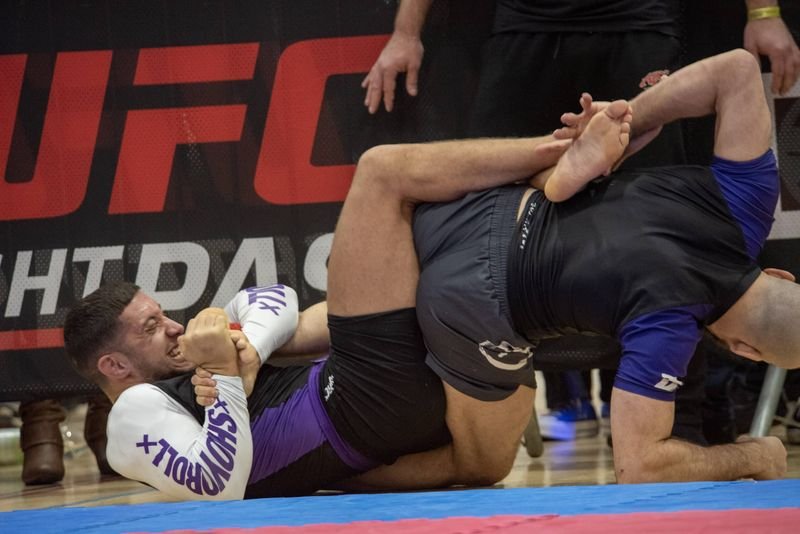
Posting is the other half of the problem. Every sprawl, every scramble out of a leg entanglement, every time you catch yourself from a sweep — you’re loading an open palm against the mat with your bodyweight behind it. That’s a wrist in extension, under load, repeated dozens of times a round. None of it looks dramatic. It just adds up, round after round, until the ligaments that hold the carpal bones together start to fail from fatigue rather than from one bad moment.
The Wrist Injuries No-Gi Grapplers Actually Get
Three patterns show up again and again in a gym’s physio referrals, and they come from different mechanisms entirely.
TFCC tears are the one most grapplers have never heard of until they have one. The triangular fibrocartilage complex is a cluster of cartilage and ligament tissue that cushions the little-finger side of the wrist and lets the forearm rotate smoothly. It fails from forceful twisting under grip — exactly what happens when a hand-fighting exchange turns into a sudden yank. The tell is pain specifically on the pinky side of the wrist, a clicking sensation when you rotate your forearm, and grip strength that disappears when you try to turn a doorknob.
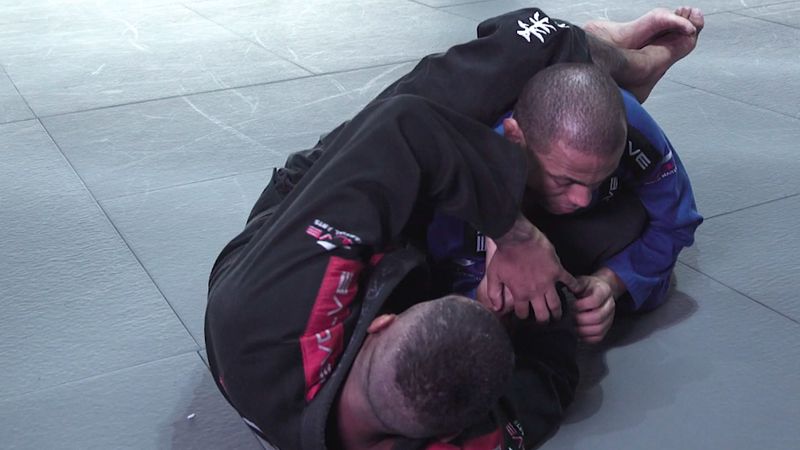
Radiocarpal ligament sprains come from the posting mechanism — bodyweight driving an extended wrist past its normal range during a sprawl or a bad landing. These present as dorsal wrist pain, swelling, and sharp discomfort any time you try to bear weight through an open hand, which makes basic positions like top side control or defending a takedown genuinely difficult until it settles.
Wrist lock injuries are the outlier because they’re not overuse at all — they’re acute trauma from a single submission attempt. The carpal bones have almost no elastic warning zone before the ligaments fail, so a wrist lock can go from “fine” to “torn” in a fraction of a second, well before the muscles around the joint have time to brace. A wrist lock applies extension, flexion, or a twisting deviation force directly to the radioscaphocapitate and scapholunate ligaments — the same structures a TFCC tear damages, just loaded from a completely different direction and speed.
What makes the carpal bones unusual compared to a knee or shoulder is how little room they give you. Bigger joints have a noticeable soft end-range before real damage occurs, which is why you can feel a knee or shoulder getting uncomfortable and tap in time. The wrist’s small bones and stiff connecting ligaments mean the gap between “stretched” and “torn” is a matter of a few degrees, with almost no warning in between.
When a Wrist Lock Lands: The Branko Simonovic Case
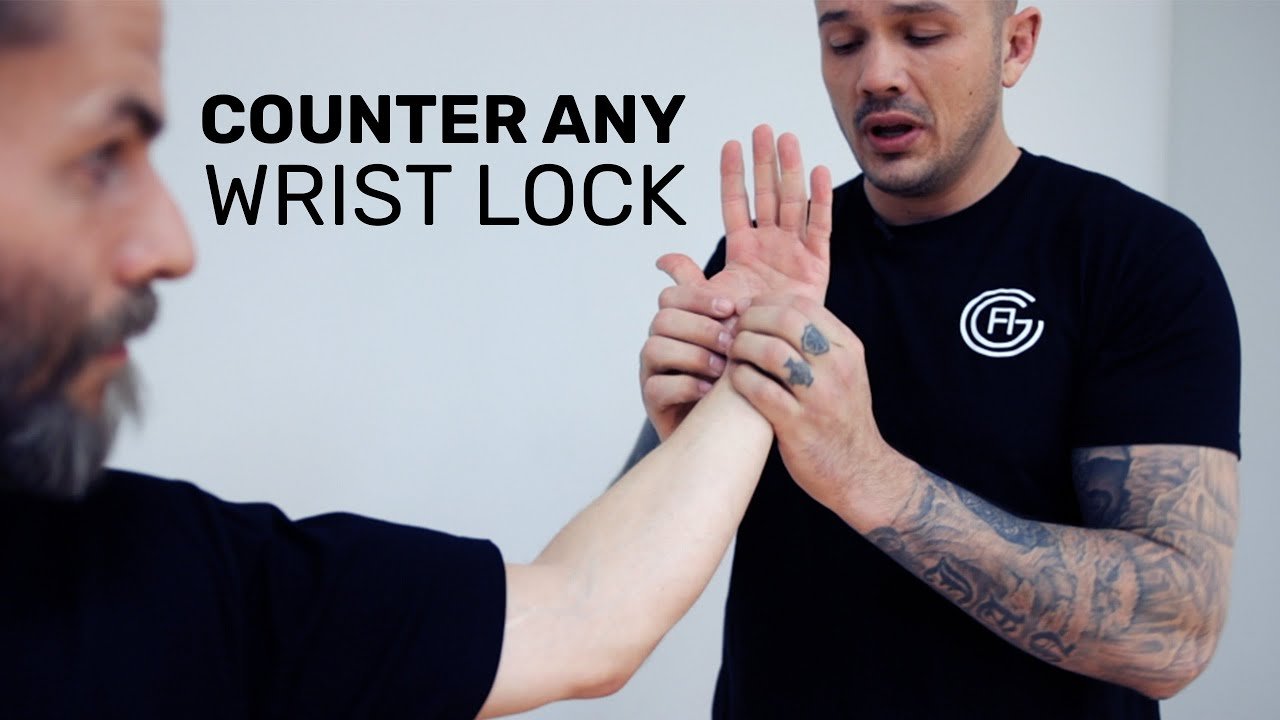
Wrist locks catch experienced competitors off guard precisely because they’re rare enough that nobody drills defending them with any urgency. At the 2023 IBJJF Rome Open, black belt Branko Simonovic of Kimura BJJ Serbia finished a standing wrist lock on an opponent so quickly that most of the crowd didn’t register what had happened until the referee’s hand went up. That’s the pattern with wrist locks in competition — they don’t build gradually like a tight guillotine. The wrist either gives immediately or the grappler taps before it does, and there’s rarely a middle ground where someone “fights out” of a deep one.
Under IBJJF rules, wrist locks are illegal for kids, adolescents, and white belt adults, but allowed for adults at blue belt and above, in both gi and no-gi. Our breakdown of wrist locks no-gi covers which setups show up most at blue belt and above, and why so few grapplers train the escape before they need it.
Red Flags That Mean You See a Doctor, Not a Trainer
Most wrist tweaks are genuinely minor and settle with a few days of rest. A short list of symptoms means skip the trainer and book a hand specialist instead: pain specifically on the pinky side of the wrist that doesn’t ease after a week, a visible lump or deformity, a wrist that catches or locks mid-motion, numbness running into the fingers, or grip strength that doesn’t recover at all after two weeks of rest. Any of those can point to a TFCC tear, a scapholunate ligament injury, or a fracture that won’t heal correctly without imaging and, in some cases, surgical repair.
Numbness is the symptom grapplers dismiss most often, and it’s the one worth taking most seriously. A wrist sprain doesn’t normally touch the nerves that run through the carpal tunnel, so tingling or numbness in the thumb and first two fingers after a wrist injury usually means swelling is pressing on the median nerve — something that needs attention before you load the joint again, not after.
Taping and Bracing a Wrist Before You Get Back on the Mat
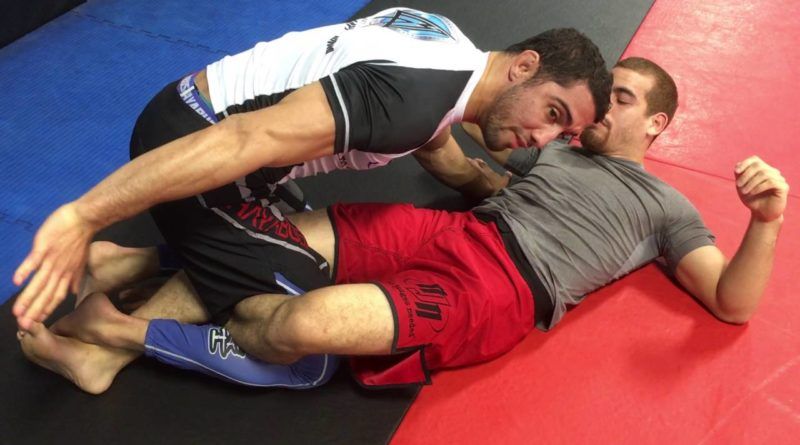
A wrist brace earns its place in the first week or two after a sprain, when the goal is just protecting the joint long enough for acute inflammation to calm down. Past that window it becomes a crutch — braces restrict the range you’re trying to rebuild, and grapplers who live in one for months often come back with a wrist that’s protected but weaker than before the injury.
Taping is the better long-term tool once you’re training again. A dorsal X-tape or figure-8 wrap limits end-range extension without locking the joint down completely, which is exactly the range that gets loaded during posting and hand fighting. Wrap snugly — like a watchband, not a tourniquet — and re-tape every session rather than trying to make one wrap last a week.
The Return Timeline No One Tells You
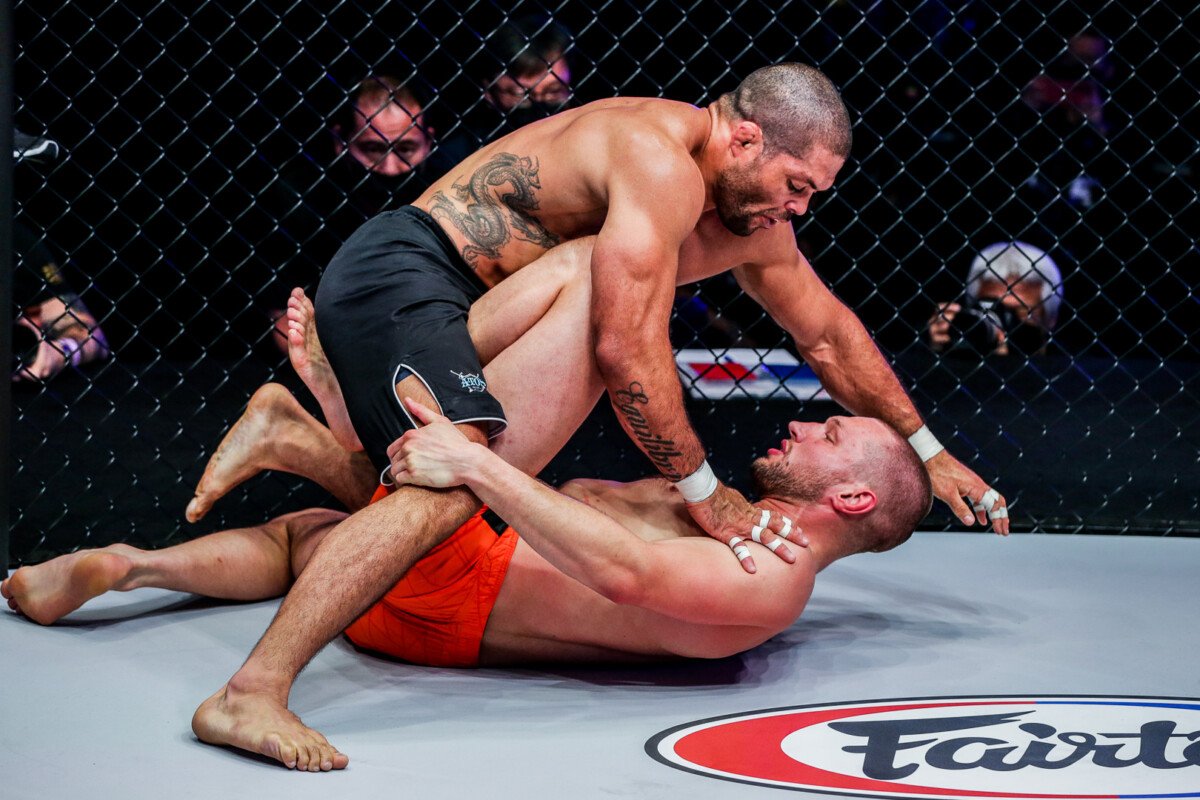
Most grapplers treat “the pain is gone” as the finish line and jump straight back into live rolling. That’s how a mild sprain becomes a recurring one. The real progression runs through four phases: pain-free range of motion first, then isometric grip squeezes that load the joint without moving it, then eccentric wrist curls and finger-extension band work to rebuild strength through the full range, and only then back to live grip fighting. Mild sprains typically clear that whole sequence in two to four weeks. A TFCC tear or ligament sprain with instability can take two to three months, and rushing the last phase is the single most common reason grapplers re-injure the same wrist within a season.
Building Wrist Resilience So It Doesn’t Happen Again
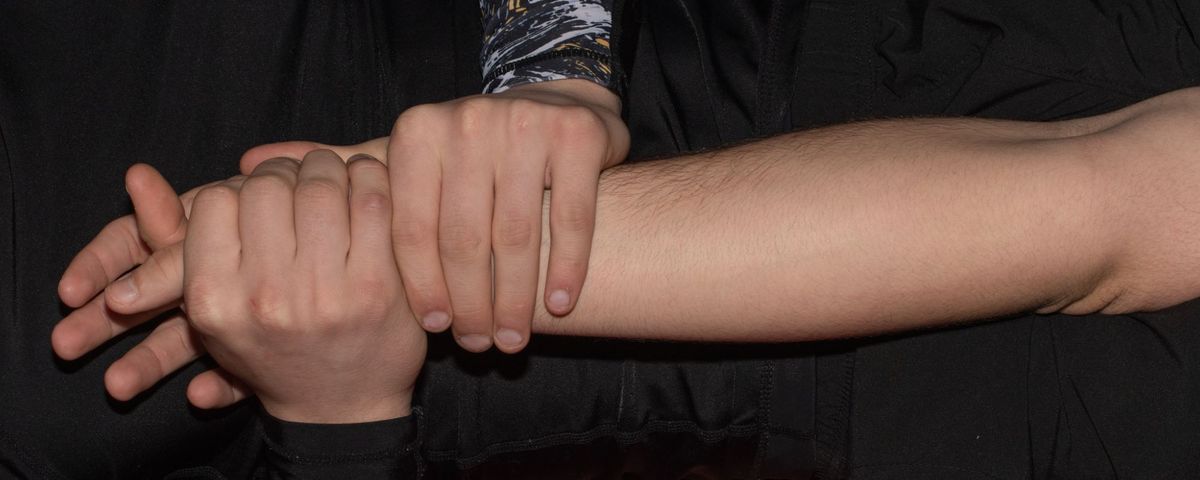
Grip strength work does double duty here — the same tendons and forearm muscles that make your grip harder to break also stabilize the wrist joint itself when it gets pushed toward end-range during a scramble. Grapplers who dedicate even two short sessions a week to wrist flexion and extension with light bands come back from minor tweaks faster and pick up fewer of them in the first place. Our guide to grip strength no-gi breaks down the specific exercises worth adding, and it pairs well with the finger-taping habits covered in our no-gi finger injuries piece, since both joints fail for similar reasons in a grip-fighting sport.

Drilling partners matter too. A wrist lock applied at speed in drilling removes the one thing that makes it survivable — time for the other person to feel it coming and tap before the ligaments reach failure. Announce the submission before you apply it in drilling, and treat any wrist lock in live rolling the way you’d treat a heel hook: controlled, not cranked.

The grapplers who last longest in no-gi aren’t the ones who avoid wrist injuries entirely — almost nobody does, given how much of the sport runs through the hands. They’re the ones who tape early, respect a hot wrist lock instead of fighting through it, and actually finish the rehab sequence instead of stopping the moment the pain fades. Your grip is the tool you use for every position in the sport. Treat the joint that makes it work accordingly.
Sources
- Petrisor BA, et al., “Injury in Brazilian Jiu-Jitsu Training,” Orthopaedic Journal of Sports Medicine — survey of 70 BJJ athletes finding wrist injuries in 27.7% of training participants.
- BJJ Rehab: Wrist Lock Injuries in BJJ — mechanism of carpal ligament sprain from wrist lock submissions.
- Triaxis Clinic: TFCC Injuries — structure, function, and causes of triangular fibrocartilage complex injuries.
- BJJ Eastern Europe: Branko Simonovic standing wrist lock, 2023 IBJJF Rome Open
- The Brassie: Wrist lock legality under IBJJF rules by belt level