
Grip Strength No-Gi: 7 Keys to Build It
A 2023 pilot study in the journal Sports measured maximal isometric handgrip strength in 13 male BJJ athletes and found something that cuts against gym folklore: belt rank showed no measurable relationship to grip strength on a dynamometer.1 White belts and black belts in the sample posted comparable numbers. That doesn’t mean grip doesn’t matter in a match — ask anyone who’s lost a kimura because their hand opened a half-second early — it means raw crush power is only one slice of what no-gi grip fighting actually tests, and most grapplers train the wrong slice.
Why Grip Strength Still Decides No-Gi Scrambles
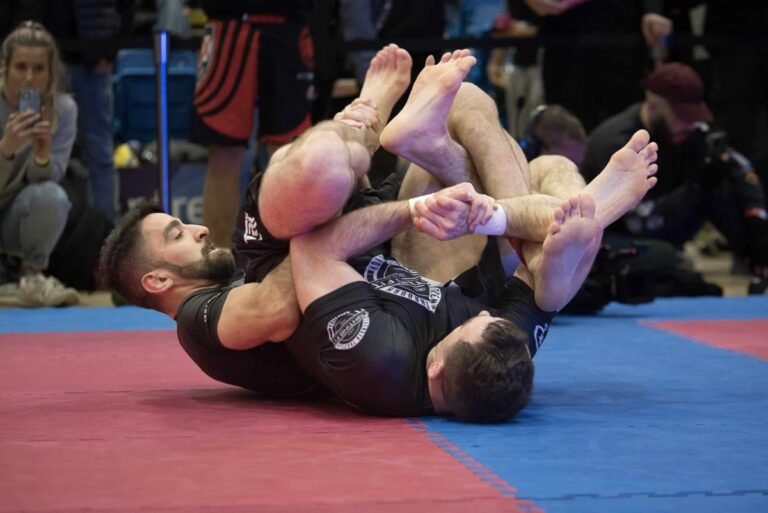
No-gi strips away the fabric gi grapplers use to control a limb, which means every tie, wrist grab, and leg entanglement happens skin-on-skin against sweat. That shifts the demand from the crushing strength gi players use to rip a sleeve away toward a mix of pinch grip, thumb-and-finger control, and grip endurance that has to hold up for a six- or ten-minute match, not a single explosive pull. A grappler with a weak grip isn’t just losing strength contests — they’re losing position, because a hand that slips off a far-side wrist or a heel during a leg entanglement hands the other person a scramble for free.
The counterintuitive part is that elite no-gi competitors aren’t necessarily the strongest grippers in the room. Technique — where you anchor the grip, which fingers do the work, how you load your hips behind it — closes most of the gap between a decent natural grip and a trained one. But a trained grip still beats an untrained one at the same skill level, and that’s the gap worth closing.

Crush Grip: Train It With a Captains of Crush Gripper
Crush grip is the strength that lets you clamp down on a wrist, a collar-less neck, or a gi-less ankle and not let go under resistance. The IronMind Captains of Crush gripper is the accepted standard for training and testing it — the lineup runs from a 60 lb Guide model up to the 365 lb No. 4, and the jump in difficulty at the top is steep. IronMind’s own certification records show the No. 4 has been officially closed by only six lifters total since Joe Kinney first did it in 1998.2

You don’t need to chase a certification to get value from one. Pick a gripper that takes real effort to close for 3-5 reps, not one you can rep out twenty times, and work negatives — forcing it open slowly under control — once you can’t close it anymore. Two sets of 5-6 closes per hand, twice a week, is enough; crush grip responds fast and overtraining it just means sore forearms on the mat the next day.
Pinch Grip: The Grip No-Gi Submissions Actually Use
Pinch grip — thumb pressed against the pads of your fingers with no palm involved — is what controls a heel in a saddle, a far-side wrist in a kimura trap, or a knee line in a leg entanglement. It’s a different muscle pattern than crushing a gripper shut, and most grapplers who feel strong on a hand gripper are surprised how weak their pinch is by comparison.
Plate pinches are the simplest way to build it: hold two weight plates together, smooth sides facing out, pinched between your thumb and fingers, and time the hold. Start with two 10 lb plates for 20-30 seconds per hand and add weight before you add time. Grip-sport athletes who specialize in this movement are working with weight most grapplers will never need — Finnish lifter Harri Tolonen set an IronMind pinch block world record at 51.4 kg (113 lb) pinched between flat blocks with no handle3 — but even a fraction of that number transfers directly to controlling a leg you’re trying to finish.

Thick-Bar Training: Fat Gripz and Forearm Endurance
A standard barbell or dumbbell handle is about an inch in diameter. Wrap a Fat Gripz attachment around it and that jumps to roughly 2.25 inches, which forces your hand, wrist, and forearm to work far harder just to keep the bar from rotating out of your palm. That’s closer to what an opponent’s forearm or calf actually feels like than a thin Olympic bar is.

The easiest way to add this without a dedicated grip day: slide Fat Gripz onto whatever you’re already doing for deadlifts, rows, or farmer carries. You don’t need to add volume, just change the diameter of what you’re holding. Expect your working weight to drop 10-20% the first few sessions — that’s the forearm catching up to what the rest of your body can already lift.
Dead Hangs and Timed Holds for Match-Length Endurance
Crush strength and pinch strength both matter less if your grip gives out from fatigue before the position does. A no-gi match runs five to ten minutes depending on the ruleset, and a scramble-heavy style means your hands are gripping something for most of it. Dead hangs train the specific skill of holding on isometrically well past the point of discomfort, which is exactly what a long leg-entanglement battle or a stalled guard pass demands.
Hang from a pull-up bar with straight arms until your grip fails, not until your shoulders get tired — that’s usually 30-60 seconds for someone with moderate training. Do three rounds, resting a full two minutes between them, twice a week. Progress by adding a weight belt before you worry about adding time; grip endurance under added load transfers to grappling better than hanging bodyweight longer and longer.
Kettlebells and Carries for Grip Under Fatigue
Kettlebell work and loaded carries train grip the way a match actually stresses it — while your heart rate is up, your other muscles are working, and nothing is isolated. A farmer’s carry with a heavy kettlebell or dumbbell in each hand, walked for 30-40 meters, builds the same “hold on while everything else is also working” quality that a back take or a failed pass attempt demands.

Kettlebell swings add a ballistic element — the bell tries to rip itself out of your hand at the top of the swing, and controlling that is its own grip skill. Single-arm swings for 10-12 reps per side, or a simple farmer’s carry superset after your main lift, covers this without adding a separate training day.
Where Grip Training Shows Up in Real Finishes
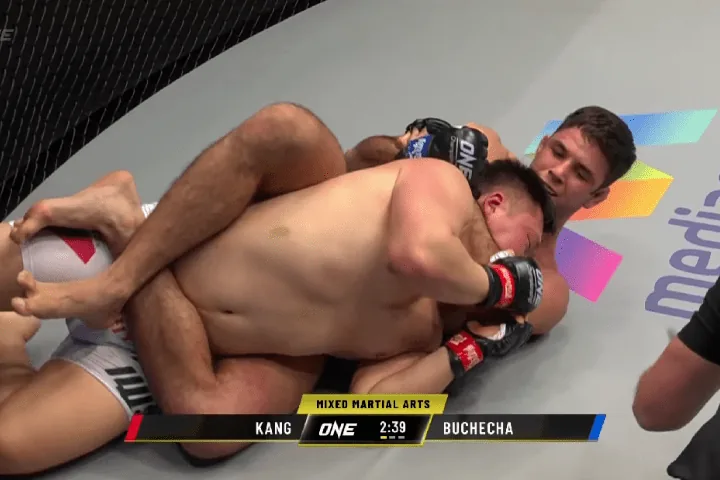
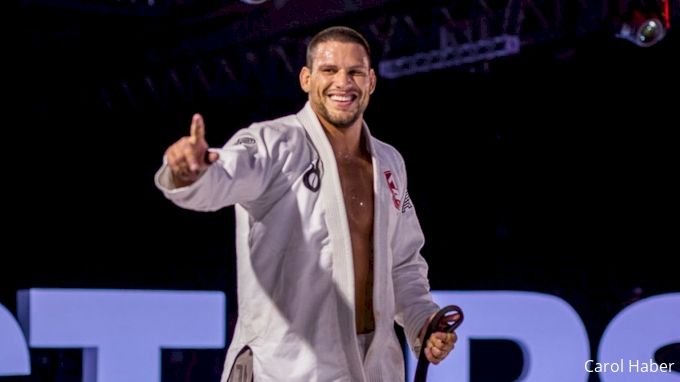
The transfer from gym to mat isn’t abstract. Leg entanglements are decided by who controls the foot and knee line first, and that control is a pinch-and-crush combination, not a single grip. In a recent UFC BJJ bout, one competitor locked a leg entanglement and had to maintain a crushing grip on the foot through a prolonged scramble before the finish came — exactly the isometric-under-fatigue scenario dead hangs and loaded carries are built to prepare for.

Even in positions that look like pure technique, grip is doing quiet work underneath. A kimura trap only holds if the wrist grip doesn’t slip once the opponent starts posting and turning; a tight leg entanglement only stays tight if the grip on the heel doesn’t loosen when the other person starts kicking free.

Programming Grip Work Without Wrecking Your Elbows
Grip training is easy to overdo precisely because it feels so manageable — a few minutes on a gripper doesn’t feel like a workout. The problem shows up two days later as medial elbow pain from the tendon overload, a common complaint among grapplers who stack grip work on top of already-heavy mat time. Keep dedicated grip sessions to two or three per week, separate from the days you’re drilling heavy wrist control or finishing a lot of kimura traps live, and treat any lingering forearm soreness as a signal to back off rather than push through.
A simple split that works for most training schedules: one crush-and-pinch session (gripper plus plate pinches), one endurance session (dead hangs plus a farmer’s carry or kettlebell work), spaced at least two days apart. That’s enough stimulus to move the needle inside six to eight weeks without turning into a second job. Pair it with the kind of structured conditioning covered in our no-gi conditioning program, and grip stops being the thing that gives out before your gas tank does.
Grip training for no-gi isn’t about chasing a number on a hand gripper — it’s about the specific holds that keep a limb from sliding free when it matters. Build the crush, the pinch, and the endurance to hold all three under fatigue, and the next scramble you lose won’t be because your hand opened first.
Sources
- Experience, Training Preferences, and Fighting Style Are Differentially Related to Measures of Body Composition, Strength, and Power in Male Brazilian Jiu Jitsu Athletes — A Pilot Study, Sports (2023) — found no significant relationship between belt rank and maximal isometric handgrip strength in 13 male BJJ athletes.
- Captains of Crush Grippers — certification history showing only six lifters have officially closed the 365 lb No. 4 gripper since 1998.
- Harri Tolonen Breaks IronMind Pinch Grip Block World Record, IronMind — record-setting 51.4 kg pinch block hold used as a benchmark for elite pinch grip strength.
- UFC BJJ 11: Musumeci vs Mitchell Results, UFC.com — match recaps referencing leg entanglement and submission sequences used for context.
Related on Rashguard Guy
Build out your conditioning with our guide to cutting weight safely for no-gi, or read up on submission grappling conditioning for a full training program.