ADCC Champ Victor Hugo Makes His ONE Debut | No-Gi Weekly Oct 26–Nov 1, 2026
Six days, four promotions, and one grappler with a shot at something nobody in IBJJF history has ever done. That’s the window running October 26 through November 1 — headlined by 2026 ADCC +99kg champion Victor Hugo’s jump to ONE Championship, Craig Jones picking a fresh fight with the IBJJF rulebook, and Pawel Jaworski putting a five-tournament win streak on the line in Rome today.
ADCC Champion Victor Hugo Signs On for ONE Championship’s Grappling Push
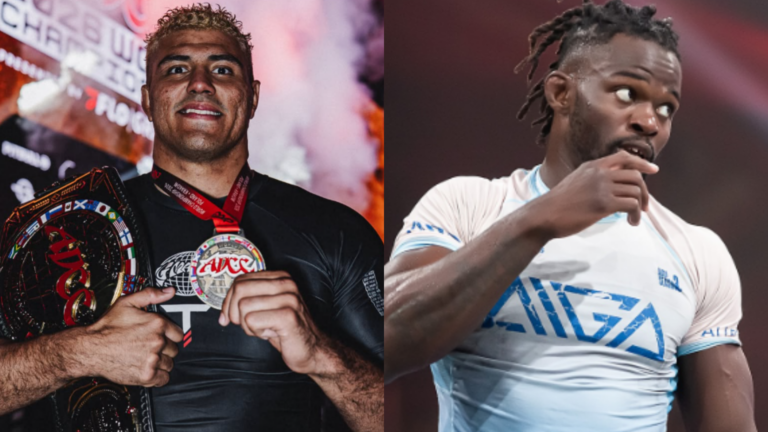
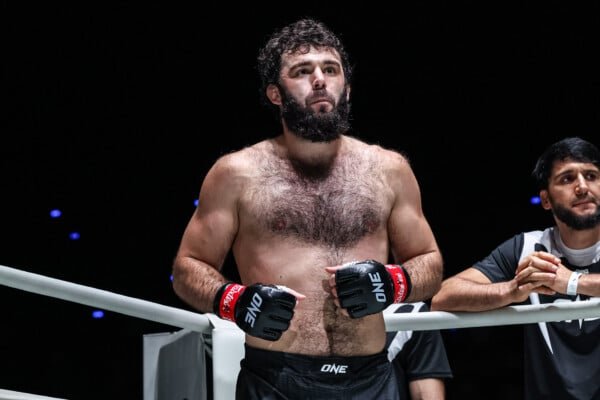
Victor Hugo makes his ONE Championship debut against Devhonte “Bones” Johnson on Friday, November 6, at Lumpinee Stadium in Bangkok — an openweight submission-grappling clash streaming on Prime Video. Hugo, 29, arrives off the best run of his career: he submitted all four opponents on his way to +99kg gold at the 2026 ADCC World Championships in Krakow, adding that title to four IBJJF World Championships and a 125-31 career record. At 6-foot-4 and 260 pounds, he moves like a man half his size, finishing most of his matches from guard rather than from on top.
Johnson isn’t a soft landing spot. The 32-year-old is a 2021 IBJJF No-Gi World Champion with Pan American and European No-Gi titles on his resume, and his game is built around a front headlock — he hunts D’arce, anaconda, and guillotine chokes off wrestling-heavy top pressure. Where Hugo wants scrambles and submissions from his back, Johnson wants to flatten him out and grind, and that stylistic collision is exactly why ONE booked this as an openweight match instead of forcing either man to cut.
There’s also a size question nobody’s fully answered yet. Hugo’s finishing instincts have mostly been tested against IBJJF and ADCC opponents who grew up chasing the same rulesets he did — Johnson’s background is different enough, closer to a wrestler’s sense of distance and top pressure, that this reads less like a style clash and more like two separate grappling cultures meeting in the same cage. If Hugo’s guard game holds up against a true front-headlock specialist, it’s the strongest argument yet that his finishing rate travels outside IBJJF’s gi-less bracket format.
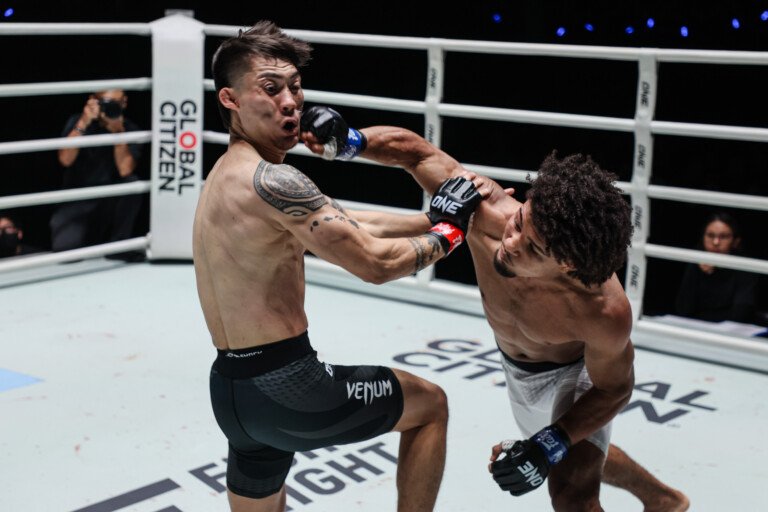
The signing isn’t a one-off. ONE has been leaning harder into grappling all year — Kade Ruotolo and Ok Rae Yoon are running back their rivalry in MMA this December, and the promotion’s own ONE Fight Night 48 card leaned on submission grappling to fill out the Bangkok bill: Ruan Alvarenga needed a judges’ aggression-factor tiebreak to edge Shoya Ishiguro after both men traded leg-lock threats for ten straight minutes, and Shamil Erdogan closed the show with a clean submission over Paul Elliott. Signing an ADCC world champion with Hugo’s finishing rate is the next, much louder step in that strategy.
Pawel Jaworski Puts a Perfect Season on the Line in Rome
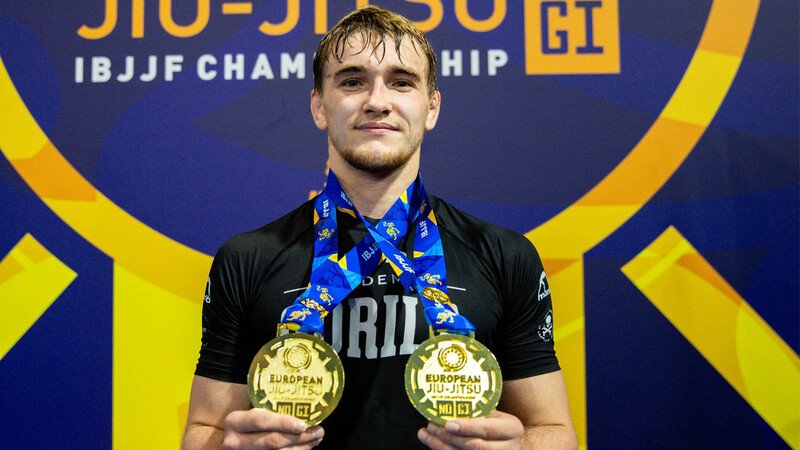
Poland’s Pawel Jaworski has not lost since the summer. He took medium-heavyweight gold at the 2025 No-Gi Worlds, then swept both his weight class and the open class at the 2026 Brasileiro No-Gi and Pan No-Gi championships, then added double gold at the Lisbon International Open — five gold medals in five weeks, by IBJJF’s own count, and the current #1 ranking in the sport. We broke down the chase in detail in our deep dive on his Grand Slam bid, and today is the deadline: his medium-heavyweight final at the IBJJF European No-Gi Championship in Rome was scheduled for November 1, the last of the four titles he needs to become the first grappler to ever win the No-Gi Grand Slam in a single season.
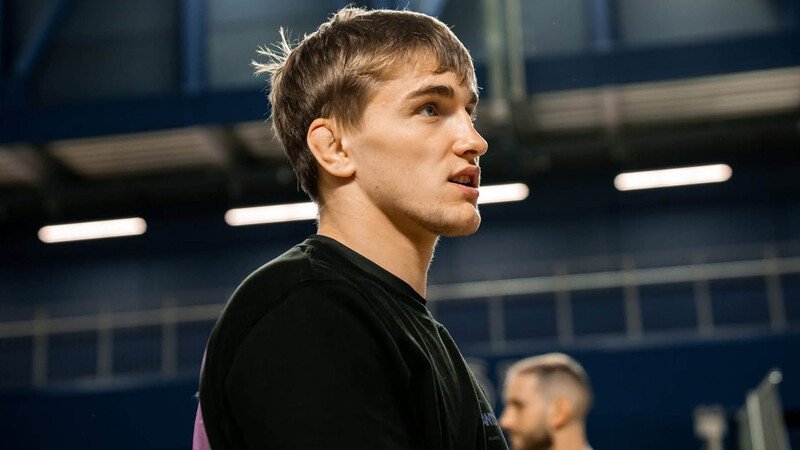
Results were still filtering in as this went to print, which tells you how tight IBJJF’s own reporting window is on a Sunday final. Of his nine matches at last year’s Euros, seven ended in a tap — he’s not a grappler who needs the judges’ table, and the smart money in Rome expects the same. What makes the Grand Slam framing more than a marketing hook is that nobody has actually done it before: Worlds, Brasileiro, Pan, and Euro titles in medium-heavyweight, in the same season, without a single loss along the way. Gabi Pessanha and a handful of others have put together comparable multi-title runs on the women’s side, but a clean four-for-four sweep in one season, at black belt, has never happened on the men’s side until this bracket.
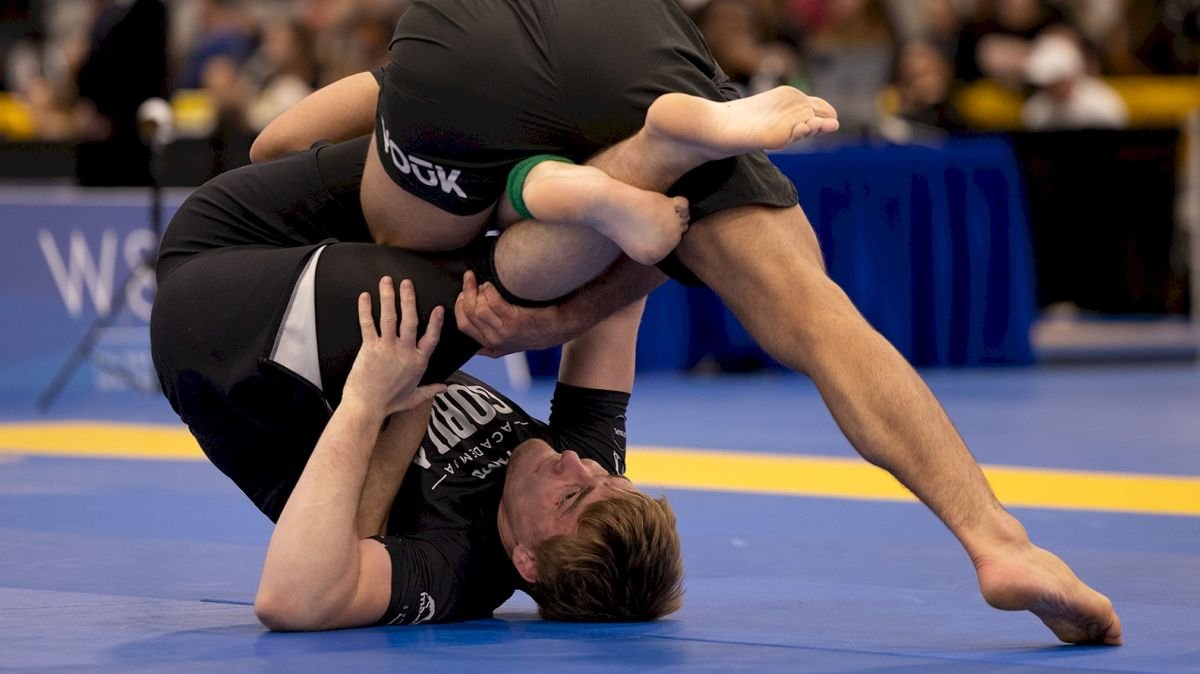
Academia Gorila, Jaworski’s team under head coach Marcin Polczyk, has quietly become one of the sport’s deeper no-gi factories — and a Grand Slam this season would be the clearest possible proof of that pipeline, not just a career-best run for one athlete. Jaworski has also been open that the Grand Slam isn’t the ceiling for him: he’s named the No-Gi World Championship, a different title than the one he already won in 2025, as the real test against reigning champion Wallisson Souza.
The grassroots side of the sport didn’t take the week off either. ADCC’s regional-expansion circuit added another stop with the Caracas Open in Venezuela on October 31, the same weekend the Rome bracket wrapped up — one more data point for how fast ADCC’s lower-tier events have multiplied since the 2026 season began. Between Krakow in September, the Peru and New Jersey Opens in October, and now Caracas, ADCC has run more regional qualifiers in 2026 than in any prior year, and each one feeds a slightly different pipeline of unsponsored talent into the sport’s biggest stage.
Craig Jones Says the IBJJF Is Scoring the Wrong Kind of Control
Craig Jones used a new installment of his Power Ride instructional to take a direct shot at IBJJF’s scoring rules, and the argument is sharper than the usual “points ruin jiu-jitsu” complaint. Jones’s case: side control, mount, and back control all score heavily because they were historically read as dominant positions for ground-and-pound, but none of them account for where an opponent’s actual movement comes from — the legs. A bottom player who keeps his feet free can bridge, hip-escape, and explode out from underneath almost any top position, scored or not.
His example is Khabib Nurmagomedov, who built an entire undefeated career controlling opponents from half guard and closed guard — positions that score zero points under IBJJF rules but that Jones argues produce more functional control than mount or back control ever do. The result, in his telling, is a sport that rewards grapplers for rushing into scoring positions instead of locking down the one thing that actually stops a comeback.
It’s a timely argument to drop in the same week Jaworski is trying to sweep every major IBJJF no-gi title — Jones is essentially asking whether the system producing that Grand Slam is measuring the right thing at all. It’s also not an isolated gripe. Jones has spent most of 2026 picking at IBJJF from the outside — criticizing the belt system as a weak proxy for actual skill, and pointing out that competitors cover their own hotel rooms and registration fees at events that charge spectators full price at the door. None of it has slowed IBJJF’s calendar down, but it’s shaping how the sport’s biggest free-agent voice talks about the federation that still produces its most prestigious titles.
The counterargument, made often by IBJJF loyalists, is that a scoring system has to be learnable and officiable in real time by a judge with a stopwatch — “control quality” is the kind of subjective call that turns into exactly the judging controversies ONE just had with Alvarenga and Ishiguro. Points are blunt on purpose. Whether that trade-off is worth it is the argument Jones keeps having, one instructional and one podcast appearance at a time.
Grappling’s Crossover Season — and Its Money Problem
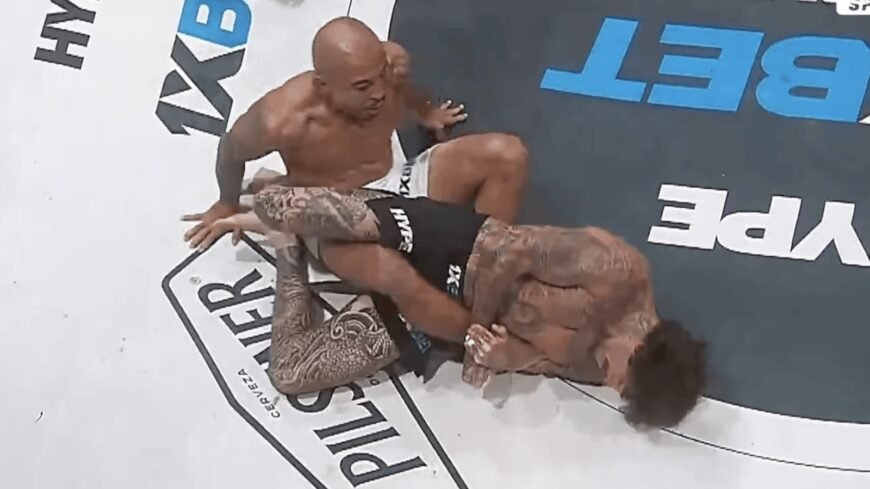
MMA and grappling keep bleeding into each other. Earlier this month, Jose Aldo made his return after 17 months away from competition and grappled Marlon Vera to a draw at Hype Fighting’s Ecuador card in Quito — ten minutes, submission-only, no tap from either side. Vera pulled for a heel hook midway through and Aldo scrambled out clean, the only real finishing threat in an otherwise tactical, feeling-out affair. It’s a small result on paper, but it’s one more 40-something UFC name choosing a grappling mat over a cage for his comeback.
The bigger crossover story is still UFC BJJ, which crowned two new champions at UFC BJJ 13 on October 29 — and promptly got a reality check from the person who runs FloGrappling’s broadcast deals. GM Ben Kovacs said flatly that UFC BJJ’s business “doesn’t math out”: he knows what the promotion is paying and what production costs, and there’s no version of that math that ends in profit. Kovacs traced the inflated expectations back to Gordon Ryan’s old FloGrappling contract — “what was worth $100,000 to pay Gordon is literally worth $400 to pay you,” he said, describing a pay ratchet where one superstar’s deal reset what every mid-tier grappler now expects to get offered. It’s the same tension Fight to Win has quietly solved by paying smaller, sustainable purses every few weeks instead of chasing one eight-figure spectacle — and it’s the reason nobody in the sport is surprised anymore when a promotion’s “biggest card ever” turns out to be a loss leader.
UFC BJJ’s bind is specific to who’s backing it: the UFC’s broadcast and sponsorship numbers are built around cage fighting, not grappling, so every submission-grappling card has to borrow a production budget sized for a different sport. FloGrappling, by contrast, built its entire model around grappling-specific numbers from day one — smaller purses, cheaper production, and a subscriber base that was already paying to watch this exact product before UFC BJJ existed. Kovacs’s point isn’t that UFC BJJ is badly run; it’s that a bigger parent company doesn’t automatically mean a bigger, more sustainable grappling business. Sometimes it just means a more expensive one.
UFC BJJ 13 itself delivered on the in-cage side regardless of the balance sheet — Tackett vs. Rodriguez and Fonacier vs. Barbosa crowned two vacant-title champions at Meta APEX, and the card debuted a new “Submission of the Night” bonus with no disclosed payout attached, which is its own small window into how the promotion is still figuring out its incentive structure in real time.
Looking Ahead
November opens fast. Victor Hugo and Devhonte Johnson headline the grappling half of ONE Fight Night 49 on November 6 in Bangkok, and we’ll have the recap. Jaworski’s Grand Slam result out of Rome should be fully confirmed within days — if it holds, it’s the biggest story IBJJF no-gi has produced all year. Garry Tonon returns to pure jiu-jitsu after six years away from the sport when he rematches Sam McNally for the Polaris lightweight title on November 21 — our full preview is live now. And Jaworski himself isn’t done: he’s already pointed at the No-Gi World Championships in mid-December, where a potential rematch with reigning champion Wallisson Souza is waiting.
Sources
- ONE Championship — Victor Hugo Debuts Against Devhonte Johnson at ONE Fight Night 49
- ONE Championship — ONE Fight Night 48 Results
- IBJJF — Five Gold Medals in Five Weeks: The Rise of Poland’s Pawel Jaworski
- MiddleEasy — Pawel Jaworski Enters European No-Gi With First Grand Slam in Reach
- BJJ Eastern Europe — Craig Jones Says the IBJJF Points System Rewards the Wrong Kind of Control
- Yahoo Sports — Jose Aldo Returns After 17 Months, Grapples Marlon Vera to Draw
- BJJ Eastern Europe — FloGrappling GM Ben Kovacs Says UFC BJJ Is Losing Money