No-Gi Finger Injuries: 7 Keys to Recover
Researchers James Scoggin and colleagues tracked orthopaedic injuries across competitors at the 2009 and 2010 Hawaii State Judo and Brazilian Jiu-Jitsu tournaments, and the hand showed up in the data more than most grapplers expect. Of the orthopaedic injuries recorded, hand injuries accounted for a DIP joint strain, a thumb sprain, a PIP dislocation of the index finger, and a ring-finger metacarpal fracture — a spread across nearly every bone and joint in the hand, not one isolated pattern. The fingers don’t get a dramatic highlight reel like the knee or shoulder, but they take damage constantly, in small increments, almost every time grips are exchanged.
Why No-Gi Grip Fighting Puts Fingers at Risk
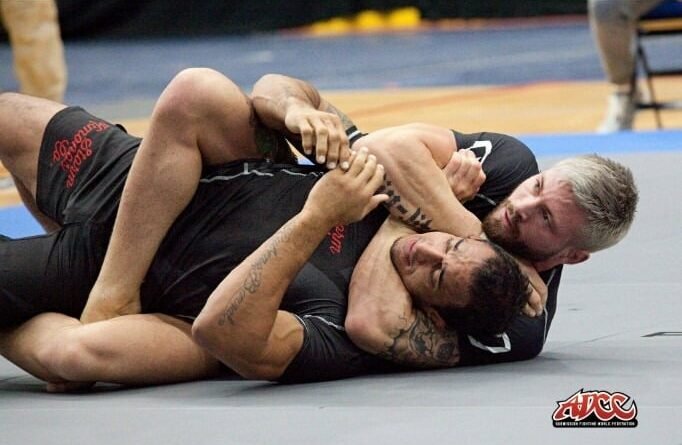
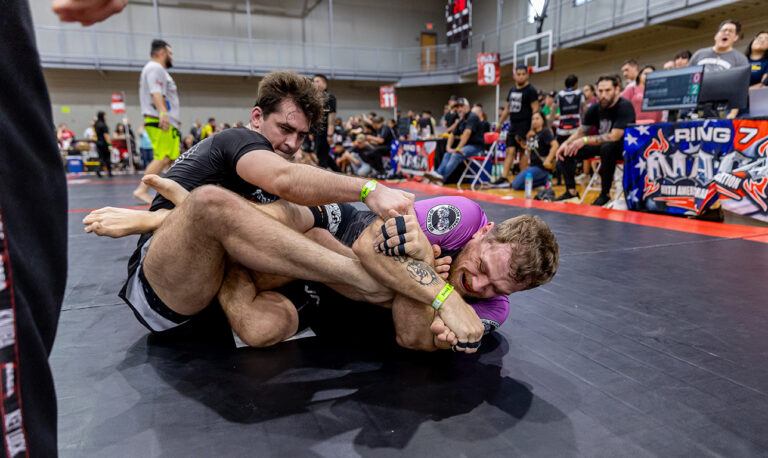
Gi grappling loads the fingers in a sustained, predictable way — fingers hooked into thick cotton fabric, gripping and re-gripping against canvas resistance for the length of a match. No-gi strips that predictability out entirely. Wrist control, ankle control, and collar-tie-style grips on sweat-slick skin fail suddenly instead of gradually, and when a grip breaks it often breaks with a snap rather than a slow slide. The fingers that were loaded a half-second earlier get wrenched sideways or backward as the grip releases, and there’s no fabric buffer to spread that force out.
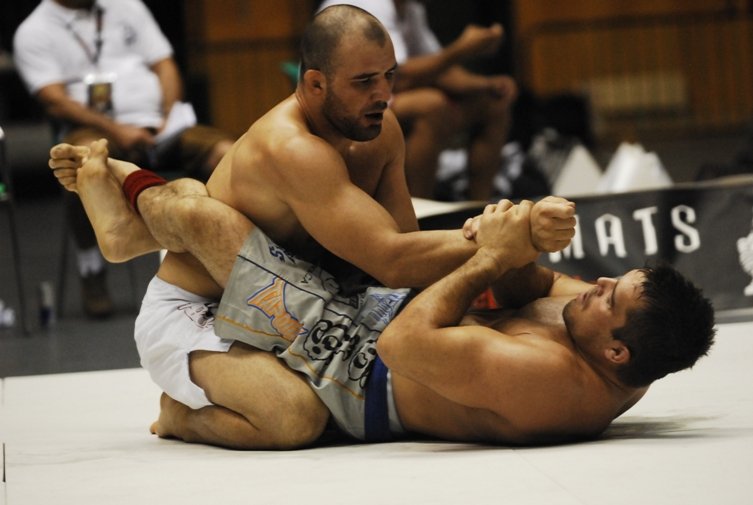
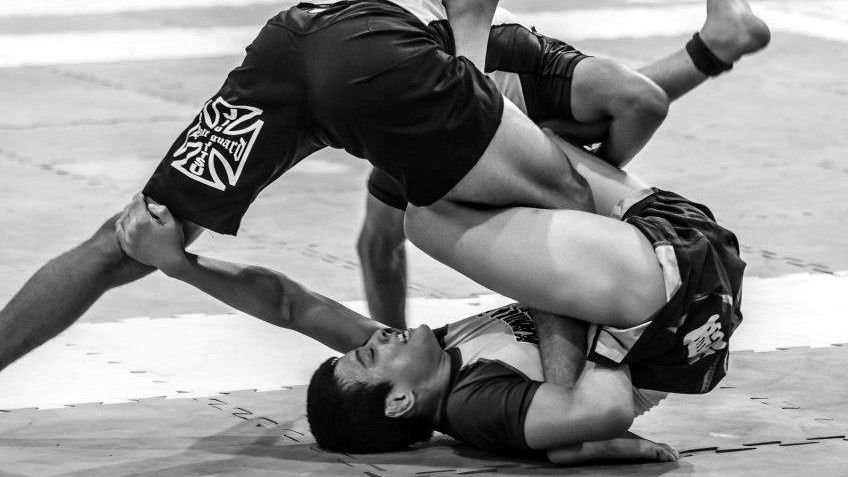
Scrambles compound the problem. A leg entanglement or a fast guard pass puts fingers in places they don’t belong — hooked under a knee, trapped between two moving bodies, or caught in a pant leg or rashguard hem during a transition. None of that happens with intent. It happens because grip fighting in no-gi is faster and less forgiving than the gi version, and the fingers are the first thing to pay for a scramble that moves quicker than reaction time allows.
The Finger Injuries No-Gi Grapplers Actually Get
Three patterns account for most of what shows up in a gym’s physio room, and they feel different enough that most grapplers can tell them apart without an X-ray.
PIP collateral ligament sprain is the most common outcome. The ligament runs along the side of the middle knuckle and resists sideways force — exactly what a grip gets exposed to when it’s wrenched off-axis during a break. A 2022 study in Cureus found that clinical stress testing, not MRI, is the reliable way to grade these: more than 10 degrees of sideways give with the finger straight, or more than 20 degrees bent, signals a complete tear rather than a sprain. MRI actually underperforms here, catching only about 55% of confirmed injuries.
PIP dislocation is the injury Scoggin’s data recorded directly — the index finger’s middle joint popped out of alignment, almost always from a finger caught at a bad angle during a grip break or a scramble rather than a clean submission attempt. It looks dramatic and it’s painful, but a clean dislocation reduced promptly by someone who knows what they’re doing often returns more function than a ligament tear that gets ignored.
Flexor pulley strain shows up as soreness along the palm side of the finger rather than at the joint, from repeated loaded gripping rather than one acute event. No BJJ-specific study has measured this directly, but the mechanism matches what sports medicine already knows from rock climbing, where the A2 and A4 pulleys take the same kind of repetitive crimp-style load that grip fighting puts on a no-gi grappler’s fingers session after session.
When a Grip Fight Goes Wrong: The Khetag Pliev Case
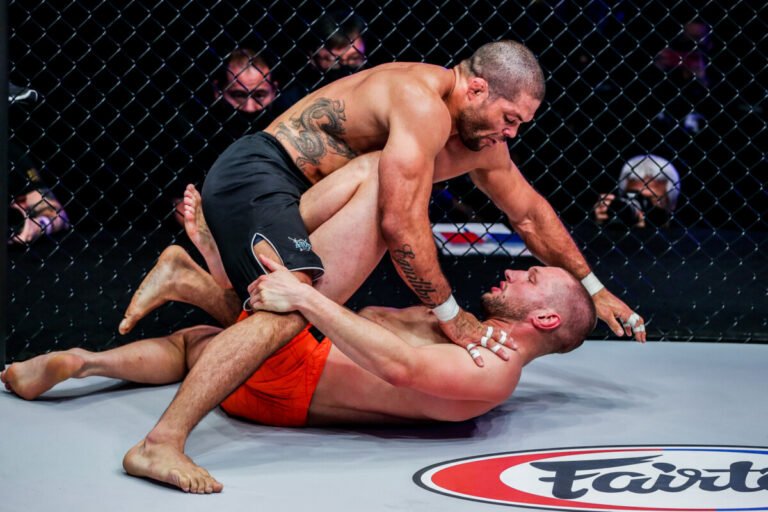
At CFFC 94 on April 1, 2021, Khetag Pliev was grappling with Devin Goodale along the fence in round two when his ring finger caught in a glove grip. “He caught my glove with one hand and held it,” Pliev said afterward. “I felt my finger snapped. He kept pulling my glove and my finger snapped.” Nobody in the cage noticed in the moment — the finger had fully separated, and it wasn’t discovered until between rounds two and three, when it was found inside Pliev’s own glove.
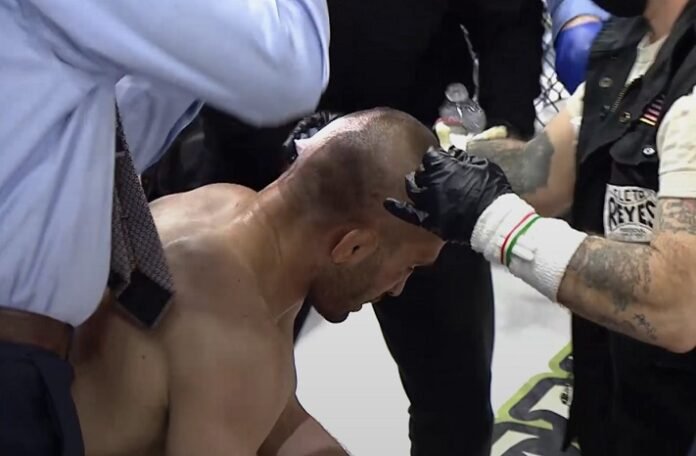
The fight was stopped once ringside doctors saw the injury, ruled a TKO loss for Pliev despite him wanting to continue. Surgeons reattached the finger at Thomas Jefferson University Hospital. It’s an extreme case — most no-gi finger injuries are a jammed PIP joint, not a full detachment — but the mechanism is the same one that happens in gyms every day: a grip caught and held under load until something in the hand gives out before the grappler feels it coming.
Red Flags That Mean You See a Doctor, Not a Trainer
Most finger sprains don’t need imaging or a hospital visit. A handful of signs mean you skip the gym’s roll of tape and get it looked at:
- A visible deformity, or a finger that sits at an obviously wrong angle
- Inability to fully straighten or bend the joint within a few hours of the injury
- More than 10–20 degrees of sideways give when the joint is gently stressed
- Numbness or tingling in the fingertip that doesn’t resolve within minutes
- Swelling that balloons within the first hour rather than building gradually overnight
A simple jam that hurts but moves normally and passes a basic stress test is almost always safe to buddy tape and monitor. Anything on this list is worth a same-day urgent care visit instead of waiting to see how it feels tomorrow.
Taping a Finger Before You Get Back on the Mat
Buddy taping — securing an injured finger to its uninjured neighbor — is the standard fix for a mild PIP sprain and works because the healthy finger restricts the sideways and backward motion that re-injures a healing ligament. For a sprain with more lateral instability, an X-pattern of athletic tape across the joint gives targeted support to whichever side of the ligament took the damage, without locking the joint completely straight.

Tape doesn’t heal a torn ligament, and it won’t stop a hard scramble from re-injuring a joint that isn’t ready. What it does is limit the end-range motion that causes most re-injuries, which is enough to get a mild sprain through light drilling while the ligament finishes knitting back together underneath.
The Return Timeline No One Tells You
A mild PIP sprain with no measurable instability often tolerates buddy tape and light training the same week — grip-light drilling first, live rolling once it passes a pain-free stress test. A moderate sprain with some ligament laxity needs three to six weeks taped before grip-heavy training resumes. A confirmed collateral ligament tear is a different timeline entirely: surgical repair with a mini suture anchor, two weeks of immobilization, then supervised physical therapy before any grip loading begins.
Here’s the part that surprises most grapplers: even after a sprain feels fully healed, swelling and stiffness around the PIP joint can take up to a year to fully resolve, according to orthopaedic sources tracking long-term outcomes. That doesn’t mean waiting a year to train — it means accepting that a finger joint can look permanently a little thicker than its neighbors while still being completely safe to grip and compete with.
Training Around a Finger Injury Without Losing Your Game
A taped or healing finger doesn’t have to shut down a whole training block. Positional sparring that avoids grip-heavy exchanges — closed guard work, hip movement drilling, leg lock entries that don’t rely on gripping with the injured hand — keeps most of a grappler’s game alive while the joint recovers.
Tell training partners explicitly, every session, not just the first time. A taped finger doesn’t look injured from across the mat, and a partner who doesn’t know will grip-fight at full intensity out of pure habit. Grapplers who re-injure the same finger twice in one season are rarely the ones who trained too hard — they’re the ones who stayed quiet about it and let someone grab a joint that wasn’t ready.
Buddy tape it, respect the stress test, and give a torn ligament the two weeks of immobilization it actually needs instead of the two days most grapplers give it. If the elbow is the next joint on your recovery list, the same return-to-training logic applies — see our breakdown of no-gi elbow injuries for the companion guide.
Sources
- Scoggin JF, et al. “Assessment of Injuries During Brazilian Jiu-Jitsu Competition.” Orthopaedic Journal of Sports Medicine, 2014 — tournament injury data showing hand injuries at 11.1% of recorded orthopaedic injuries, including a PIP dislocation and metacarpal fracture.
- Sahin MS. “Accuracy and Cost-Effectiveness of MRI Assessment of Collateral Ligament Injuries of the Lesser Digits’ PIP Joints.” Cureus, 2022 — clinical stress-test grading thresholds and MRI sensitivity data for PIP collateral ligament injuries.
- Miro PH, et al. “Finger Flexor Pulley Injuries in Rock Climbers.” Wilderness & Environmental Medicine, 2021 — mechanism reference for repetitive loaded-grip pulley strain.
- “Khetag Pliev’s finger gets stuck in glove, detaches during CFFC 94 fight.” Sports Illustrated, 2021 — the Pliev-Goodale case study.
- “MMA fighter’s finger comes off during bout at South Philly’s 2300 Arena.” PhillyVoice, 2021 — additional reporting confirming hospital reattachment and fight outcome.