Knee on Belly BJJ: 7 No-Gi Attacks
Most grapplers treat knee on belly as a waypoint — something to pass through on the way to mount. That’s the wrong frame. Knee on belly in no-gi grappling is one of the most productive attacking positions you can reach, precisely because of what it forces your training partner to do. The shin across soft abdominal tissue is immediate and hard to ignore. Without a lapel or collar to frame against, the bottom person has fewer tools to remove your knee than they would in a gi match. They’re going to do something — and each of those somethings maps to a specific attack if you’ve drilled it.
The position was central to Marcelo Garcia’s top game for years. His knee on belly was rarely where matches ended, but it was consistently where they turned: one reaction, one grip, and he was already locking in a kimura or taking the back. That transition speed is what makes KOB worth studying in no-gi.
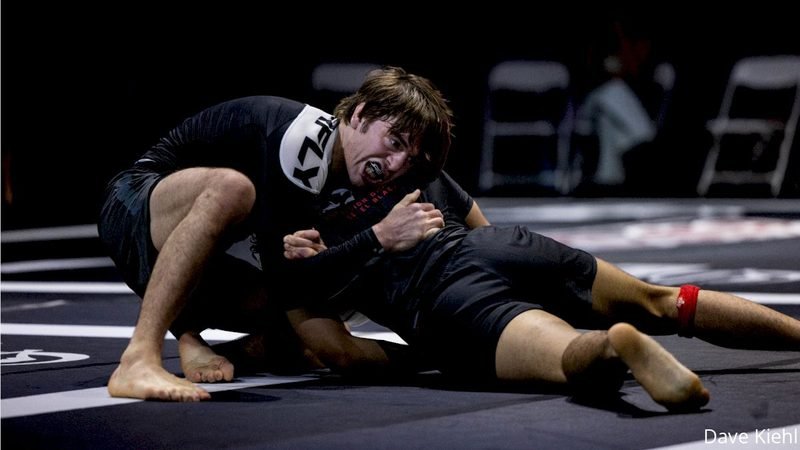
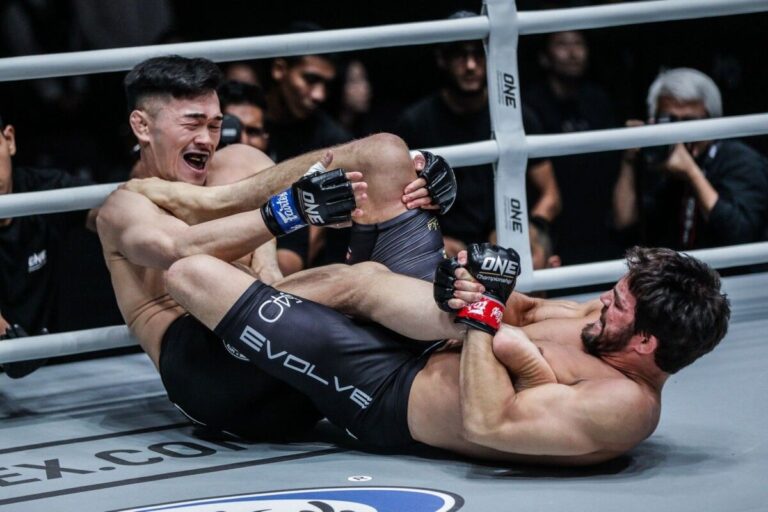
Top pressure in a no-gi competition setting — the pressure dynamic that makes knee on belly work. Photo: Dave Kiehl / FloGrappling
Why Knee on Belly Thrives Without the Gi
In a gi match, the bottom person can grip your sleeve, lapel, or collar to create a frame that takes some of the pressure off. Take those away, and the bony shin on soft tissue does its work more directly. The bottom player’s only real pressure-relief options in no-gi are to shrimp out, hip escape toward the knee, or lift your knee with their hands — every one of which creates a submission opening if you’re watching for it.
The other factor is weight distribution. You can make knee on belly feel like a thousand pounds or like nothing, depending on how much you shift into the shin and how you angle your posting arm. Lighter weight invites the bottom person to bridge; heavier weight makes them think they’re being crushed. Reading their tolerance and shifting between these states is what separates a static KOB from a dynamic attacking platform.
From a practical standpoint, knee on belly forces a faster reaction than flat side control. That speed is what you’re exploiting. A grappler who can sit comfortably in side control for thirty seconds under you will not do the same under your shin.
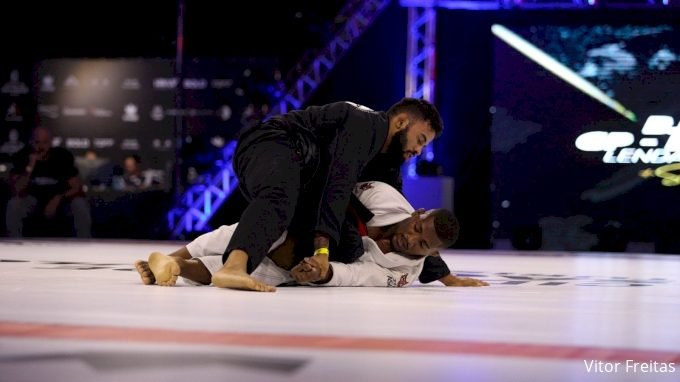
Top control in no-gi competition — the baseline position before transitioning to knee on belly. Photo: Vitor Freitas / FloGrappling
How to Establish Knee on Belly from Side Control
The entry most people know: from side control, drive your near-side knee upward across their midsection while posting your far foot on the mat for base. Your hip comes over, your weight shifts forward, and the knee settles. It sounds simple because it is, but the detail that gets missed most often is the posting foot. If your base is wrong, the bottom person will sweep you immediately by shoving the knee and sitting up.
The second entry comes off a leg drag pass: as you complete the pass, the hip-over motion naturally positions you for KOB rather than flat side control. Use it. The third entry is from a knee cut or torreando pass where you’ve cleared the legs and landed in a brief stand-up — dropping the knee across the belly from standing is fast and harder to prevent than crawling across from flat side control.
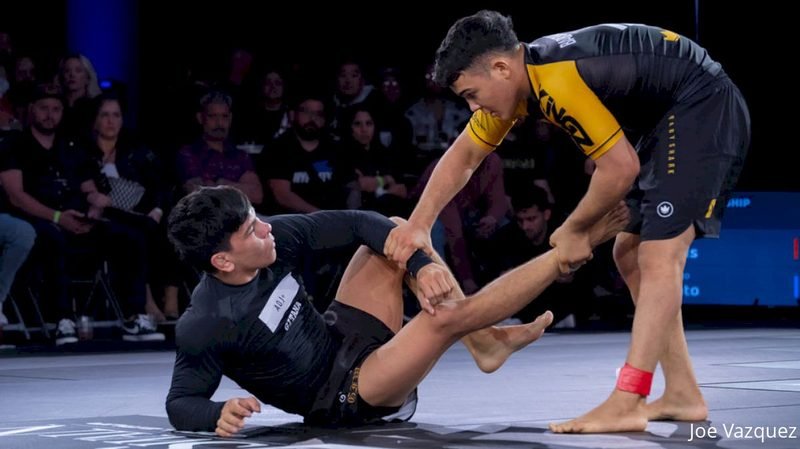
The guard engagement phase in no-gi — where knee on belly entries begin after guard is cleared. ADCC 2024. Photo: Joe Vazquez / FloGrappling
1. Far-Side Kimura
The most reliable attack from knee on belly. When you’re in position, reach your far hand across and grip the bottom person’s far wrist. Bring it toward their hip, thread your near arm under their elbow from below, and lock your hands in the classic kimura figure-four grip. The lever is sharp because your knee is already occupying their center — they can’t bridge away without falling into the lock.
The detail that makes this work is timing. Don’t grab the wrist and immediately start rotating the shoulder. First, control the wrist downward so the elbow bends — once it’s bent, the rotation does the work. Pull toward their hip first, not upward. Upward pressure tips them into a potential counter; hip pressure exposes the joint at the worst angle for them.
The kimura trap from no-gi extends this into a full attacking system — once you have the KOB kimura grip, there are five or six places the match can go from there, including to the mount, to the back, and to a straight armbar if they straighten the arm in defense.
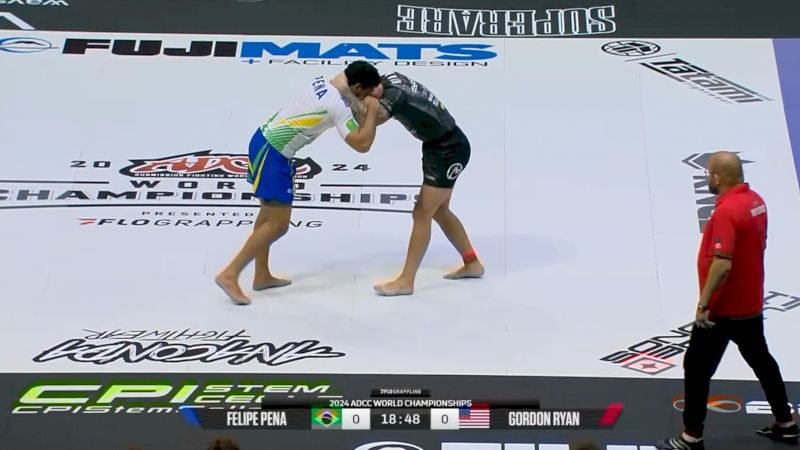
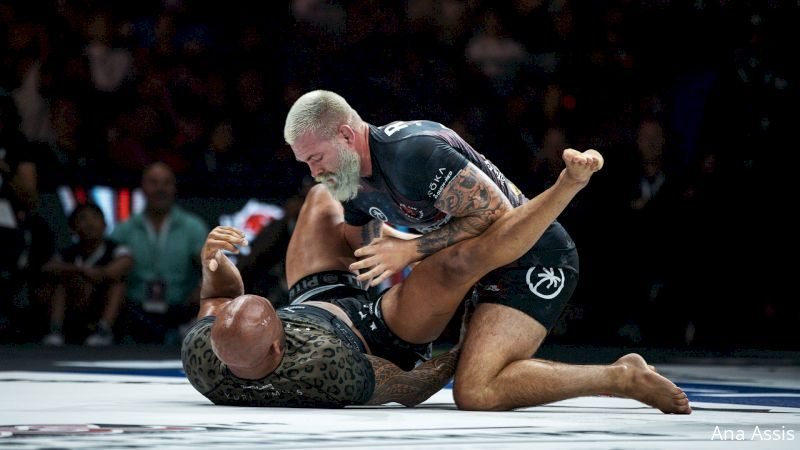
Felipe Pena and Gordon Ryan at ADCC 2024 — two athletes whose top games depend heavily on efficient grip-to-submission transitions. Photo: FloGrappling
2. Cross-Body Armbar
When the bottom person bridges into you to relieve the knee pressure, they often give you their near arm across their own body. Your weight is already forward from the KOB position. Pin that arm — trap it against their chest with your knee or thigh — and drop your hips back, rotating to isolate the elbow. This is a variation of the classic cross-body armbar that Marcelo Garcia used repeatedly from this exact position.
The pin is the key. If you try to rotate without trapping the arm first, they’ll pull it out. Drive your shin or knee across the elbow, let your weight do the work, then rotate into the submission. You need very little force once the elbow is pinned and your hips have swung through.
For the full technical breakdown of armbar mechanics in no-gi, including entries from other positions, the no-gi armbar guide covers the details that apply directly here.
3. Over-the-Top Armbar
The bottom person pushes your knee with an extended arm — that’s the most common physical response to the shin pressure. When they do, grab that wrist with both hands, step over their head with your far leg, and sit back. The armbar appears instantly. The reason it works so reliably is that the push requires a straight or near-straight arm; straight arms lose armbars.
What kills this attack is hesitation. The window between when they push and when they pull the arm back is less than a second. You have to have drilled the response enough that it’s automatic: push on knee — grip wrist, step over, sit back. Three movements, no pause between them.
If they don’t fully extend the arm and try to circle it instead, that’s your kimura setup from Attack 1. The two attacks feed each other, and training both as a pair is more effective than drilling either in isolation.
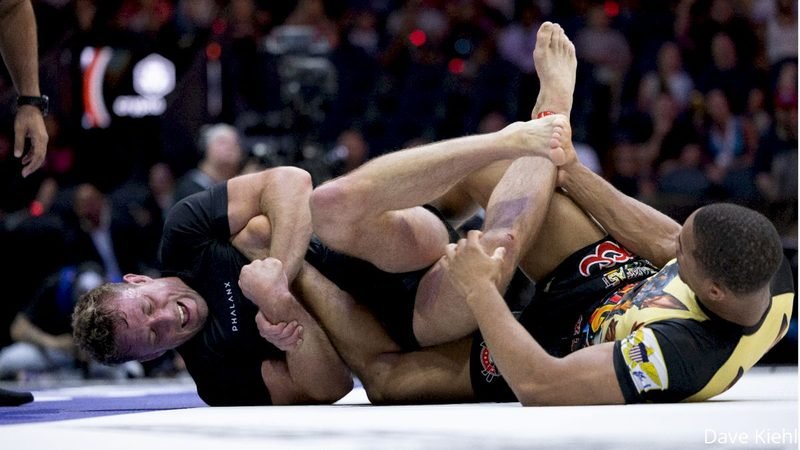
Leg entanglement entering from a scramble at ADCC 2024 — the same offensive mindset applies from knee on belly transitions. Photo: Dave Kiehl / FloGrappling
4. Back Take When They Turn In
Some people, especially wrestlers, respond to knee on belly by turning into you rather than away. The instinct is to lift the knee off by getting to their knees — the classic “back to base” response. When they do, step off the knee, reach under their near arm for the underhook, and get your second hook in. You’re on the back before they realize what happened.
The read here is watching the hips. The moment they start rolling their hips toward you to get to all fours, that’s the signal. Commit to the back take before they complete the movement. Waiting until they’re already on all fours makes the entry harder; catching them mid-roll is clean.
Once you have the back and both hooks, the rear-naked choke is the primary finish — see the rear naked choke no-gi guide for the seatbelt detail and choking mechanics that make the most difference in a live roll.
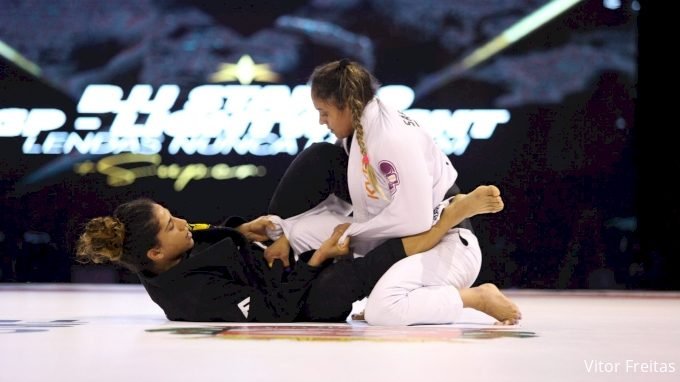
Guard passing in no-gi competition — the back take from knee on belly uses the same directional momentum as a guard pass. Photo: Vitor Freitas / FloGrappling
5. Back Take When They Turn Away
The opposite reaction: some people turn away from the knee to shrimp out. They’re trying to create space and escape. Follow the hips, reach under their far arm for the underhook, and get your chest on their back. Your near hook goes in first — the one closest to their hips — then your far hook. The seatbelt grip follows.
This version of the back take from KOB is actually cleaner than the turn-in version because the bottom person is already moving in the direction you need them to go. You’re not redirecting their momentum; you’re following it. The one mistake to avoid is reaching for the choke before your hooks are established. Get your position first.
6. Triangle From the Top
Less common but highly effective when it appears: if the bottom person reaches up to grab your chin, chest, or collar (a reflex from gi training that still shows up in no-gi), scoop that arm with your knee-side arm and drop your far leg across their neck. The triangle appears from the top of knee on belly, which is unusual enough that most training partners won’t recognize the setup until it’s too late.
The entry requires that you drop your weight back and swing your far leg over as a single fluid motion. Stalling at any point in that movement lets them pull the arm out. Think of it as a controlled fall — you’re committing your weight in one direction and locking in the triangle on the way down.
Finish detail that matters: once the triangle is closed, pull their trapped arm across their own centerline. This angles the submission and adds pressure that a closed triangle alone won’t generate without that extra leverage.
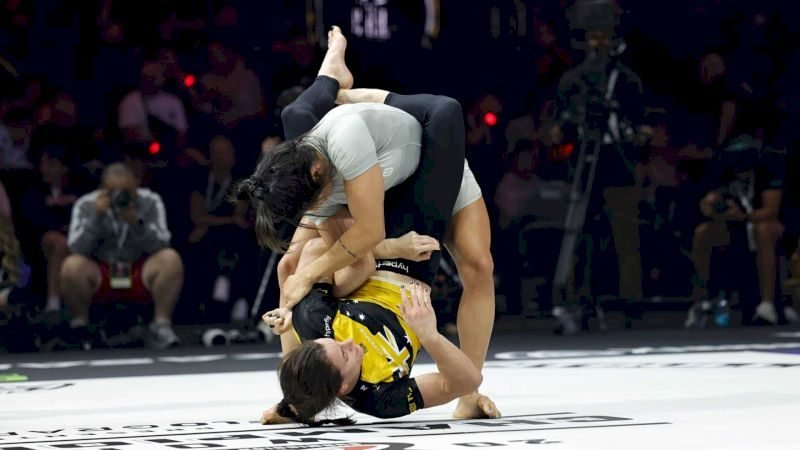
Top mount pressure in no-gi competition — the same directional weight-loading applies when finishing the triangle from the knee on belly position. ADCC 2024.
7. KOB Pressure as the Seventh Weapon
Not every move from knee on belly ends in a submission. Sometimes the most effective thing is to make the position so uncomfortable that your training partner expends energy just managing it — energy they don’t have available for attacks when you transition to another position. Sustained, weighted knee on belly depletes a grappling match in ways that flat side control doesn’t. You get credited for the position, you’re generating reactions that set up submissions, and you’re draining their tank.
The practical application: if you’ve hit the kimura and they’ve defended, don’t immediately hunt for the next attack. Reset the knee on belly position, add weight, and wait for the second reaction. Impatience from the top position is what causes grapplers to rush attacks that aren’t there yet. The position itself is winning; the submission is just the confirmation.
This patient top game approach is different from what most people learn early on — the instinct is to always be moving, always hunting. At higher competition levels, the ability to hold a dominant position without telegraphing your next move is at least as valuable as the speed of the attack itself. The best KOB games combine both: patient pressure until a clear reaction, then instant commitment to the attack. The position earns 2 points in IBJJF rules regardless of submission — it’s already working before any attack lands.
Sources
- BJJ Fanatics — instructional breakdowns of top control positions and KOB attacking systems
- FloGrappling — competition coverage and technical analysis from ADCC 2024 and BJJ Stars events
- GrappleArts — Stephan Kesting’s technical analysis of guard passing and top control in no-gi grappling