No-Gi Clinch Work and Ear Exposure: The Tie-Up Phase Most Grapplers Underestimate
Ear guard conversations in no-gi grappling almost always center on what happens on the mat. The side headlock that pins your ear to the canvas. The mount pressure that grinds cartilage across a long round. The guard scramble where your partner’s hip catches your ear on a sweep attempt. These are real risks, and they deserve the attention they get. But there is a parallel exposure window that receives almost no coverage: the standing clinch phase, where tie-ups, snap-downs, head ties, and body lock entries create their own sustained friction against ear cartilage — and where most grapplers are not wearing ear guards at all.
This gap matters because no-gi grappling has embraced wrestling more deeply than at almost any point in the sport’s history. Clinch work, level changes, and the scrambles that follow takedown attempts have moved from peripheral skills to core curriculum across academies. The more time you spend in the clinch, the more time your ears spend in friction-generating contact with a training partner’s head, shoulder, and chest. Understanding that exposure — and how ear guards actually perform under those conditions — changes how you think about protection as a whole-round practice.
Why the Clinch Creates Unique Ear Exposure
In ground positions, ear contact is relatively predictable. You know when you’re in side control. You know when a headlock is being applied. The positions have recognizable geometry, and the moments of ear risk are identifiable if you’re paying attention. The clinch is different. Tie-up work is kinetic and contested — both grapplers are moving, posting, breaking grips, and changing levels simultaneously. The friction your ear receives during a collar tie or an over-under isn’t always a distinct event. It’s a steady accumulation of small contacts across a round that builds without you registering each individual instance.
This is partly why clinch-related ear damage is often attributed to ground work by the grapplers who experience it. The damage happens in motion, during transitions, and the culprit is often a phase of training that doesn’t feel high-risk because neither grappler has established dominant control yet. The ear doesn’t know whether you’re standing or on the mat. It responds to friction, pressure, and shear force the same way in both contexts. Forty-five seconds of sustained over-under fighting can accumulate more ear contact than a ground-based headlock that lasts thirty seconds — it’s just less visible as a risk.
The Mechanics of Ear Friction in Standing Tie-Ups
Over-Unders and the Head-to-Chest Contact Zone
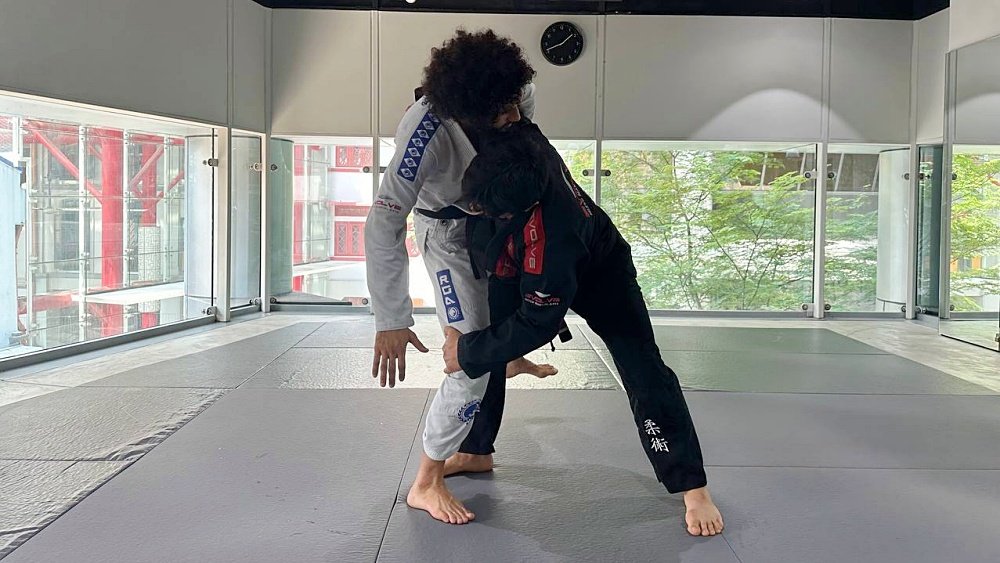
The over-under clinch is one of the most common positions in no-gi wrestling, and its geometry places your head directly against your partner’s chest, shoulder, and neck. Depending on head position, your ear is often pressed into the shoulder-blade zone or grinding against the sternum as both grapplers fight for angle and leverage. When your partner drives their head down into an inside position to establish an underhook, the side of their head frequently makes contact with your ear on the way through. This isn’t intentional — it’s mechanical. The geometry of the position demands it, and it happens repeatedly throughout a single exchange.
Snap-Downs and Collar Ties
The collar tie is used to break posture, set snap-downs, and control head direction before shot attempts. When your partner snaps your head down from a collar tie, your ear moves through a downward arc that can drag against their forearm, their wrist, or their own head if they follow the snap-down into a front headlock. Repeated snap-downs across a round mean repeated contact at that same ear location. The collar tie itself, pulled tight and positioned high, can also compress the outer ear against the skull depending on where the hand is placed — particularly when the opponent posts their forearm across the neck and drives in.
Body Lock Entries and Ear Compression
Body lock takedown attempts — the Greco-influenced lifts that have become increasingly common in no-gi competition — require chest-to-chest clinching that brings the ear into sustained contact with the opponent’s head and shoulder during the entry. When a body lock is defended, the defender often turns into the attacker, and that rotation drags one or both ears through the transition. If the body lock is established and the grappler attempts a lateral throw or trip, the ear on the entry side experiences compression as grips lock and bodies rotate together. It isn’t a single high-force impact. It’s a positional grind that continues for the duration of the attempt.
Why Grapplers Don’t Think About the Standing Phase
Part of the issue is that ear guard discussions in no-gi have historically centered on ground-based headlocks and control positions. That framing makes sense as an entry point — the side headlock on the mat is an obvious culprit, and the ground is where most training time is spent. But it also creates a mental model where grapplers think of ear protection as something that matters from the moment they’re taken down, not from the moment a round begins. The clinch is treated as a waiting room for the real game rather than a risk environment in its own right.
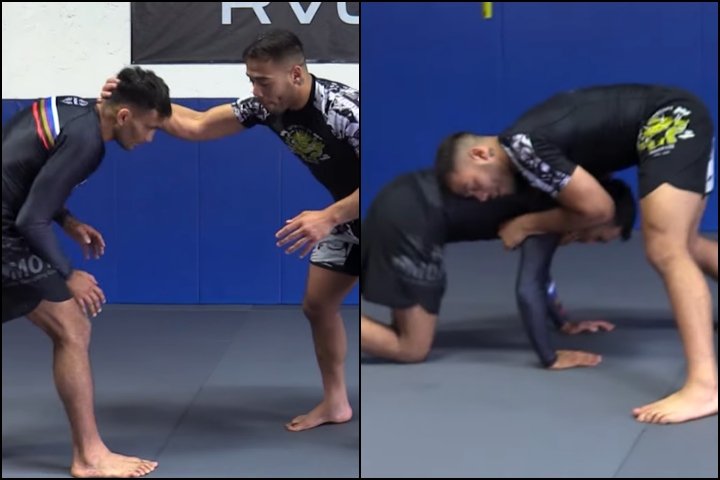
The standing phase is also shorter in individual exchanges than a long ground position, which may give grapplers the impression that their standing exposure is limited. In practice, wrestling-heavy training sessions can accumulate substantial clinch time — multiple rounds, multiple partners, multiple standing exchanges before takedowns land and positions are established. The cumulative exposure across a session is significant even if any single clinch exchange lasts only thirty or forty seconds. No-gi grappling’s movement toward wrestling integration over the last several years has increased the proportion of training time many people spend in exactly these positions.
How Ear Guards Perform Under Clinch Pressure
Not all ear guards are designed with the standing phase in mind. Most of the testing that shapes ear guard design and user feedback is focused on ground work, where the forces are more easily characterized. The clinch presents a different mechanical challenge: the guard needs to stay in place while your head is driven, snapped, and rotated, while grips are being established around your neck and head, and while your own head position changes multiple times per exchange.
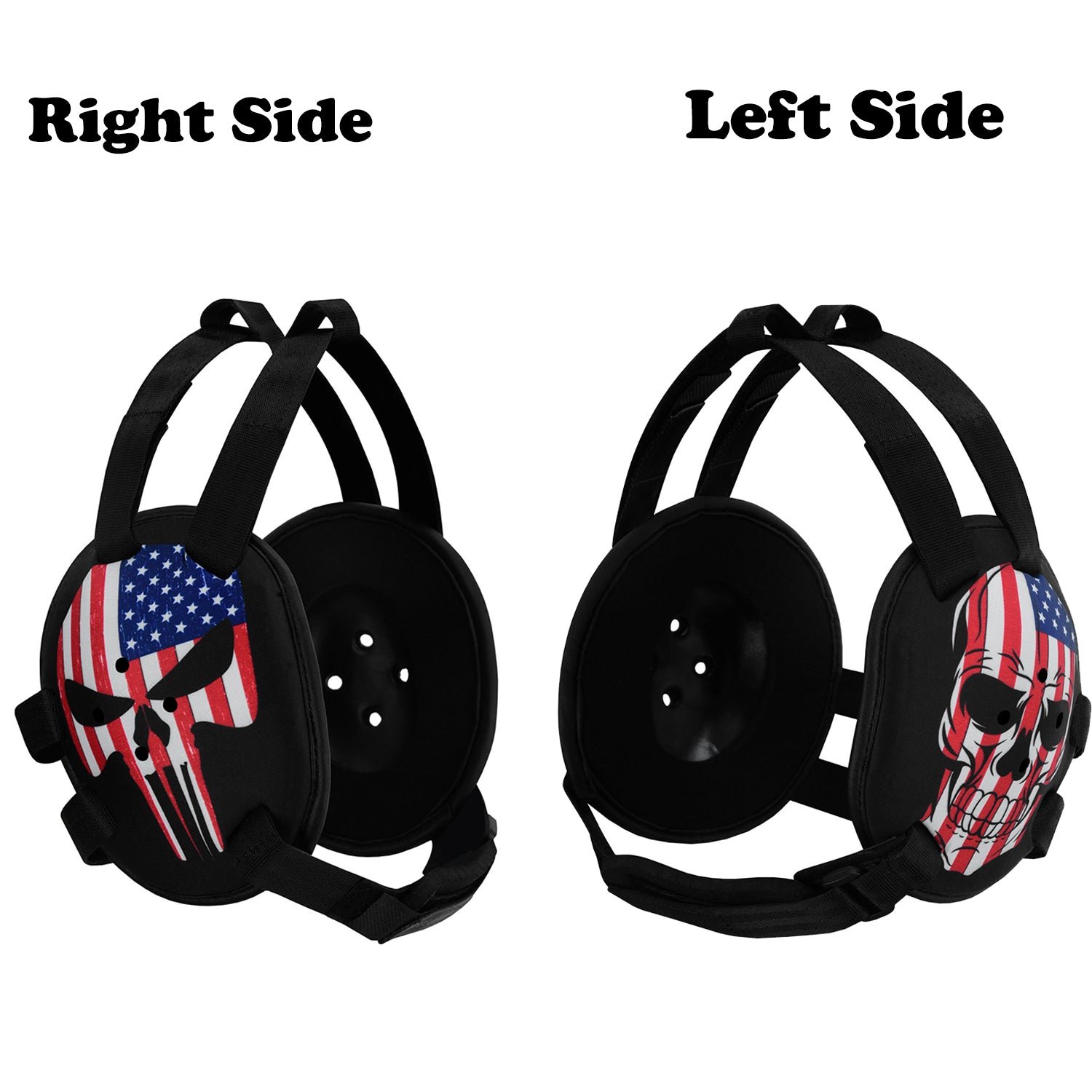
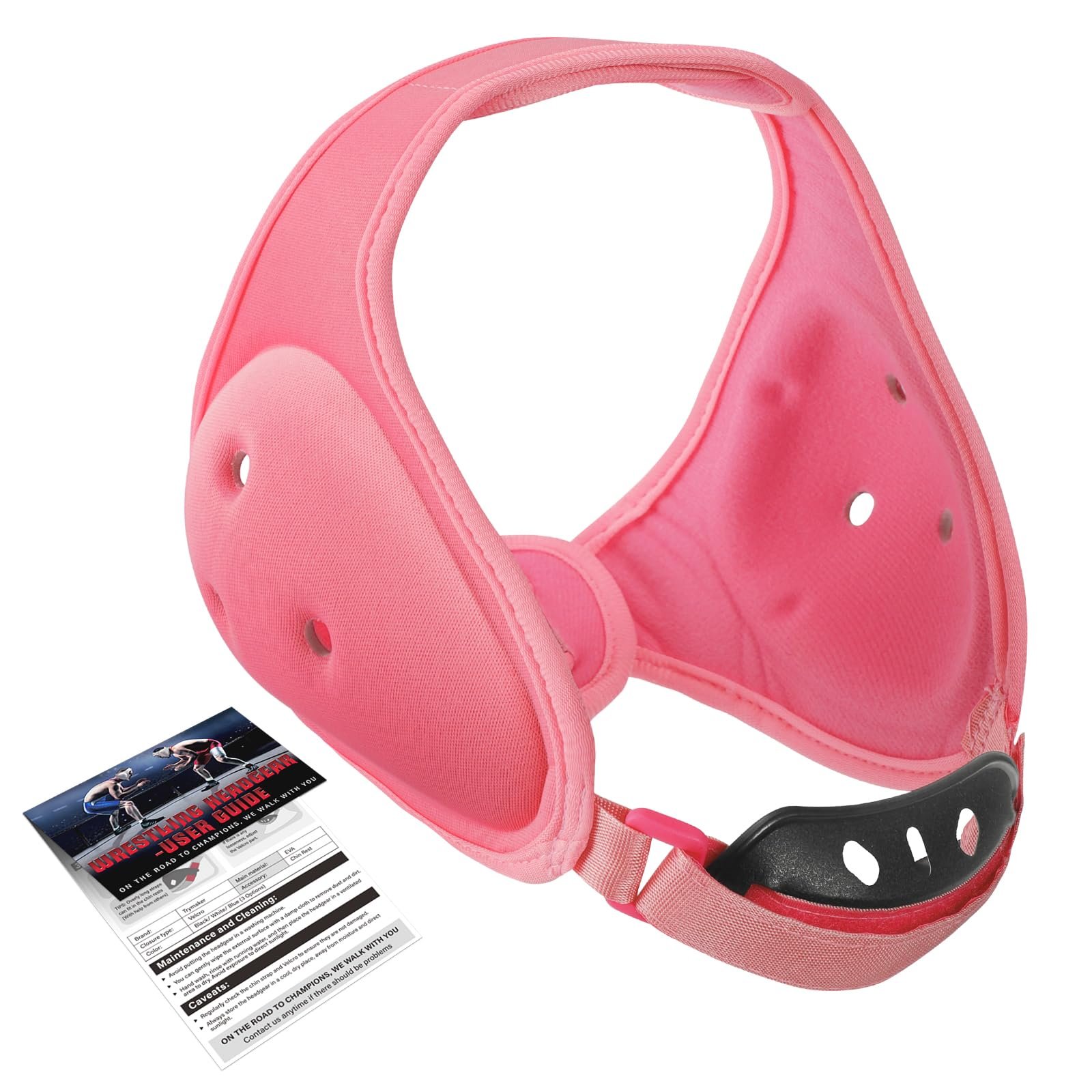
Ear guards with robust chin strap systems perform better in clinch work than those relying primarily on side straps. The downward force of a snap-down and the lateral rotation of a collar tie test strap retention from different directions simultaneously, and a chin strap provides an anchor point that resists multiple force vectors at once. Guards that sit flush to the ear with a low outer profile also experience fewer catch points when a partner’s arm or head moves across the ear during a tie-up. A high-profile guard can shift under incidental contact in ways a lower-profile model will not.
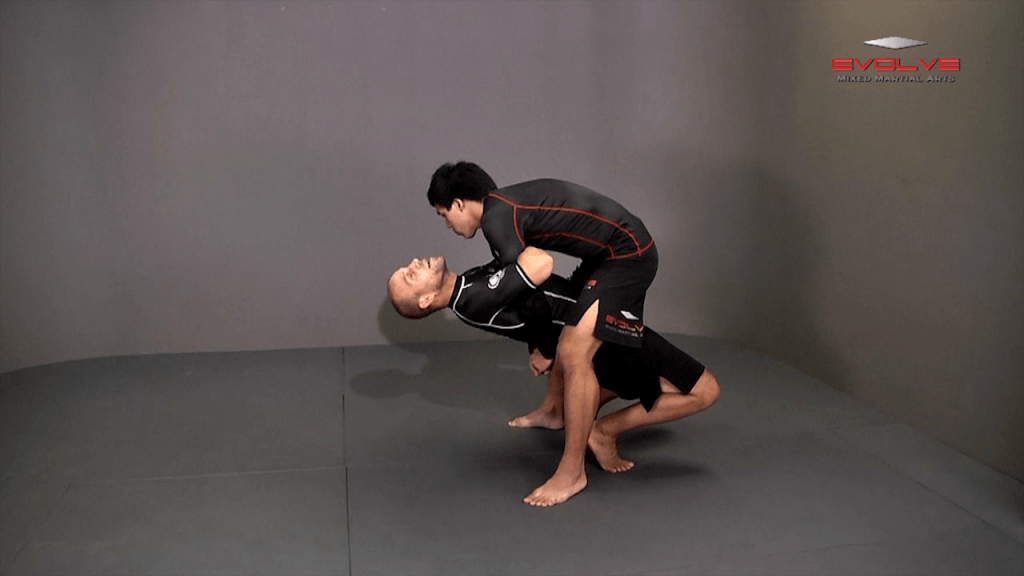
Soft-shell guards generally handle incidental clinch contact better than hard-shell models in this specific context. Hard cups are effective against direct impact forces but can be displaced by the sustained directional pressure that occurs during a collar tie or a long over-under exchange. The rigid geometry doesn’t flex to redistribute force — it shifts as a unit, putting all the retention demand on the strap system. In the clinch, where force direction changes constantly, that creates a more difficult retention problem than you’d encounter in a static ground position.
Retention Failures Specific to the Standing Phase
Grapplers who wear ear guards consistently often report their worst retention failures during standing exchanges rather than ground work. The pattern makes sense when you consider the mechanics: a headlock on the ground applies force in a relatively stable direction. A collar tie snap-down applies force through a quick arc. An over-under exchange applies lateral force that reverses as angles change. Each of these creates a different challenge for the strap system, and a guard that stays put during ground rolling may still shift or unseat during the standing phase.
The most common failure mode is the guard rotating forward off the ear, usually when a downward force is applied — the snap-down being the primary culprit. When the chin strap isn’t tight enough, the downward pull of the snap-down rotates the guard forward rather than pulling it off entirely, which means the cup is no longer covering the ear and the grappler often doesn’t notice immediately. By the time they feel the guard has moved, the exchange has already exposed the ear. Checking guard position at the end of clinch exchanges, not just after ground rounds, helps identify whether your current setup has this problem.
Building a Protection Practice That Covers the Full Round
The practical implication of all of this is straightforward: wearing ear guards for the entire round — starting from the opening clinch, not after a takedown — provides meaningfully more coverage than the selective use patterns many grapplers adopt. Some grapplers put ear guards on partway through a round, or only when they expect extended ground work. By that point, they’ve already moved through the clinch phase without protection. If the session is wrestling-heavy and the rounds start standing, that’s where a significant portion of the ear risk is concentrated.
Building the habit of treating the ear guard as part of the round setup — alongside mouthguard, rashguard, and shorts — rather than as a response to specific positions is the behavioral shift that matters most. This is harder than it sounds because the existing mental model frames ear protection as something for headlocks and mat work. Extending that frame to include the clinch requires consciously recognizing the standing phase as an exposure window rather than a preamble to the real training.
For grapplers who train in environments that emphasize wrestling entries, takedown chains, and live clinch drilling, the standing exposure is not incidental — it’s structural. The way a session is organized determines how much time the ears spend in friction-generating contact, and for many training environments, that time is highest during the standing phases that open each round and the scrambles that follow every takedown attempt. Treating ear protection as a full-round commitment rather than a ground-specific intervention is what actually addresses the risk those environments create.
The grapplers who maintain consistent ear health across long training careers tend to have internalized exactly this. They wear their guards as a round-level commitment, not as a position-level response. That consistency is easier to sustain when you understand where the actual risk geography is — which in no-gi grappling, particularly wrestling-integrated no-gi, extends from the first collar tie of a round to the last scramble off the mat. The clinch is not a waiting room for the ground game. For ear health, it’s an active exposure zone that deserves the same protection.
Sources
- Wikipedia: Cauliflower Ear — Auricular Hematoma Overview
- National Center for Biotechnology Information — Sports Medicine Research Database
- FloGrappling — No-Gi Competition Coverage and Analysis