Guillotine Choke: 7 Best No-Gi Setups and Escapes
In the UFC, the guillotine is the second most common submission finish behind only the rear-naked choke. That ranking isn’t an accident. The guillotine punishes the one mistake almost every grappler makes under pressure — shooting for a takedown with the head down — and in no-gi, where there’s no collar to grab and no friction to slow a scramble, it shows up in nearly every round. Get the mechanics right and it’s a five-second finish. Get them wrong and you’ll gas out both arms squeezing a neck that was never in danger.
What Makes the Guillotine Choke So Effective in No-Gi
The guillotine lives off other people’s offense. Nobody walks into one — they hand it to you when they reach, shoot, or duck under without controlling your hips. That reactive quality is exactly why it thrives in no-gi: the pace is faster, takedown exchanges are constant, and a missed shot leaves the neck exposed for a half-second longer than it does in the gi.
It also scales. A 70-kilo grappler can finish someone forty pounds heavier with it, because the choke doesn’t depend on holding a bigger person down — it depends on trapping the neck and dropping your weight. Marcelo Garcia built an entire ADCC career on this idea, tapping opponents twice his size from the bottom with the arm-in variation. The submission rewards timing and grip detail over raw strength, which is why it’s one of the first finishes worth drilling obsessively.
Air Choke vs. Blood Choke: Why the High Elbow Wins
There are really two guillotines, and confusing them is the most common reason people fail to finish. The standard guillotine runs your forearm bone straight across the throat — it crushes the trachea, which is painful and makes the other person panic, but a tough opponent can survive it for a long time. That’s an air choke. It works, but slowly.
The high elbow guillotine is a different animal. Instead of the forearm across the windpipe, you rotate so the crook of your elbow sits under the chin and your forearm wraps around the side of the neck. Now you’re compressing both carotid arteries at once — a blood choke. Done right it puts someone out in seconds, and it doesn’t require the bone-on-cartilage grinding that tips your opponent off early. If you take one thing from this article: aim your elbow high, not your forearm across.
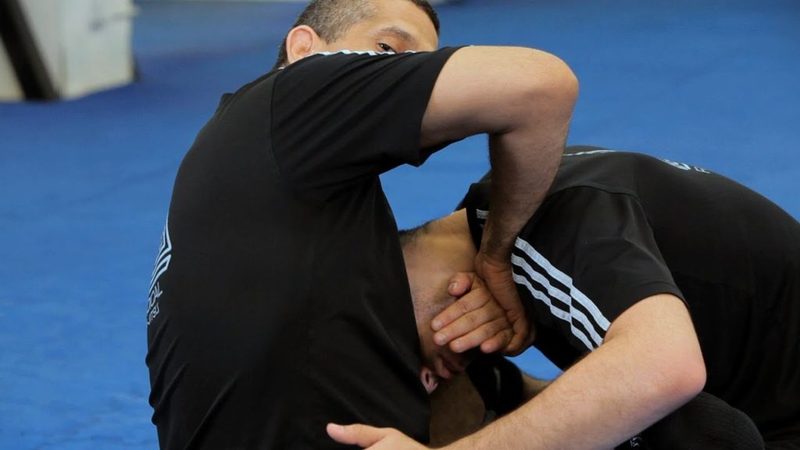
7 Best Guillotine Choke Setups for No-Gi
You don’t hunt the guillotine in a vacuum — you catch it inside positions you’re already passing through. These seven entries cover the situations where the neck actually presents itself, from a failed takedown to a scramble on the mat.
1. The Snap-Down to Front Headlock
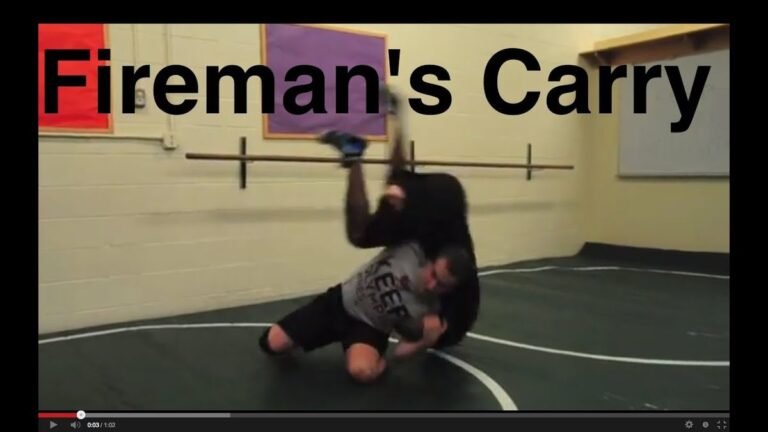
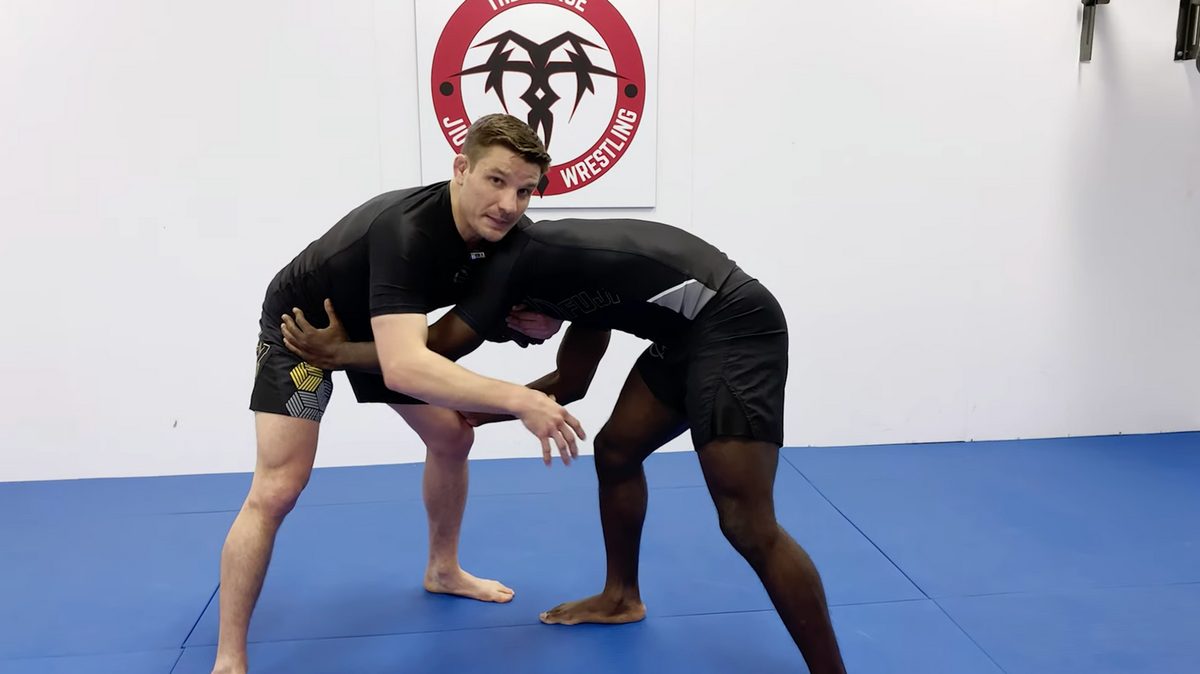
This is the bread and butter. From a collar tie or a wrestling exchange, you yank the head down sharply, force it past your hip, and your arm slides under the throat as their posture breaks. The snap-down creates the front headlock; the front headlock creates the guillotine. Most high-level no-gi finishes start exactly here.
2. The Sprawl Counter
When an opponent shoots a single or double leg and you sprawl, their head is buried against your hip with the neck wide open. Hook the chin, climb your hand to a grip, and you’ve converted their attack into your submission. This is the entry that makes the guillotine so feared by wrestlers — a clean no-gi takedown attempt that gets stuffed becomes a real threat to the person who shot it.
3. The Arm-In Guillotine
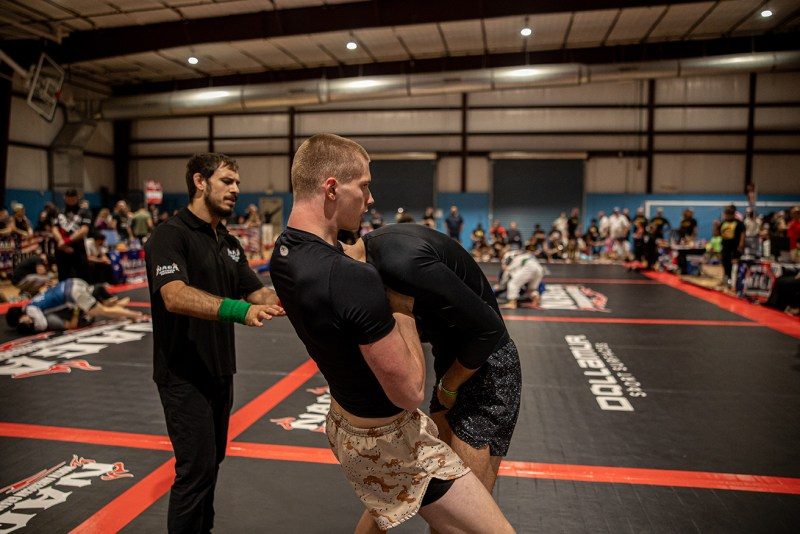
Here you trap one of your opponent’s arms inside the choke along with the neck. It feels counterintuitive — you’d think a free arm is better — but the trapped arm wedges against the carotid and lets you finish even when you can’t get a perfect clean grip. Nate Diaz finished Michael Johnson in the UFC with exactly this variation. It’s also more forgiving when the other person ducks their chin.
4. The High Elbow Guillotine from Guard
From closed or butterfly guard, when your opponent posture-pushes into you, slide your arm over the shoulder, drive the elbow high, and lock the blood-choke grip. This is the Marcelo Garcia signature — the “Marcelotine” — and it works precisely because the bottom player isn’t supposed to be the one attacking. Pinch your knees, break their posture forward, and finish.
5. The Standing Guillotine
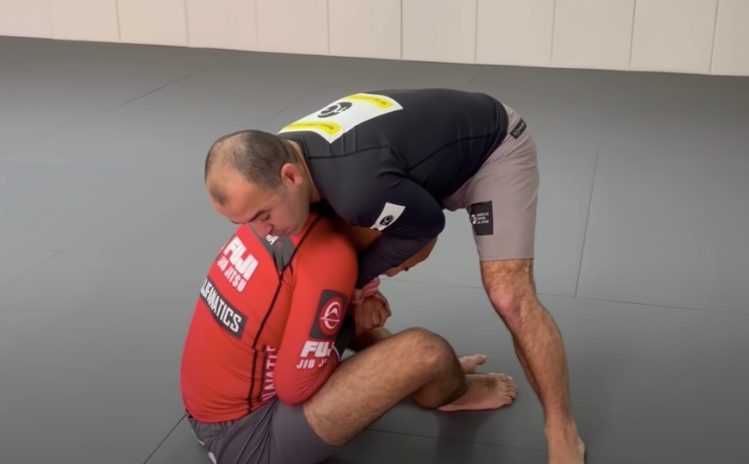
Sometimes the neck is there before anyone hits the mat. From the clinch, if your opponent’s head dips, lock the grip while you’re both standing and walk them backward to load your weight onto the choke. Charles Oliveira has ended fights with the standing version before the takedown ever happened. The risk: if you don’t finish quickly, they can lift and slam you, so commit or bail.
6. Pull Guard to Finish
You’ve got the grip standing but they’re defending their posture. Rather than wrestle for the finish on your feet, jump to closed guard. Pulling them into your guard adds the power of your legs and hips and takes the slam off the table. This is the safest way to convert a standing grip into a tap.
7. The Mounted Guillotine
From mount, when your opponent bridges and turns to escape, their head comes forward and the neck opens. Catch the chin, sit back to guard with the grip locked, and you finish on the way down. It’s a clean answer to one of the most common mount escapes in no-gi.
How to Do a Guillotine Choke That Actually Finishes
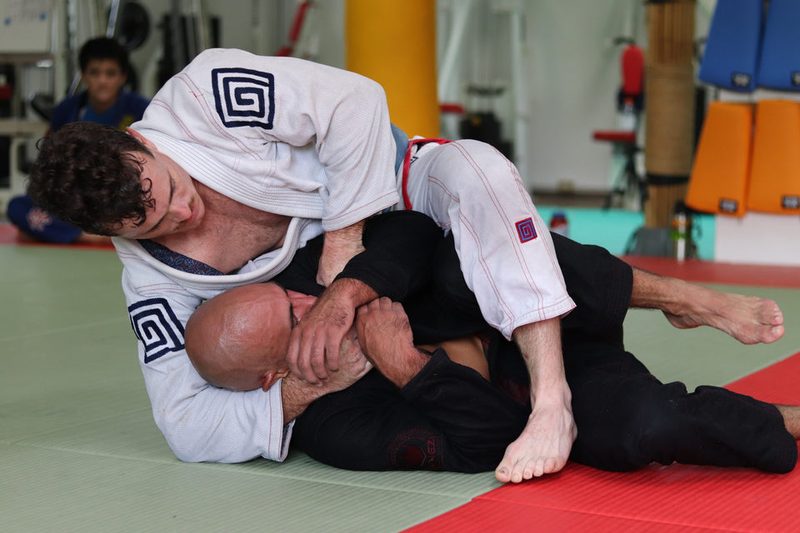
The difference between a guillotine that taps people and one that just annoys them comes down to four details, in order of importance.
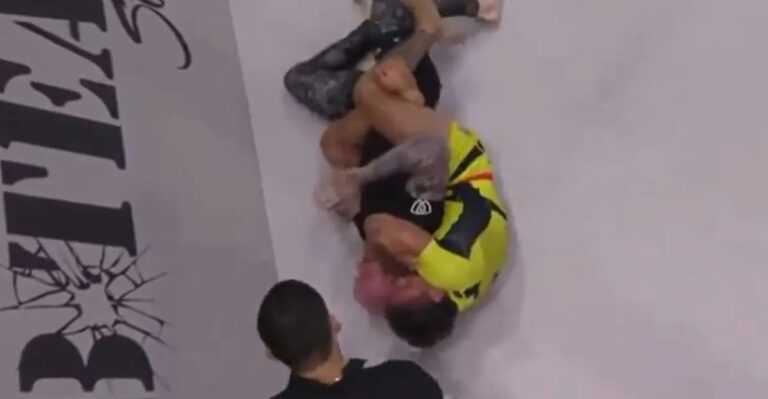
Grip first. Get your choking hand deep, palm down, so the blade of your wrist — not the soft part — sits against the neck. Your other hand reinforces by gripping the wrist or palm, never lacing the fingers (laced fingers slip and strain). Elbow high. Rotate the choking elbow up toward the ceiling so the crook lands under the chin for that blood choke. Hips forward. The squeeze doesn’t come from your arms; it comes from driving your hips into your opponent and arching slightly, which lengthens the choke like a noose. Pull your elbows to your own ribs while you push your hips away — the two opposing forces are what generate the pressure. Chin control. If they tuck their chin, you’ll never finish; clear it first by adjusting the angle or switching to the arm-in variation.
Guillotine Choke Escape: Getting Out Before You Tap
Defending the guillotine is half the battle in no-gi, because you’ll get caught in one eventually. The fundamentals are simple and you have to do them early. The moment you feel the grip, get your chin down and your hands on the choking arm — buy time. Then come to the same side as the choking arm (if their right arm is around your neck, move to their right). Posturing toward the open side only tightens it.
From there, the cleanest escape is to drive your shoulder into their throat and “walk” your head out the back while passing toward side control. If they pulled guard, stack them — drive their knees toward their face to kill the hip movement they need to finish. The slower you react, the worse your odds: a high-elbow grip locked for more than a few seconds is often already too late. Like the anaconda choke and the D’Arce, this is a front-headlock-family attack, so the same defensive instinct — chin down, hand-fight the grip, clear to the safe side — carries across all three.

Common Mistakes That Cost You the Tap
The mistake I see most often is squeezing with the arms and forgetting the hips. Your biceps will fail long before a conditioned neck does. If you’re not driving your hips and arching, you’re arm-wrestling a muscle group that’s stronger than yours.
Second is the forearm-across-the-throat habit. It’s the version everyone learns first, and it’s the version that lets tough opponents ride it out. Train yourself to find the high elbow every time. Third is chasing the finish too long on a defended neck — if the chin is tucked and you’ve squeezed for ten seconds with nothing, you’re burning gas you’ll want later. Reset, switch to the arm-in, or transition to a back take. A guillotine that doesn’t finish should flow into the next position, not into exhaustion.

Where the Guillotine Fits in Your No-Gi Game
Treat the guillotine as the natural consequence of good front-headlock control rather than a standalone trick. Once you’re comfortable snapping people down and threatening the neck, your whole takedown defense improves — opponents stop shooting carelessly because every failed shot becomes a choke. Drill the grip until it’s automatic, learn the high-elbow rotation cold, and pair it with one solid escape so you’re never afraid to engage in a scramble.
If you’re building a no-gi submission game from scratch, the guillotine, the front-headlock chokes, and a reliable leg-lock entry like the heel hook cover most of what you’ll need. Start with the snap-down to front headlock this week, and finish your next live round with a high elbow.
Sources
- Guillotine choke — Wikipedia — Technical overview, judo origin (mae hadaka jime), and air-choke vs. blood-choke mechanics.
- The Ultimate Guide to the Guillotine Choke — Grapplearts — Stephan Kesting’s breakdown of grips, the high-elbow finish, and common errors.
- 3 Guillotine Choke Variations — Evolve University — Arm-in, high-elbow, and standing variations explained.
- Charles Oliveira’s Career Highlights — UFC — Record submission finishes including standing guillotines.
Browse our top-rated rashguards and no-gi gear at the RashguardGuy shop →