Half Guard Sweep: 7 No-Gi Secrets That Work
The half guard sweep is still one of the highest percentage ways to reverse strong top pressure in modern no-gi grappling. If you understand how to win the underhook, connect your hips, and force reactions from knee shield or deep half, you can turn a defensive position into a reliable path to top control against bigger, faster training partners.
That matters more than ever in 2026, because no-gi passing is brutally efficient. Body lock systems, headquarters variations, and float passing all punish lazy half guard. But when your half guard has clear sweep chains, it becomes a launchpad instead of a stall. The best competitors do not just survive there. They off-balance, come up, and score.
In this guide, I am focusing on seven half guard sweep options that work especially well without the gi. These are the sweeps and transitions you see feeding directly into wrestling, front headlock attacks, leg entries, and clean top position. If you already liked our breakdowns of body lock passing, modern no-gi guard retention, and wrestling takedowns for BJJ, this is the natural next layer.
Table of Contents
- Why the half guard sweep still works in no-gi
- 1. Old school underhook come-up
- 2. Knee lever from knee shield
- 3. Coyote half guard sweep
- 4. Lockdown to electric chair off-balance
- 5. Deep half guard roll-through
- 6. Wrestle-up single leg finish
- 7. Back door and leg-entry transition
- Common mistakes that kill your half guard sweep
- Best no-gi gear for half guard training
Why the half guard sweep still works in no-gi
The half guard sweep works in no-gi because it lets the bottom player get underneath the passer while controlling one leg and disrupting posture. Without jacket grips, that connection has to come from head position, underhooks, hip angle, shoulder pressure, and tight lower-body clamps. When those pieces line up, the top player is carrying weight at the wrong angle and becomes easy to tilt, bump, or chase into a wrestle-up.
That is why elite half guard players usually talk about dilemmas, not isolated techniques. John Danaher has emphasized half guard as a hub for sweeps, wrestle-ups, and leg attacks through layered reactions. Lachlan Giles has taught deep half as a practical answer for creating leverage under pressure. Across ADCC-style grappling, the bottom player often wins not by forcing one magic sweep, but by threatening three directions at once.
1. Old school underhook come-up
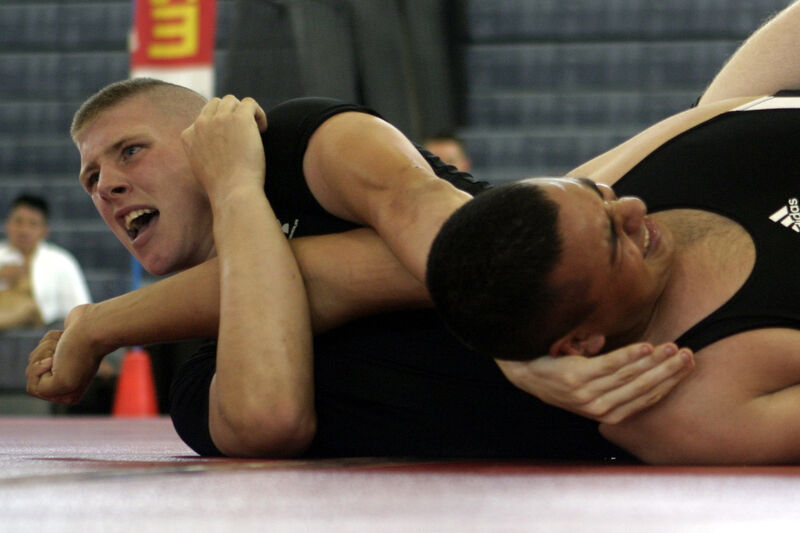
The old school half guard sweep is still money in no-gi because it punishes passers who drive chest-to-chest while leaving the far leg available. Your first job is winning a deep underhook and getting your head tight against the opponent’s ribs or chest. Once your outside elbow stays connected to their trapped leg and your hips scoot underneath, you can build to your knees and run the pipe toward the far ankle.
This is less about yanking somebody over and more about climbing into a single-leg style finish. If the passer bases wide, chase the far knee. If they sprawl back, keep the lock on their leg and come up to dogfight. If they whizzer hard, that reaction opens the coyote series covered later in this article. The biggest detail is refusing to stay flat. Flat half guard kills the half guard sweep before it begins.
The reason this one remains a staple is that it blends seamlessly into wrestling. In no-gi, that matters. Many competitors are hard to reverse with classic rolling sweeps, but much easier to beat once you convert half guard into a technical stand-up and leg attack.
2. Knee lever from knee shield
The knee lever is one of the smartest half guard sweep options for people who already play knee shield half guard. The setup starts when your top knee frames across the passer’s chest or shoulder line, keeping enough distance to stop the crossface. As you control their far arm or shoulder and shift your hips underneath, your lower hook and upper knee work together to tip their balance over the trapped leg.
What makes this sweep so effective in no-gi is that it does not need perfect sleeve or collar grips. It needs frames, inside position, and timing. When the passer tries to collapse your knee shield or pummel inside, their weight loads forward. That is the moment to punch your hips in, elevate, and follow to top.
This variation also feeds nicely into guard retention if it fails. If you cannot complete the sweep, you are often still in a safer distance-management shell than you would be from a flattened half guard. That alone makes it valuable for anyone building a modern no-gi half guard game.
3. Coyote half guard sweep
The coyote half guard sweep is the answer when your opponent pressures in and gives you a dogfight-style underhook battle. Popularized heavily through Lucas Leite’s system in gi grappling, the core mechanics translate beautifully to no-gi when you stay glued to the hips and keep your head higher than your opponent’s head.
From the dogfight, you want your underhook tight, your outside hand controlling near the knee or ankle, and your chest glued forward so the passer cannot simply circle behind. From there, you can drive, shelf the leg, and tip them over their base. If they post, you can switch to a single, peek out the back, or chain into a sit-out to top position.
What beginners often miss is that coyote half guard is not a single movement. It is a pressure sequence. You keep forcing the top player to widen their base, and each post exposes a new angle. In no-gi rounds, that chain-wrestling mindset is exactly why the coyote sweep keeps showing up at high levels.
4. Lockdown to electric chair off-balance
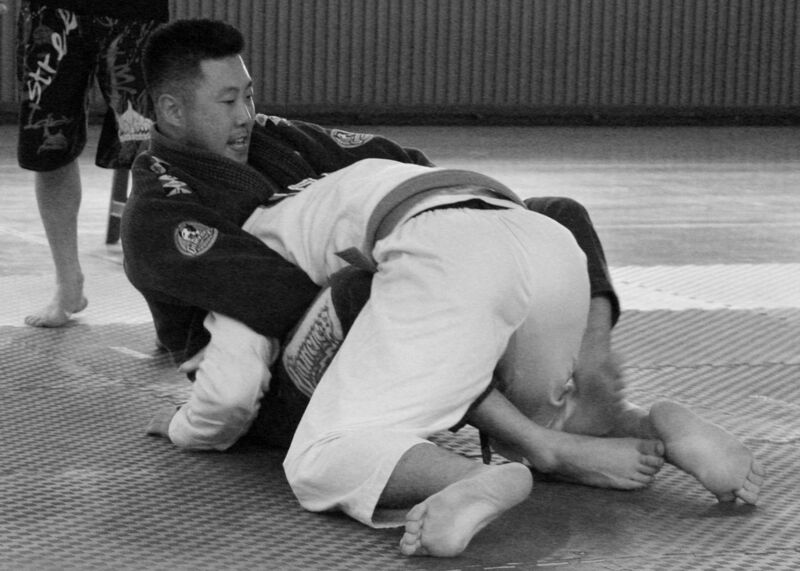
Lockdown half guard is controversial because some coaches think it stalls the action, but used correctly it is a powerful half guard sweep platform. The lockdown stretches the trapped leg, disrupts the passer’s base, and creates the off-balance you need to come underneath. In no-gi, it is especially useful against opponents who drive hard with shoulder pressure and think they are safe once they flatten your hips.
The key is not hanging out there forever. Extend, break posture, and immediately combine that with an underhook, whip-up motion, or electric-chair style angle change. If the top player bases their hands forward to avoid being rolled, they often expose space for your hips to come underneath. If they try to back out, you can release and wrestle up.
Used with discipline, lockdown gives smaller grapplers a way to interrupt crushing pressure and turn the match back into a movement battle. Used lazily, it becomes a stall. The difference is whether you are actually chasing a sweep chain.
5. Deep half guard roll-through
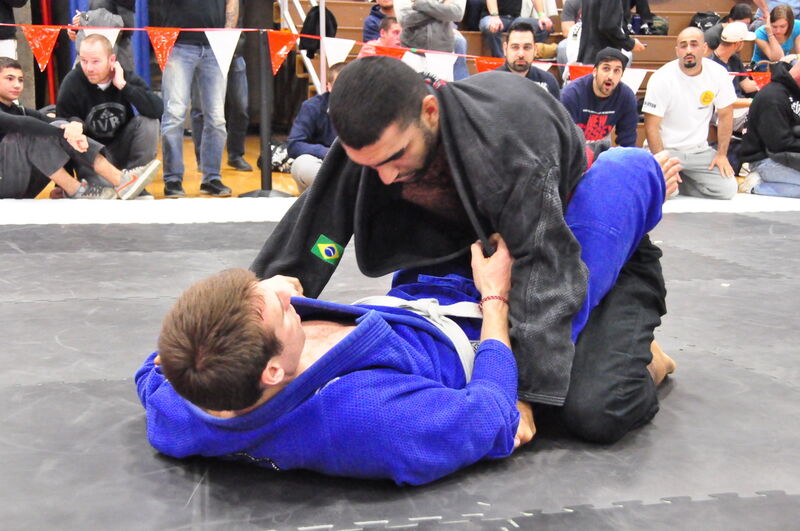
Deep half guard remains one of the best answers when a heavy passer is too committed over your upper body. The deep half guard sweep works by slipping under their center of gravity, isolating one leg, and making them carry your whole body in an awkward angle. Once you are underneath with tight connection at the thigh and hip, even a much bigger opponent can be rolled.
In no-gi, deep half is less about hanging on and more about staying compact. Your head position matters. Your arms have to clamp rather than reach. Your hips need to stay directly under the opponent instead of drifting away. When those details are clean, you can hit classic waiter-style finishes, tilt them over the trapped leg, or come up into a single.
Deep half also creates an important reaction: many top players panic and try to free the leg explosively. That scramble often gives you access to leg entries, backside exposure, or simple top position if you follow the momentum correctly.
6. Wrestle-up single-leg finish
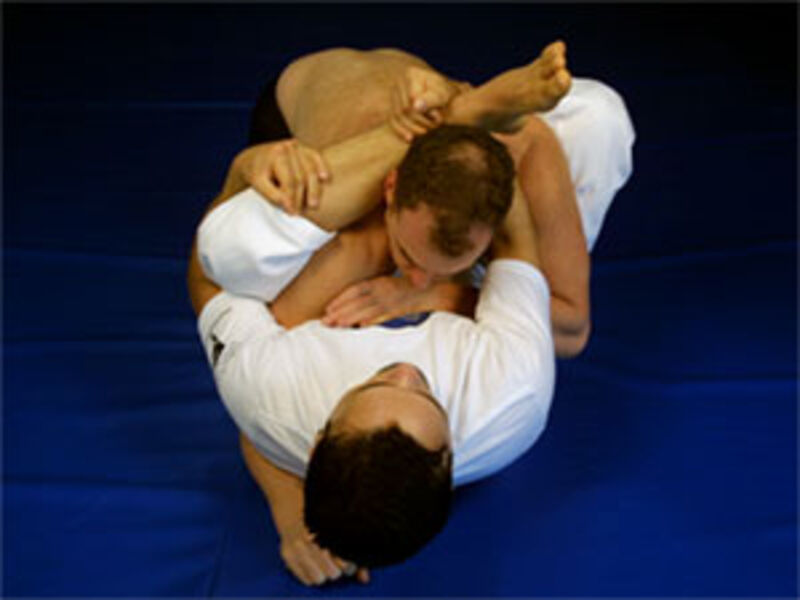
The wrestle-up may be the most important half guard sweep adaptation in modern no-gi. Strictly speaking, some people call it a reversal and others call it a transition to a takedown finish, but for practical grappling it does the same job: you start on bottom in half guard and end on top after attacking the leg.
This is why half guard has become so valuable in ADCC-style rulesets. When you sit under an opponent, win an underhook, and force them to post, you can come up cleanly onto a single leg instead of insisting on rolling them. That often gives you a safer scoring path and avoids the wild scrambles that come from more explosive sweeping attempts.
If you train with wrestlers or MMA guys, build this one first. It rewards timing, posture, and pressure more than flexibility. It also connects directly with the takedown systems we already covered in our guide to wrestling takedowns for BJJ.
7. Back door and leg-entry transition
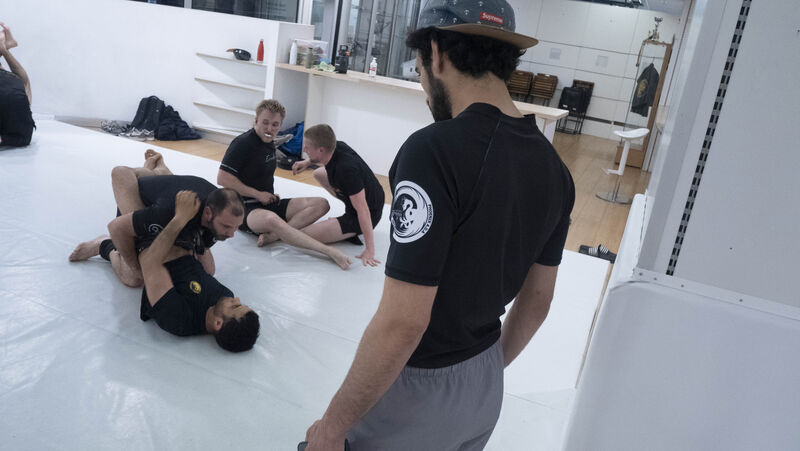
Sometimes the best half guard sweep is not a direct sweep at all. When the passer drives forward and commits their hips too far ahead, the back-door escape and leg-entry transition become available. You can slip under, chase behind the hips, or enter the legs depending on how they react.
This option is powerful because it punishes aggressive passing. If someone is obsessed with smashing your upper body but careless with leg positioning, you do not need to force a textbook reversal. You can come out the back, expose the hips, or enter ashi-style positions that create either immediate sweeps or submission threats. That is one reason half guard stays relevant even in highly leg-lock-literate rooms.
It also pairs beautifully with deep half. The passer thinks they are killing your guard. In reality, they are giving you access underneath. As long as you are comfortable switching from classic top-reversal goals into leg-entry dilemmas, your half guard becomes much harder to shut down.
Watch: no-gi half guard sweeps in action
If you want to see how these reactions chain together in live instruction, this breakdown is worth your time. It focuses on practical no-gi half guard sweeps built around pressure and timing rather than flashy movement.
Common mistakes that kill your half guard sweep
The biggest mistake is accepting the crossface and staying flat. Once your shoulders are pinned and your head is turned away, most half guard sweeps disappear. Win inside space early, frame with purpose, and get on your side before you start hunting underhooks.
The next mistake is trying to finish too early. A good half guard sweep usually needs one or two reactions first. Off-balance, re-angle, and then finish. If you rush, strong passers will post and sprawl. Finally, do not ignore your head position. In no-gi, head height often decides whether you are sweeping, scrambling, or getting flattened.
Best no-gi gear for half guard training
Half guard training is rough on gear because you spend so much time fighting chest-to-chest, pummeling legs, and grinding through scrambles. A solid ranked rashguard and shorts with real grip at the waistband help a lot, especially in hard competition rounds. If you are still dialing in your no-gi setup, our no-gi competition gear guide breaks down what actually matters, and our BJJ gear for beginners post covers the basics without overspending.
For this specific style, prioritize rashguards that stay put when somebody is crossfacing and dragging on your shoulders. Loose gear turns every half guard battle into a distraction. You want clothing that lets you focus on underhooks, frames, and angle changes, not bunching fabric.
Final thoughts on building a better half guard sweep
The best half guard sweep for no-gi is the one that fits your reactions and body type, but the big pattern is always the same: get off your back, win the inside battle, and chain your sweep into a wrestle-up, leg attack, or clean reversal. If you can connect the old school come-up, knee lever, coyote series, lockdown off-balance, and deep half transitions, you will stop treating half guard like survival mode and start using it as an attacking hub.
That is the real shift. Modern no-gi rewards people who can turn defense into motion. Build these seven options into your rounds, link them together, and your half guard sweep game will start feeling a lot less like guesswork.
Sources
- Mastering the Half Guard Sweep in BJJ — overview of mechanics and no-gi adaptation.
- New Wave Jiu Jitsu: No Gi Half Guard 3 Directions of Attack — Danaher instructional description covering sweep, retention, and leg-lock pathways.
- Deep Half Guard by Lachlan Giles — deep half strategy, entries, and sweeping concepts.
- The 5 Best Sweeps From The Half Guard In BJJ — competitor reference list and broad sweep taxonomy.
- List of Half Guard Sweeps You Should Know — examples of knee shield, lockdown, and elevator-style attacks.
Browse our top-rated rashguards and no-gi gear at the RashguardGuy shop →