Modern No-Gi Guard Retention: Essential Principles for Submission Wrestling
The guard game has exploded in modern no-gi competition, transforming from a defensive necessity into an aggressive attacking platform. From Gordon Ryan’s systematic guard retention to Kade Ruotolo’s dynamic transitions, today’s elite grapplers treat guard work as the foundation of their entire game.
This comprehensive breakdown examines the core principles that separate effective guard players from those who get passed and pounded. Whether you’re drilling in your garage or competing at ADCC trials, these concepts will revolutionize how you approach guard retention.
The Evolution of No-Gi Guard Work
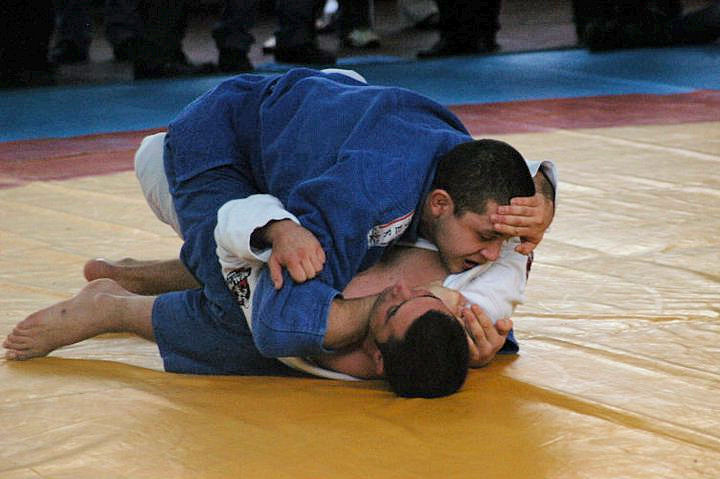
Traditional Brazilian Jiu-Jitsu relied heavily on gi grips to maintain guard positions. Lapel control, sleeve grips, and collar ties provided multiple layers of defense against guard passes. Strip away those grips, and the guard game becomes an entirely different animal.
Modern no-gi guard retention centers around dynamic movement rather than static holds. Instead of gripping cloth and hanging on, successful guard players use:
- Constant hip movement and recomposing
- Hand fighting to control wrists and biceps
- Leg positioning to create frames and barriers
- Explosive direction changes to break passing momentum
The best guard players never stay in one position longer than necessary. They flow between guards, create scrambles, and use movement to generate submission opportunities.

Core Principles of Modern Guard Retention
Principle 1: Never Let Them Settle
The biggest mistake in guard retention is allowing your opponent to establish a stable passing position. Once someone achieves headquarters, knee slice position, or tight leg weaves, escaping becomes exponentially harder.
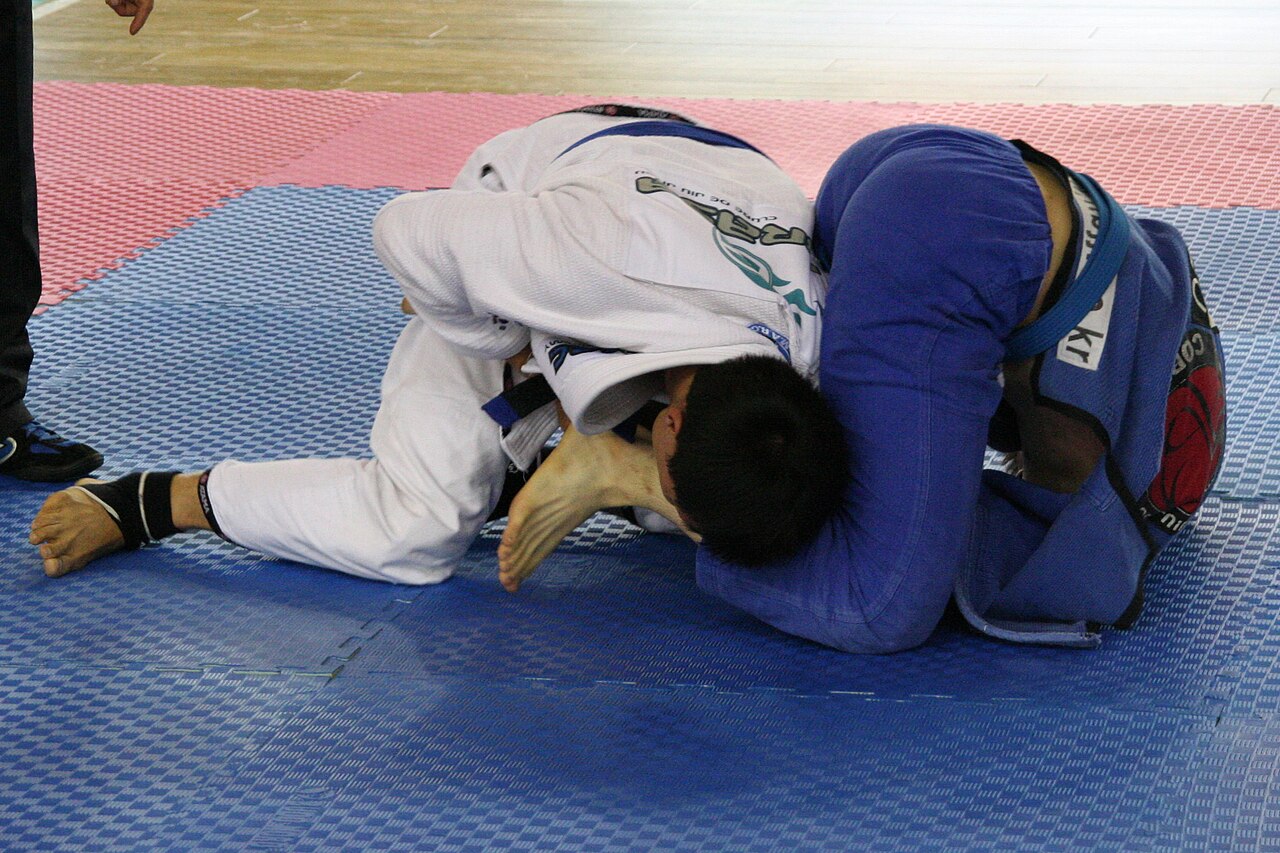
Key implementation:
- Move before they can establish grips
- Change guards immediately when pressure increases
- Use bridges and shrimps to disrupt their base
- Attack legs or attempt submissions to force reactions
Elite competitors like Mikey Musumeci and Kade Ruotolo exemplify this principle. They never give opponents clean looks at guard passing positions, constantly moving and adjusting before pressure can accumulate. Watch any of their recent ADCC or CJI matches and you’ll see perpetual motion – hips never flat, legs always cycling between positions, hands always fighting for inside control.
Principle 2: Attack to Defend
Offensive guard work creates the best defense. When you’re hunting submissions or sweeps, your opponent must react defensively instead of focusing purely on passing.
Effective attacking sequences:
- Leg lock entries from open guard positions
- Arm drag attempts that create back exposure
- Sweep attempts that force reactions
- Submission threats that demand immediate attention
This approach flips the script. Instead of playing defense, you force your opponent to defend against your attacks while simultaneously making it harder for them to pass. The concept of “offensive guard” has become central to modern no-gi strategy – if your opponent is worried about getting submitted or swept, they can’t commit fully to passing your guard.
Principle 3: Use Distance and Angles
No-gi guard retention requires precise distance management. Too close, and you get smashed. Too far, and they disengage or take your back.
Distance management zones:
- Close range: Use frames and underhooks for control
- Medium range: Employ feet on hips and knee shields
- Long range: Utilize ankles and shins as barriers
The key is transitioning fluidly between ranges based on your opponent’s actions. When they pressure forward, create distance. When they back up, close distance and attack.
Essential Guard Positions for Modern No-Gi
Open Guard Fundamentals
Open guard forms the backbone of no-gi retention. Unlike closed guard, which can feel static in no-gi, open guard positions provide constant movement options and attacking opportunities.
Core open guard positions:
- Butterfly guard: Central hub for sweeps and transitions
- Spider guard (no-gi): Feet on biceps for distance control
- De La Riva variations: Ankle hooking for control
- Shin-to-shin: Attacking sweeps and leg entanglements
Each position serves specific functions, but the magic happens in the transitions between them. Great guard players don’t specialize in one guard – they flow seamlessly between multiple systems.

The Butterfly Guard System
Butterfly guard deserves special attention as the most fundamental no-gi position. It provides:
- Immediate sweep threats in all directions
- Easy transitions to single-leg X and X-guard
- Natural pathways to leg lock entries
- Excellent control over opponent’s posture
Key butterfly guard details:
- Hooks go under thigh, not over
- Forehead pressure to prevent opponent lifting
- Constant underhook battles for control
- Ready to switch to ankle picks or leg attacks
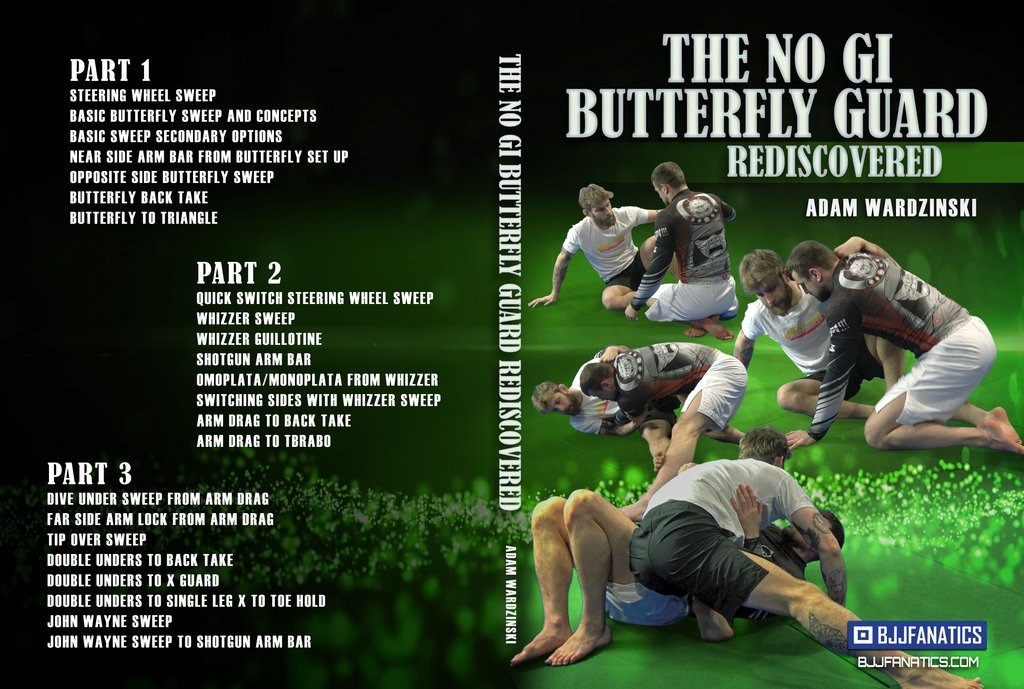
Modern athletes like Jon Satava have elevated butterfly guard to an art form, demonstrating how this “basic” position can dominate elite competition when executed with precision. The beauty of butterfly guard in no-gi is its versatility – from this single position, you can sweep in four directions, enter into leg entanglements, take the back via arm drags, or transition to single-leg X for devastating off-balance attacks.
The Half Guard Connection
Half guard has evolved from a “last resort” position into one of the most dangerous guards in no-gi competition. When your butterfly guard gets passed to one side, half guard becomes your safety net – but it’s so much more than that.
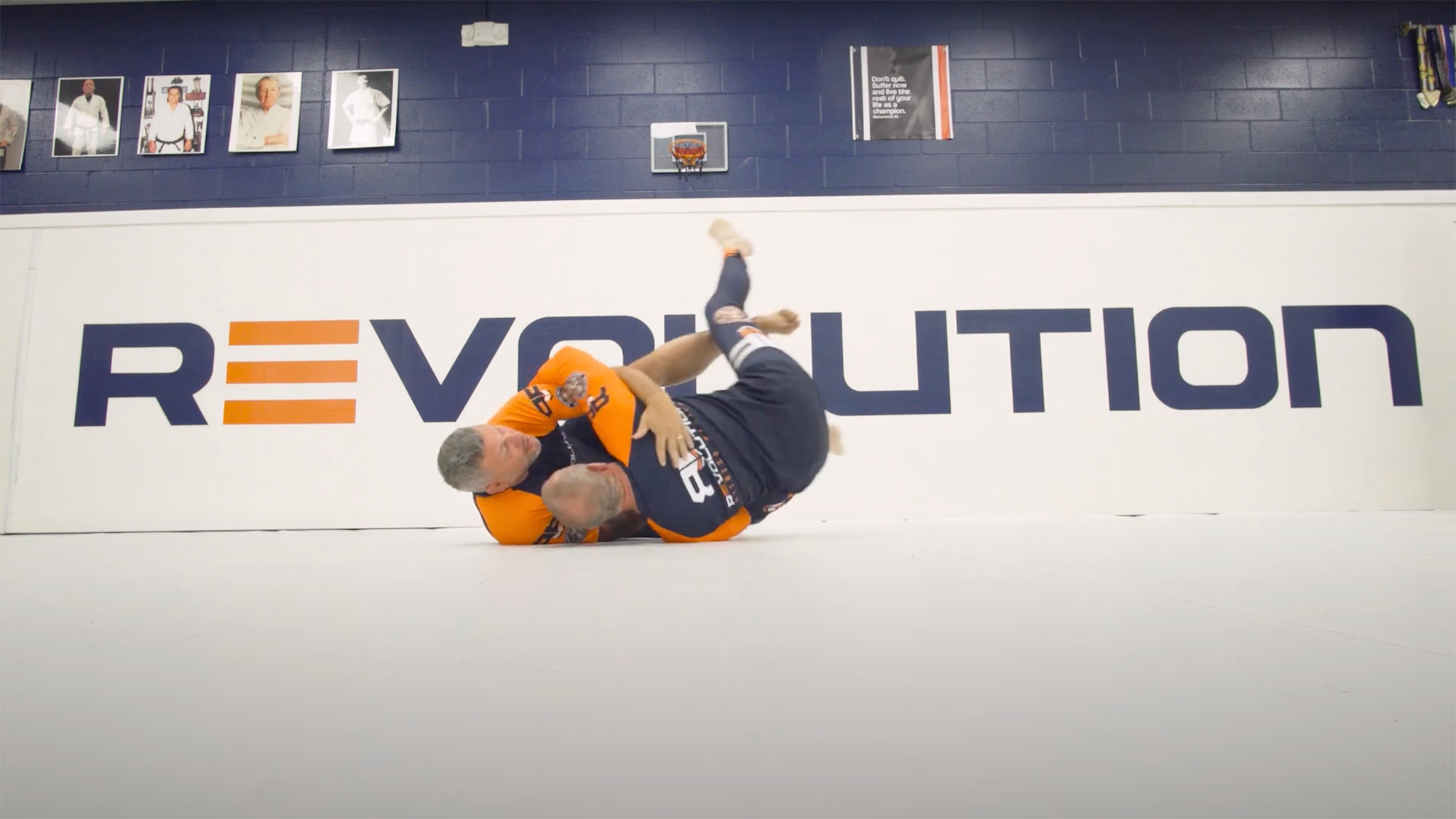
Modern no-gi half guard players use the underhook as their primary weapon. Getting the underhook from half guard gives you sweep opportunities, back take entries, and the ability to come up to single legs. The knee shield variation keeps distance while you work for that underhook, and the lockdown position can neutralize even the most aggressive top players.
Connecting your half guard to your butterfly guard creates a devastating retention cycle. When opponents try to pass butterfly, you recover to half guard. When they try to smash your half guard, you re-enter butterfly. This constant cycling between positions exhausts passers and creates endless attack opportunities.
Hand Fighting: The Hidden Battle
Perhaps no aspect of guard retention is more crucial yet overlooked than hand fighting. In no-gi, your hands become your primary defensive tools.
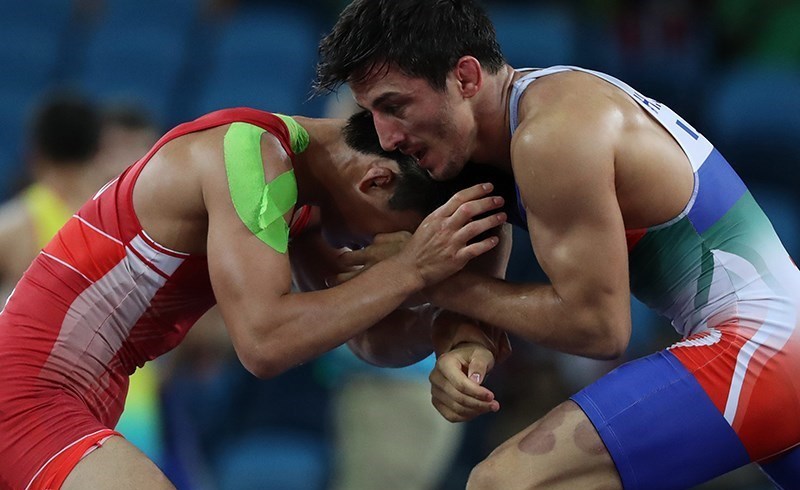
Essential Hand Fighting Concepts
Wrist control vs. bicep control:
- Wrist control prevents grips and frames
- Bicep control limits reaching and movement
- Alternate between both based on position
The pummel game:
- Constant underhook battles in close range
- Wrist pummel to break grips
- Underhook pummel for position
Grip breaking techniques:
- Thumb leverage to break wrist grips
- Circular motions to break collar ties
- Explosive timing to catch opponent off-guard
Elite grapplers like Gordon Ryan excel at hand fighting because they understand it’s not about strength – it’s about timing, leverage, and constant pressure.
Leg Pummeling: The No-Gi Guard Retention Secret Weapon
While hand fighting gets some attention, leg pummeling is the true engine of no-gi guard retention. Your legs are longer, stronger, and more versatile than your arms – and in no-gi, where there are no grips to grab, your legs become your primary tools for maintaining guard.

The concept is straightforward: when your opponent clears one of your legs during a guard pass, you immediately pummel the other leg back inside. This creates a continuous cycle where your opponent can never fully clear both legs to complete a pass. The best guard retainers in the world – athletes like Giancarlo Bodoni, Mica Galvao, and the Ruotolo brothers – make leg pummeling look effortless, but it requires countless hours of drilling to develop the hip dexterity and timing needed.
Key leg pummeling principles include keeping your knees pointed toward your opponent (never letting them flatten), using your feet as hooks rather than just shields, and always maintaining at least one point of leg contact with your opponent’s body.
Training Drills for Guard Retention
Movement Pattern Drills
Hip escape sequences:
- Practice shrimping from various angles
- Chain multiple escapes together
- Add resistance gradually
Guard replacement drills:
- Flow between guard positions without resistance
- Add light pressure from partner
- Practice under increasing time constraints
Scramble simulations:
- Random starting positions with full resistance
- Practice recovering from disadvantageous positions
- Emphasize constant movement over static holds
Sparring Variations
Guard retention specific sparring:
- Start in guard with opponent trying to pass
- Reset to guard each time a pass occurs
- Focus purely on retention without attacking
Handicap sparring:
- Start with opponent in advantageous passing position
- Practice retention with limited grip options
- Use positional sparring to isolate skills
These drilling approaches develop the muscle memory and conditioning needed for high-level guard retention.
Mental Aspects of Guard Retention
Guard retention is as much mental as physical. The psychological pressure of defending constantly can break down technique and decision-making.
Developing Guard Confidence
Comfort under pressure:
- Practice with larger, stronger opponents
- Gradually increase sparring intensity
- Learn to stay calm in bad positions
Pattern recognition:
- Study opponent tendencies
- Identify common passing sequences
- Develop counters to common attacks
Patience and timing:
- Understand when to be explosive vs. when to be patient
- Recognize moments of opportunity
- Avoid panic reactions that compromise position
Elite guard players possess unshakeable confidence in their defensive abilities, which allows them to take calculated risks and create attacking opportunities.
Common Guard Retention Mistakes
Mistake 1: Being Too Passive
Many grapplers treat guard retention as pure defense, focusing only on preventing the pass without creating their own threats.
Solution:
- Always have an active attack plan
- Use submission attempts to control opponent reactions
- Create sweep opportunities that force defensive responses
Mistake 2: Over-Gripping
In the absence of gi grips, some athletes compensate by over-gripping wrists or arms, leading to exhaustion and positional compromises.
Solution:
- Use grips strategically, not constantly
- Release and re-grip to prevent fatigue
- Focus on timing over strength
Mistake 3: Staying Flat
Lying flat on your back makes guard retention exponentially harder by limiting hip mobility and creating weak frames.
Solution:
- Maintain constant hip movement
- Use bridges and shrimps to create space
- Keep active feet and leg placement
Building Your No-Gi Guard Retention Game Plan
The best guard retainers don’t just react – they have a system. Building your personal guard retention game plan means identifying your A-game guard, your B-game fallback, and the transitions between them.
Start by picking two guard positions you feel most comfortable in. For most no-gi practitioners, this means butterfly guard and some form of half guard. Drill the transitions between these two positions until they become automatic. Then add a third option – perhaps single-leg X or closed guard – as an emergency fallback.
Once you have your core positions mapped out, practice the recovery sequences: what do you do when your butterfly gets passed to one side? How do you re-guard from bottom side control? Where are your frames when someone is stacking you? Having rehearsed answers to these common scenarios transforms guard retention from a panicked scramble into a calm, methodical system.
The Future of No-Gi Guard Work
No-gi guard work continues evolving rapidly. Several trends shape its development:
Increased athleticism:
- Faster transitions and movement patterns
- Higher conditioning demands
- More explosive defending and attacking
Technique refinement:
- Subtle details become increasingly important
- Efficiency replaces purely physical approaches
- Better understanding of leverage principles
System integration:
- Guards connect to leg entanglements
- Smooth transitions to wrestling positions
- Back and forth between top and bottom
As the sport continues growing, guard retention will only become more sophisticated and essential for competitive success. The athletes who invest time now in developing systematic guard retention will find themselves ahead of the curve as no-gi grappling continues its trajectory toward mainstream recognition.
Modern no-gi guard retention represents one of the most dynamic aspects of submission grappling. It requires technical precision, physical conditioning, mental toughness, and strategic thinking. The athletes who master these principles gain a massive competitive advantage – they become incredibly difficult to submit or control, while simultaneously creating constant offensive threats.
Whether you’re training for local competitions or dreaming of ADCC gold, investing time in guard retention fundamentals will pay dividends throughout your grappling career. The guard game isn’t just about preventing passes – it’s about controlling the pace, creating opportunities, and dictating the terms of engagement.
Master your guard retention, and you’ll find that bad positions become good positions, defensive situations become attacking opportunities, and your entire grappling game elevates to new levels. Train smart, train often, and remember – the guard is just the beginning.
Browse our top-rated rashguards and no-gi gear at the RashguardGuy shop →