Wrestle Up BJJ: 7 No-Gi Details That Finish
The wrestle up BJJ game is the fastest way to turn modern no-gi guard into offense, because it lets you come off the mat into singles, doubles, ankle picks, front headlocks, and back takes instead of accepting bottom position. In 2026, the best wrestle-up players are not treating it like one move, they are treating it like a chain that starts with posture, wins the reaction, and finishes in the next exchange.
If you already play butterfly, shin-to-shin, reverse De La Riva, or seated guard, the good news is that you do not need a full wrestling background to make this work. You need the right cues. That is exactly why elite instructors like Nicky Ryan, Dante Leon, and Craig Jones keep building entire systems around the idea.
- What wrestle up BJJ actually means in no-gi
- 1. Win posture before you win the leg
- 2. Force the step, do not chase it
- 3. Build from guards that already carry inside position
- 4. Come up in layers, not in one jump
- 5. Expect the second reaction before you stand
- 6. Use the front headlock as a scoring hub
- 7. Split your answers for standing and kneeling opponents

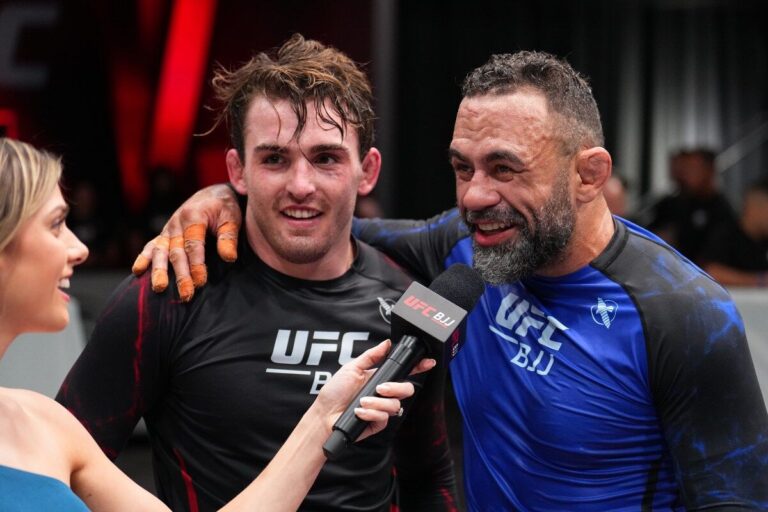
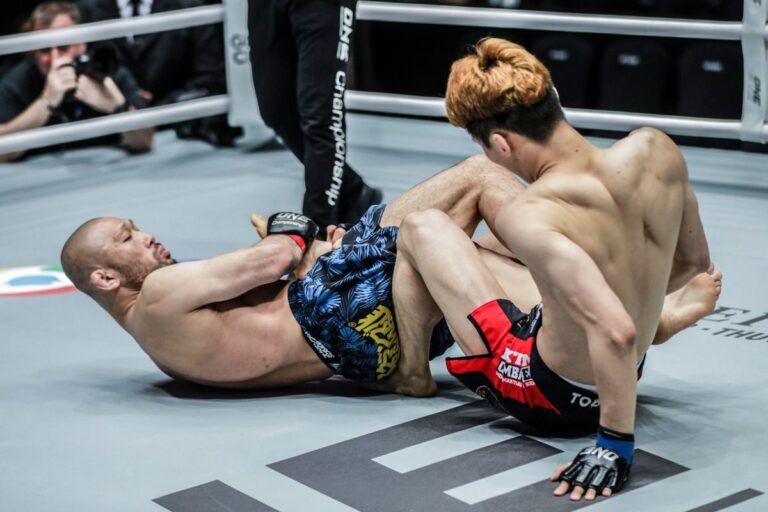
Craig Jones has helped push wrestle-up thinking toward a full no-gi bottom-game system.
What wrestle up BJJ actually means in no-gi
At a basic level, wrestle up BJJ means using your guard to stand into an attack instead of sweeping cleanly or stalling underneath. That sounds simple, but the better definition is more useful: you are using seated, supine, shin-to-shin, butterfly, X-guard, or reverse De La Riva to create enough imbalance that your opponent has to step, post, square up, or retreat. The moment they give you that reaction, you rise into the space they created.
Nicky Ryan’s instructional outline is useful here because it breaks wrestle-ups into seated versus standing, seated versus kneeling, and supine reactions rather than pretending there is one universal answer. Dante Leon teaches the same idea through distance management, especially from De La Riva, reverse De La Riva, and butterfly. Craig Jones pushes the concept even further by tying heists, turtle, and stand-ups into one bottom-game ecosystem. That is the big 2026 lesson: the wrestle-up is not a trick. It is a decision tree.
If you want more no-gi context around entries that connect to this style, Rashguard Guy already has guides on ashi garami leg entanglements, body lock passing, and wrestling takedowns for BJJ. Wrestling up sits right in the middle of those worlds.
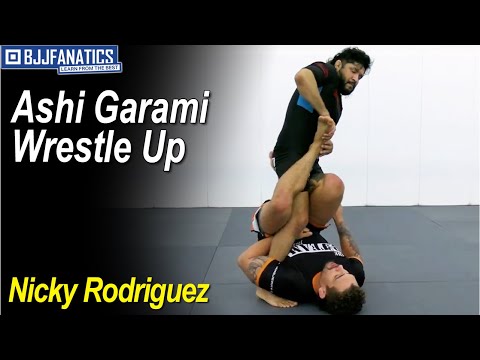
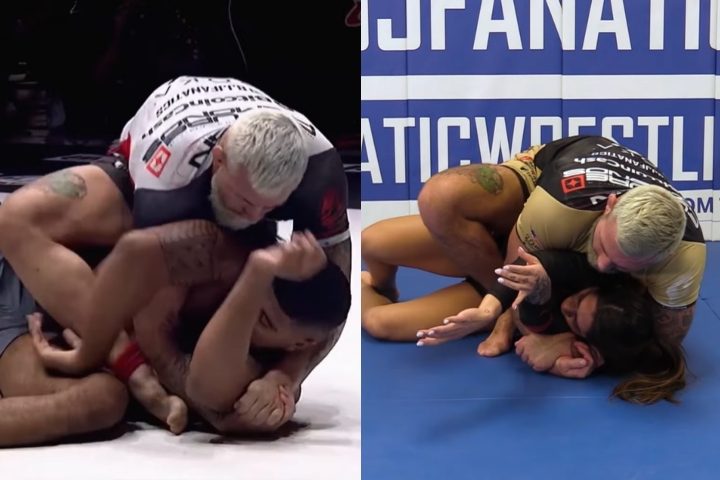
Ashi-garami wrestle-ups show how leg entanglements can become stand-up attacks.
1. Win posture before you win the leg
The biggest mistake people make is reaching for a single leg while their head is still low and their shoulders are still behind their hips. That is not a wrestle-up. That is a desperation grab. The good competitors rise in posture first, then connect to the leg second.
Craig Jones calls this out in his bottom-game material when he emphasizes head and hip height. Nicky Ryan does the same thing in his seated attacks, where the position of the head is tied to whether the lock double, low double, or arm-drag sequence is even available. If your spine is folded and your eyes are down, your opponent sprawls on your neck. If your chest comes forward and your hips follow, your leg attack starts to carry real weight.
This is why the first cue I like is simple: come to your elbow, then hand, then knee, then foot as needed. Even when the finish ends in a single leg, the real battle is posture. Without that layer, the attack is weak enough that good no-gi players will either stuff the head or snap you straight into a front headlock.
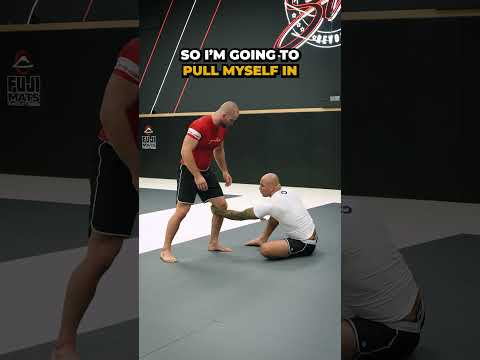
The first step usually comes from an off-balance, not from blind aggression.
2. Force the step, do not chase it
The best wrestle-up entries are reaction-based. You are not diving under a statue. You are making a live opponent step where you want. Nicky Ryan’s course menu shows this with double kouchi entries, ankle doubles, snatch singles, and timing steps. The common thread is that the opponent moves first because they have been off-balanced, pushed, pulled, or redirected.
Dante Leon frames the same idea as forcing reactions. That wording matters. It shifts your guard from passive retention to active manipulation. A seated guard player who only waits for an opening will be late. A seated guard player who creates the opening with shoulder line pressure, collar tie snaps, ankle controls, or off-balancing hooks will get the leg while the opponent is still reorganizing.
For practical training, start with one reaction you can reliably draw out. Maybe that is the opponent stepping the lead leg forward when you threaten shin-to-shin. Maybe it is them widening their base when you tug the upper body. Maybe it is the square-up after you stretch them from reverse De La Riva. Your wrestle-up becomes much more dependable when you know exactly which step you are trying to manufacture.
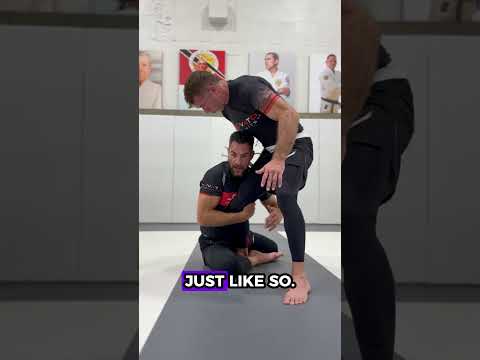
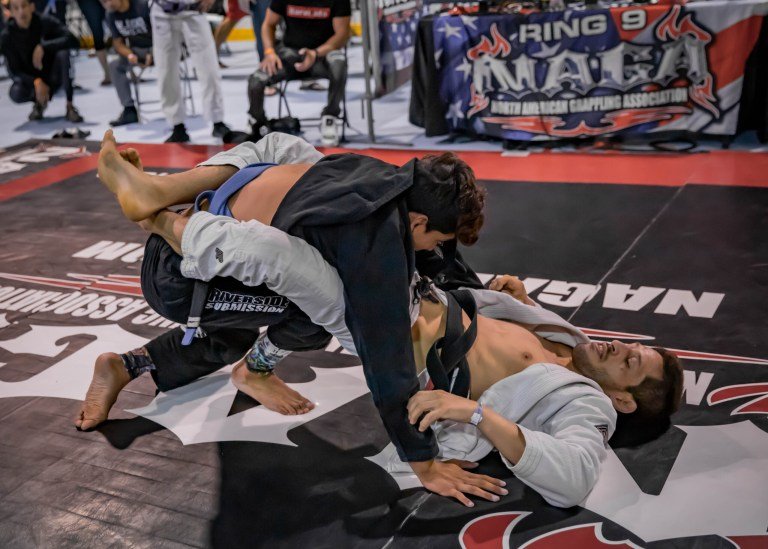
Seated guard remains one of the easiest gateways into reliable wrestle-up entries.
3. Build from guards that already carry inside position
Wrestling up from everywhere sounds exciting, but some guards clearly make the job easier. Shin-to-shin, butterfly, seated guard with inside ties, and certain X-guard or single-leg-X scenarios already place you close enough to rise under the hips. That is why those positions show up over and over in modern instructionals.
Dante Leon’s series leans heavily on De La Riva, reverse De La Riva, and butterfly. Nicky Ryan uses shin-to-shin, seated guards, and supine reactions. Craig Jones’ material connects reverse Z, false half, and fundamental heists to the same idea. Different names, same principle: if your guard already gives you an angle, a post, or an inside lane, the wrestle-up becomes cheaper.
This matters for real rounds. If you try to wrestle up from a flat, square, disconnected bottom position, you will feel late and heavy. If you first re-guard into a position with inside control, your rise becomes direct. For a lot of smaller grapplers, shin-to-shin is still the easiest place to start because it naturally creates a lane to the single and keeps the opponent from freely circling behind.
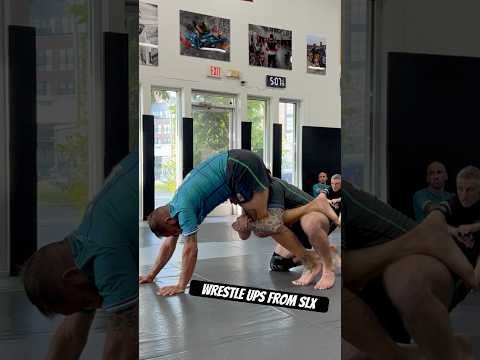
Single-leg-X and shin-to-shin positions already give you a natural lane underneath the hips.
4. Come up in layers, not in one jump
A clean wrestle-up often looks explosive on video, but mechanically it is layered. Elbow, hand, hip, knee, foot. Head up, chest forward, hips under. The reason experienced players make it look smooth is that they remove the wasted motion between those steps.
Nicky Rodriguez’s standing and kneeling anti-wrestle-up instructionals are helpful even if you are attacking, because they show what top players are waiting to punish. If you rise in one huge leap, you expose your neck, lose your elbow connection, and give your opponent time to sprawl or circle. If you build up in stages, you keep connection while upgrading posture.
The best way to drill this is to freeze the sequence. Start in seated guard. Come to your elbow and stop. Build to your hand and stop. Get your knee underneath and stop. Only then connect your single, ankle pick, or body lock. This sounds slow, but it makes your live pace faster because the pathway becomes automatic under pressure.
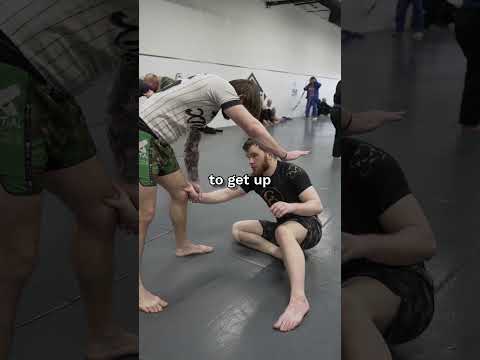
The cleanest wrestle-ups are layered, with posture and timing built before the finish.
5. Expect the second reaction before you stand
Good opponents rarely lose to the first attack anymore. They lose to the attack after the defense. That is why the best wrestle-up systems always include built-in second looks. Nicky Ryan chains doubles into singles and ankle picks. Dante Leon moves from De La Riva wrestle-ups into underhooks and snap-downs. Craig Jones links heists to front headlocks, cross ashi, and stand-ups.
Think of the first rise as a question. If your opponent squares up, you may switch to a body lock. If they sprawl, the front headlock opens. If they whizzer hard, a limp-arm or backside angle may appear. If they retreat their lead leg, the second leg often becomes available. The wrestle-up feels magical when you are prepared for these transitions and miserable when you insist on one finish after the reaction is gone.
This is also why the move works so well in no-gi compared with older static guard games. Sweat and speed make long grip battles unreliable. The wrestle-up rewards players who move from one brief but meaningful connection to the next.
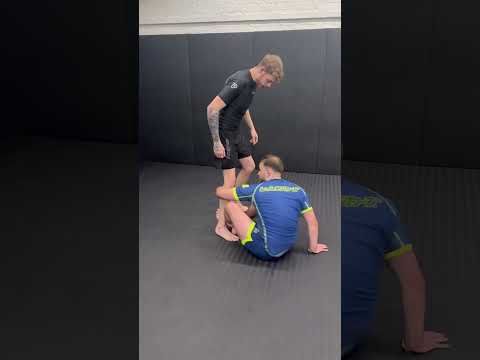
Shin-to-shin remains one of the best beginner-friendly launch points for no-gi wrestle-ups.
6. Use the front headlock as a scoring hub
One reason wrestle-up BJJ keeps growing is that even the failed shot can become offense. Nicky Ryan explicitly teaches front-headlock finishes and ankle-pick options off reactions. Dante Leon uses snap-downs off his underhook and reverse De La Riva work. Nicky Rodriguez frames the kneeling-opponent problem around transitions into anacondas, guillotines, d’arces, and leg picks.
That should change how you judge success. If you rise and your opponent stuffs the leg but leaves their head reachable, you are not back to zero. You are in one of no-gi’s best attacking hubs. From there you can spin behind, threaten the neck, or force a panic response that returns you to the legs.
For competitors, this is gold because the front headlock sits right between takedown scoring and submission danger. It also blends naturally with the half guard sweep mindset of forcing reactions instead of chasing perfect positions. The wrestle-up does not have to end with you finishing clean on the leg if it consistently moves you into dominant front-headlock exchanges.
Modern wrestle-up systems divide the problem by the opponent’s posture and reaction.
7. Split your answers for standing and kneeling opponents
This might be the most important tactical detail of all. A lot of people learn one wrestle-up and try it against every posture. The elite instructionals do the opposite. They divide the problem by opponent stance. Standing players give you steps, level changes, and leg lanes. Kneeling players give you upper-body ties, front headlock chances, and go-behinds.
Nicky Ryan’s outline separates seated-versus-standing from seated-versus-kneeling for a reason. Nicky Rodriguez literally turned the defensive side into two separate courses. The reactions are different, so the answers should be different too. Against a standing opponent, you may be hunting low singles, lock doubles, or ankle picks. Against a kneeling opponent, you may need body-lock elevation, collar ties, arm drags, or underhooks before you ever think about a leg finish.
If your wrestle-up has stalled lately, this is the first thing I would audit. Are you trying to blast the same entry against two very different postures? If yes, the fix is not more aggression. It is better sorting.
Why the wrestle-up keeps getting bigger in 2026 no-gi
The modern no-gi game rewards athletes who can connect guard retention, leg attacks, stand-ups, and front-headlock chains without treating them as separate sports. That is why wrestle-up BJJ keeps showing up in elite rooms and instructional libraries. It is efficient. It gives bottom players a way to threaten without waiting for a perfect sweep. It punishes passers who overcommit their weight. And it fits the pace of modern competition, where one brief off-balance can turn into two points, a back take, or a submission threat.
If you want one simple takeaway, it is this: stop thinking of the wrestle-up as a heroic stand-up from guard. Think of it as a reaction chain. Win posture. Force the step. Come up in layers. Expect the second defense. Use the front headlock when the leg disappears. Split your tactics based on whether the passer is standing or kneeling. Do that, and your no-gi guard starts feeling a lot less like survival and a lot more like hunting.
Sources
- Nicky Ryan’s Wrestle Up Series by Nicky Ryan — BJJ Fanatics instructional outline covering seated, kneeling, and supine wrestle-up chains.
- Wrestling Up From Guard by Dante Leon — BJJ Fanatics instructional focused on distance management and wrestle-ups from DLR, RDLR, and butterfly.
- Slay The Wrestle Up Guard vs Kneeling Opponent by Nick Rodriguez — BJJ Fanatics outline showing anaconda, guillotine, d’arce, and leg-pick counters.
- Slay The Wrestle Up Guard vs Standing Opponent by Nick Rodriguez — BJJ Fanatics outline separating reactions against standing opponents.
- The B Team Bottom Game: Imparting Wrestling, Turtling, and Heisting For Superior Results by Craig Jones — BJJ Fanatics instructional explaining heists, stand-ups, and head-and-hip-height concepts.
- The Pendejo Guard — BJJ Fanatics free page highlighting Craig Jones’ wrestle-up and off-balancing approach.
- Ashi Garami Wrestle Up by Nicky Rodriguez — YouTube example of a wrestle-up transition from a leg entanglement.
- Wrestle Up: The New School Sweep — YouTube example of wrestle-up mechanics from no-gi guard.
Browse our top-rated rashguards and no-gi gear at the RashguardGuy shop →