Electric Chair BJJ: 5 Sweeps and Submissions from the No-Gi Lockdown
At Metamoris 3 in 2014, Eddie Bravo put Royler Gracie — a four-time world champion — on his back using the electric chair three separate times in twenty minutes. Gracie couldn’t stop it. He couldn’t escape it. He could barely survive it. The match ended in a draw, but everyone watching understood what had happened: a no-gi position built entirely without gi grips had handled one of the greatest competitors in the sport’s history.
That’s the electric chair. It’s not a single technique — it’s a system that forces your opponent to choose between getting swept, getting stretched, or giving up their back. If they can’t solve all three threats at once, they lose.
What Is the Electric Chair in BJJ?
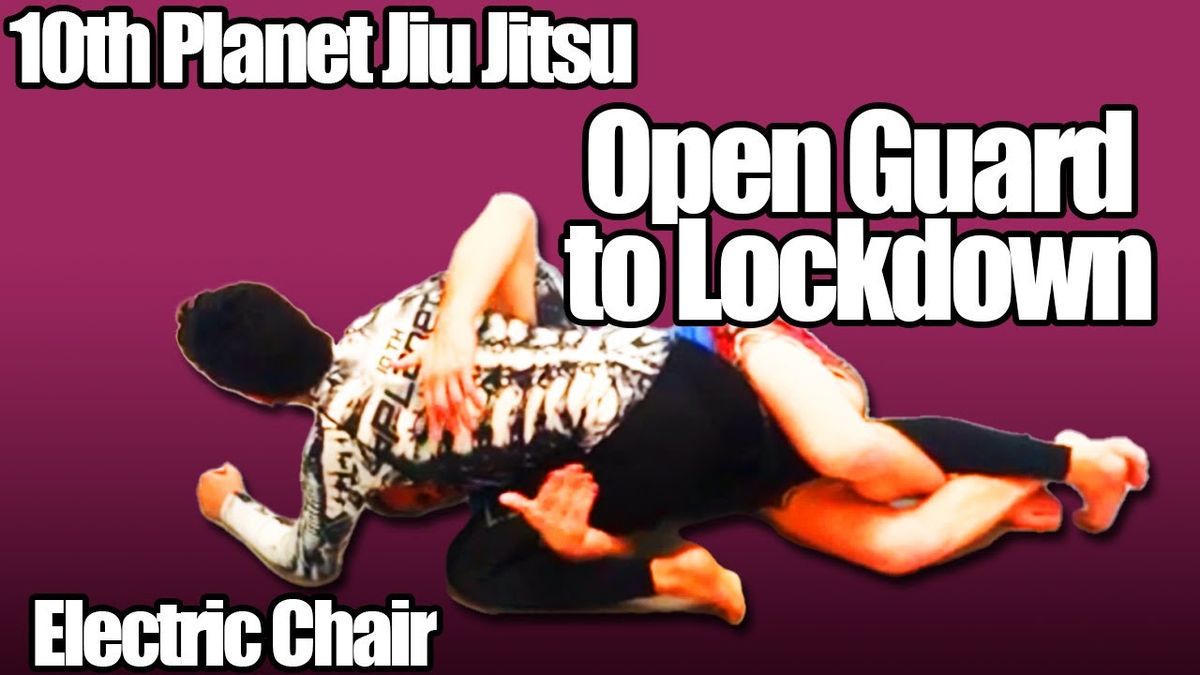
The electric chair is an attacking position reached from the lockdown half guard, developed by Eddie Bravo as part of his 10th Planet Jiu-Jitsu system. Unlike traditional half guard, which tends to be a defensive or transitional position, the electric chair puts the bottom player in full offensive control — threatening a sweep, a submission, and a back take from the same configuration.
The name refers to the sensation for the defender: legs split apart, hips elevated, no safe direction to move. It’s accurate. Once you’re properly caught in it, your options are limited and most of them hurt.
The electric chair differs from ashi garami leg entanglements in a key way: it relies on the lockdown leg control rather than foot positioning. This means it’s accessible from a conventional half guard entry and doesn’t require specialized leg weave setups. Grapplers who’ve never drilled 10th Planet can often find themselves halfway into the electric chair without realizing it.
The Lockdown: Foundation of the Electric Chair
You can’t reach the electric chair without the lockdown, so that’s where to start. The lockdown is a modified half guard leg entanglement — not the standard half guard where you just trap a foot with your calves.
From bottom half guard, thread your outside leg to the inside so it wraps around the opponent’s shin. Your second leg builds a triangle shape over the first, with your top foot hooking as low on the opponent’s ankle as possible — driving into dorsiflexion constantly. This triangle locks the opponent’s shin and ankle in a vise that doesn’t rely on grip strength. They can’t pull free without risking knee ligament damage from the rotation.
The lockdown works in no-gi specifically because it can’t be stripped. No handles, no collar grips — just leg mechanics. That’s why the top player has to fight hard against it rather than simply prying the grips off.
Once lockdown is established, the opponent’s base is compromised. They can’t get their knee back to stabilize for passing. They’re stuck — and stuck is where the electric chair begins.
How to Get to the Electric Chair Position
The setup sequence from lockdown is precise. Shortcut any step and the position collapses.
Step one: From lockdown, pull both knees toward the opponent’s buttocks. This disrupts their hip position and creates upward leverage.
Step two: Extend both legs upward sharply. This lifts the opponent’s hips off the mat for a moment — creating a gap on the trapped-leg side.
Step three: Swing toward the trapped-leg side and shoot your near arm deep under the opponent’s thigh on that side. This is your first underhook. Get it as deep as possible — past the elbow, almost to the shoulder.
Step four: Swing back to the far side and repeat. Thread your second arm under the opponent’s far thigh, driving the hamstring onto your shoulder.
That’s the electric chair. Both legs controlled — near leg by the lockdown, far leg by the underhook. The opponent is now balanced on top of you with no solid base, their legs split by your body position.
The Electric Chair Sweep
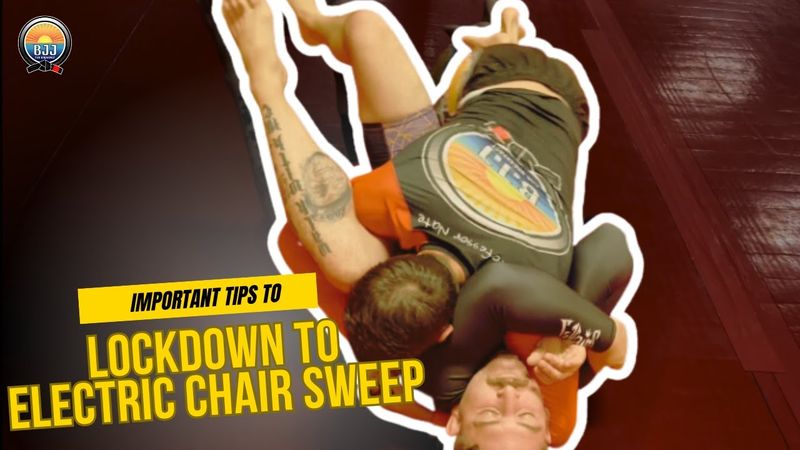
The sweep is the most common finish from the electric chair and the one that made Bravo famous at Metamoris. The mechanics are simple; the timing takes practice.
Once both underhooks are secured, drive your shoulder hard into the opponent’s far thigh while swinging your locked legs toward the trapped-leg side. The combination of the leg swing and shoulder drive rolls them over. They’ll land in a split position with their legs still partially controlled — you come up on top with immediate passing options.
The moment you complete the sweep, you have two immediate paths: leg drag the near leg into a pass, or capture the far leg as a kneebar. The “dogbar” — 10th Planet terminology for a kneebar taken right after the electric chair sweep — is one of the highest-percentage leg lock setups in the system. The leg is already positioned across your body from the sweep; you just need to secure it and extend.
The key mistake on the sweep is committing before the second underhook is truly deep. A shallow underhook under the far thigh lets the opponent shrug it off and create distance. Wait for the full depth, then drive.
Submission Finishes from the Bottom
You don’t have to sweep. The electric chair also works as a direct submission from the bottom position — and in some setups, the submission is the higher-percentage choice.
The crotch ripper: Stay on your back, don’t roll. Instead, collapse your chest toward the mat while maintaining the underhooks. The lockdown stretches the opponent’s near leg laterally while the underhook lifts the far leg upward. The groin and hip flexors take the load. This stretch becomes unbearable fast — it’s not a clean ligament lock like a heel hook, but the combination of compression and stretch on the hip complex forces taps at every level.
Electric chair to toe hold: After establishing the position without sweeping, angle toward the lockdown leg and reach for the foot. Set a standard toe hold grip — palm-to-palm, fingers curling around the top of the foot — and rotate your wrist outward while driving the knee toward the mat. The lockdown already has the leg controlled, so the toe hold locks in tighter than it would from a neutral position.
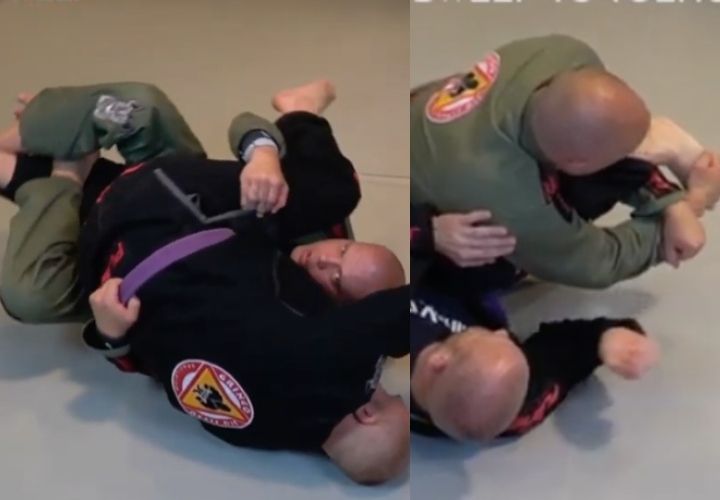
Calf slicer entry: If the top player attempts to step over and pass while you’re in lockdown, their shin sometimes lands across your legs in a position where you can flex your knees upward into a calf slicer. Pull down on the foot while driving your shin as the fulcrum. This transition is opportunistic rather than set up, but it happens regularly in live rolls when opponents try to force a pass.
The vaporizer: This is the nastiest finish in Bravo’s arsenal. Roll over your own shoulder while carrying the far leg with you, folding the opponent into a knee and hip compression. It’s the submission Bravo had on Royler in the final seconds of Metamoris 3 that Royler declined to tap to as time expired. The joint stress is on both the knee and the hip simultaneously — it gets compliance fast.
Transitions After the Electric Chair Sweep
Top position after the electric chair sweep is disorganized for both players. The opponent’s legs are split; you’re coming up from underneath. What you do in the first two seconds determines whether you pass or get entangled again.
The leg drag is the cleanest pass. As you come up, keep the far leg across your body and drive the near knee to the mat. Step around the head for side control. Clean, high-percentage, fast.
For leg lock hunters: stay low after the sweep and transition directly into single-leg X or ashi garami on the far leg. The leg is already across your body from the sweep — you need one re-pummel to get the heel hook angle. ADCC-ruleset grapplers use this chain constantly. The electric chair sweep into outside heel hook is a legitimate competition-level sequence.
The back take is the third option. If the opponent scrambles hard after the sweep and goes to turtle, follow their hips and insert a hook. The whip-up motion from the lockdown naturally points you toward their back.

How to Defend the Electric Chair
Defending the electric chair starts before the lockdown is fully locked. Once it’s tight, you’re on defense — the goal is damage limitation.
Before the lockdown: When you feel your leg being trapped in half guard, keep your hips heavy and low. Don’t sprawl backward — that’s exactly what opens your hips for the leg triangle to seal. Instead, drive forward and down. A hip position that’s forward and low makes the lockdown much harder to complete.
After the lockdown: Your most important job is protecting the far thigh underhook. If the bottom player gets both arms under both of your legs, you’re in the electric chair and they have the sweep. Keep your weight forward, dig your elbow into their hip on the far side, and prevent that second underhook from threading through.
Escaping the lockdown: The standard escape is to drive your trapped knee toward your own chest — not away from the body — while standing up on the free leg. Moving the knee away from the body increases the stress on the joint. Moving it toward the chest reduces it. Stand up on the free leg, create downward pressure, and walk around the head. This takes patience; don’t force it.
The counter underhook: If you can secure your own underhook around the bottom player’s head or shoulder before they get the thigh underhook, you cut off their entry to the electric chair. Now you can drive toward a half guard pass or wizzer them to expose their back.
Notable Competitors and the Electric Chair
Eddie Bravo is the architect and remains the most visible practitioner. His Metamoris 3 match against Royler Gracie in March 2014 is the definitive demonstration of the electric chair at elite level. Bravo pulled quarter guard, worked to lockdown, and hit the electric chair sweep on Royler multiple times over twenty minutes. The fact that Royler — widely regarded as one of the most technically complete grapplers of his generation — couldn’t consistently solve it is a testament to the position’s soundness.

On the modern side, the electric chair occasionally surfaces at high-level no-gi events when competitors with 10th Planet backgrounds enter the leg lock game via the lockdown rather than through conventional ashi garami entries. The heel hook chains that follow the electric chair sweep are increasingly common at EBI and ADCC qualifiers.
Paddy Pimblett — the UFC lightweight — tapped to an electric chair at his home academy in Liverpool in early 2022, injuring his hip flexor before a scheduled UFC appearance. The incident was notable not because Pimblett’s grappling is weak (it isn’t) but because the electric chair’s groin stretch creates injury risk even in training. Tapping early in training is the correct call; ego-holding in a live electric chair costs hip flexors and knees.

Training the Electric Chair: Where to Start
Start with the lockdown before the electric chair. Specifically: practice the whip-up motion — the leg extension that lifts the opponent’s hips — until it’s automatic. The whip-up is the engine of the whole system, and if it’s weak, your underhook timing will always be late.
Drill the underhook sequence slowly at first. The critical moment is committing to the second underhook under the far thigh. Many grapplers get the first one fine but lose the second because they’re not creating enough hip elevation beforehand. Every time you miss the second underhook, go back to the whip-up and add more extension.
For sparring, give your partner the lockdown in positional rounds. Work specifically from lockdown top (defending) and lockdown bottom (attacking). Five-minute rounds where you start in lockdown bottom build the timing faster than trying to reach it from open guard every time.
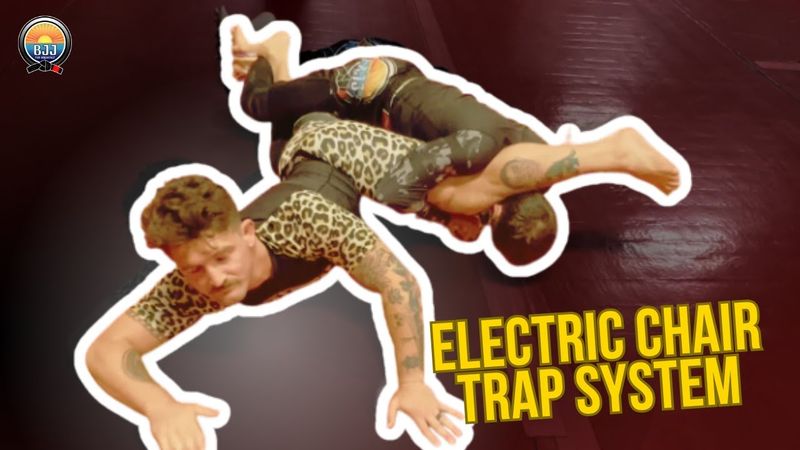
The electric chair doesn’t require athleticism — it’s mechanics. Bravo’s match with Royler Gracie happened when Bravo was in his late thirties and significantly heavier than his opponent. What it requires is repetition until the leg swing, the underhook timing, and the shoulder drive happen as one continuous motion rather than three separate decisions.
The electric chair is one of the few positions in no-gi where the bottom player has a genuine sweep AND submission threat simultaneously — and where the sweep itself feeds directly into leg lock chains. For no-gi competitors, that combination of offensive options from a position you can reach without any gi grips is exactly what the modern game rewards.
Sources
- Lockdown, Electric Chair Sweep And The Nastiest Submission In BJJ — BJJ World — full technique breakdown of the lockdown and electric chair system
- Electric Chair BJJ — BJJ Fanatics — overview of the electric chair position and submission options
- Paddy Pimblett Taps To Electric Chair & Injures His Hip Flexor — BJJ Eastern Europe — real-world account of elite-level electric chair submission, January 2022
- Electric Chair Sweep to Toe Hold Submission — BJJ Eastern Europe — technique detail for the sweep-to-toe-hold chain
- Eddie Bravo vs. Royler Gracie: A Rivalry That Changed Modern Jiu-Jitsu — Josh Presley Substack — analysis of Metamoris 3 and the electric chair’s role in the match