Wrestling Headgear vs. No-Gi Ear Guards: What Crosses Over and What Doesn’t
Most grapplers who come from wrestling don’t start their no-gi BJJ training looking for new ear protection. They already have headgear. The assumption — reasonable on its face — is that gear built to protect ears in one grappling sport will translate cleanly to another. It usually doesn’t, at least not completely. Understanding why requires looking at how each sport creates ear injury in the first place, and how that difference shaped the gear that evolved to address it.
How Wrestling Headgear Was Designed
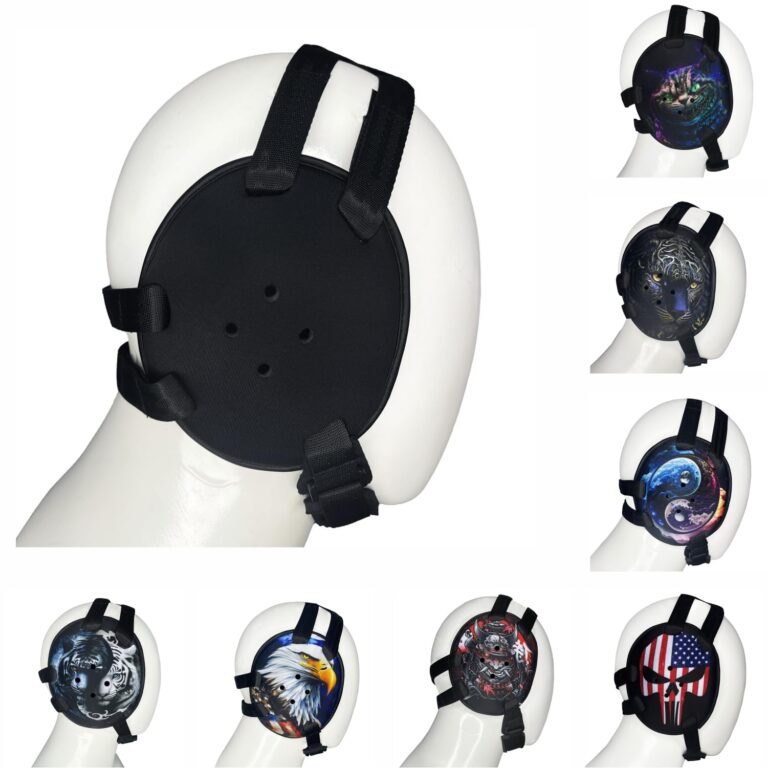
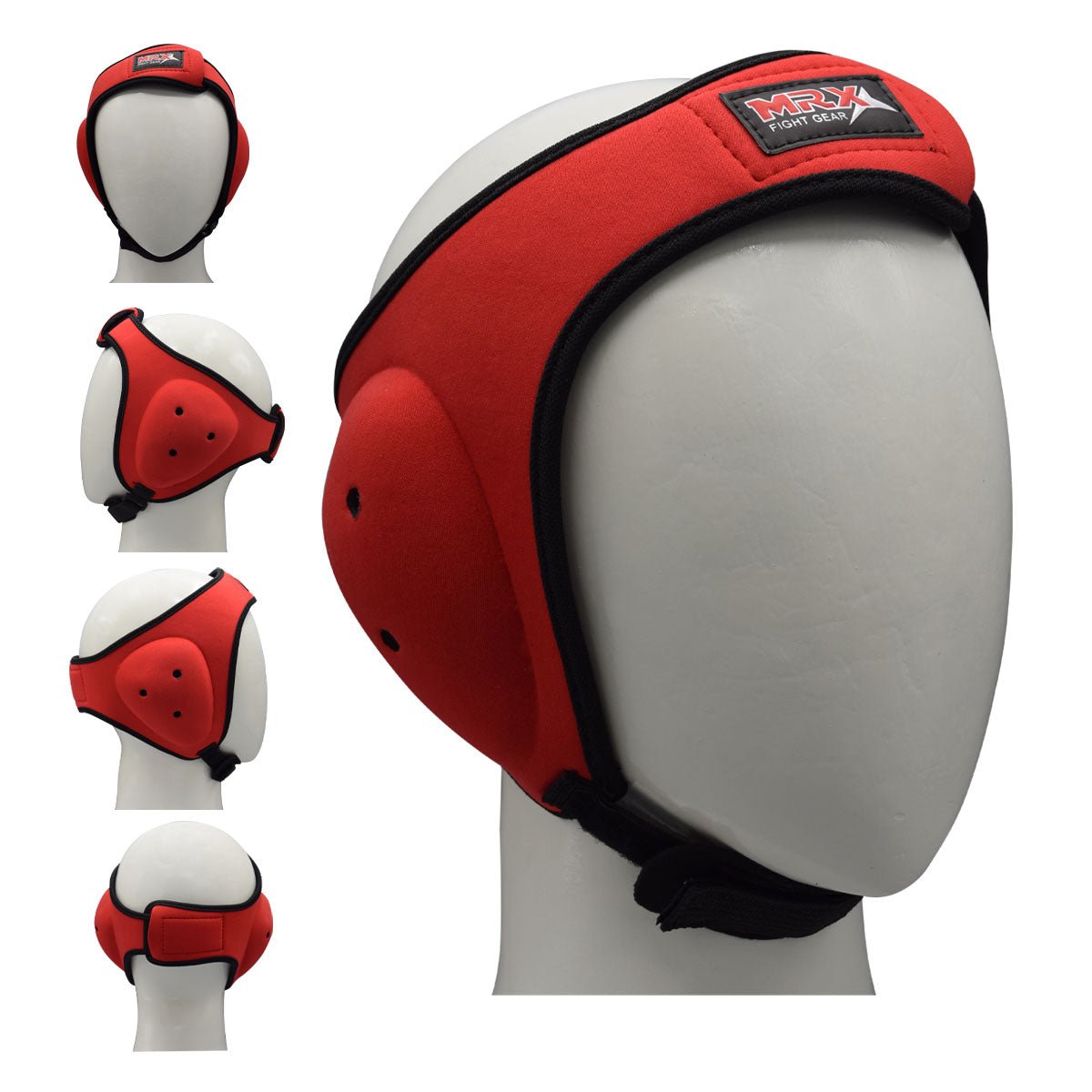
Wrestling headgear emerged from a specific problem set. In competition wrestling — folkstyle, freestyle, Greco-Roman — ear contact happens frequently during standing exchanges: clinch ties, head-to-body contact on shots, lateral pressure during scrambles in the standup phase. The gear was built to handle that. Rigid shells cover the ear cup area and extend to protect surrounding tissue. A chin strap anchors the whole assembly during explosive forward motion — when you’re shooting or being shot on, the natural movement pulls the headgear forward off the face, and the strap counteracts that.
The design also accounts for frequent adjustment during breaks. Wrestling matches have more standing resets. You can quickly readjust headgear between exchanges in a way that isn’t available when you’re underneath someone in a guard battle. That built-in reset tolerance lets wrestling headgear get away with fit compromises that become significant problems in extended ground grappling — where there are no pauses, no resets, and no moment to reach up and center a shell that’s migrated toward your cheekbone.
The Contact Pattern in No-Gi Is Different
No-gi grappling creates ear exposure through different mechanics. Yes, there’s standup — wrestling entries, snap-downs, outside ties, collar ties. That phase shares enough with wrestling that headgear designed for standup performs reasonably well there. The divergence happens the moment the match goes to the ground, which in no-gi BJJ competition is most of it.
On the ground, the primary ear injury mechanisms are sustained compression against the mat surface, lateral shearing during guard passing, and the specific pressure that comes from being caught flat in turtle position with someone driving their hips into your back and their head against yours. These aren’t sudden impact events — they’re sustained loading events. A shell built to deflect a sharp lateral blow in standup behaves differently under the slow, grinding pressure of a stack pass or a crossbody ride. The shell that performs well in one context isn’t necessarily the same shape and rigidity that performs well in the other.
Why the Chin Strap Creates Problems in No-Gi
The chin strap is the most obvious pressure point when wrestling headgear moves to BJJ. In wrestling, the chin strap works because choke attempts aren’t legal — nobody’s wrapping forearms around your chin and pressing. In no-gi grappling, front headlocks, guillotines, and rear naked chokes all apply meaningful pressure to the chin area. A strap across the chin during any of those exchanges is uncomfortable at best. During a serious guillotine defense, it’s actively distracting — you’re managing the choke and feeling the strap pulling at the wrong moment.
Beyond choke defense, the chin strap creates leverage problems that are hard to anticipate until you’re rolling live. When an opponent controls your head — in a front headlock, during a hip escape from guard, in a scramble from turtle — there’s rotational force on the headgear. The chin strap, attached below, creates a fulcrum point. The shells rotate upward and outward, often ending up positioned more over the cheekbone than the ear. You end up with headgear that’s still strapped on but no longer where it needs to be — which is the worst of both situations. It’s still restricting your movement, but it’s no longer protecting you.
What BJJ-Specific Ear Guards Changed
The ear guards developed specifically for BJJ and no-gi grappling aren’t a radical departure from wrestling headgear in concept, but the design adjustments address exactly the problems described above. The chin component is either eliminated or repositioned. Most BJJ-oriented designs route a strap beneath the jaw rather than across the chin, or use an over-the-head cross-strap system that holds the shells in position through top tension rather than bottom anchoring. This changes the mechanical behavior fundamentally — instead of resisting forward pull during standup, the strap system resists rotation during ground sequences.
Shell Profile and Material Flexibility
Wrestling headgear shells tend to be thicker and more rigid — optimized for impact deflection from lateral blows. BJJ-specific shells generally use softer, more compressible materials that are better suited to sustained pressure. When you’re in guard and someone is passing and your ear is against the mat, a rigid shell that doesn’t compress well can transmit rather than absorb that sustained load. A shell that deforms slightly under compression and recovers is doing something different — distributing the load across a wider surface rather than concentrating it at the edge of the cup.
Profile height also matters differently in no-gi. Wrestling headgear can afford to be slightly bulkier because the head-to-body geometry in standup grappling tolerates it. In no-gi, you’re regularly pressing your head into tight spaces — trying to get under someone’s arm for a back take, working inside a front headlock, escaping from beneath a crossbody ride. Excess shell height gets caught on limbs and bare skin in ways that create both distraction and rotation of the headgear during the sequence. A lower, more streamlined profile isn’t just aesthetics — it reduces the number of surfaces the gear can catch on during scrambles.
Strap Systems and Position Stability
The strap configuration is where the practical performance difference is most measurable. Wrestling headgear’s chin-anchored system works on a simple mechanical principle: forward movement during standup pulls the shells forward, and the chin strap prevents that. Rotate ninety degrees, invert, and put it on the ground, and the loading direction changes completely. The same tension that holds the headgear in place during standup can work against stability when the geometry changes — in bottom guard, the chin strap is now pulling the shells toward the mat surface instead of toward the opponent, and the geometry that made the design stable inverts with the body.
BJJ-specific designs typically use a combination of crown strap and rear strap that triangulates the shell position relative to the skull itself rather than anchoring to the chin. This system is less direction-dependent — the ear cup stays roughly over the ear regardless of which axis the force is coming from. The tradeoff is real: some wrestlers find these systems feel less secure during standup exchanges than the chin-anchored system they’ve trained in for years. That’s a genuine tradeoff, not a marketing claim. What you gain in ground stability, you may give up in standup security during explosive shot sequences.
When Wrestling Headgear Actually Holds Up in No-Gi
This isn’t a blanket argument against using wrestling headgear in no-gi. The sport-to-sport transfer depends heavily on your grappling style and what positions you end up in most. Wrestlers who transition to no-gi and continue to prioritize wrestling-based attacks — double legs, singles, standing throws — spend more time in the standup phase than a guard puller does. Their ear injury risk profile more closely resembles wrestling, and their headgear will perform more like it was designed to. If your no-gi game is built around wrestling entries and you spend limited time in extended bottom guard positions, the design compromises of wrestling headgear may matter less in practice than they do in theory.
The issue is selective. If you train with wrestling headgear and it consistently stays positioned over your ear through a full round of rolling — including extended bottom guard time, turtle escapes, and scrambles — then the design isn’t failing you in practice. The only meaningful test is whether the shells are over your ears when the pressure happens, not what the gear looks like in a product diagram or how it’s classified by sport.
Running Your Own Equipment Test
If you’re coming from wrestling and not sure whether your existing headgear is performing adequately in no-gi training, the evaluation is straightforward. Roll a few rounds with your training partner, then stop and check shell position after each sequence rather than adjusting automatically. If the shells have consistently rotated off your ears during ground sequences — even if they reset easily — you’ve identified the failure condition that matters. You’re not protected when the compression is happening; you’re just putting the gear back after the fact.
Specific positions to test: bottom of a tight stack pass, defensive turtle with someone driving from the back, guard recovery after a near-pass. These are the configurations where wrestling headgear tends to shift. If your gear handles these without significant rotation, your wrestling headgear may genuinely be serving its purpose in your no-gi training. If it consistently needs readjustment after those positions, switching to a BJJ-specific design isn’t aesthetic preference — it’s correcting a functional gap that’s leaving your ear exposed at the moment it needs protection most.
Ear protection works when it’s in place when the compression happens. The gear you own matters less than whether it’s doing that job across the full range of positions you encounter. For wrestlers crossing over, that evaluation — not brand loyalty or familiarity — is what should drive the decision. The two sports create ear injury differently, and the best protection is whatever reliably stays where it belongs through the specific positions that define your game.
Sources
- Cauliflower Ear — Wikipedia
- NCAA — Collegiate Wrestling Standards and Equipment
- FloGrappling — No-Gi Grappling Competition Coverage
Image credit: mrxproducts.com