Ear Guard Fit: What No-Gi Grapplers Get Wrong Before the First Roll
You can spend forty dollars on a solid pair of ear guards and still end up with cauliflower ear by the end of the month. Not because the product failed. Because it never sat right on your skull, and you spent every round fighting the headgear as much as your training partner. Fit is the variable that determines whether ear guards actually protect you in no-gi grappling — and it is the one most grapplers figure out too late, after the damage is already done.
This guide covers what proper fit looks like, how to evaluate it before you step on the mat, and what to do when the fit that worked in month one has stopped working by month four.
What Good Ear Guard Fit Actually Means
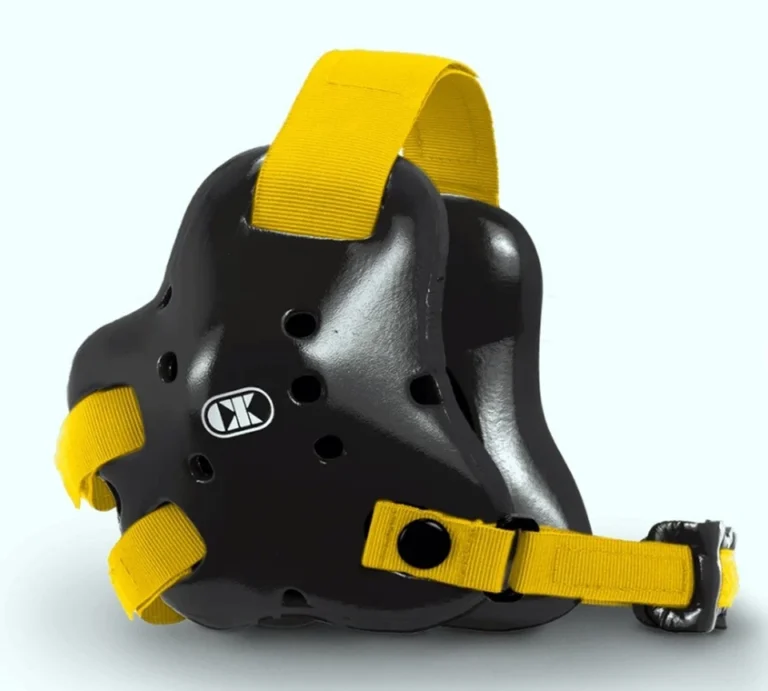
Most grapplers assume ear guards fit if they go on without too much struggle and do not fall off while standing still. That is not fit — that is just presence on your head. Real fit means the ear cups sit flush against the outer ear with no pressure points at the cup rim, the straps run cleanly over the crown and under the chin without torquing the cups sideways, and the whole assembly stays in that same position after a sprawl, a shot, a scramble, and a hard clinch exchange. All of that together is fit.
The ear cup position matters more than anything else. If the cup is sitting off-center — even slightly — it leaves part of the outer ear unprotected. That exposed margin is exactly where initial hematoma formation happens. The ear takes a glancing hit, the cup deflects the pressure slightly off-target, and the vulnerable edge of the helix or antihelix absorbs the impact directly. You were wearing ear guards and still got the hit that starts the cartilage damage process.
Measuring Before You Buy
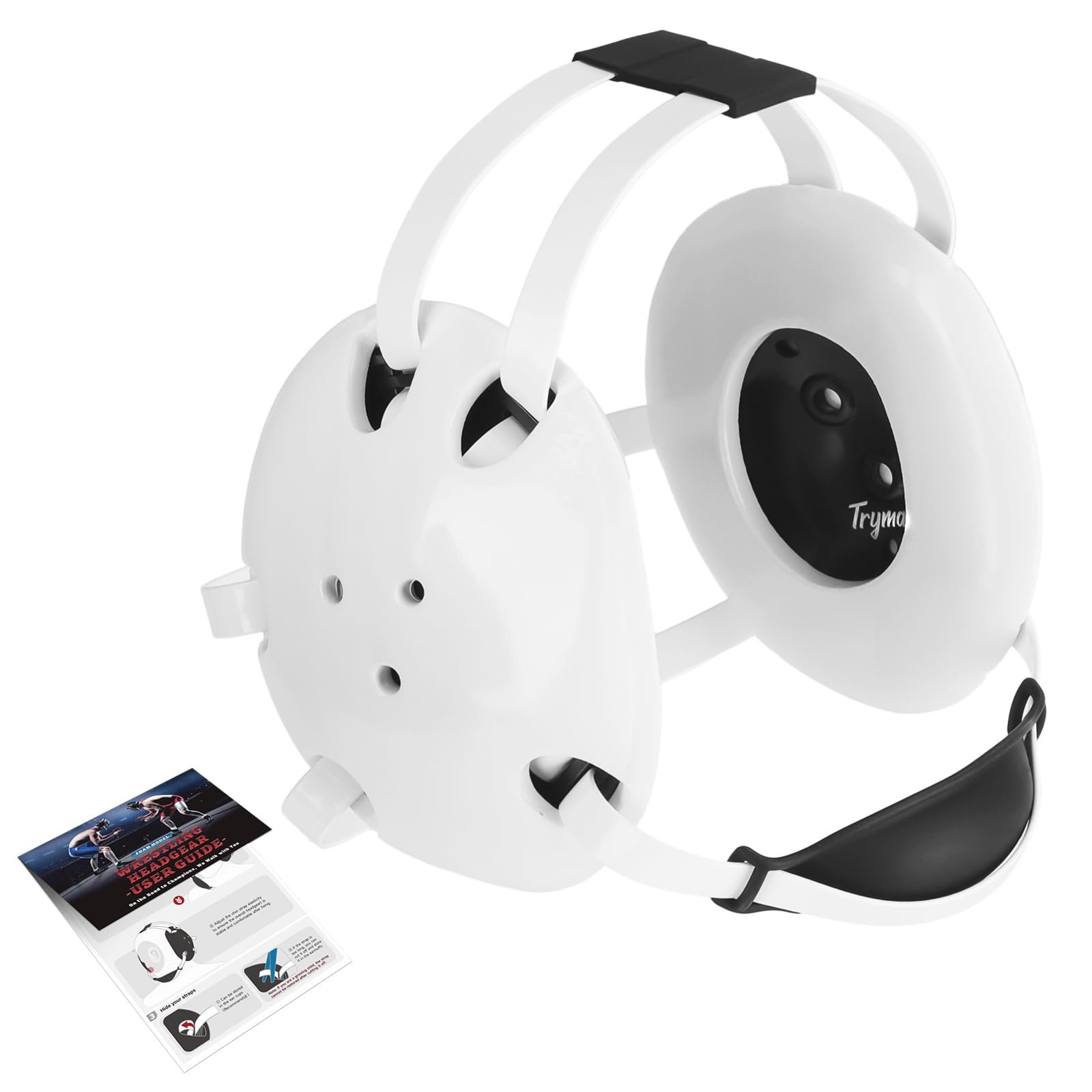
Ear guard sizing is communicated in head circumference, measured at the widest point — typically just above the ears, running around the forehead and the back of the skull. A soft tape measure works. A length of string and a ruler achieves the same result if you do not have one. Most manufacturers break sizing into small, medium, and large categories based on this measurement, though the specific ranges vary by brand.
Head circumference gives you a starting range, but it does not account for skull shape. Two grapplers with identical head circumferences can have dramatically different fit experiences if one has a wider, flatter skull profile and the other has a narrower, higher-domed head. The over-the-head strap on a pair sized correctly for circumference can still sit too far forward or too far back on the crown depending on skull geometry, pulling one or both cups out of position. This is why sizing charts are a starting point, not a guarantee.
The actual test is putting them on, adjusting the straps to the manufacturer’s center positions, and checking cup placement in a mirror. Both cups should sit centered over each ear with the cup rim running around — not over — the helix. If one cup consistently drifts toward the temple or toward the jaw after adjustment, you are dealing with a geometry mismatch that strap tightening alone will not solve. That points toward a different model, not more adjustment.
Strap Systems and What Each One Actually Does
The strap system is where fit problems originate and where they get solved. Most ear guards use a two-strap configuration: one strap running over the crown of the head and a second running under the chin. Some models add a third strap that runs horizontally behind the head, which significantly improves rear-pull retention during front headlock and guillotine defense sequences — exactly the positions where standard two-strap designs tend to fail under no-gi pressure.
The chin strap does more work than most grapplers credit. In no-gi, chin strap tension determines whether the cups stay forward-anchored when your neck is cranked into a front headlock, when someone is trying to establish a collar tie, or when you are being pulled into a hard clinch. A chin strap that is too loose lets the over-head strap pivot the entire assembly backward under pressure. A chin strap that is too tight creates jaw restriction that interferes with breathing during hard rounds — which is exactly how grapplers rationalize removing them mid-session, leaving their ears unprotected for the rest of the round.
The correct chin strap tension is snug without being compressive. You should be able to open your mouth fully without resistance. The strap should run along the jawline rather than digging under the chin. If it rides under your chin and creates upward pressure, it is either too short for your jaw width or positioned incorrectly, and it will migrate toward your throat during scrambles.
The Movement Test: Checking Fit Before You Roll
Static fit in a mirror tells you whether your ear guards are in position before training. It does not tell you whether they will stay there. The movement test does, and it takes about two minutes in the changing room or on the warm-up area of the mat before anyone else arrives.
Before your first live round in a new pair, run them through a short movement sequence. Take a few shots — simulate a double leg, dropping your level and driving forward. The ear guards should move with your head, not shift independently on your skull. Then do some level changes and head position adjustments like you would make when setting up or defending a body lock. Finally, simulate the position of the bottom of a front headlock: chin tucked, head turned, neck under pressure. Hold that for a few seconds and check cup placement.
If the cups have migrated after that sequence, the straps need adjustment before you start rolling. If adjustment does not keep them stable through the movement pattern, the shell geometry is wrong for your head and you need a different model. Discovering this during sparring — when your ear guard is covering your eye and your training partner is posting for a takedown — is the worst possible moment for that realization.
Shell Size, Cup Depth, and Contact Geometry
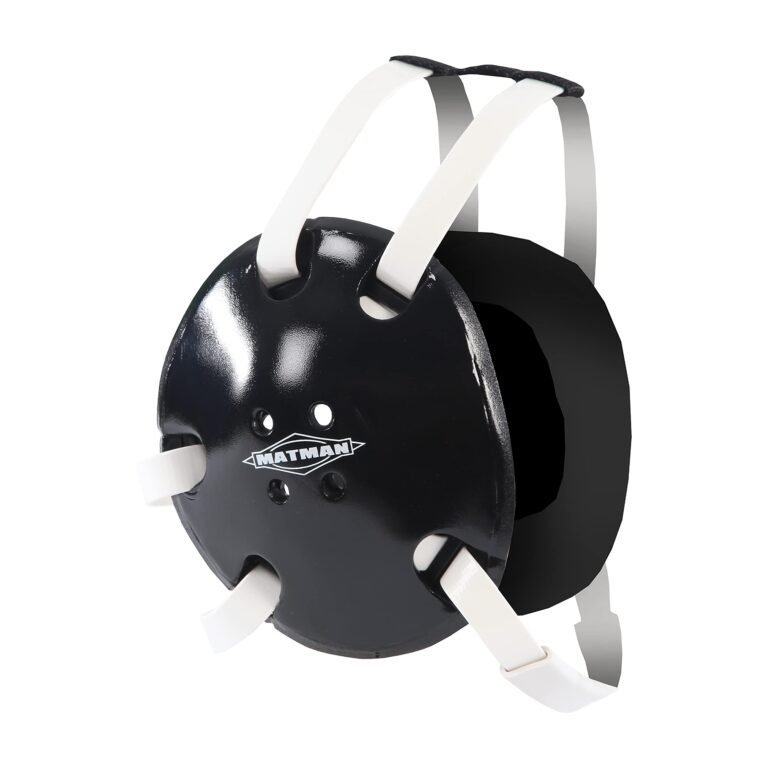
Strap fit and shell fit are separate problems that both need to be right. The shell — the plastic or padded cup that sits over your ear — needs to be large enough to fully enclose the outer ear without pressing on the cartilage, and deep enough to provide clearance between the inner ear and the inner shell surface.
Ear size varies significantly between individuals, and shell sizes do not always scale proportionally with head circumference. It is possible to have a large head with smaller ears, or a medium-sized head with ears that project further from the skull than average. If the shell is too small, the rim presses directly on outer ear cartilage — counterproductive, since you are applying consistent pressure on the same structure you are trying to protect from impact. Cup depth matters in a related way. Hard shell ear guards with adequate depth create an air pocket that absorbs and distributes impact before it reaches the ear. Hard shell guards with insufficient depth sit with the inner surface too close to the ear, collapsing that absorption layer significantly. When checking fit, there should be visible clearance between your ear and the inner shell surface while the cup is properly seated. If your ear is touching the shell while it is on your head, you need a design with a deeper cup profile.
When Fit Starts Breaking Down Over Time
Ear guards do not degrade suddenly. They get slightly looser as straps stretch, slightly less rigid as hard shells absorb micro-impacts over months, and gradually less hygienic as inner padding collects sweat and skin contact. None of these changes announce themselves loudly. The fit that worked well in month one starts working less well by month six, and unless you are actively checking, you will keep wearing the same pair well past its effective service life.
Stretched straps are the most common issue. If you find yourself adjusting the chin strap to a tighter position every few weeks to maintain the same retention, the elastic is going. Strap material has a finite number of tension cycles before it loses its ability to hold position under the kind of force generated in a hard clinch or a sprawl. Some ear guard models have replaceable straps; most do not. When straps can no longer hold proper cup position through the movement test described earlier, the ear guards need to be replaced — not adjusted more aggressively or supplemented with tape. Tape on a chin strap is a signal that pair is past its end of life.
Hard shell integrity matters in the same way. Visible cracks in the shell surface, even hairline fractures that have not fully propagated, indicate the plastic is compromised. A cracked shell distributes impact differently than an intact one — you lose the even load-spreading that makes hard shell protection effective, and the cracked section becomes a stress concentration point that can fail fully during a significant hit. Check the shells periodically by flexing them gently between your hands. An intact hard shell will flex slightly and return to shape. A compromised one will creak, flex unevenly, or show stress whitening along the crack lines.
Fit Is a Recurring Check, Not a One-Time Decision
The grapplers who come through years of no-gi training with healthy ears are rarely the ones who found the best brand. They are the ones who stayed attentive to whether their ear guards were actually doing their job. They adjusted before sessions, not during them. They recognized when gear was past its useful life and replaced it rather than keeping worn equipment in rotation because it was familiar.
Getting ear guard fit right is not a one-time decision made at purchase. It is a recurring thirty-second check before each session. That is a negligible investment for something protecting cartilage that does not grow back. To find ear guards matched to your head size, search: ear guards for no-gi grappling on Amazon.