Darce Choke No-Gi: 7 Setups That Force the Tap
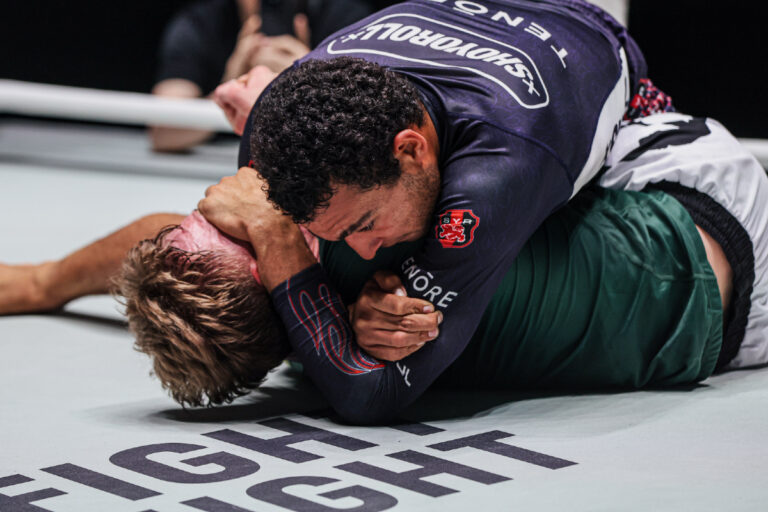
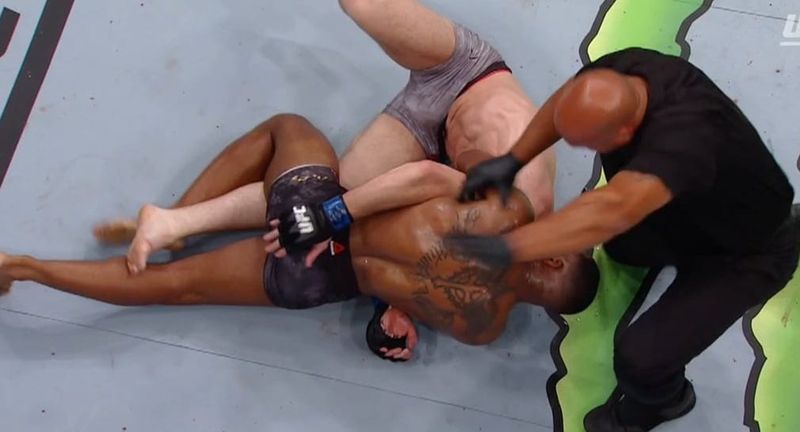
The darce choke no-gi is a head-and-arm blood choke that finishes opponents from the front headlock, the bottom of side control, the turtle, and a half guard sprawl — four positions that no-gi grapplers live in every round. Vicente Luque owns four UFC darce wins and Tony Ferguson has three, which makes it the single most reliable arm-in submission in modern MMA. This guide walks through seven setups, the grip mechanics that separate a tap from a “just hold on” position, and the angle change that finally puts your opponent to sleep.
The technique works because you are not actually choking with your bicep. You are wedging your opponent’s own shoulder into their carotid artery and using a figure-four grip to compress the sandwich. Get the wedge wrong and you have a controlling position. Get it right and the tap arrives in three to five seconds.

Darce Choke No-Gi Mechanics: The Grip That Actually Cuts Blood
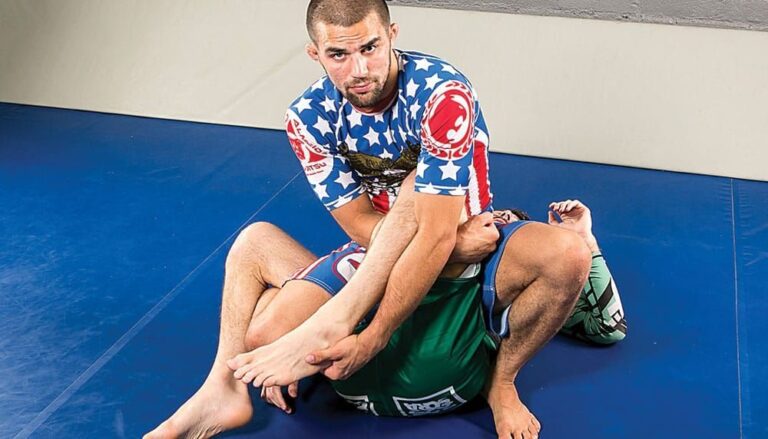
Before any of the seven setups make sense, the finishing grip has to be locked in. From the front headlock, your right arm shoots under the opponent’s left armpit and threads across the front of their right shoulder, palm down, ending with your right hand on top of your own left bicep. Your left hand goes on top of their head or behind your own right shoulder. That figure-four is the same grip you use on a rear naked choke — except here the choke is applied from the side, not the back.
What people miss is the wedge. Your forearm bone needs to ride under their carotid on the choking side, while their own shoulder gets jammed into the opposite carotid. If you skip the wedge and just squeeze, you are crushing windpipe and they will keep fighting for thirty more seconds. The wedge is the difference between a five-second tap and a stalled position.
The other mechanical truth: the darce will not finish if your opponent stays balanced on all fours. You have to roll them to their side or pull them off their base, then drop your chest weight onto their shoulder. Stay perpendicular to their spine, not parallel.
Setup 1: Front Headlock Snap-Down to Darce
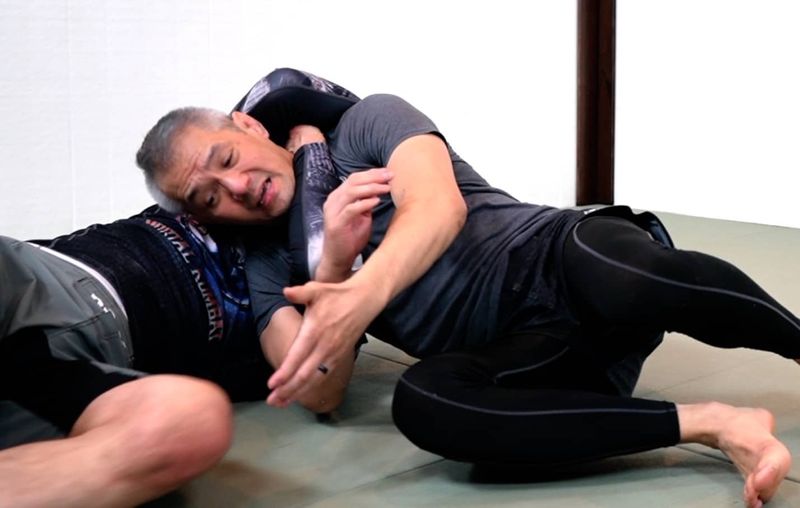
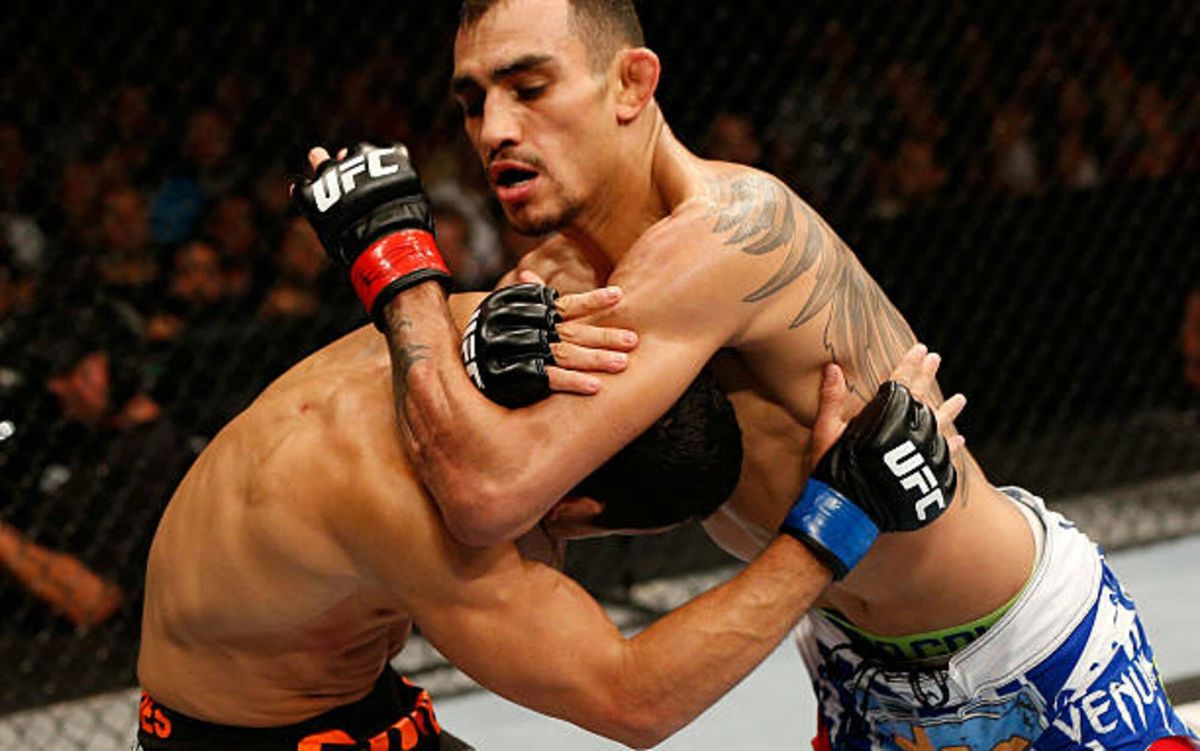
This is the bread-and-butter entry that built Tony Ferguson’s no-gi reputation. Your opponent shoots a sloppy single leg, you sprawl, and instead of fighting hands you cup the back of their head with one palm and underhook the far armpit with the other. Snap their head toward your hip, force the posture break, then dive the underhooking arm deeper until the palm comes out near their right shoulder.
The mistake here is leaving the choking arm shallow. If your wrist is still next to their armpit when you start to finish, you have a brabo controlling grip — not a choke. Push deeper until your bicep hits their tricep, then figure-four.
Setup 2: Half Guard Sprawl to Darce
When you are passing half guard and your opponent gives up the underhook to frame, you get a free runway to the darce. Sprawl the trapped leg flat, drive your shoulder into their jaw, and as they panic-frame with the bottom arm, swim your hand under that frame and across the neck. Their own forearm becomes the meat in the sandwich.
The half guard darce works because the bottom player cannot turn into you — their leg is still controlling yours. They are stuck on their side, which is exactly the body position the darce demands. Free finish.
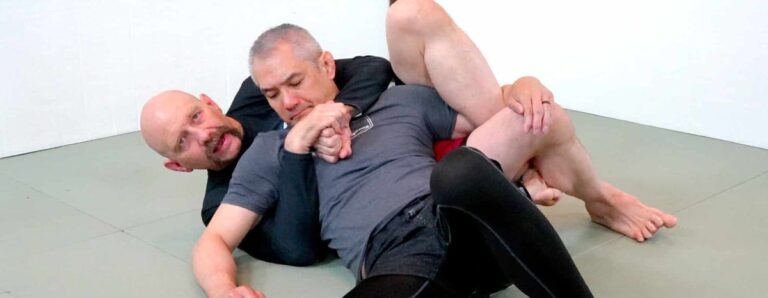
Setup 3: Bottom Side Control Darce (The Najmi Special)
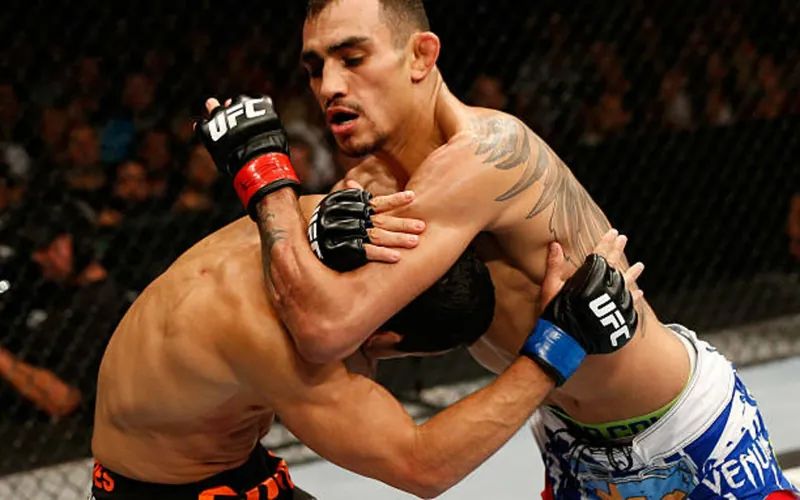
Edwin Najmi built an entire instructional around this one and it is the reason the bottom of side control is not the disaster it looks like. When the top player drives a cross-face and you have an underhook on the far side, you can swim that underhooking arm up and over their head as they reach to flatten you. Your top arm finishes the figure-four behind their neck.
You finish from the bottom by bridging into them as you lock the grip — pretty much the only submission in BJJ where the bottom player chokes the top. Don’t try this against a heavy passer who keeps the cross-face locked; it works when your opponent reaches for the head instead of pinning it.
Setup 4: Turtle Top to Darce
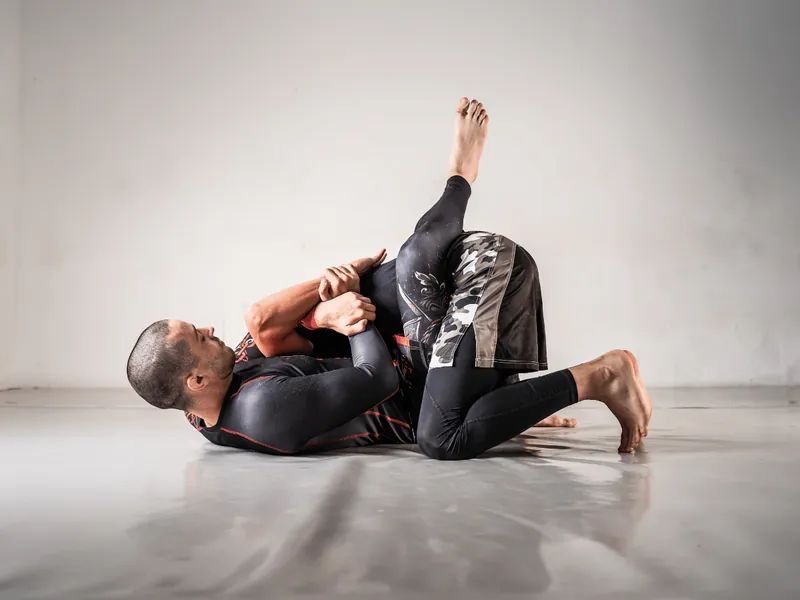
Your opponent posts up in turtle after a failed shot. Most people go straight for the back. The darce is faster because you skip the hooks battle. Reach under their near armpit while your other hand controls the head — same figure-four grip — then sit through your hip and roll them past their shoulder onto their side.
The roll is what most beginners screw up. They lock the grip from on top of turtle, squeeze, and wonder why nothing taps. Without rolling them off their base, the darce is just an awkward hug. Sit out, pull them over, and finish on the side.
Setup 5: Guillotine Failure to Darce
You shoot for the guillotine, they tuck their chin and start to escape — that exact moment is the entry. As their head pops out the side, you already have the head-and-arm position. Don’t reset. Swim the choking arm under their armpit on the way out, lock the figure-four, and the finish is right there.
This setup is why the guillotine and the darce belong in the same training block. They are mirror images of each other off the front headlock — one chokes with your bicep on the back of their neck, the other chokes with your forearm on the side. Train them as a system, not two separate techniques.
Setup 6: Anaconda to Darce Switch
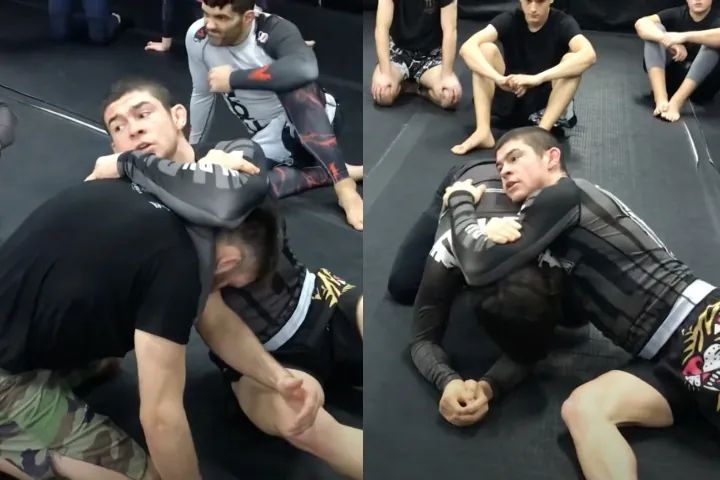
The anaconda choke threads your arm under the same shoulder as the head — opposite side from the darce. Once you understand both, you can switch live. If you go for an anaconda and your opponent rolls away from the choking arm, you let go of the figure-four, swim back across, and re-establish the grip on the other side as a darce. The roll they used to escape one choke just delivered them to the other.
The truth most instructionals skip: at high levels, every smart front-headlock player threatens both. Pick whichever side has the deeper arm, finish that one, and stop trying to force the choke your seminar coach taught you last weekend.
Setup 7: Standing Darce from the Clinch

This is the version Tony Ferguson hit in the cage three times. From an over-under clinch where your opponent’s head is dipped — usually after a knee or a stuffed takedown — you swim your underhook all the way through and lock the figure-four standing. The finish comes from pulling them down with you as you drop to one hip.
Standing darces in MMA work because your opponent is usually committed to a level change. Their head is already dipped, their carotid is already exposed, and they cannot post their elbow to defend the way they could on the mat. Vicente Luque’s UFC 265 finish over Michael Chiesa hit exactly this pattern.
D’arce vs Anaconda vs Japanese Necktie
The front-headlock choke family confuses new grapplers because all three look identical from the outside. The distinction is which arm is the choking arm and where it goes.
- Darce: choking arm threads under the FAR armpit, palm finishes on YOUR own bicep. Opponent is on their side.
- Anaconda: choking arm threads under the NEAR armpit (same side as the head), opponent gets rolled toward the choking arm.
- Japanese necktie: same arm position as the darce, but you sit through and finish with your leg over their head as a lever instead of a figure-four squeeze.
Pick one as your A-game and the other two as counters. Most pros build the darce first because it punishes the most common front-headlock mistake — chasing the underhook instead of framing on the bicep.
The Defense You Need to Know
Defending the darce is mostly a posture problem. If you sense the choking arm coming under your armpit before the figure-four locks, the answer is to bring your far hand to your own ear, drop your weight onto the trapped arm, and walk your hips toward the choking arm. That kills the wedge angle before they finish.
Once the figure-four is locked, the only escape is creating space between your shoulder and your neck — usually by walking your knees forward and tripoding off your forehead. This is uncomfortable and slow. Defend before the grip locks; once it does, you are mostly tapping or going to sleep.
Watch the Mechanics Live
The single best no-gi front headlock to darce sequence on YouTube comes from Stuart Tomlinson of Warrior Collective. He walks through the 3/4 nelson connection that lets you transition off a stuffed shot into the choke without giving up position.
Drilling the Darce Without Burning Out Your Training Partners
Repping the darce in the gym wears partners out fast because the wedge produces real pain even at fifty percent. The fix is rep the entry — sprawl, swim, lock grip — without applying squeeze pressure. Five reps per side, six rounds per session, and your training partner gets to walk out without bruised neck arteries. Save the actual choke for live rolls where you can read the tap window.
One position to drill more than any other: the half guard sprawl entry. It is the most common live position the darce shows up in, and most gyms under-train it because the choke gets all the YouTube attention. The pass-to-darce decision tree is the real skill — knowing when to keep passing versus when to abandon the pass and lock the grip.
Why the Darce Belongs in Every No-Gi Player’s A-Game
Cross-reference the submissions of the last five ADCC events and the front-headlock choke family — darce, anaconda, guillotine — produces more finishes at black belt than the rear naked choke at brown and below. The reason is simple: it shows up off failed takedowns, scrambles, and turtle positions, which is where most no-gi rounds spend their time. The RNC requires back control. The darce just requires a head and an arm in roughly the right place.
If you only have time to learn one choke for the next six months and you already have a competent guillotine, build the darce. It punishes the exact mistakes most grapplers make under fatigue: dropping levels, reaching with the underhook, and turtling under pressure. Pair it with the north south choke for top-position grappling and you have answers for every common defensive position.
Start drilling tomorrow’s class with the front headlock entry, get the grip locked in 100 reps, and let the live finishes come naturally. The first ten taps will feel like accidents. The next ten will feel like a system.
Sources
- UFC.com — By the Numbers: Inside the D’Arce choke — UFC’s official breakdown of darce finishes by fighter
- Evolve MMA — BJJ 101: D’Arce Choke — Technical breakdown of grip mechanics
- BJJ Fanatics — Edwin Najmi and Alec Baulding D’arce details — Bottom side control darce mechanics from Najmi
- Essentially Sports — Tony Ferguson’s UFC D’arce record — Documentation of Ferguson’s three UFC darce finishes
Browse our top-rated rashguards and no-gi gear at the RashguardGuy shop →