Guard Pulling No-Gi: 5 Best Entries for Your Game
The most common guard pull failure in no-gi happens before the pull itself. A grappler shoots a hand toward a wrist, gets it stripped, and ends up in a defensive scramble while the opponent advances position. Without lapels and sleeves, you’re working with less — but “less” doesn’t mean the pull is gone. It means the preparation changes entirely.
Why Guard Pulling in No-Gi Is Different
In gi BJJ, guard pullers use lapel grips to break posture and sleeve grips to kill hand fighting. Those anchors make the pull forgiving — you can lunge, sink the grip deep into fabric, and use the opponent’s own gi against him on the way down. The timing window is wide.
No-gi removes all of that. Wrists are slippery, necks are sweaty, and any grip that depends on friction can be stripped in under a second. That changes the entire architecture of the pull. Entries have to be mechanical — the kind where your body position makes the grip difficult to strip, not the fabric.
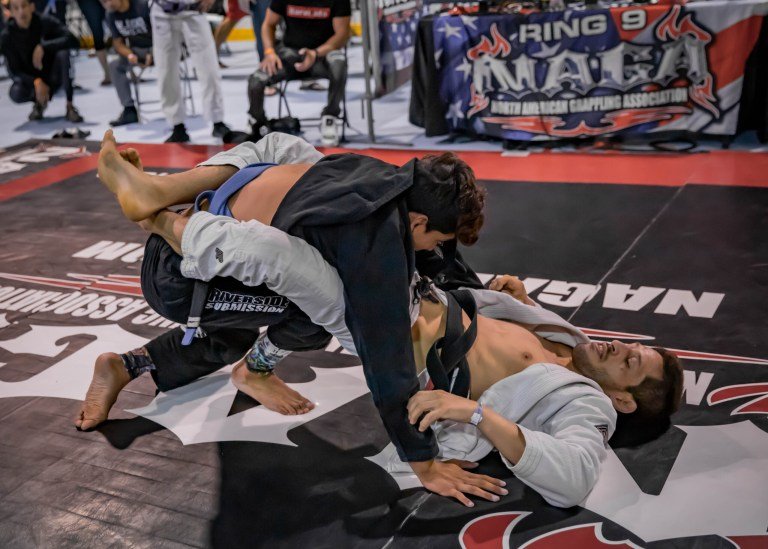
The other shift is what you’re pulling into. A gi player often pulls to closed guard and uses sleeve-collar control to keep the opponent locked in. In no-gi, closed guard is significantly harder to maintain against a skilled opponent. Most modern no-gi guard pullers skip closed guard entirely and target open guard positions — butterfly, x-guard, single-leg x, deep half — where they can immediately threaten sweeps or leg attacks without needing fabric to hold someone in place.
This isn’t a downgrade. It’s a different model, and once you adjust your entry timing and target positions accordingly, guard pulling in no-gi becomes a distinct skill with its own advantages.
The Grip-Fighting You Need Before the Pull
Guard pulling in no-gi starts with a grip-fighting win, not a lunge to the floor. If you can’t establish and hold an initial grip on the wrist, elbow, or head, the pull fails before it starts.
The two most transferable setups from no-gi grip fighting to guard pulling are wrist control and the arm drag. Wrist control — specifically the 2-on-1 — overhooks one wrist with both hands, rotating it to break elbow alignment. This strips the opponent’s ability to post and creates the opening to sit to butterfly guard. The arm drag reaches across with your far hand and pulls the opponent’s same-side arm across their body, breaking their posture and stepping outside. From there you can sit to x-guard or take the back.
Both setups share a principle: you’re compromising their base before you commit to going to the floor. Lunging for a pull while the opponent is square and balanced gives them a free pass to sprawl and advance. Distance also matters — pulling from too far out forces you to reach and telegraphs the pull, while pulling from too close gets you stuffed by a knee or hip block. The correct entry distance is just inside arm’s reach, close enough that your grip doesn’t stretch, far enough that they can’t knee you in the face.
5 No-Gi Guard Pull Entries That Hold Up in Live Rolling
Each of the five entries below works for a different situation. The wrist control pull is your safest opener. The arm drag is your highest-percentage entry. The Russian tie suits physical grapplers who like shoulder control. The collar tie drop-step flips an opponent’s pressure against them. The sit-out is reliable but situational. Learn all five and pick based on what your opponent gives you.
1. Wrist Control to Butterfly Guard
Establish the 2-on-1 on the opponent’s wrist, step your outside foot next to their lead foot, and sit to butterfly guard with your hooks already in place. The wrist control keeps their hand occupied on the way down, so they can’t post and pass immediately. This entry is particularly effective when your opponent is reaching for a collar tie or head position — use their reach against them. Don’t sit back until the wrist is locked; the grip comes first, every time.
2. Arm Drag to X-Guard
The arm drag is one of the highest-percentage entries in no-gi because it works off your opponent’s natural reaction to grip fight. As they reach to establish wrist control, grab the back of their tricep with your near hand and drag it across their body. Your outside foot sweeps to the x-guard position as you sit. The key detail is keeping your hips close — a wide hip creates space they can pass through. A tight hip lands you in x-guard with an immediate sweep or leg lock entry. This is the entry that made guard pulling central to the modern no-gi game.
3. Russian Tie to Deep Half Guard
The Russian tie gives you shoulder-level control rather than wrist control, which makes it harder to strip. From a Russian tie, drop your hips to the outside and shoot your inside leg under their far leg, ending in deep half guard. The entry is lower risk than other pulls because you’re already partially past their base as you sit — their ability to post is compromised before you land. This works well against bigger, stronger opponents who muscle out of wrist grips, because shoulder control is harder to break with raw strength.
4. Collar Tie Drop-Step to Half Guard
When your opponent is actively gripping your head or neck, turn that against them. Accept the collar tie pressure, drop-step your rear foot back, and sit to half guard with an underhook already established. The drop-step kills their weight advantage by removing the vertical pressure they were using. This is one of the few pulls that works better when the opponent is physically strong — their head pressure actually accelerates your sit-down. Don’t fight the collar tie; accept it and redirect it.
5. Sit-Out Entry to Closed Guard
The most basic pull, but also the most commonly rushed. From a neutral hand-fighting position, simultaneously clear one wrist, step inside their stance, and sit straight back — pulling them into your closed guard. This only works if the opponent is square. Against anyone with wrestling instincts who steps back as you sit, you end up on your back with no guard. Use it when you read that the opponent is committed to a static stance and not actively circling.
The Most Common Guard Pulling Mistake in No-Gi
Sitting back without establishing a grip first. This seems obvious, but in live rolling under fatigue, grapplers default to just falling to their guard without any mechanical setup. The result is the opponent standing over them with full posture — exactly the scenario guard pulling is supposed to avoid.
The fix is a two-beat mental model: grip first, pull second. The grip doesn’t have to be elaborate. A single wrist control or an elbow grip is enough. But it must come before the sit. Any pull where you go to the floor first and hope to get grips on the way down is an improvised fall, not a technique. Grapplers who train the grip-fighting half of guard pulling as seriously as the pull itself are the ones who make it work against wrestlers and pressure passers.
The second most common mistake is pulling into the wrong position for your guard game. If your best submissions come from butterfly guard, don’t pull to x-guard and then try to transition under pressure. Know your guard, and pull directly into it.
Guard Pull to Submission Chains
Guard pulling has more value in no-gi when it’s an entry into a submission system rather than just a position change. Two reliable chains worth drilling until they’re automatic:
Arm drag → x-guard → heel hook: The arm drag delivers you to single-leg x. From there, frame your shin across their hip, extend for the knee shield, and enter the heel hook. This sequence is now standard at high-level no-gi — it’s why the arm drag became so central to the modern open guard game. The guard pull is step one of a three-step finish.
Wrist control → butterfly → armbar or triangle: Pull to butterfly with the 2-on-1 still active. The wrist control naturally straightens their arm. From there, collapse your butterfly hook while pulling their wrist down for the armbar, or step over the head for a triangle if they tuck the arm. This is a gi-era submission chain that transfers directly to no-gi because the wrist control replaces the sleeve grip. The mechanics are the same; only the fabric is gone.
When Your Pull Gets Stuffed
If you sit to guard and the opponent sprawls, passes immediately, or circles out before you establish position, the pull failed. Three recovery options that don’t require starting over from standing:
The sit-up guard: As the opponent advances, sit up into them rather than lying flat. This creates an underhook battle instead of a pass. Use the sit-up to re-enter butterfly or single leg. Flat grapplers get passed; sitting grapplers create frames.
The shin shield: If they’re advancing to your side, bring your inside knee across as a frame. This stalls the pass long enough to reguard. It’s not a sweep position — it’s a reset position, and that’s enough.
The snap down counter: Some opponents will snap down on your head when you reach for a pull entry. If you feel the snap coming, don’t resist it standing — drop-step and sit to your guard immediately. Fighting a snap down while upright gives them a takedown; accepting it with a drop-step gives you guard.
Guard Pulling in Competition: What the Rules Actually Allow
Rules vary by organization, and what’s legal in one setting is penalized in another. Before building your guard pull game around competition, know the format you’re entering.
ADCC: Guard pulling is legal but penalized in the points format — the puller gives up two points to their opponent. In overtime, the format starts submission-only before returning to the feet, which makes early guard pulling a tactical calculation. Most ADCC competitors pull guard early if they hold a point advantage and defend from there. Under the current ADCC ruleset, guard pulling is not prohibited, just penalized.
IBJJF No-Gi: Guard pulling is legal. Jumping to guard — both feet leaving the ground simultaneously while pulling — is illegal at white belt. From blue belt up, jumping guard is allowed if you establish grip contact before leaving the ground. You cannot jump to guard from a distance; grip contact must precede the jump.
Submission-only formats: Rules vary by event, but most allow guard pulling without penalty. The focus is on the finish, not how position was established. Check the specific event rules before assuming anything.
Sources
- How To Pull Guard Quickly And Safely In Jiu-Jitsu — BJJ World, technique fundamentals and safety methodology
- What To Do Against Guard Pullers — BJJEE, defensive and counter strategies
- What You Need To Know About Grip Fighting In No-Gi BJJ — Evolve MMA, no-gi grip principles
- The Single Leg X Guard — A Surprising Way to Pull Guard — Grapple Arts, x-guard entry mechanics
- Pulling Guard in BJJ: Everything You Need to Know — JiuJitsu News, strategic overview and practitioner archetypes
Image credit: nagafighter.com