Rash Guard vs Compression Shirt: Why Grapplers Can’t Swap One for the Other
Walk into any sporting goods store and the rash guard rack and the compression shirt rack look indistinguishable. Same tight cut. Same synthetic feel. Same long sleeves. A new grappler shopping for their first piece of no-gi gear will absolutely pick up a compression shirt thinking they’ve found the same thing for thirty dollars cheaper. They haven’t. The two garments are built for different sports, different stress patterns, and different failure modes — and one of them falls apart fast when you drag it across a mat under another human.
This is a question that gets asked at every BJJ academy front desk, and the answer most coaches give is some version of “trust me, they’re different.” That’s true but not useful. The actual difference lives in the fabric weave, the seam construction, the compression rating, and the surface friction profile — and once you understand those four things, the answer becomes obvious. Let’s go through what each garment actually is, what it was engineered to do, and why grappling specifically demands one and breaks the other.
Why the Confusion Exists in the First Place
Both garments emerged from the same parent category: synthetic athletic baselayers. In the 1980s, surfers in Australia started wearing thin nylon-and-spandex tops under their wetsuits to stop the neoprene from chewing up their nipples and underarms on long sessions. That’s the original rash guard — the name is literal. Around the same time, track and cycling brands started experimenting with tight-fit polyester shirts to compress muscle groups and reduce vibration. That’s the compression shirt lineage. Two different problems, two different fabrics, but to the eye they ended up looking like cousins.
Then the UFC happened. Submission grappling exploded as a discipline through the late 1990s and 2000s, and rash guards migrated off the beach and onto the mat because they solved the same fundamental problem: a thin, friction-reducing layer that protected skin from constant abrasion. By the time no-gi tournaments became their own competitive scene, the rash guard had become the standardized uniform piece. Compression shirts stayed where they started — running tracks, weight rooms, and football fields.
What a Rash Guard Actually Is
A purpose-built BJJ or grappling rash guard is engineered around one assumption: the wearer will spend an hour with another person’s bodyweight dragging across the surface of the shirt, repeatedly, at varying angles. Every design choice flows from that assumption.
Fabric weave and weight
Most quality grappling rash guards use a polyester-spandex blend in the 200-260 GSM range (grams per square meter). That’s a relatively dense, tightly woven knit. The weave matters more than the fiber content — a tight interlock weave resists snagging and abrasion in a way that a looser jersey knit cannot. When your training partner cranks a kimura grip on your forearm and slides their grip up to your tricep, the fabric needs to glide without the threads catching, lifting, or pilling. Lighter rash guards in the 180 GSM range exist for hot climates, but they pay for that breathability with shorter lifespan.

Flatlock seams
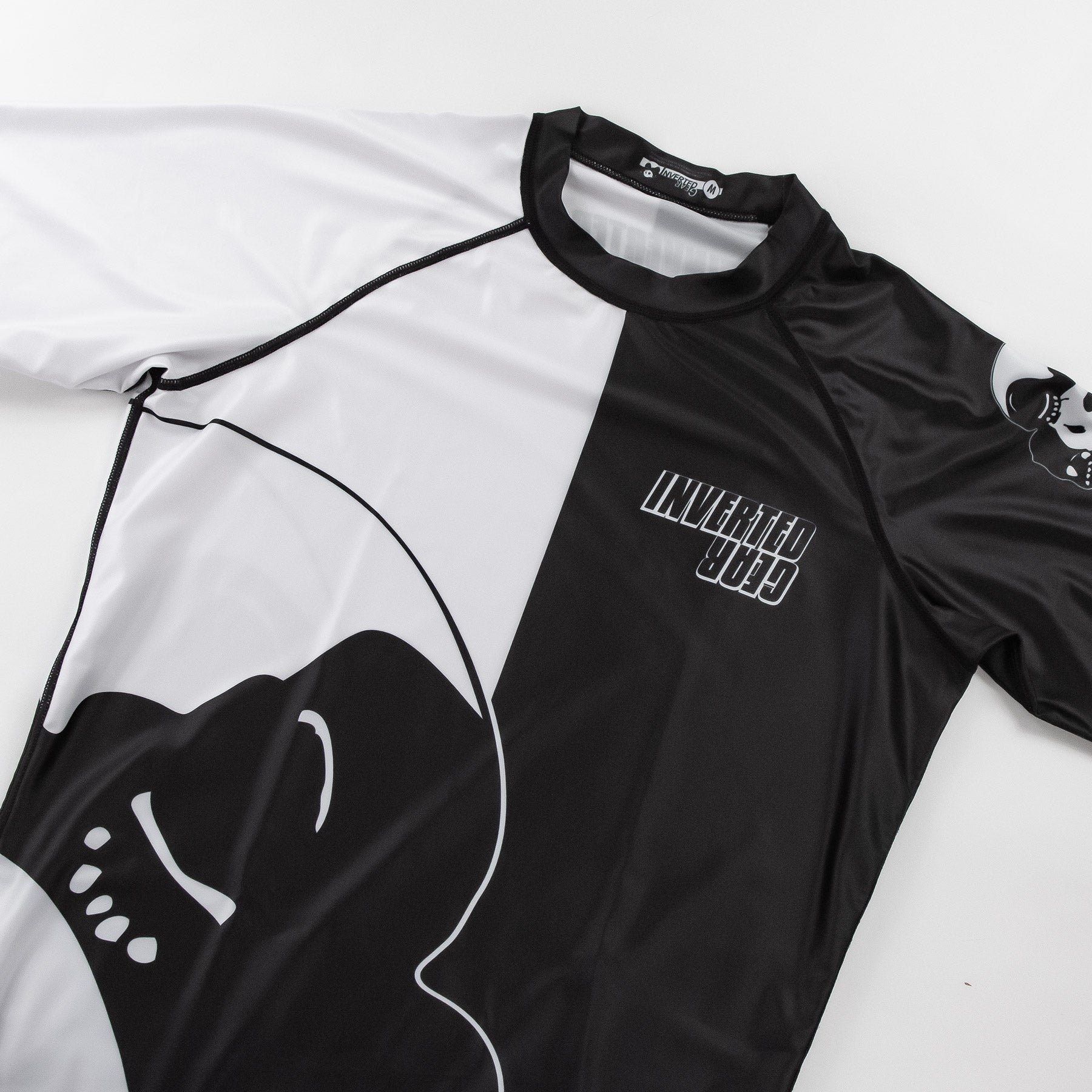
This is the single biggest construction difference you can spot with your fingers. Flip a grappling rash guard inside out and run your hand along the seam where the sleeve meets the body. The stitching is flat against the fabric — no ridge, no bump, no raised edge. That’s a flatlock seam, and it exists because conventional overlock seams (the standard ridge you find on most t-shirts) become friction points the moment a forearm slides across them at speed. Under live rolling, a non-flatlock seam abrades the skin underneath the shirt, leaks moisture, and is the first thing to split when stress hits perpendicular to the stitch line. Every serious grappling rash guard uses flatlock construction at the shoulder, underarm, and side panels.
Sublimation printing
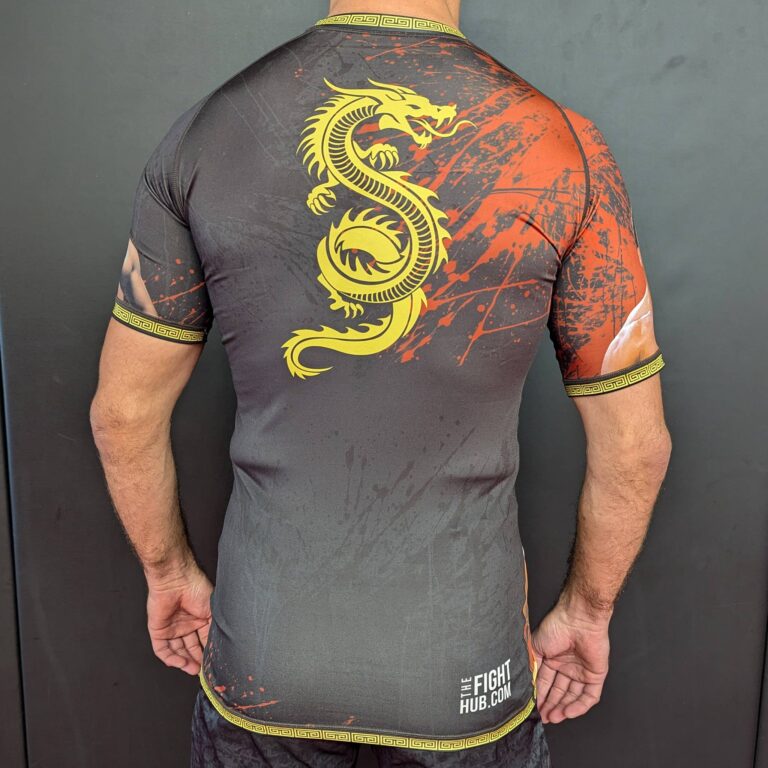
The graphics on a grappling rash guard are dyed into the fabric using a sublimation process — the ink essentially becomes part of the polyester at a molecular level. That’s why a good rash guard’s design doesn’t crack, peel, or wear off the way a screen-printed shirt does. Compression shirts overwhelmingly use heat-transfer or screen-printed logos because their wearers aren’t dragging the graphic across rough surfaces.
What a Compression Shirt Actually Is
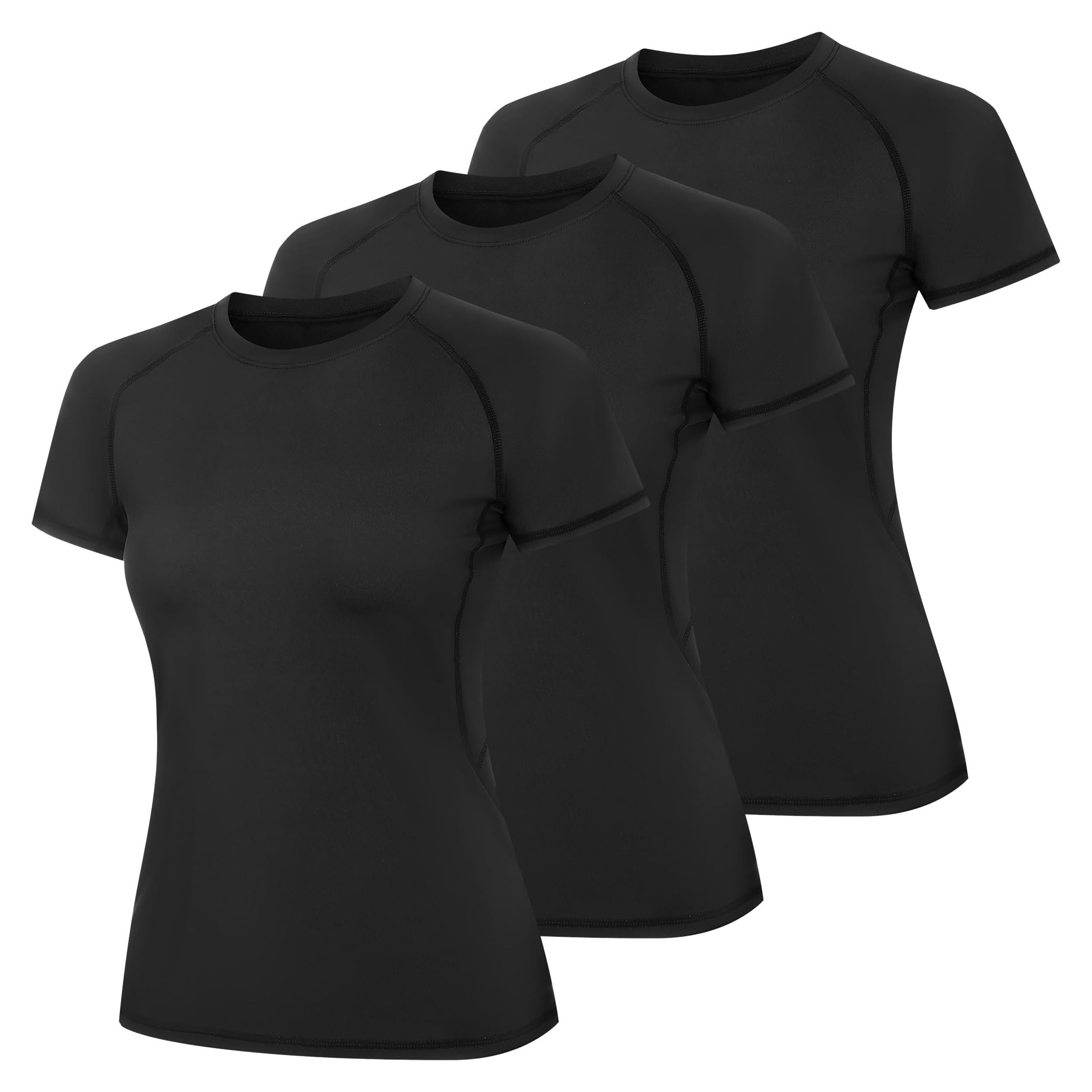
A compression shirt is engineered around a different assumption: the wearer is performing repetitive, axis-locked motion (running, cycling, lifting) and benefits from graded mechanical pressure on the muscle groups underneath. The garment’s job is to squeeze, not to protect.
Graduated pressure rating
Real compression apparel is rated in mmHg (millimeters of mercury) the same way medical compression stockings are rated. The pressure profile is graduated — tighter at the extremities, looser toward the core — to encourage venous return. The shirt’s purpose is to slightly reduce muscle oscillation during repetitive impact and, depending on which study you trust, support recovery between training sessions. A grappling rash guard has no compression rating because it doesn’t need one; mat sports don’t generate the kind of repetitive oscillation that compression is designed to address.
Lighter fabric weight
Compression shirts typically run 140-180 GSM. The fabric needs to be thin and stretchy enough to apply uniform pressure without restricting movement, but it doesn’t need to survive abrasion. Run your hand across a compression shirt and the fabric feels almost silky — that’s smooth, lightweight knit that’s tuned for moisture wicking and thermoregulation, not durability under shear stress.
Standard seam construction
Almost all compression shirts use standard overlock or coverstitch seams. They sit fine under a running singlet or a football jersey because nothing is dragging across them. Put one under a no-gi gi (or rather, no gi at all), and those raised seams become the first point of failure within minutes of live rolling.

Why Compression Shirts Tear on the Mat
Here is what actually happens when someone wears a compression shirt to no-gi class. The first round goes fine. The shirt is tight, breathable, feels like a real piece of athletic gear. Then someone establishes an overhook on the side panel and posts their weight through it during a hip switch. The thinner fabric tears at the seam. Or the partner grabs a wrist control and the spandex thread snaps where it crosses the shoulder seam. Or — most commonly — the wearer finishes a hard 60-minute session and discovers a constellation of pilling and snags along the rib cage that won’t come out in the wash.
The failure isn’t a manufacturing defect. The shirt is doing exactly what it was designed to do. It’s just being asked to absorb a shear stress profile it was never engineered for. Compression shirts assume the wearer is the only person interacting with the fabric. Grappling assumes the opposite. That’s the whole gap.
Where Each Garment Actually Belongs
The clean answer is that a compression shirt is a complement to grappling training, not a substitute for a rash guard. Plenty of competitors wear compression sleeves or compression bottoms on recovery days, on lifting sessions, or under their walkout gear pre-tournament. The mmHg pressure does help with circulation and perceived muscle soreness, especially after a hard rolling session where the legs and shoulders have taken repeated isometric load.
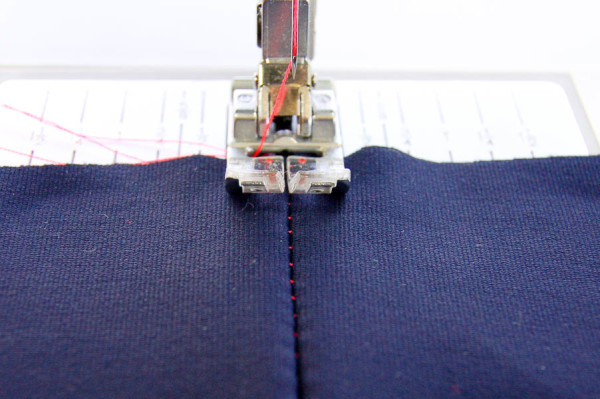
On the mat, the rash guard is non-negotiable. It exists because skin-on-skin contact in submission grappling is a hygiene problem (ringworm and staph thrive in shared sweat), and a friction problem (your training partner’s arm is dragging across yours at 50+ pounds of pressure for an hour). The rash guard solves both. The compression shirt solves neither — it’s thinner, more porous to skin contact, and tears before it ever forms a useful barrier.
The Hybrid Question
Some brands have started marketing “compression rash guards” — garments that claim to offer both graduated pressure and grappling-grade abrasion resistance. In practice, this is mostly marketing language laid over a standard heavyweight rash guard. The fabric weight required for grappling abrasion resistance (200+ GSM) is too heavy to deliver true graduated medical compression, and most of these shirts don’t publish an actual mmHg rating. They’re rash guards with a tighter cut. That’s fine, but don’t expect actual recovery-grade compression from them.
If you want both effects, the practical move is to layer or alternate: wear a real grappling rash guard for training, and switch to a real compression top during recovery sessions. Trying to make one shirt do both jobs almost always means it does neither well.
How to Tell Them Apart Before You Buy
If you’re standing in a store or scrolling a website and can’t tell which category a shirt actually belongs to, three checks will sort it out fast. First, look for a fabric weight or GSM spec — grappling rash guards advertise it, compression shirts usually don’t, and anything below 180 GSM should be treated as compression-class regardless of what the marketing says. Second, look at the seams. Flatlock construction is visible and obvious; ridged overlock seams disqualify a shirt from mat use. Third, check the brand’s pedigree. A rash guard from a no-gi or MMA-native brand (Origin, Hyperfly, Shoyoroll, Tatami, Sanabul, Venum, Gold BJJ, and so on) is built for the mat. A shirt from a running, cycling, or general fitness brand almost certainly isn’t, regardless of how thick it feels in the hand.
The price spread is also informative. A serious grappling rash guard usually sits in the 45-90 USD range; a compression shirt from a mainstream athletic brand sits around 30-55 USD. If you find something marketed as a grappling rash guard for under 25 USD, the manufacturer almost certainly cut corners on either the fabric weight or the seam construction. Both will fail inside a year of regular training. Cheap rash guards aren’t a bargain, they’re a recurring purchase.
The Bottom Line
Rash guards and compression shirts share an aesthetic and almost nothing else. The rash guard is a friction-management and skin-barrier garment engineered around a shear-stress environment where a second human is dragging across the fabric. The compression shirt is a circulation-and-recovery garment engineered around solo athletic motion. They look the same on the hanger because they share the same parent category of synthetic baselayers, but they fail in opposite ways under the wrong conditions — a rash guard will run hot during a 10K but won’t tear; a compression shirt will breathe well during a 10K but will shred during round one of live rolling.

For no-gi training, the answer is settled: buy a real grappling rash guard with flatlock seams and 200+ GSM fabric. If you want the recovery benefits of compression, layer that into your gym days or your post-training routine with a dedicated compression piece. They aren’t competitors. They aren’t substitutes. They’re tools for different jobs that happen to look like each other.
Sources
Further reading on fabric construction, compression apparel science, and grappling gear standards:
- Wikipedia: Rash guard history and construction
- Wikipedia: Compression garments and mmHg ratings
- NCBI / PubMed: published research on compression apparel and athletic recovery
- IBJJF: official no-gi uniform regulations
- Amazon: shop BJJ rashguards with flatlock seams
Browse our top-rated rashguards and no-gi gear at the RashguardGuy shop →