Knee Cut Pass: 7 Essential No-Gi Passing Keys
At ADCC 2024, top position was the single biggest predictor of who won, and more successful passes started from a knee cut entry than any other position. That is not an accident. The knee cut pass rewards pressure and timing over athleticism, which is exactly why it survives at the highest level of no-gi while flashier passes get stuffed. If you only drill one guard pass this year, this is the one that pays rent.
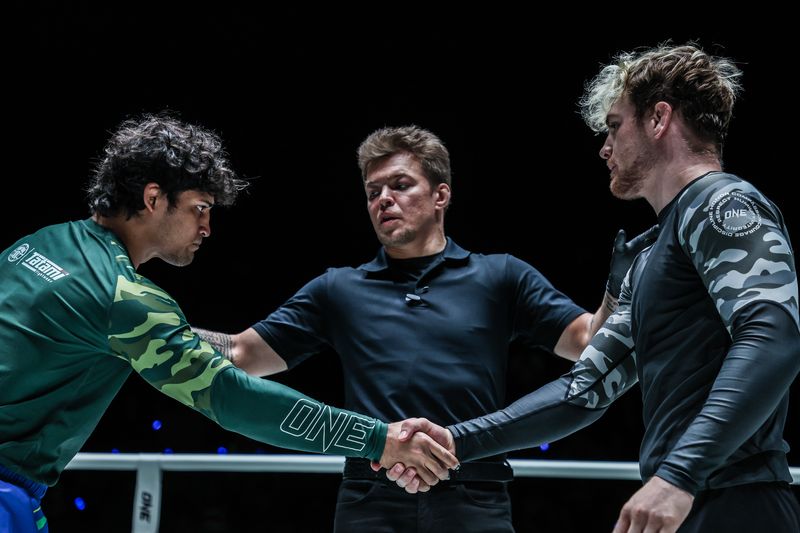
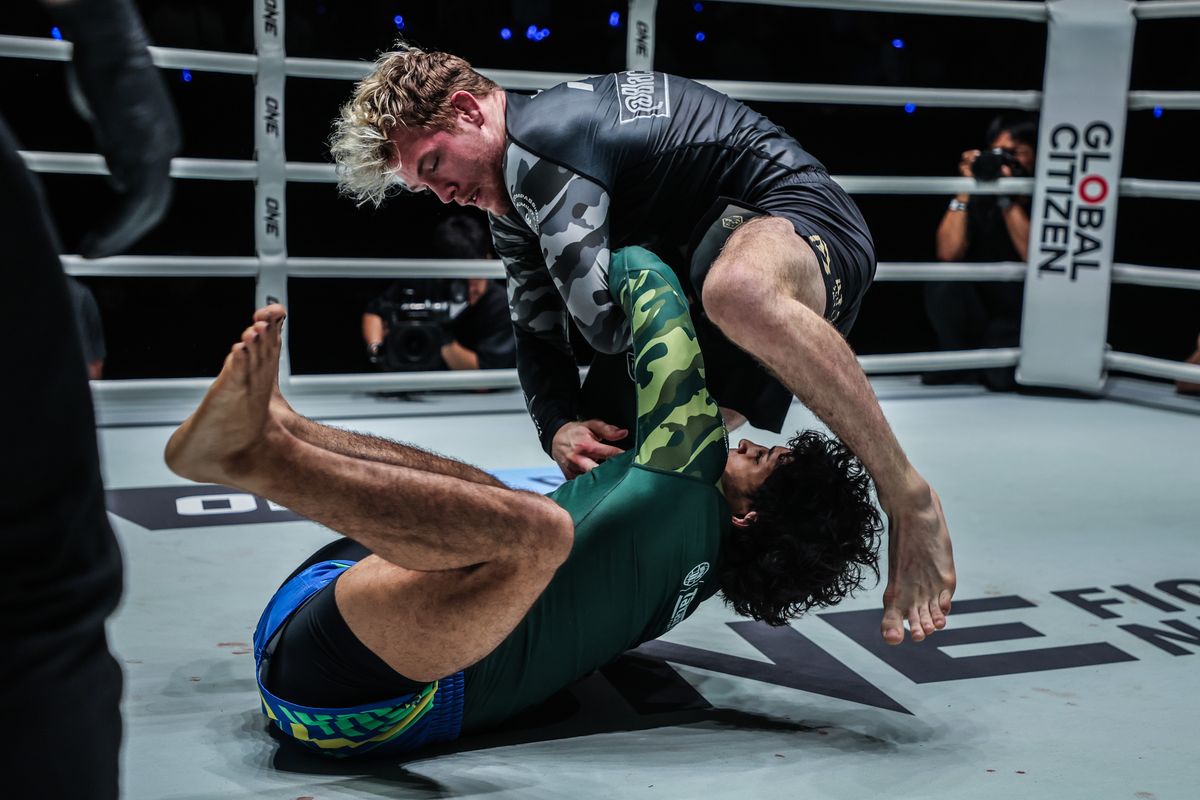
No-gi passing lives and dies on grip fighting — the battle starts before anyone hits the mat.
What Is the Knee Cut Pass?
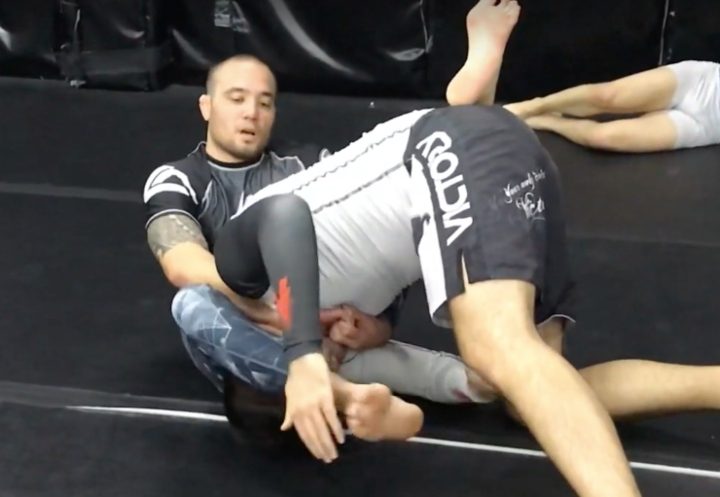
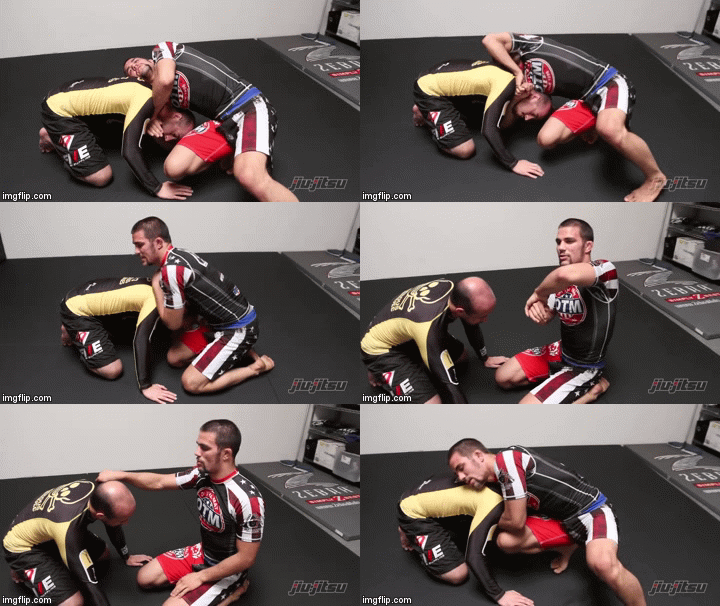
The knee cut pass is a top-position guard pass where you slice one knee diagonally across your opponent’s near thigh while pinning their upper body, bisecting their guard and opening a straight line to side control. Most people enter it from a pummeled open guard or a partial half guard, cupping the back of the bottom player’s near knee and driving the lead knee down and inside their thigh. The name says it all: your knee cuts through the middle of their frame like a wedge.
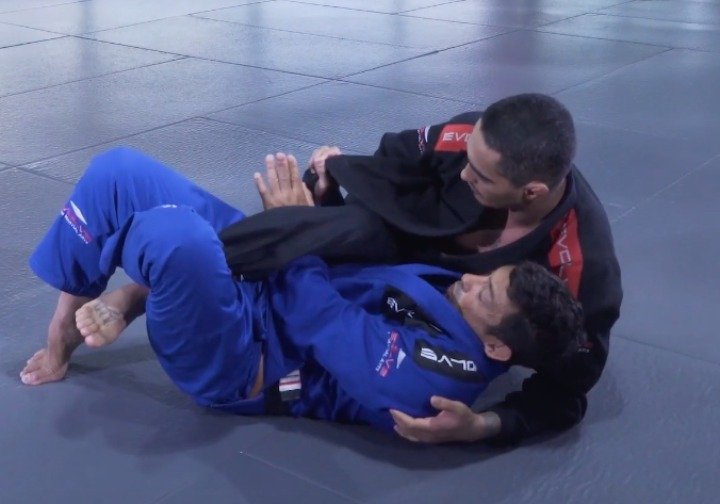
It shows up under two names — knee cut and knee slice — and they describe the same move. In the gi you can grab a collar to glue their shoulders down. In no-gi you lose that grip, so the pass shifts to underhooks, head pressure, and wrist control. That change is why no-gi players drill it differently than gi players, and why a sloppy gi knee cut gets swept the moment you try it without the jacket.
Why the Knee Cut Wins More Than Any Other No-Gi Pass
Passing in no-gi is a leverage problem, not a strength contest. The knee cut works because it stacks three advantages at once: your knee kills their hip mobility, your head pressure kills their bridge, and your chest connection kills the space they need to recover guard. Take away hips, bridge, and space, and there is very little left for the bottom player to do.
The truth is, most passers who fail with the knee cut are not losing the technique — they are losing the underhook and trying to muscle through anyway. Lachlan Giles, who ran one of the most efficient passing games at ADCC, teaches the pass as a hips-and-underhook problem first and a knee problem second. Get those right and the knee slides almost on its own.
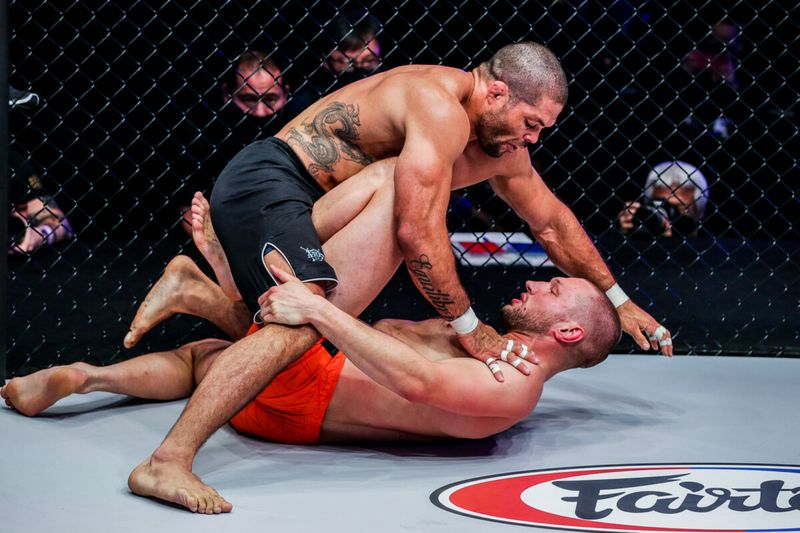
Head and chest pressure flatten the bottom player and strip away the bridge they need to recover guard.
How to Hit the Knee Cut Pass: 7 Keys
Think in keys, not a rigid ten-step recipe. Every rep looks slightly different, but these seven checkpoints show up in every clean knee cut you will ever see.
- Kill the near hip. Cup behind their near knee or pin the leg so they cannot re-guard as you step in.
- Cut the knee inside the thigh. Drive your lead knee across their near thigh, aiming your shin toward the mat next to their hip — not straight down, but on a diagonal.
- Drop your head to the far side. Bury your head into the mat past their far shoulder. Never look down at the legs; looking down feeds them the space to bridge.
- Fight for the underhook. Dig the same-side underhook the instant you cut. This is the whole pass.
- Flatten with chest pressure. Chest to chest, hips heavy, so they cannot turn to their side.
- Free the trapped foot. Slide your cutting shin to the floor and pull your back foot through so they cannot lock a half guard on your ankle.
- Consolidate before you celebrate. Land in side control, re-pummel your arms, and only then start hunting the submission.

The knee cut is a race: cut and flatten faster than they can turn in and recover.
Win the Underhook, Win the Pass
If there is one line to tattoo on your forearm, it is this: win the underhook, win the pass. In no-gi you cannot grip cloth, so the underhook is your anchor. With a deep underhook driving across their back, you glue their far shoulder to the mat and take away the turn-in that kills most knee cuts. Lose it, and they frame on your neck, turn to their side, and rebuild guard.
When the underhook is not there, you have two backups. Pin their near wrist to the mat so that arm cannot frame, or use a cross-face with your shoulder to turn their chin away. Both do the same job the gi collar used to do — they stop the bottom player from facing you. Grip fighting for that position is a battle you often win on the feet, which is why a clean entry off your no-gi takedown game makes the pass so much easier.
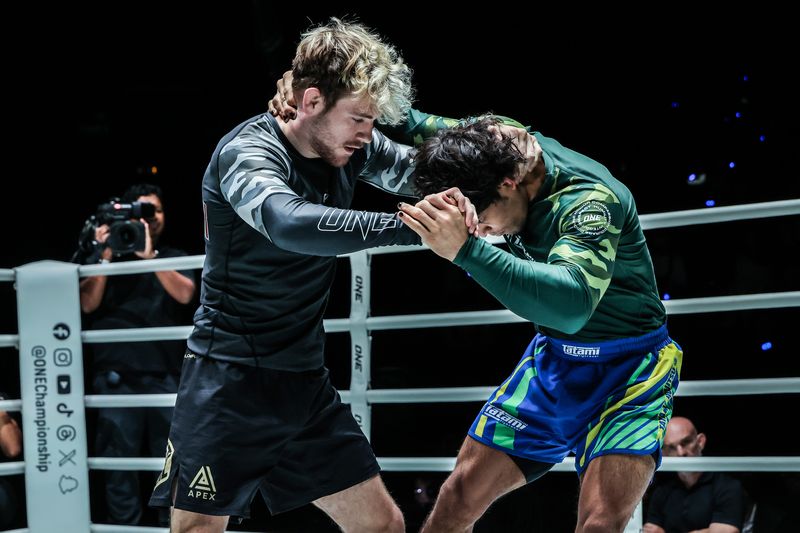
Hand fighting for the underhook decides the knee cut before your knee ever moves.
The Three Mistakes That Stall Your Knee Cut
Watch a hundred failed knee cuts and the same three errors repeat. First, looking down at the legs — this drops your head, gives up the far-side pressure, and hands the bottom player room to bridge and recover. Second, cutting the knee too vertically, which lets them lock a knee shield and stuff the pass cold. Third, rushing to side control before the trapped foot is free, so they trap your ankle in half guard and the pass turns into a grind.
None of these are strength problems. They are attention problems. Keep your head heavy on the far side, cut on a diagonal, and clear the foot before you move on, and most of your stalled passes disappear.
How Do You Defend the Knee Cut Pass?
The bottom player’s best answers are a knee shield, an underhook race, and the granby roll. A strong knee shield across the passer’s hip stops the knee from cutting in and buys time to reset. If the passer commits anyway, the defender fights for their own underhook and comes up to a dogfight or a wrestle-up — whoever wins the underhook usually wins the exchange. As a last resort, the granby roll lets the defender invert and spin out before the pass finishes.
Understanding the defense makes you a better passer. Knowing they will reach for a knee shield tells you to clear the near leg first; knowing they will hunt an underhook tells you to get yours a half-second sooner. If they retreat to half guard, your half guard passing knowledge is what closes the door.
Knee Cut vs. Leg Drag: Where Should You Start?
Both are elite no-gi passes, and they pair beautifully because the threat of one opens the other. But if you are choosing your first pass, start with the knee cut. It teaches the fundamentals — head position, underhooks, and pressure — that every other pass borrows. The leg drag is more dynamic and works best once you already read scrambles well.
| Factor | Knee Cut Pass | Leg Drag |
|---|---|---|
| Best against | Half guard, open guard, seated guard | Open guard, single-leg X, de la Riva |
| Main control | Underhook + head pressure | Hip-to-hip drag + far-hip pin |
| Learning curve | Beginner-friendly, pressure-based | Intermediate, timing-based |
| Risk if you miss | Sweep or back exposure | Guard recovery or leg entanglement |
Learn the knee cut until it is boring, then add the leg drag as your counter when they defend. That order builds a passing game that actually connects instead of a bag of disconnected tricks. The body lock pass slots in as your third option when they flatten out and deny the knee line entirely.
Finishing to Side Control
The pass is not done when your knee hits the floor — it is done when your shoulder is heavy on their chest and your arms are re-pummeled. The most common leak is celebrating a half-second early: you free the knee, feel yourself sliding through, and stop driving. That pause is exactly when a good bottom player shrimps back to guard. Keep your chest pressure on and your head down until you have a locked crossface and a controlled far arm.
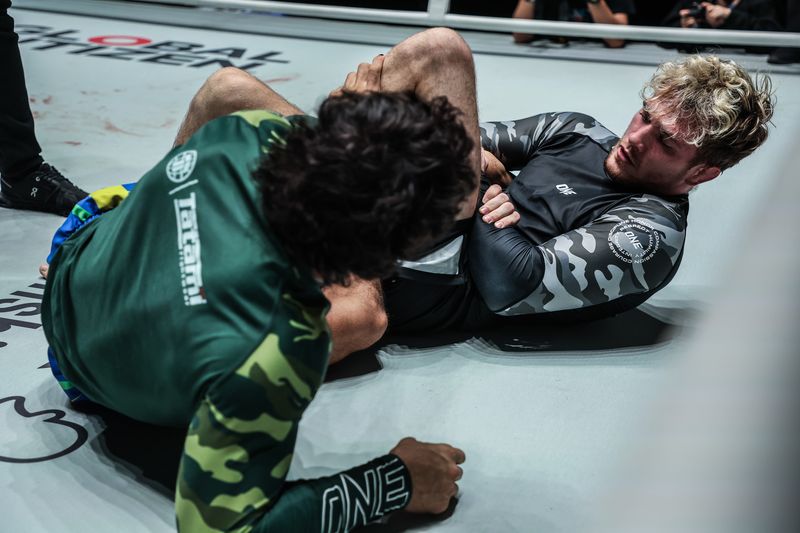
Only stop driving once your chest is glued down and your arms are re-pummeled in side control.
Drilling the Knee Cut for No-Gi Competition
Reps beat theory. Start with slow positional drilling from half guard: your partner defends at 30%, you cut, clear the foot, and settle. Add resistance in stages until they are fighting at full speed. Then drill the failure branches — when they knee shield, when they underhook, when they turtle — so you are never surprised in a match. A passing game is really a decision tree, and you build the tree in the room, not on competition day.
One practical note: sweat makes no-gi passing a nightmare without the right gear. A grippy, snug rashguard keeps the underhook from slipping and stops mat friction from shredding your skin during the cut. If you are still training in a loose cotton shirt, our guide to the best rashguards for men covers what actually holds up under scramble-heavy passing.
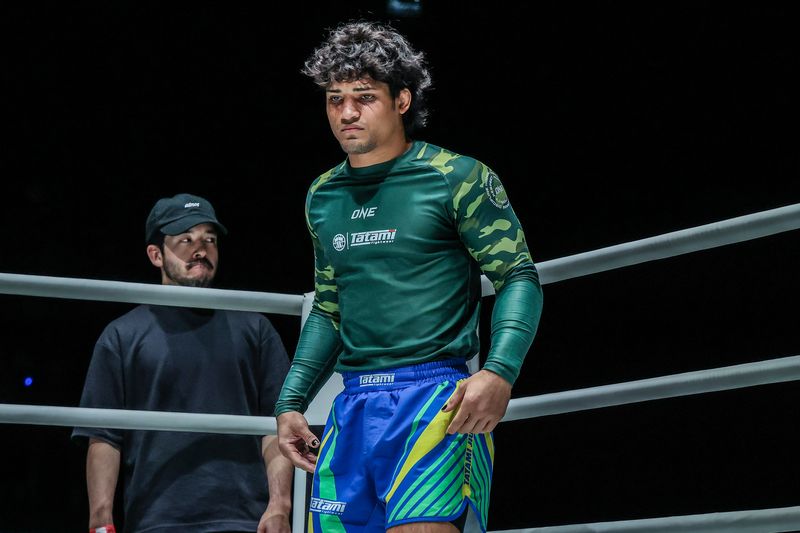
Competition-tested passing habits are built in the drilling room, not on the day.
See the Knee Cut in Motion
Reading the steps helps, but watching the timing land is what makes it click. This breakdown from Lachlan Giles walks through the exact underhook-and-pressure details that separate a clean no-gi knee cut from a stalled one.
Master the knee cut and the rest of your no-gi passing game gets simpler, because every other pass is just a reaction to how they defend this one. Get on the mat this week, pick one of the seven keys above, and drill it until it stops feeling like a checklist. That is how a pass becomes a reflex.

Passes win matches — top position was the biggest winning factor at the last ADCC.
Sources
- BJJ Heroes — Analysis of Guard Passing in the ADCC — data on how often top position and passing decided ADCC matches.
- Evolve MMA — How To Perform The Knee Slice / Cut Pass — step-by-step mechanics of the knee cut entry.
- NAGA Fighter — What Is the Knee Slice Pass? — competition context and the underhook-first principle.
Browse our top-rated rashguards and no-gi gear at the RashguardGuy shop →