
No-Gi Takedowns: 7 Best Entries to Win the Scramble
At ADCC 2024, double legs were thrown more than any other single-leg-attack finish on the feet, and the body lock quietly became the most reliable way to drag a stalling opponent to the mat. That tells you everything about no-gi: the takedowns that work are the ones that don’t need cloth. Strip away the gi and the sleeve grips, the lapel chokes, and the spider guard all disappear with it. What’s left is wrestling — and the grapplers who can’t take someone down without a kimono spend most of a no-gi match playing catch-up from their backs.
This guide breaks down the seven no-gi takedowns worth drilling first, the wrestling concepts that make every one of them land, how to stop your opponent from hitting them on you, and the mistakes that waste years of mat time.
Why No-Gi Takedowns Are Different
The single biggest change going from gi to no-gi is that you lose every fabric grip. No collar to break posture, no sleeve to trap an arm, no pant grip to block a sprawl. Sweat makes everything slippery, so even a solid wrist control can slide off mid-shot. That’s why no-gi takedowns lean heavily on wrestling and Greco-Roman clinch work rather than judo throws — you’re controlling skin, bone, and angles instead of cloth.
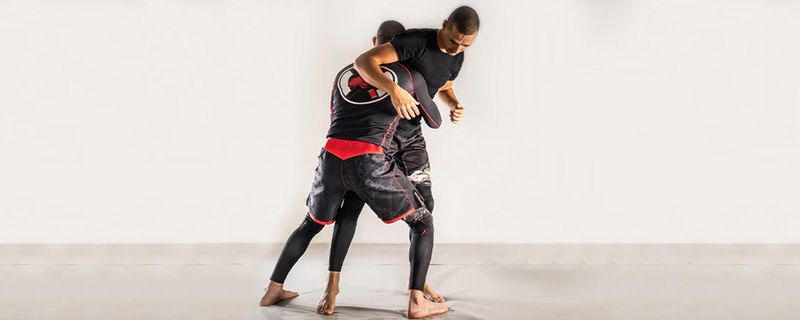
No grips means the fight starts with underhooks and collar ties, not sleeve grips.
The trade-off cuts both ways. Grips slow a match down; their absence speeds it up. Scrambles are faster, sprawls are slicker, and a missed shot dumps you straight into a front headlock or a guillotine. The truth is that most hobbyists avoid takedowns entirely and just pull guard — which is exactly why learning to finish on your feet is one of the fastest ways to separate yourself from the average no-gi player.
The Wrestling Concepts Behind Every No-Gi Takedown
Before the techniques, the principles. Wrestlers cross over to no-gi so easily because they already own these four ideas, and every takedown below is just an application of them.
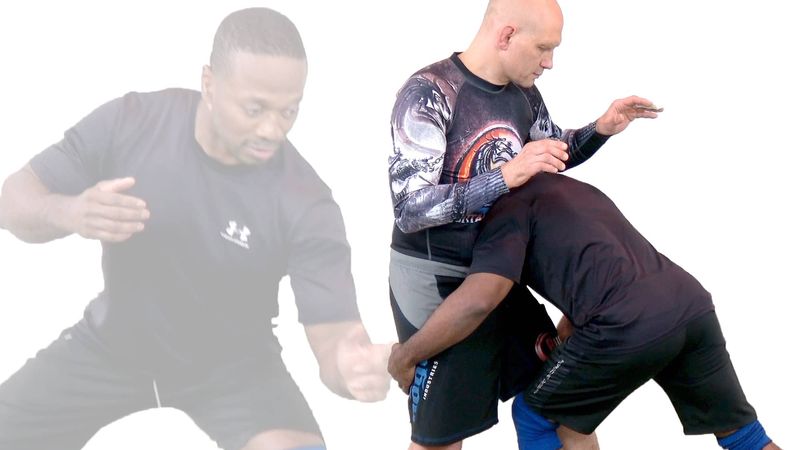
The level change — dropping the hips under the opponent’s — is the engine behind almost every leg attack.
Head control. Wherever the head goes, the body follows. A collar tie or a tight front headlock lets you steer posture and balance before you ever touch a leg. Break someone’s posture down and their sprawl loses most of its power.
Hip control and the level change. You can’t take down what you can’t reach, and reaching the legs means dropping your level — bending the knees, not the waist, so your hips sink under theirs. Underhooks and body locks then let you steer those hips. Lose the underhook battle in the clinch and you’ll get sprawled on every time.
The hand fight. No-gi exchanges start with wrist control, two-on-ones, collar ties, and snap downs — the constant tapping and clearing of hands that creates the half-second opening to shoot. Grapplers who shoot cold, without winning the hand fight first, telegraph everything.
Inside position. Whoever has their arms and feet inside the opponent’s frame controls the exchange. Inside ties beat outside ties; inside foot position sets up trips. Fight to get inside before you commit to anything.
For a high-level overview of how these principles shape takedown selection, John Danaher’s breakdown is worth the watch:
The 7 Best No-Gi Takedowns
These are ordered roughly from highest-percentage-for-everyone to most-technical. You don’t need all seven. Pick two that fit your body type, drill them until they’re reflexive, and add the rest later.
1. The Double Leg
The double leg is the first takedown most people learn and still the most common finish on the feet at the elite level. Drop your level, step your lead foot between your opponent’s feet, drive your shoulder into their midsection, grab behind both knees, and run your feet through while turning the corner. In no-gi the head position matters more than ever — keep your head on the outside (the “tight” side) to avoid feeding a guillotine. Most common mistake: shooting from too far away so the shot dies on a sprawl. Close the distance with a snap or a collar tie first.
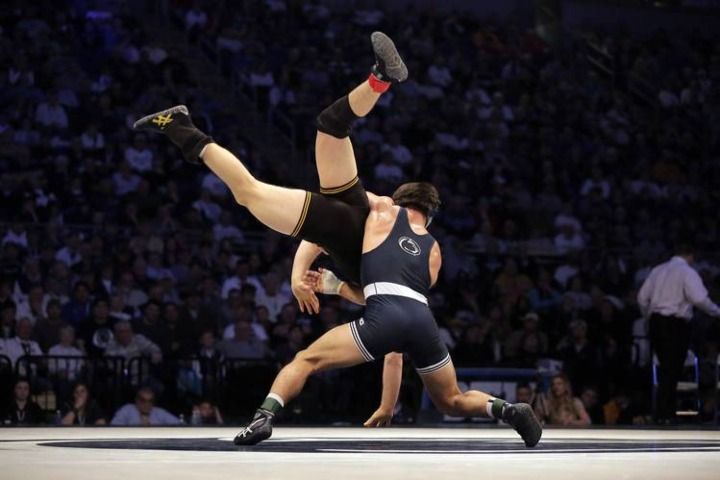
The double leg crosses straight over from folkstyle wrestling — penetrate, drive, and finish through the corner.
2. The Single Leg
The single leg is lower-risk than the double because your head stays on the outside, away from the guillotine. Capture one leg, lock your hands around the knee or run the pipe, and finish with a trip, a bump, or by dumping them as you clear their base. It’s the bread-and-butter scramble takedown — when a double gets stuffed, you’ll often end up on a single anyway. The key is finishing: too many people get to a strong single and then stall there long enough for the opponent to recover and counter.
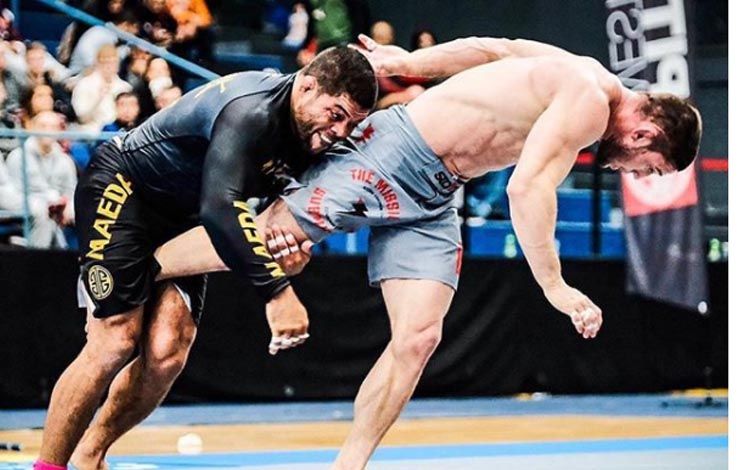
The single leg keeps your head on the outside, away from the guillotine — the safer of the two leg attacks.
3. The Body Lock Takedown
The body lock is the ultimate no-gi takedown precisely because it needs zero grips — you’re clasping your own hands around the torso, not gripping anything they’re wearing. From the clinch, secure an underhook, swim the other arm around, lock your hands at the small of their back, and walk them to a trip or a mat return. It’s low-risk, controls the hips completely, and flows straight into a dominant body lock pass once you hit the mat. This is why it’s exploded in popularity in modern no-gi competition.
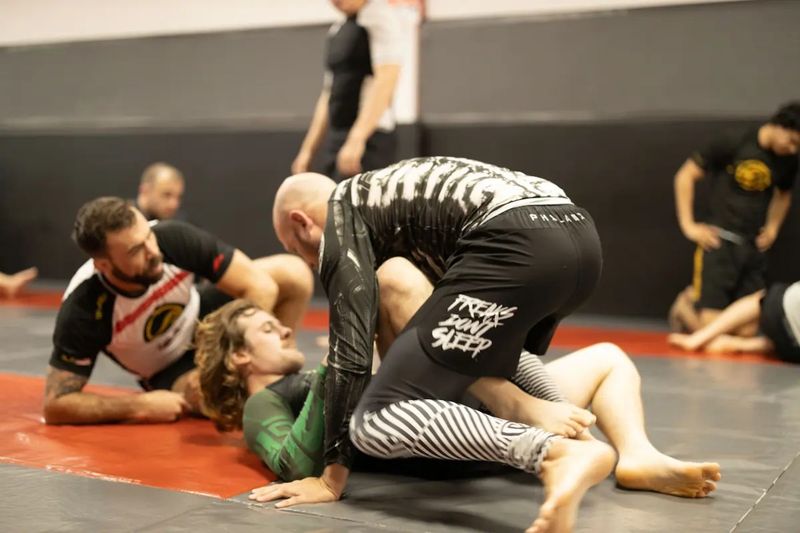
Hands clasped, not gripping cloth — the body lock is the purest no-gi takedown there is.
4. The Ankle Pick
Underrated and brutally effective in scrambly no-gi exchanges. Use a collar tie to push the head down and load weight onto one leg, then reach down and pick the ankle of the now-light leg while continuing to drive the head. The opponent’s compromised base does the rest. It rewards good timing over athleticism, which makes it a great equalizer for smaller or older grapplers.
5. The Arm Drag to the Back
The arm drag is low-risk and creates the best angle in grappling: the back. Control the wrist and the tricep, yank the arm across your body as you step off-line, and either take the back directly or chain into a single leg on the now-exposed leg. Because you’re attacking from an angle, the opponent can’t square up to defend. It’s one of the safest entries for anyone nervous about shooting and getting guillotined.
6. The Snap Down to Front Headlock
Not every takedown is a leg attack. From a collar tie, snap the opponent’s head and shoulder sharply toward the mat. If they post and scramble, you transition to a front headlock — the gateway to the back and the rear naked choke, the anaconda, and the d’arce. The snap down is the single best tool for breaking the posture of a taller opponent who’s keeping you at range, and it sets up half the entries on this list.
7. The Inside Trip
The inside trip is arguably the highest-percentage takedown for blue and purple belts because it punishes the exact posture most grapplers default to — squared up, slightly upright, hands fighting. Secure an underhook, step your leg inside theirs, and reap it out from under them while driving your shoulder across. It’s a clinch finisher that doesn’t require a deep level change, which makes it perfect when your opponent is heavy on the underhooks and stuffing your shots.
How to Defend Takedowns in No-Gi
Most takedown guides stop at offense, which is half a game. The foundation of takedown defense is the sprawl: when you feel the shot, kick your hips down and back, flatten your weight onto the attacker’s shoulders, and circle away from the trapped side. Heavy hips kill almost any leg attack. From there, fight to a front headlock and you’ve turned their offense into yours.
The second layer is the hand fight itself. Most takedowns in no-gi are won or lost before the shot — control the inside ties, keep your elbows tight to deny underhooks, and don’t let anyone settle a collar tie on you for free. If you sprawl well and win the ties, you can shut down a better wrestler without ever shooting yourself.
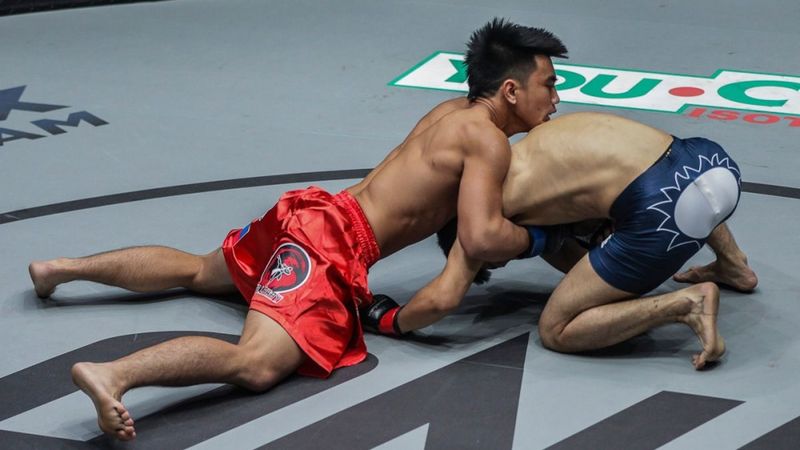
The sprawl: hips down and back, weight crushing the shoulders. Heavy hips beat almost any shot.
How Takedowns Score in Modern No-Gi
The takedown’s value depends on the ruleset. Under ADCC rules, no points are awarded in the first half of regulation, but in the second half a clean takedown to guard scores 2 points, and passing straight to side control off the takedown is worth more. That structure rewards aggressive wrestling late and is a big reason takedowns — especially the body lock and double leg — have become central to high-level no-gi rather than an afterthought.
IBJJF no-gi and most submission-only formats treat takedowns differently, so know your ruleset before you build your game around scoring. But across every format, the strategic value is the same: starting on top means you dictate where the match goes instead of inviting your opponent into your guard.
How to Actually Drill No-Gi Takedowns
Technique knowledge isn’t the bottleneck — reps are. The most common mistake new grapplers make is collecting twenty takedowns and owning none. Pick two entries that suit you (most people do well with a body lock plus an ankle pick or arm drag, since none require a deep, risky shot) and drill the entry hundreds of times before worrying about variations.
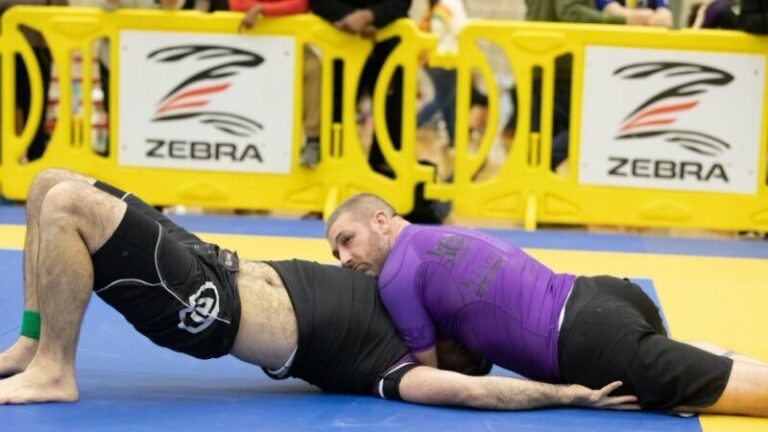
Drill the failure, too. Spend as much time on what happens when the shot gets stuffed — recovering to a single, scrambling to the back, fighting up from a sprawl — as you do on the clean finish, because in live rounds the clean finish is the exception. Finally, practice your takedowns in the rashguard and shorts you actually compete in; grip and feel change without the gi, and a sweaty live round behaves nothing like a dry technical drill. A well-fitted rashguard that doesn’t ride up or bunch makes a real difference once the scramble starts.
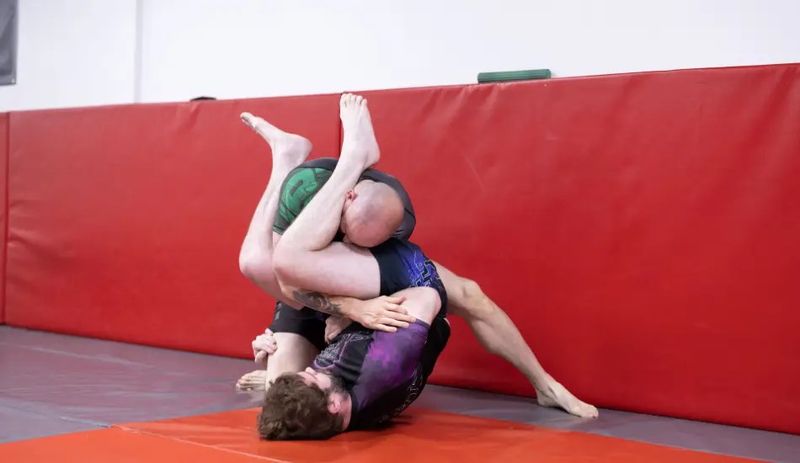
Reps in the rashguard you actually compete in — sweaty live scrambles behave nothing like dry technical drills.
Frequently Asked Questions
What’s the easiest no-gi takedown to learn? The body lock and the ankle pick. Neither requires a deep, committed shot, both are low-risk for getting guillotined, and both reward timing over athleticism — ideal for grapplers who never wrestled.
Do you need wrestling to be good at no-gi? You don’t need a wrestling background, but you need wrestling skills. The good news is the four concepts above — head control, level changes, the hand fight, and inside position — are learnable on the BJJ mat without ever stepping on a wrestling team.
Why are no-gi takedowns harder than gi takedowns? No grips. You can’t break posture with a collar or trap an arm with a sleeve, and sweat makes every control slippery, so no-gi forces you to rely on body position, angles, and timing instead of cloth.
Should I just pull guard instead? You can, and a sharp no-gi half guard sweep game is a legitimate path to top position. But pulling guard hands your opponent the choice of where the match goes. Even a basic takedown game forces opponents to respect your standup and keeps you in control of the exchange.
Sources
- ADCC Official — Rules & Scoring — official takedown scoring structure for ADCC competition.
- Evolve MMA — 7 Essential Concepts of Wrestling for No-Gi BJJ — head and hip control fundamentals.
- FloGrappling — How ADCC Rules Work — breakdown of ADCC point structure and match format.
- Elite Sports — Best No-Gi Jiu-Jitsu Takedowns — technique reference for no-gi entries.
Browse our top-rated rashguards and no-gi gear at the RashguardGuy shop →