
Why Women’s Rashguards Aren’t Just Smaller Men’s Rashguards
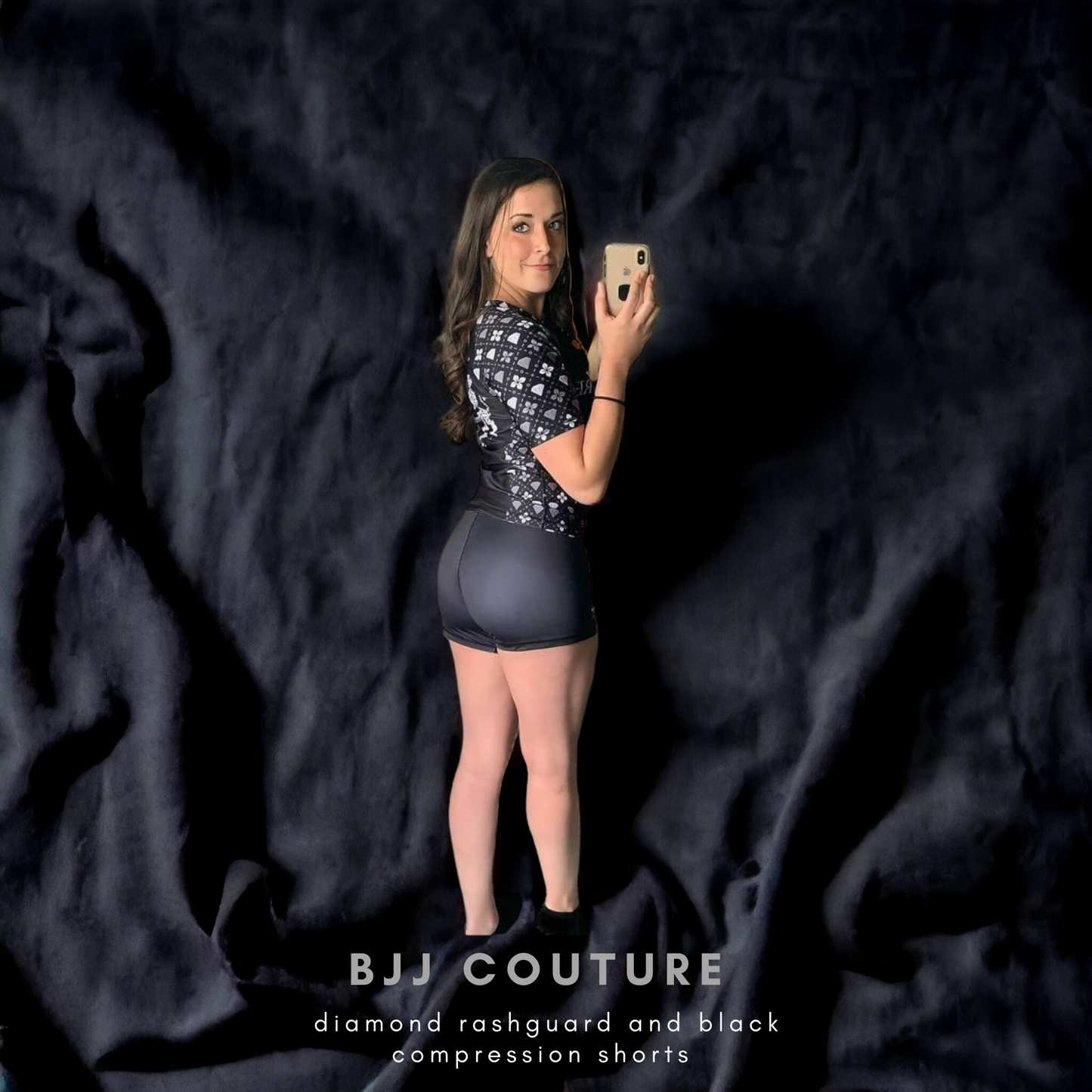
Walk into most gear discussions about the best rashguards for women and you’ll get the same advice recycled from the men’s aisle: check the fabric weight, look at the seams, buy compression fit. All true. All incomplete. A women’s rashguard has to solve a set of problems a men’s cut never has to think about, and the brands that pretend otherwise are the ones you end up returning after two sessions. If you’ve ever finished a hard round tugging the hem down, adjusting a strap that dug into your neck, or fighting a panel that rode up every time you shot for an underhook, you already know the men’s-guide checklist left something out.
This is a function-first look at what actually changes when a rashguard is built for a female grappler’s body and a female grappler’s roll — and how to tell, before you hand over your money, whether a top was designed for you or just recolored for you.

The “shrink it and pink it” problem
For years, a lot of women’s grappling apparel was exactly what the industry nickname suggests: a men’s pattern scaled down a few sizes, printed in a different colorway, and shipped. The trouble is that scaling a garment down uniformly doesn’t account for the fact that women’s proportions don’t scale uniformly. A smaller men’s top gets narrower in the shoulders and shorter in the torso at the same rate, when what a female frame usually needs is a different ratio — often a longer torso relative to shoulder width, more room through the chest, and a narrower set to the neck and sleeves.
The result of the shrink-and-recolor approach is the cluster of complaints you hear from women at every gym: sleeves that bunch at the wrist because they were cut for a longer, thicker forearm; a collar that gaps or chokes; a hem that sits too high and untucks the moment you’re on your back. None of these are compression problems or fabric problems. They’re pattern problems, and no amount of premium polyester fixes a pattern that was never drafted for you in the first place.
The good news is that the last few years have produced a real crop of women’s-specific cuts from brands that actually re-drafted the pattern rather than resizing it. The bad news is that plenty of “women’s” rashguards on the market are still the old trick with new marketing. Knowing the difference is most of the battle.
Chest support is a training decision, not a fashion one
The single biggest thing a men’s buying guide can’t tell you is how to think about support. Grappling is not a low-impact sport in the way people assume rolling is gentle — scrambles, sprawls, and getting stacked put your torso through sudden direction changes, and coverage that shifts mid-round is both a distraction and a genuine exposure risk when you’re wearing nothing but a rashguard for no-gi.
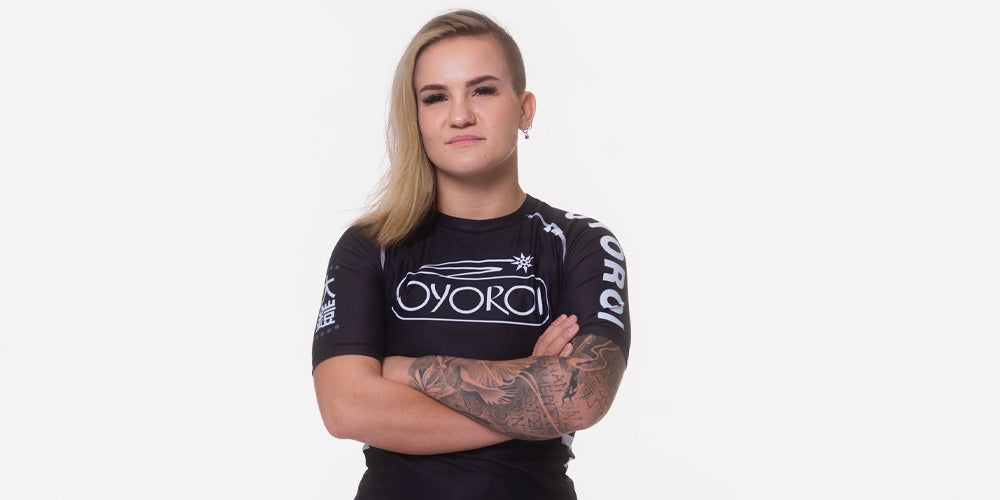
There are two schools of thought, and both are valid depending on your body and your preference. The first is the layered approach: a well-fitted, high-support sports bra underneath a standard women’s-cut rashguard. This gives you the most control over support level, lets you replace the bra and the rashguard on different cycles, and works well if you already own bras you trust. The catch is bulk and seam-on-seam friction — two garments’ worth of seams stacked on top of each other is exactly where chafe and pressure points start.
The second is the built-in-support rashguard, where a shelf bra or a compressive front panel is integrated into the top itself. At its best this is the cleanest option: fewer layers, fewer seams, nothing to shift. At its worst — and this is where cheap versions fall down — the built-in shelf is a token strip of fabric that provides no real hold, and you’ve now bought a rashguard you can’t wear without adding a bra anyway. If you go this route, the shelf has to be genuinely structured, and you have to be able to try it under load, not just standing in front of a mirror.
How to test it before you trust it
Whatever you choose, the test is the same and it isn’t the mirror. Bend at the waist and shake. Reach both arms overhead and hold. Get into a sprawl position on the floor and post. If the coverage moves, the support isn’t there — and it will move more, not less, when a training partner’s weight is added and you’re both sweating. Treat the fitting room like a warm-up, not a photo shoot.
Torso length is the fit detail nobody mentions
If there’s one measurement that separates a rashguard designed for women from one that was resized for them, it’s torso length. This is the quiet reason so many women end up in men’s small or youth sizes and then wonder why nothing else fits — they’re chasing a hem that stays put and accepting bad shoulders and sleeves as the price.
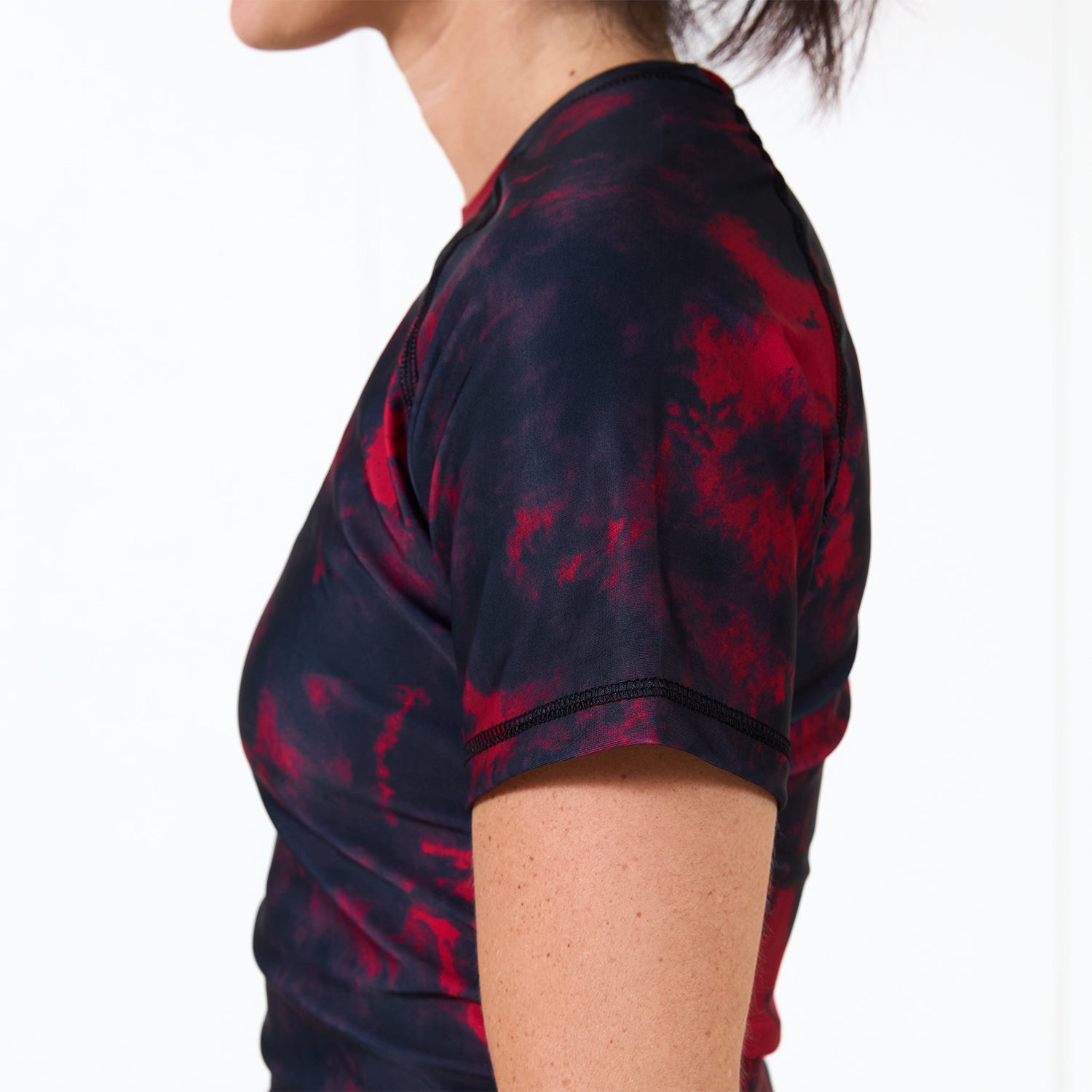
A no-gi rashguard earns its keep by staying tucked and staying down through inversion, granby rolls, and getting flattened out under side control. A top that’s cut too short for your torso will creep up every single time your hips move above your shoulders, and no-gi is full of moments where your hips are above your shoulders. Women’s-specific patterns generally add length through the body precisely so the hem has somewhere to go when you compress. When you’re evaluating a top, dip your torso measurement against the brand’s size chart directly rather than trusting the label — a “women’s medium” from a brand that re-drafted its pattern and a “women’s medium” from a brand that resized a men’s block can differ by inches through the body.
Sleeve length follows the same logic. Long-sleeve rashguards are popular for mat-friction protection and for keeping warm in cold rooms, but a sleeve drafted for a longer male forearm will bunch at your wrist and catch on grips. If you run cold or want the coverage, look for women’s long-sleeve cuts specifically; if a brand only offers unisex long sleeves, a short-sleeve or sleeveless women’s cut that actually fits your torso is usually the better trade.
Seams, necklines, and the small stuff that ends a session early
Everything a men’s guide says about flatlock and coverstitch seams is true here too — you want flat, low-profile seams that won’t saw at your skin over a long round. But there are two placement details that matter more on a women’s cut.
The first is the neckline. A collar that sits too high or too tight is uncomfortable on anyone, but on a narrower neck it’s the difference between forgetting the top is there and thinking about it every time a cross-face comes across your jaw. Look for a neckline that’s finished cleanly and sits flat without a rigid band that presses on your throat. The second is the underbust and side seams — the exact zone where a sports bra’s band and a rashguard’s seams can double up. If you layer, pay attention to where those seams land relative to each other. Offset is comfortable; stacked is a hot spot waiting to happen.
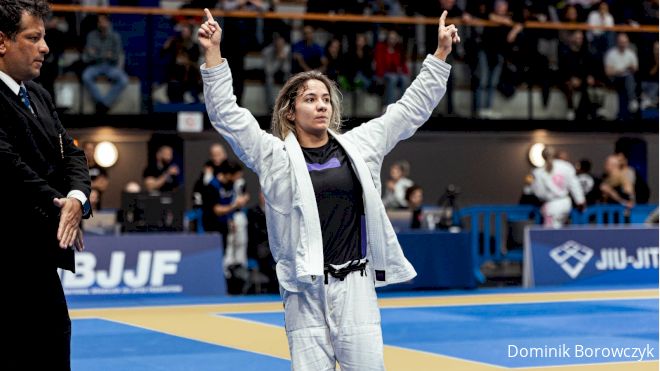
Fabric-wise, the physics don’t change with gender: a blend of polyester with a meaningful percentage of spandex (roughly 15–20%) gives you the four-way stretch and recovery that keeps a rashguard hugging through a session and snapping back afterward. Higher spandex content means more stretch and compression but usually less durability over hundreds of washes; that’s a trade you make based on how hard and how often you train, not on what the top looks like on a hanger.
Coverage, confidence, and rolling with your head in the game
There’s a performance argument buried in all of this that’s easy to dismiss as vanity and shouldn’t be. If part of your attention during a roll is going toward whether your top is going to ride up, gap, or shift, that’s attention not going toward the scramble. A rashguard that fits — that stays down, holds its support, and disappears from your awareness — is a rashguard that lets you train harder because you’re not managing your gear. That’s not a comfort luxury; it’s a focus advantage, and it’s the reason the best rashguards for women are worth being picky about.
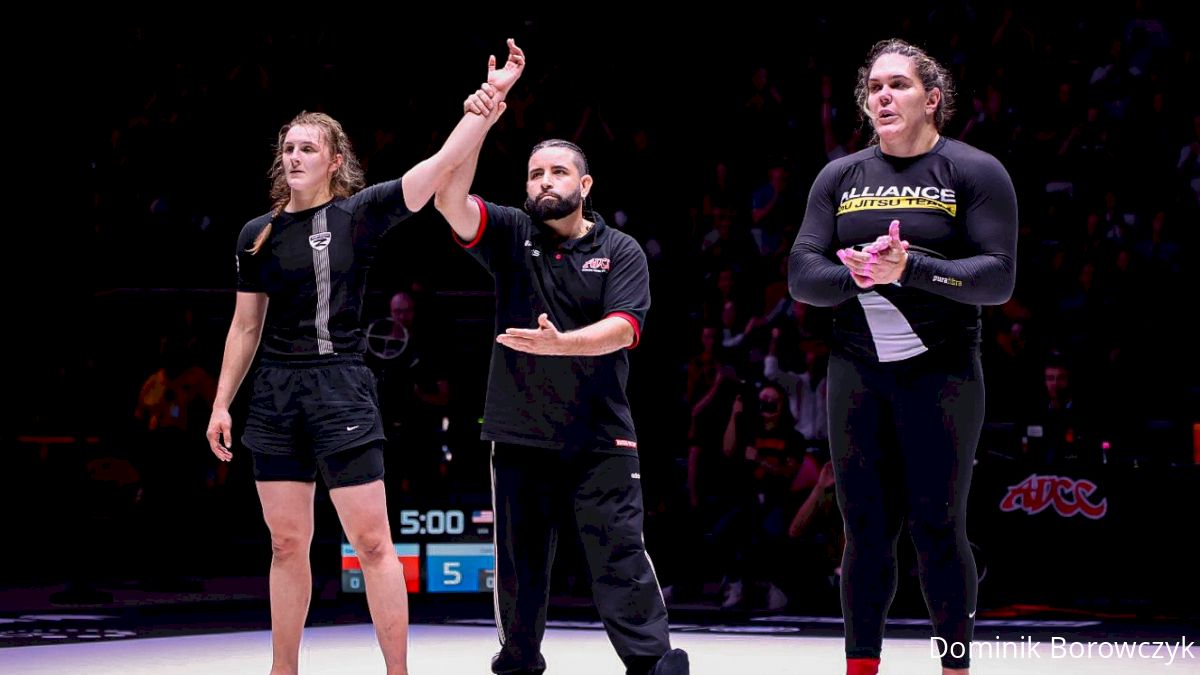
It’s also worth saying that the field has genuinely improved. Watch the women competing at the top of no-gi — the ADCC field, EBI-era submission-only events, the growing roster of dedicated women’s divisions — and you’ll notice the gear has caught up to the athletes. The visibility of high-level female grapplers has pushed brands to actually invest in women’s-specific patterns instead of treating the category as an afterthought. You benefit from that at the consumer level: there are more genuinely well-cut options now than there were even a few years ago.
How to actually buy one
Put the pieces together and the buying process is straightforward, even without a fitting room. Start with your torso length and chest measurement, not your “usual size,” and check them against the specific brand’s chart every time — sizes are not consistent across brands, especially between ones that re-drafted their patterns and ones that resized men’s blocks. Decide your support strategy first: layered bra-plus-rashguard for maximum control, or a genuinely structured built-in shelf for fewer layers. Then filter for the details that survive live rolling — flat seams, a flat neckline, a hem with enough length to stay tucked.

When you’re ready to compare specific tops, searching for women’s BJJ rashguards or a women’s long-sleeve grappling rashguard will surface the current field, but read the size chart and the reviews for fit-under-load comments before you commit — a five-star top that fits a men’s frame tells you nothing about whether it’ll stay down when your hips go over your head.
Buy one that fits your body and your roll, not one that fit the marketing photo, and it should quietly do its job for a couple of hard training years. That’s the whole point: the best women’s rashguard is the one you stop thinking about the moment you slap hands.
Sources
- Rash guard — Wikipedia
- ADCC Submission Wrestling World Championship — Wikipedia
- Spandex — Wikipedia
- Women’s BJJ rashguards — Amazon search
Browse our top-rated rashguards and no-gi gear at the RashguardGuy shop →
Shop on Amazon
BJJ Rashguards on Amazon →
As an Amazon Associate we earn from qualifying purchases.