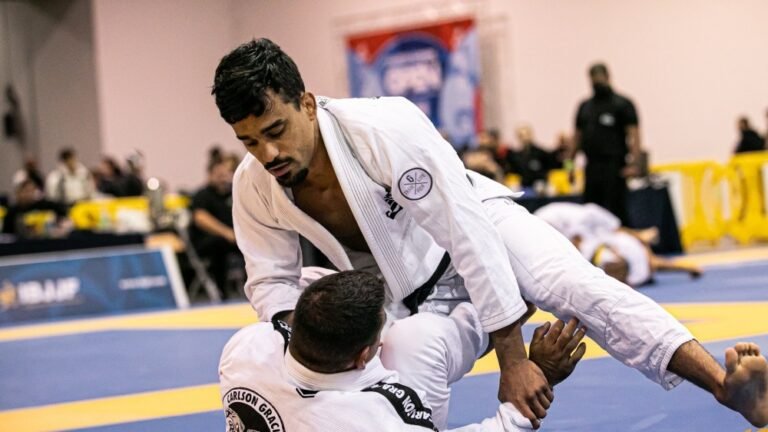

Body Lock Pass No-Gi: 7 Setups That Crush the Modern Guard
The body lock pass is the no-gi guard pass that quietly became the meta. Watch any ADCC final from the last six years and you’ll spot it: forearms cinched around the lower back, head heavy on the chest, knees splitting the opponent’s hips. Gordon Ryan rode it to three ADCC golds. Nicky Rodriguez built an entire silver-medal run around one variation. Lachlan Giles teaches a six-volume series on it. If you train no-gi and you don’t have a body lock pass, you are missing the most reliable pressure pass in modern grappling.
This guide breaks down seven body lock pass setups that work in real no-gi rolling — not just on a demo partner who freezes at the right moment. Every setup here shows up in current ADCC and CJI footage, and each one is designed to beat a specific guard the modern player will throw at you.
What Is the Body Lock Pass in No-Gi?
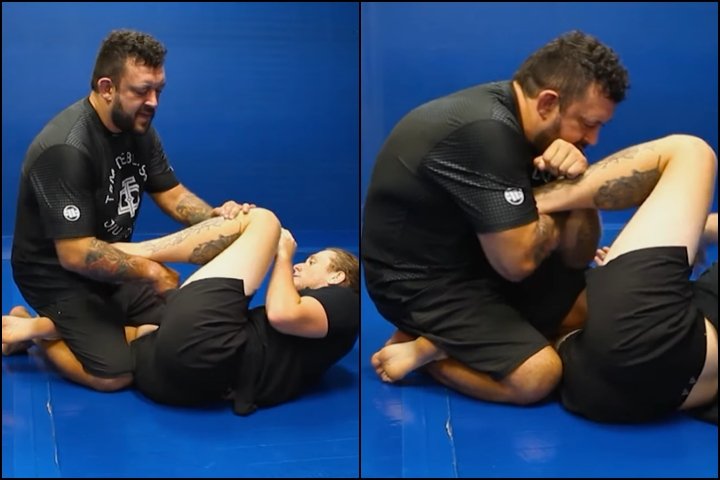
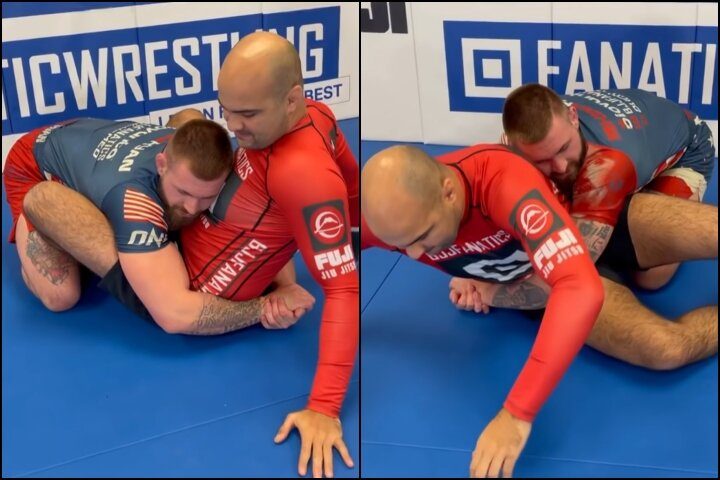
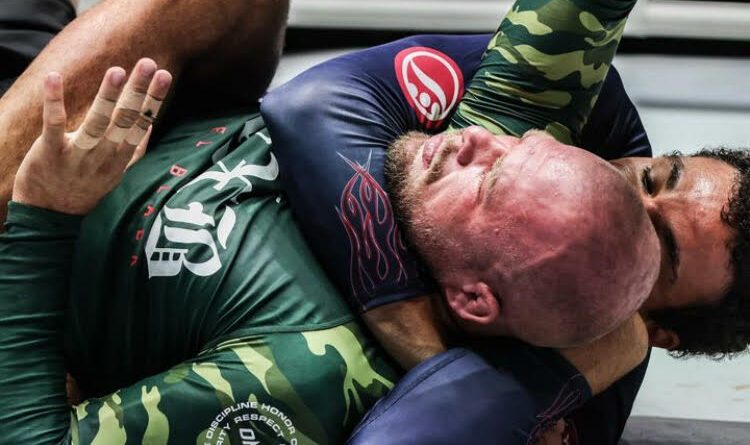
A body lock pass in no-gi is a guard pass where the passer locks both hands around the opponent’s lower back or waist, then uses pressure and incremental hip movement to clear the legs. The pass works because the body lock kills two things the bottom player needs: the ability to frame with the arms and the ability to angle the hips off-center.
In gi grappling, you can break grips and stiff-arm at the lapels. Strip the gi, and the body lock becomes the closest thing to a head-and-arm choke for passing purposes. The opponent cannot frame on your face. They cannot push your hip away. Most of the standard guard retention chain — knee shield, framing, hip escape — depends on space the body lock denies.
Why the Body Lock Pass Took Over No-Gi
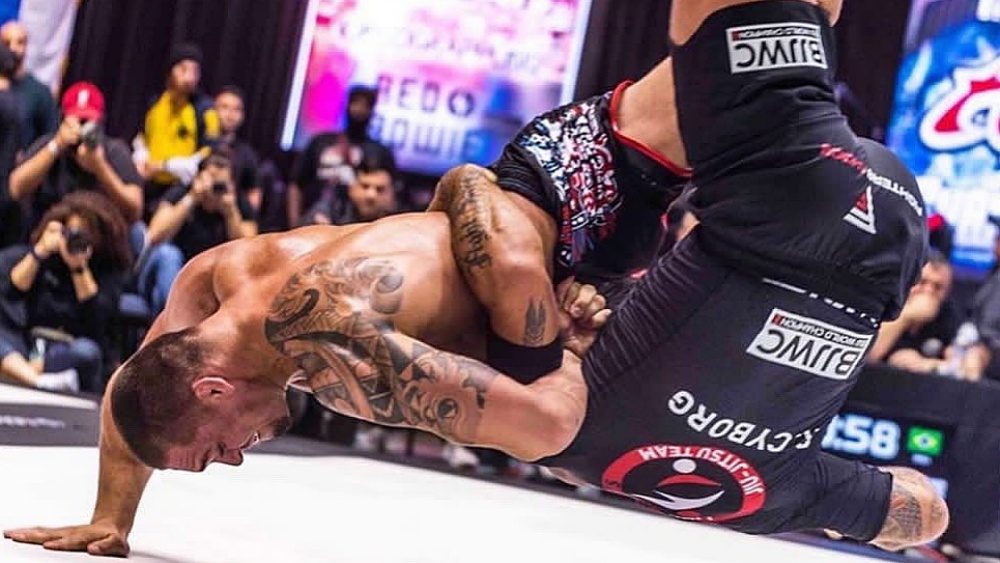
Ten years ago, the dominant no-gi guard pass was the leg drag. Marcelo Garcia, Rafa Mendes, the Mendes brothers — they popularized stripping the legs and pinning them off to the side. The body lock pass largely replaced it at the elite level for one reason: the leg drag opens the door to leg attacks. Drag a leg in 2026 and you risk waking up the inside heel hook or the entry to the cross-ashi.
The body lock pass solves that problem because it controls the upper body first. By the time you commit to splitting the legs, the opponent is already pinned at the shoulders. There is no scramble lane back to a leg entanglement. That single trade — slightly slower entries in exchange for total leg-attack denial — is why the body lock pass became the answer to the leg-locker era.
7 Body Lock Pass Setups That Work in No-Gi
1. The Wrestling Shot Entry from Standing
This is Lachlan Giles’ bread and butter and the cleanest place to start. Stand in front of a seated opponent. Drop your level, post one hand on a knee, and shoot the way you’d shoot a low double — except instead of finishing the takedown, you lock your hands around the lower back and drive forward. Your head goes to the chest, not the hip, and your knees pinch around the opponent’s outside hip. You’re not trying to score a takedown; you’re using a wrestling shot to land in pre-passed position.
2. The Half Guard Body Lock
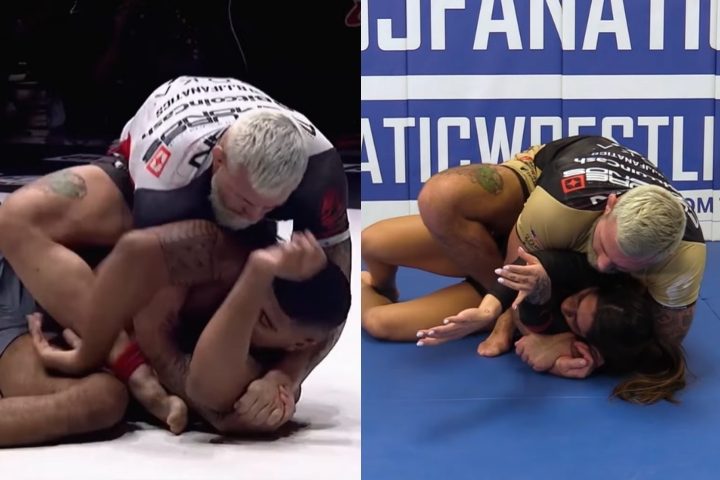
You’re in someone’s half guard, head on their right shoulder. Most passers immediately try to free the trapped leg. Don’t. Instead, body lock around their lower back, walk your hips out toward your trapped knee, and start to flatten them. Once they are on their back with the body lock secured, the half guard hooks no longer matter — the opponent cannot turn into you because their hips are stapled. From here you peel the half guard and slide knee on belly.
This is the pass Gordon Ryan has been hitting since 2018. It is the most replicable setup in the entire system because it does not depend on speed or athleticism. It just requires patience.
3. The Butterfly Guard Hip Switch
Butterfly is a body lock killer if you let the bottom player elevate. The fix is to step around one of the hooks the moment you sense the load. Drop your hips outside the butterfly hook, body lock around the waist, and drive shoulder pressure into the chest. The hook you stepped around is now dead weight. Their other leg is the only thing between you and side control.
4. Headquarters to Body Lock
Craig Jones popularized the headquarters position — sitting at the leg entanglement edge, one knee threaded over the opponent’s leg. If the bottom player tries to retreat to closed or butterfly, transition to a body lock by pushing forward off the headquarters, sliding your trail leg up the centerline, and tightening the body lock as their guard breaks. You’re using headquarters as a holding pattern that gives you the body lock entry without committing to a leg attack first.
5. The Knee Shield Trap Pass
Knee shield half guard is the hardest position from which to body lock pass cleanly, which is why most coaches skip teaching it. Here’s the fix: instead of trying to clear the shield, body lock low around the hips with your chest pinning the shield shin to the opponent’s own chest. The shield becomes a frame between the opponent and themselves. From there, you walk your hips north until the shield collapses sideways.
6. The Low Body Lock
Lachlan Giles built an entire course around the low body lock — locking around the legs above the knees rather than at the waist. This is the answer to opponents who sit up and frame on your biceps the moment you try a standard body lock. By going below the elbow line, you cut off the bottom player’s framing arms. The trade is that the pass takes longer to finish because you have less torso control. The win is that nobody at white or blue belt has seen this setup before, so the defensive reaction is almost always wrong.
7. The Nick Rodriguez High Step
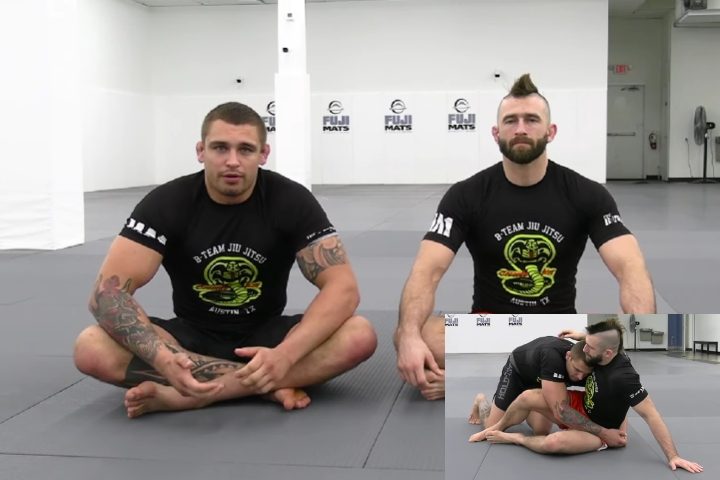
Nicky Rod’s body lock setup uses a high step entry — he steps one leg way up past the opponent’s hip line, lands on the side, then closes the body lock from a near-side-control position. The high step bypasses every framing structure because the opponent’s hands are reaching where Nicky already isn’t. By the time the body lock locks, the body lock pass is half-finished. Nicky has broken this down in a BJJEE video clinic that’s worth watching in slow motion.
The Pass Itself: Three Ways to Finish
Locking the body lock is half the battle. The other half is breaking the legs. Gordon Ryan defines three finishing methods that cover almost every situation: stuffing, shelving, and splitting.
Stuffing is the simplest — you push both of the opponent’s knees together and across, then slide your head past to land in side control. Shelving means scooping one of the opponent’s legs onto your shoulder, then sliding through to side or knee-on-belly. Splitting is the most aggressive: you wedge a knee between the opponent’s legs and force them apart, walking your hips through to mount. Pick the method based on which way the opponent is defending. If they post a foot, stuff. If they squeeze a knee, split. If they fight to get to a side, shelve.
Five Mistakes That Sink the Body Lock Pass
The body lock pass looks simple in instructionals because the demo partner gives it to you. In a real roll, five errors kill it more than anything else.
The first mistake is locking the body lock too high. If your hands meet at the shoulder blades, the opponent can shrimp their hips back. The grip needs to sit at the small of the back, between the bottom rib and the belt line. Anything higher gives the opponent the hip mobility to retain.
The second mistake is keeping the head light. The body lock pass is a head-pressure pass. If your chin is up, your shoulder is not pinning the chest, and the opponent will frame an elbow into your throat. The cure is to plant the temple on the sternum and breathe through it.
The third mistake is rushing the leg clearance. Most passers try to split the legs the instant the body lock locks. Wait. Pin the upper body for five full seconds and let the bottom player commit to a defensive shape. Then attack the leg they are not actively defending.
The fourth mistake is letting the elbows flare. The body lock works because your elbows are tight to your own ribs. The second you let them swing wide to chase a grip, you’ve broken your own frame. Keep elbows in, hands locked, and everything else mobile.
The fifth mistake is over-committing the hips. New passers try to walk their hips way out to the side to flatten the opponent. That just gives the opponent the angle to recover guard. Walk your hips out maybe four inches at a time — enough to pin, not enough to give back the angle.
The Best Instructionals for the Body Lock Pass
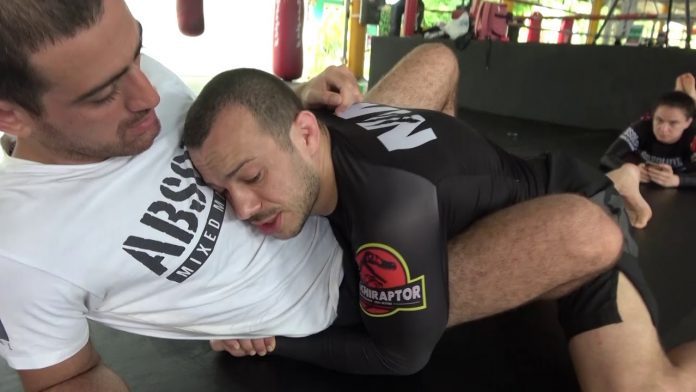
If you want to go deeper than this article, the three instructionals worth your money are Lachlan Giles’ six-volume Body Lock Pass on BJJ Fanatics, Gordon Ryan’s Systematically Attacking the Guard, and Nick Rodriguez’s Rody Lock system. Giles is the best teacher of the three for adult hobbyists — his explanations are slow and concept-first. Ryan’s series is the most complete reference. Rodriguez’s stuff is the most athletic and the least replicable for the average grappler, but if you can move like Nicky, the high-step variation is unblockable.
One word of warning: do not buy more than one instructional series at a time. The body lock pass has roughly a dozen useful entries and three finishing methods. Past that, you’re learning variations of variations, and they all bleed together in your head. Drill one setup until it works in live rolling before you add another.
Body Lock Pass FAQs
Does the body lock pass work in gi?
Yes, but it’s not the same pass. In the gi, lapel grips give the bottom player far more ways to frame, and your own grips on the lapel are usually higher value than a body lock. You’ll see hybrid versions — Bernardo Faria has a famous body lock that uses the back of the gi for extra friction — but in pure no-gi, the body lock is at its most effective. The friction of skin and rashguard does the work the cloth used to do.
Is the body lock pass legal at white belt?
The body lock pass itself is legal at every belt and in every major ruleset. The thing that gets called illegal at white belt is the standing body lock takedown, where you lock around the waist and throw — IBJJF restricts certain trip and slam variants below blue belt. The pass from the ground is always legal.
How long does it take to drill the body lock pass to competition level?
For a blue belt training three days a week, six months of focused drilling on one setup is enough to start hitting it in live rolling. Twelve to eighteen months gets you to the point where it becomes your primary pass. Faster than that is possible but rare — the small details of pressure, head position, and hip incrementing don’t shortcut.
Will the body lock pass work against bigger opponents?
Better than almost any other no-gi pass. The body lock favors connection over raw strength, which means a 165-pound passer can hold a 220-pound bottom player in pre-passed position for long enough to break the legs. Marcelo Garcia at 168 pounds passed absolute-division heavyweights regularly using control-first concepts that line up with body lock principles.
Final Word
If you train no-gi and you haven’t put time into the body lock pass yet, this is the year. Every elite competitor at ADCC, CJI, and ONE Championship’s submission grappling cards is using some version of it, and the technique is not going anywhere because there is no clean counter. The bottom player needs space; the body lock denies space. That is the entire game. Pick one of the seven setups above, drill it for thirty days, and bring it into rolling — the rest of your no-gi top game will reorganize itself around it. While you’re tightening your passing system, it pays to make sure your finishes are sharp too: spend a session on no-gi heel hooks, triangle choke setups, and knee bar entries so the body lock pass leads somewhere ugly for the person under it.
Sources
- The 5 Stages of the Body Lock Pass — BJJ Fanatics — Lachlan Giles’ breakdown of the five-phase body lock pass system.
- Everything You Need to Know About the Body Lock in BJJ and MMA — Evolve Daily — Overview of body lock control across grappling and MMA contexts.
- Gordon Ryan on the Finer Points of His Body Lock Pass — Grappling Insider — Ryan’s own commentary on the three finishing methods.
- ADCC Official — Latest ADCC events, qualifying trials, and rulesets.
Browse our top-rated rashguards and no-gi gear at the RashguardGuy shop →