Anaconda Choke No-Gi: 7 Brutal Setups That Force the Tap
The anaconda choke no-gi is the front-headlock submission that ex-wrestlers use to wreck pure jiu-jitsu guys who never learned to fight off a snap down. It is an arm-triangle variation finished with a roll, and on a sweaty mat with no collar to grip it stays tight when almost everything else slips. Below are the seven setups that actually finish in modern no-gi, the mechanical details that make the choke fast instead of mushy, and the differences between the anaconda, the d’arce, and the Peruvian necktie that most YouTube videos blur together.
What Is the Anaconda Choke in No-Gi BJJ?
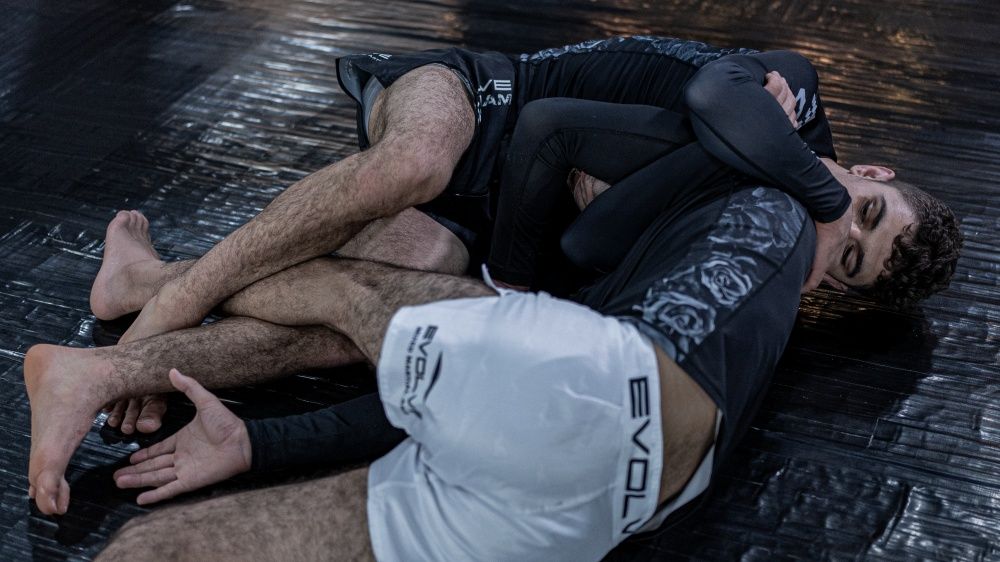
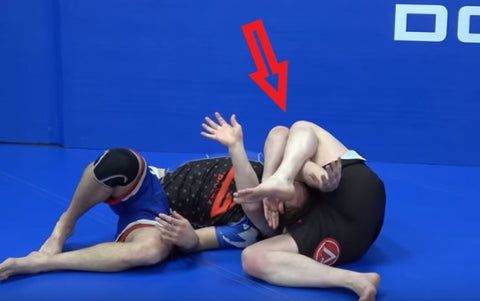
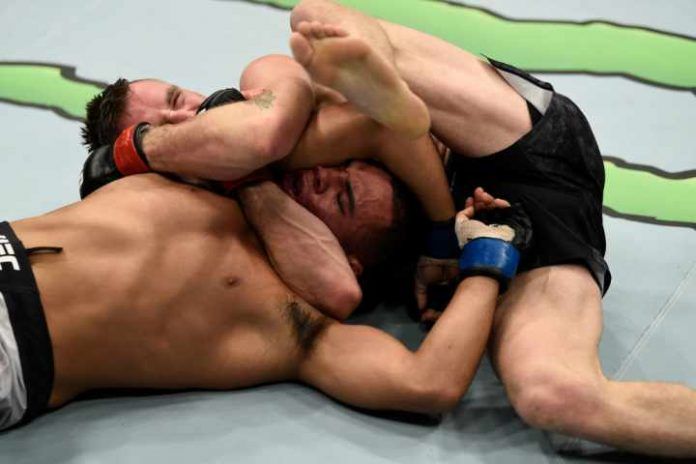
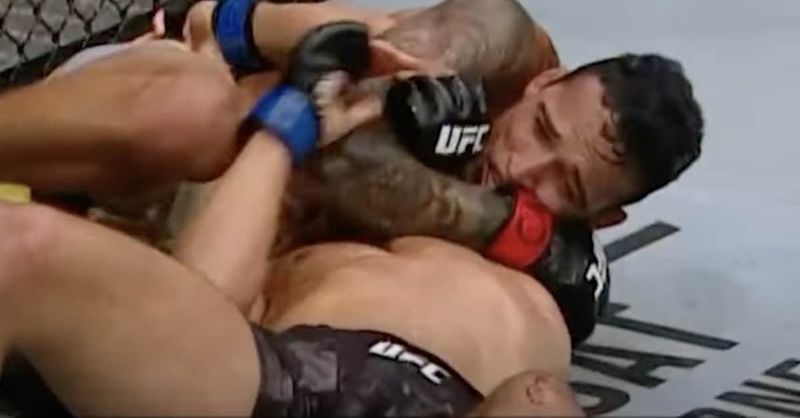
The anaconda choke is a blood choke applied from the front headlock by feeding your dominant arm under your opponent’s neck and around their far shoulder, then locking that hand to the bicep of your other arm. The exit point of your choking arm is on the outside of the opponent’s armpit, with their near arm trapped between your forearm and their own neck. The finish almost always involves rolling them over the trapped arm — commonly called the gator roll — so their bodyweight finishes the squeeze for you.
The submission was developed in the early 2000s by Brazilian coach Milton Vieira, who taught it to a young Antônio Rodrigo Nogueira. Minotauro then submitted Hirotaka Yokoi and Ricco Rodriguez with the choke in PRIDE, putting the technique on the global map. Today it is a staple of high-level no-gi: Charles Oliveira owns four anaconda finishes inside the UFC, and B-Team’s wrestling-heavy crew teaches it as a primary front-headlock attack for grapplers with strong sprawls.
Why the Anaconda Choke Works So Well in No-Gi
No-gi grappling rewards submissions that don’t need fabric, that survive sweat, and that punish a sprawled posture — which is exactly the position any wrestler finds themselves in twenty times a round. The anaconda is built for that position. There is no collar, no sleeve, no lapel. You need a tight arm-in-front-headlock and a willingness to roll.
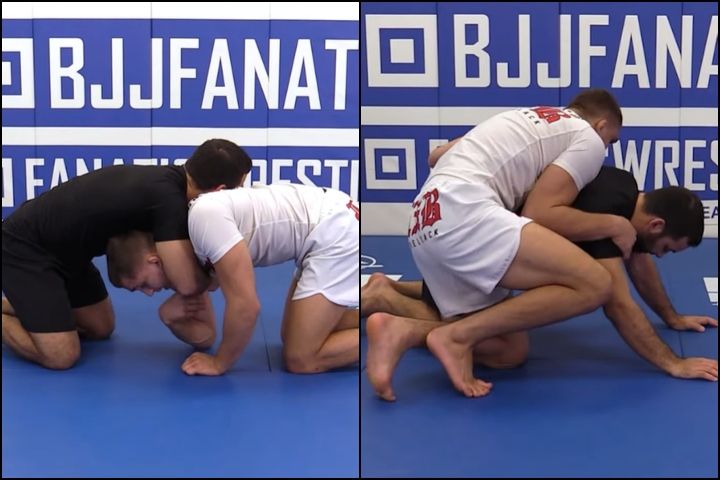
It also chains beautifully with the rest of the front-headlock toolbox: guillotine, d’arce, Peruvian necktie, kimura, even the ten-finger guillotine. When an opponent defends one, the others open. Modern no-gi athletes treat the front headlock the way old-school gi players treated the closed guard — as a position with multiple submission paths, not just a single move.
How the Anaconda Choke Works: Mechanics That Matter
Most anaconda chokes fail at the same three points: shallow arm depth, weak shoulder pressure, and a roll that drags instead of crushes. Get these mechanics right and the tap comes in seconds.
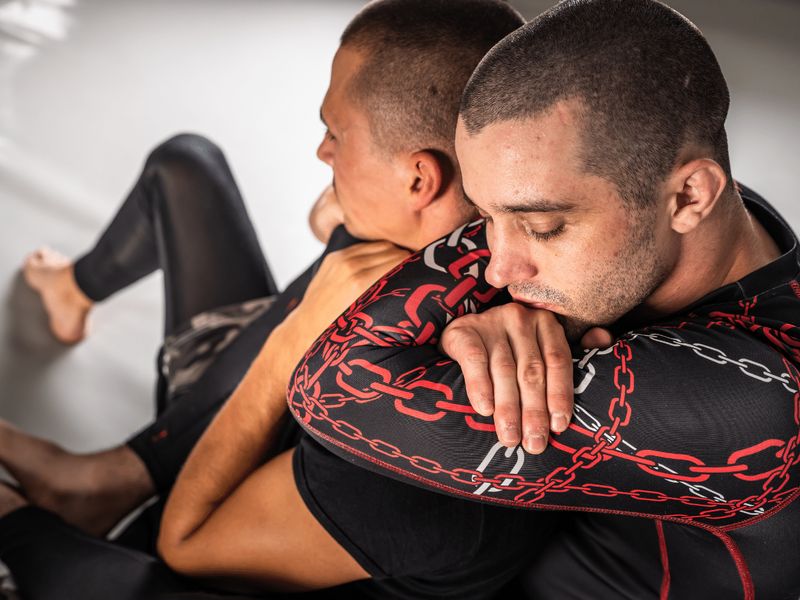
Wrist under the chin, not the bicep. Slide your wrist under your opponent’s chin so the bone of your radius cuts across their carotid. If your bicep is the contact point you have already given up two inches of slack and the choke becomes a wrestle.
Elbow glued to your own ribs. When your right arm is placed correctly, the right elbow is mashed against your right ribs. That seals the gap their arm wants to escape through.
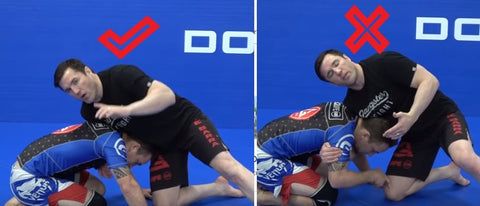
Grip your bicep, hand on their back. Take your free arm, grab a hold of your own bicep, and place your top hand flat on their upper back — not floating. The flat hand creates the lever for the squeeze.
Turn before you roll. Turn onto your grip-side hip first so they cannot base out with their free hand. This puts them on their side and gives you the angle to finish.
Walk hips into them as you bend their neck. The squeeze isn’t arms — it’s your hips driving forward while your chest folds their head down. The arms just hold the frame.
7 Anaconda Choke Setups That Finish in No-Gi
1. The Snap Down
The bread-and-butter entry. As your opponent shoots a single or double, post on their head, snap them down hard to all fours, and immediately slide your choking arm under the chin while their posture is still broken. Most no-gi anacondas in MMA come from exactly this sequence — Charles Oliveira’s anaconda over David Teymur at UFC Fight Night 144 started with a missed shot and a snap down.
2. The Sprawl
When the takedown is already in motion, sprawl your hips back, drop your chest onto their upper back, and immediately attack the front headlock. Don’t hunt for the underhook — the moment the sprawl is heavy, the anaconda arm is open. From here you cinch the grip and gator-roll before they can stand back up.
3. The Failed Guillotine
You shoot a high-elbow guillotine; they posture out and free their head halfway. Instead of releasing the position, walk your hips out, dive the choking arm under and around the trapped shoulder, and convert. The guillotine attempt actually pre-positions their arm exactly where you want it for the anaconda.
4. From Top Turtle
You have your opponent in turtle and they reach for an underhook to roll out. Catch their reaching arm, drive your shoulder into the side of their neck, and feed your far-side arm under the chin. As you finish the grip, gator-roll over the trapped arm and squeeze.
5. Off the Single-Leg Defense
An opponent grabs a single on you. You sprawl, peel the head down, and drop into the front headlock. Because they were committed to the leg, their arm is extended and their posture is wrecked — the anaconda finds its lane fast. This is Nicky Rod’s favorite from the B-Team curriculum.
6. Funk Roll Counter
When a wrestler tries to roll under your single-leg defense (the funk roll), their arm extends as they spin. Catch the arm, slap on the anaconda grip mid-roll, and finish on the back side of their attempt. This is high-percentage in MMA where the funk roll is a common scramble pattern.
7. The Olympic Roll Finish
Once the grip is locked, instead of a low gator roll, you can drop to your near hip and roll heels-over-head, landing on your shoulder with your opponent’s body folded over you. Aaron Hernandez popularized this as the Olympic Roll on YouTube — it works against bigger opponents who can stop a sideways roll because it uses gravity instead.
Anaconda Choke vs D’Arce Choke vs Peruvian Necktie
All three submissions live in the front-headlock family, all three trap the arm, and all three look identical to a casual viewer. The mechanics are completely different. Mixing them up is the fastest way to leave taps on the mat.
Anaconda choke: Choking arm goes under the neck and exits at the outside of the trapped armpit. You grip your own bicep with the same-side hand. Finished by rolling toward the trapped arm so their body weight tightens the squeeze. If your right arm chokes, you roll to your right.
D’arce choke: Choking arm goes under the trapped armpit and exits at the back of the neck. You finish in a figure-four, usually from the side or with your opponent flat. The d’arce demands a deeper, longer arm path. Read more in our d’arce choke no-gi setups guide to see how the two chain together.
Peruvian necktie: Same arm position as the front headlock, but instead of rolling sideways you sit down, hook your leg over the back of your opponent’s head, and pull them face-first into your chest while your locked arms crush the neck. It is closer to a neck crank than a true blood choke and usually taps people in two seconds when locked correctly.
The simplest rule: anaconda goes under, d’arce goes over the arm. If you can’t find your exit point in three seconds, you’re probably on the wrong submission for the angle you have.
How to Escape the Anaconda Choke
Defense starts before the choke is locked. Once the grip closes you have maybe four seconds, and most of that window is panic, not technique.
Posture up before the grip closes. If you feel an arm sliding under your chin, drive your forehead into the mat hard and walk your knees forward. Posture buys you time and prevents the squeeze.
Hand-fight the choking arm. Two-on-one their wrist before they cup the bicep. If you stop the grip from closing, there is no choke.
Roll the same direction they roll. If they roll right, you roll right too — not against them. Rolling the same way takes pressure off your neck and lands you in a position where you can pull your trapped arm out.
Sit through and post the head. A clean escape used by Jay Rodriguez involves sitting through your hip on the choking-arm side, posting your free hand under their head to lift, and recovering to a knee. It works because it attacks the choke’s shoulder pressure rather than the grip itself.
Common Anaconda Choke Mistakes
Three errors show up at every level — from blue belt opens to ADCC trials.
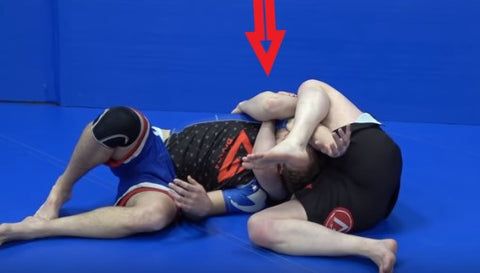
Rolling without finishing the grip. If your bicep is not yet sealed when you roll, you have just given your opponent a free trip to top side control. Lock first, roll second.
Choking with the bicep instead of the wrist. The bicep is too thick and the angle is too soft to cut blood flow. Always finish with the wrist or forearm bone in contact with the carotid.
Floating the top hand. Your top hand must be flat on the opponent’s upper back to create the lever. A floating hand turns the squeeze into a head-pinch and they will posture out.
Drilling the Anaconda Choke for Competition
The anaconda is a position-pressure submission, which means reps in isolation don’t transfer well. Drill it inside scrambles, not from a frozen grip.
Snap-down to roll, ten reps a round. Have a partner shoot a half-committed single. You snap, hit the grip, and roll — even if the grip is loose. Train the entry; the squeeze comes free.
Three submission stack. From the front headlock, drill anaconda → d’arce → Peruvian necktie as a chain. The opponent defends one; you flow to the next without resetting the position. This builds the muscle memory the front headlock actually demands in live rolls.
Sweaty rounds only. Most no-gi submissions feel different when both athletes are dripping. Always test the anaconda in the back third of a hard session, never fresh.
Mid-session is also when wrestlers start grinding for takedowns — the perfect time to practice your sprawl-to-front-headlock chain. Pair anaconda drilling with your wrestling takedowns for BJJ work; the same body positions feed both attacks.
Watch the Anaconda Choke in Action
For a full breakdown from a current ADCC-level athlete, this B-Team Jiu-Jitsu walkthrough by Nicky Rodriguez covers the snap-down entry, the grip mechanics, and the gator-roll finish — the exact sequence that built him into one of the most dangerous front-headlock players in modern no-gi.
Building an Anaconda Game
An athlete who can finish the anaconda choke from no-gi has solved one of the hardest scrambles in grappling: what to do when an opponent gets to all fours after a failed shot. The path to a real anaconda game is short. Three months of dedicated drilling on the snap-down, the sprawl, and the gator-roll finish will give any blue belt a competition-level submission. Six months of chaining it into the d’arce and Peruvian necktie will make them a front-headlock specialist.
If you want a model to study, watch how Gordon Ryan and the modern Danaher-trained athletes use the front-headlock cluster against opponents who can’t be passed conventionally. The anaconda is not a flashy choke. It is a high-percentage one. In a sport where most submissions live and die by the grip, the anaconda survives sweat, survives scrambles, and finishes fights.
Sources
- Evolve Daily — BJJ 101: Anaconda Choke — History, mechanics and origin attributed to Milton Vieira and Nogueira.
- BJJ Fanatics — Fine-Tuning the Basics: The Anaconda Choke — Grip details and finish mechanics.
- BJJ Fanatics — D’Arce vs Anaconda: What’s the Difference? — Side-by-side comparison of the front-headlock chokes.
- Lowkick MMA — Anaconda Choke: BJJ Submission — Step-by-step setup and pressure points.
- BJJ World — Roll Your Opponents Into Submission With The Anaconda Choke — Gator roll finish technique.
- BJJEE — Anaconda Choke: Try This Easy Escape Technique — Defensive details from Jay Rodriguez.
- Wikipedia — Charles Oliveira — UFC submission record including four anaconda finishes.
Browse our top-rated rashguards and no-gi gear at the RashguardGuy shop →