Tornado Guard No-Gi: 7 Keys to Sweep
Grapplers who’ve never gone upside down in live rolling tend to assume the tornado guard is a gi-only party trick that collapses the moment the collar grip disappears. It doesn’t. The underlying position — inverting underneath a half-guard opponent to elevate and dump them — traces back to the inverted guard that Brazilian competitor Roberto “Roleta” Magalhães started developing in the 1990s, and the half-guard-specific version most grapplers now call the tornado guard has been running through no-gi brackets for over a decade with a triceps-and-ankle grip replacing the lapel entirely. The mechanics are less about flexibility than most people think and more about sequencing: get the frame wrong and you’re just stuck upside down with your neck loaded; get it right and the sweep is close to automatic.
1. The No-Gi Entry Starts With a Real Knee Shield
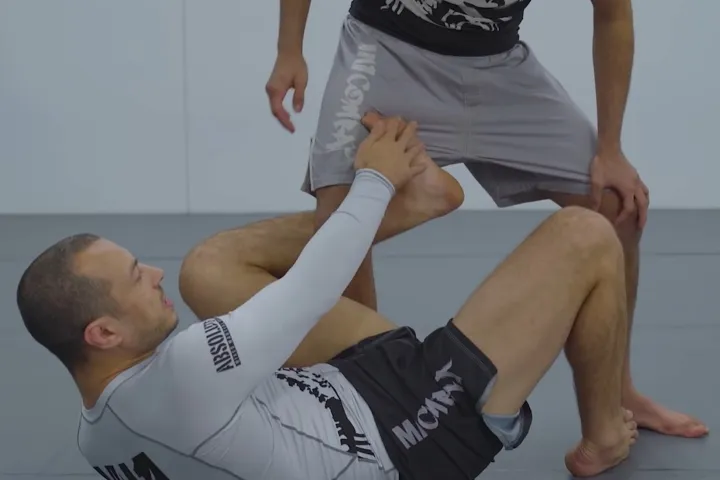
Every tornado guard rep starts in bottom half guard, and the single biggest reason people never get the sweep off the ground is that their knee shield isn’t a knee shield — it’s a flat leg jammed between their hip and the opponent’s. A working knee shield puts your shin bone across their hip and ribs with your foot free to post, hips angled off the mat, and your top-leg knee tucked in tight enough that your opponent can’t flatten you out and start stacking pressure. If you’re already pinned flat before you try to invert, the rest of the sequence never happens — you’ll just get crushed trying to turn your hips.
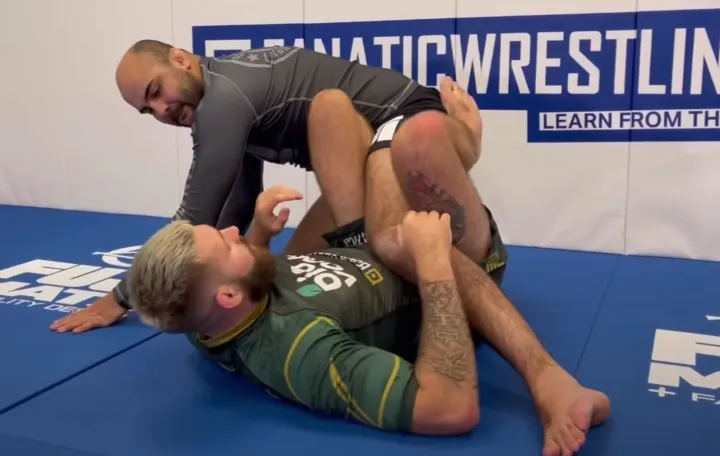
Build the shield before you reach for any grip. Most people try to grip-fight first and build the frame second, which is backwards — without the shin already wedged in, there’s no base to invert off of, and you’ll spin yourself into a bad spot instead of a sweep.
2. Swap the Collar Grip for a Triceps Frame
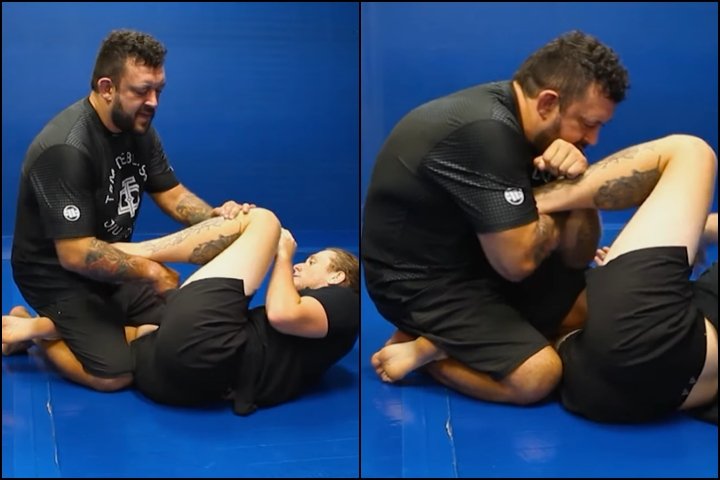
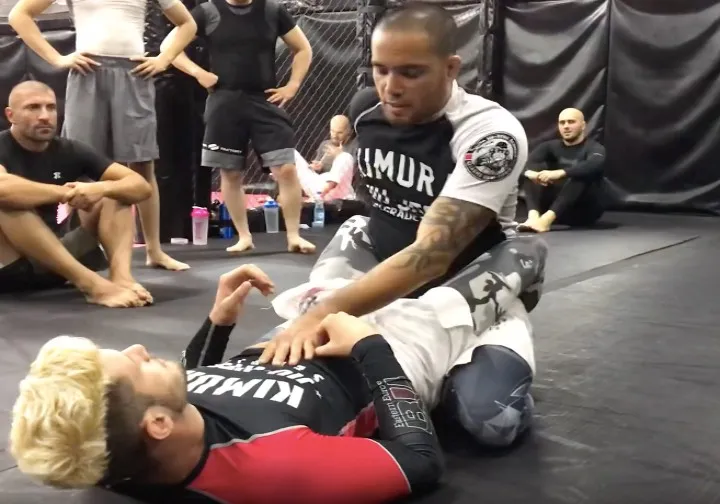
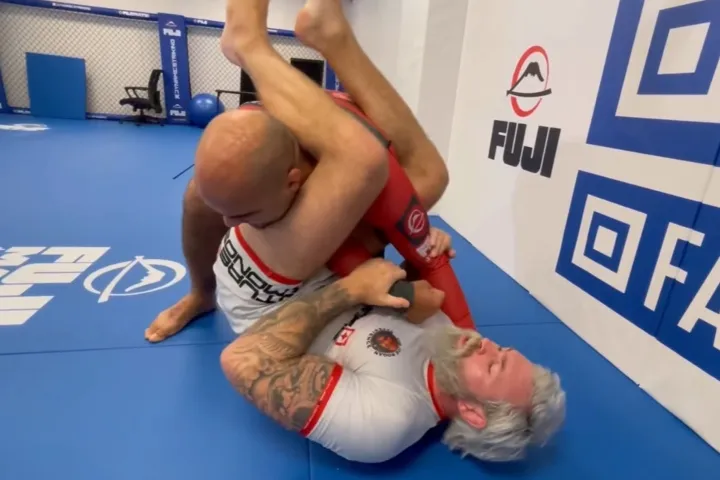
This is the one substitution that makes the entire no-gi version work. The gi tornado guard anchors on a collar grip that gives you a fixed point to pull against during the invert. Without a gi, you reach across your opponent’s body with your top arm and clamp onto their triceps — ideally above the elbow, close to the shoulder, where you get leverage instead of just skin. That grip does two jobs at once: it stops them from posting their hand out to stuff the spin, and it gives you the same pulling anchor the collar used to provide.
Grip it too low, near the wrist or forearm, and a stronger opponent will simply rip the arm free the instant you commit your weight to the invert. The triceps grip holds because you’re fighting bone leverage close to the joint, not grip strength against grip strength.
3. Control the Trapped Leg Before You Spin
With the triceps framed, your bottom arm slides underneath your own shielding leg and hooks around the opponent’s near leg — usually behind the knee or around the ankle, depending on how tight their stance is. This is the control most beginners skip because it feels unnecessary right before the spin, but it’s what stops your opponent from simply stepping over you and passing while you’re mid-invert. No leg control means no sweep; it just means you handed them a scramble with your back already turned.
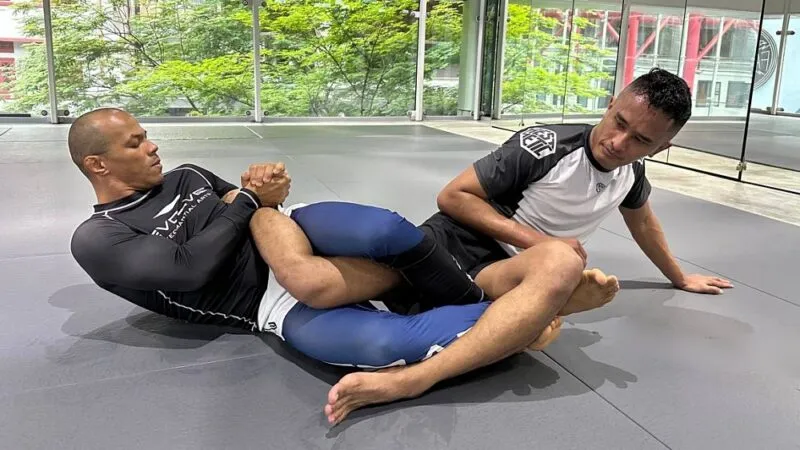
Think of the triceps grip and the leg hook as a single frame, not two separate grips. If either one loosens in the half-second before you kick, the opponent has an exit — and they will find it.
4. Time the Kick to the Pendulum, Not Your Hips
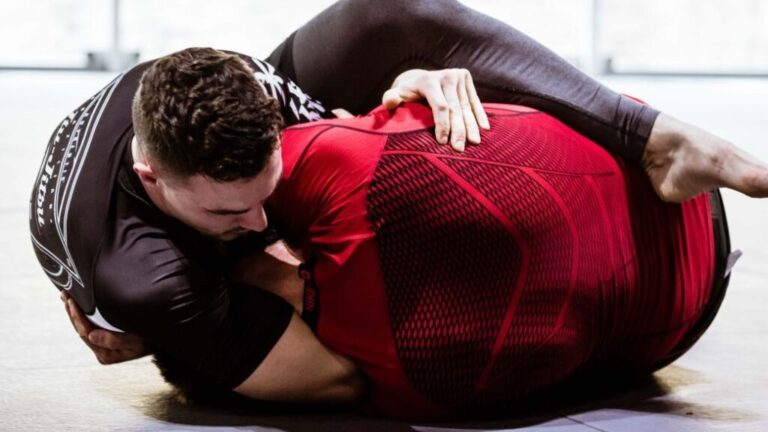
The actual invert is a pendulum, not a crunch. Your free leg swings down and back like a kettlebell, and that swing is what generates the momentum to flip your hips underneath your opponent — not your abs, not a muscled-up sit-up motion. Grapplers who try to power the spin with their core alone usually stall halfway through, stuck on their shoulder with their hips still on the mat and their neck absorbing the opponent’s weight.
The checkpoint that tells you it worked: your opponent ends up balanced over your thigh, not your shin or your calf. Over the thigh, you can finish lifting them through the sweep. Over the calf, you’ve got almost no leverage left and the position collapses back to flat half guard.
5. Read the Sprawl — Sweep or Fork to the Triangle
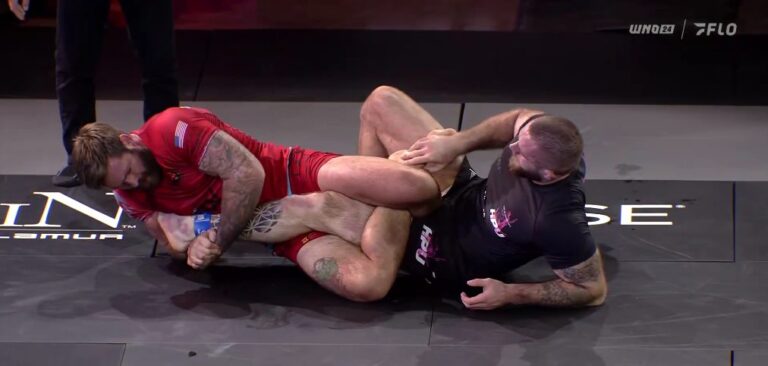
A live opponent won’t just fall over. The common defensive reaction is to sprawl their weight back and post hard off the triceps arm you’re gripping, and that reaction is your fork in the road. If the sprawl is weak, keep driving the pendulum and finish the sweep to a dominant top position. If they sprawl hard and create space, let go of the leg hook, extract your shielding leg, and thread it under their far armpit — that’s the entry into a no-gi triangle choke off the same frame you already built.
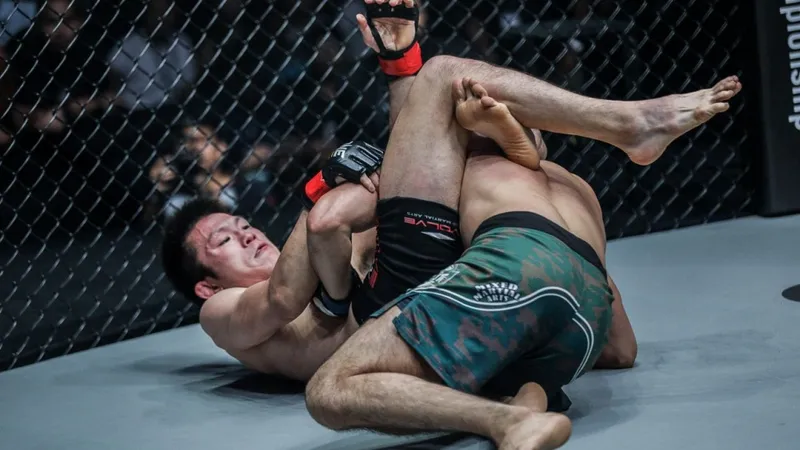
This is the part that separates grapplers who actually use tornado guard from people who drilled it twice and moved on: you have to read the sprawl in real time, not decide beforehand which finish you’re going for. The position rewards reacting, not planning.
6. Chain to the Omoplata or Kimura When the Sweep Stalls
If the sprawl is somewhere in between — not weak enough to sweep, not open enough for the triangle — you’re sitting on a third option most guides skip entirely. With the triceps still framed and your hips elevated, rotating your trapped-side knee onto their hip and extracting the same shielding leg sets up an omoplata instead, torquing the shoulder rather than choking the neck. And if they pull the arm back in to defend the omoplata, you’re already holding the exact grip a kimura trap starts from — you just have to switch your hand position from the triceps to the wrist and finish the figure-four.
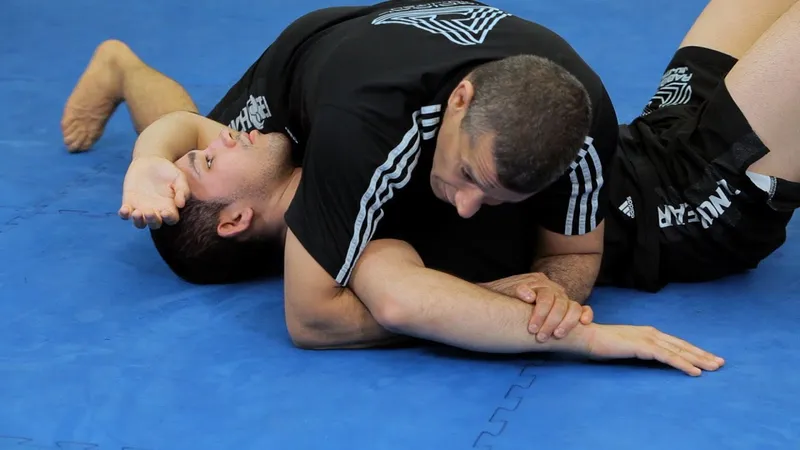
The reason tornado guard shows up so often in competition footage isn’t the sweep itself — plenty of half guard sweeps move people to top position just as well. It’s that a single entry gives you four live finishes (sweep, triangle, omoplata, kimura) depending on how the opponent reacts, which is a much better return than a sweep that’s only ever a sweep.
7. Protect Your Neck and Knees — the Real Risk of Going Upside Down
Inverting puts real load somewhere, and if your technique is off, that somewhere is your cervical spine. The common mistake is letting weight settle onto the neck during the spin instead of the upper back and shoulders — bjjee.com’s breakdown of inverted guard risk notes that practitioners who invert onto the neck repeatedly report it as a contributing factor in herniated discs, alongside guillotines and neck cranks, and the fix is the same one that makes the sweep work better anyway: keep your hips elevated above your shoulders through the whole spin instead of letting your head take the opponent’s weight.
Your knees take a secondary hit from the trapped-leg torque if you rush the leg hook instead of controlling it cleanly, so the same slow-down-and-frame-it-properly approach that fixes your sweep percentage also keeps the position from wrecking your joints over a long training career. Inverted positions reward patience during the entry far more than they reward speed.
Common Mistakes That Kill the Sweep Before It Starts
Most failed tornado guard attempts trace back to one of the same five errors, and they almost always happen in combination rather than alone:
- Grip-fighting before building the frame. Reaching for the triceps before the knee shield is set means there’s no base to invert off, so the spin just drags you flat.
- Gripping the forearm instead of the triceps. A lower grip gives the opponent a lever to strip your hand the moment you commit weight to the spin.
- Skipping the leg hook entirely. Without it, the opponent simply steps over your inverted body and starts passing while your back is turned.
- Muscling the invert with the core instead of the pendulum leg. This stalls the spin halfway, leaving your neck and shoulder absorbing weight that should be moving through to the sweep.
- Committing to the sweep before reading the sprawl. Forcing the sweep against a hard sprawl wastes the position instead of forking into the triangle, omoplata, or kimura that’s already available.
Is Tornado Guard Legal in No-Gi Competition?
Yes — inverting itself isn’t restricted under IBJJF, ADCC, or most submission-only no-gi rulesets, and the sweep, triangle, omoplata, and kimura finishes that come off it are all standard scored or submission-ending techniques. The only rules that apply are the general ones already governing those individual submissions and any leg-entanglement positions your trapped-leg control might drift into, so there’s no tornado-guard-specific restriction to plan around. The bigger practical limit is cardio and comfort upside down, not the rulebook.
What Belt Level Should Start Drilling This
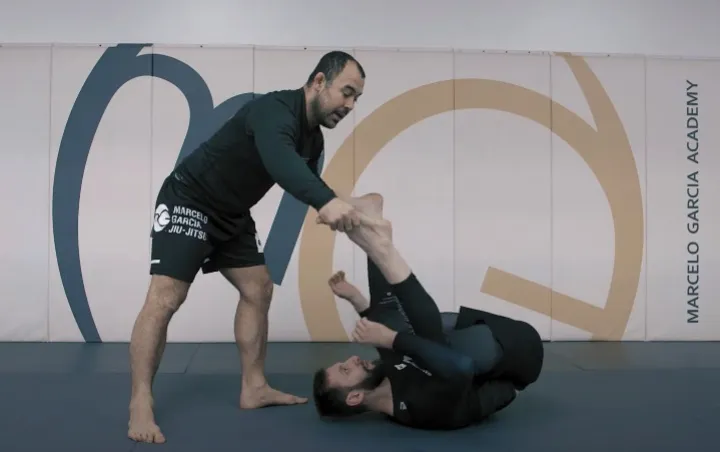
For a closer look at the inversion mechanics this position leans on, here’s black belt Lachlan Giles breaking down linking guard retention through the reverse half guard invert — the same base skill the tornado guard’s spin is built from:
Most coaches won’t hand this to a fresh white belt, and that’s less about gatekeeping than sequencing. Tornado guard asks you to already trust your half guard retention under pressure, already be comfortable inverting without bracing for a crash, and already know what a real triceps frame feels like from other positions — kimura control, for instance, uses nearly the same grip. Blue belts who’ve put real mat time into half guard and scrambles pick it up fast. White belts usually get more mileage drilling the knee shield and basic hip escapes first, then layering the invert on top once those reflexes are automatic.
That sequencing matters more in no-gi than gi, too. Without fabric to slow a grip exchange down, the triceps-frame fight happens faster than the collar-grip version ever did, so grapplers who rush straight to the spin without reps on the frame tend to get their grip stripped before they’re even upside down. Drill the frame in isolation — just the triceps grip and leg hook, no spin — for a week before adding the kick.
Where Tornado Guard Fits Your No-Gi Game
Tornado guard rewards grapplers who already spend real time in half guard and in scrambles, since the position asks you to stay calm upside down for a second or two while you read what your opponent’s hips are doing. If that comfort isn’t there yet, the berimbolo is a gentler on-ramp to the same inversion skill before you add a second moving piece like the triceps frame — drilling that base inversion comfort will do more for your tornado guard than drilling the sweep itself. Either way, a rashguard that doesn’t bunch up or ride when you spin matters more here than in almost any other position: loose, sliding fabric changes exactly where your opponent’s grip lands during the triceps frame fight, which is the whole mechanism this guard runs on.
Sources
- Inverted Guard and Tornado Guard — BJJ Heroes — history and mechanics of the inverted guard lineage and its half-guard-specific tornado variant.
- Should You Go Inverted? — BJJEE — injury-risk breakdown of inverted guard positions, including cervical spine load and proper weight distribution.
- Tornado Guard Sweeps and Submissions for Gi and No-Gi — BJJ World — grip and sweep mechanics for both gi and no-gi versions of the position.