Berimbolo No-Gi: 7 Steps to Master the Spin
Rafael and Guilherme Mendes spent the early 2010s winning gi world titles off a sweep most white belts still can’t name correctly, and by 2013 the technique had become common enough at the black belt level that the IBJJF had to write a rule specifically to stop people from reaping the knee during the entry. That rule still governs how the berimbolo is taught today, gi or no-gi. Strip away the gi grips that made the original version famous and the mechanics get harder, not easier — no lapel to anchor the spin means the whole sequence lives or dies on hip pressure and a well-timed underhook.
This guide breaks the no-gi berimbolo into seven steps, the two most common ways it falls apart, and when the move is worth the risk in a scramble-heavy no-gi match.
What Makes the No-Gi Berimbolo Different
Gi berimbolos rely on a pistol grip on the pants and a collar or sleeve control to load the opponent’s weight before the spin. None of that exists in no-gi. Instead, the bottom grappler has to create the same off-balance using an underhook on the far side, a knee shield or shin frame on the near side, and constant hip movement to stay a half-step ahead of the pass. That’s why coaches like Evolve MMA teach the no-gi version as a hip-control problem first and an inversion second — grapplers who try to invert before they’ve actually off-balanced their opponent just end up stuck upside down with their back exposed.
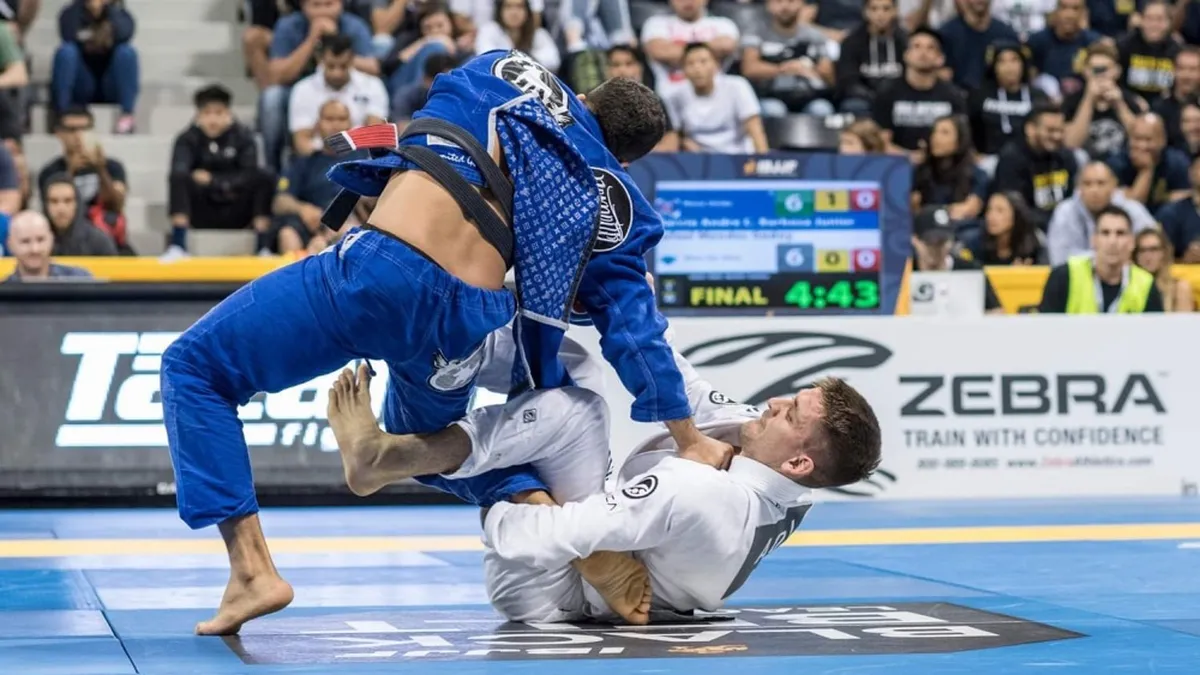
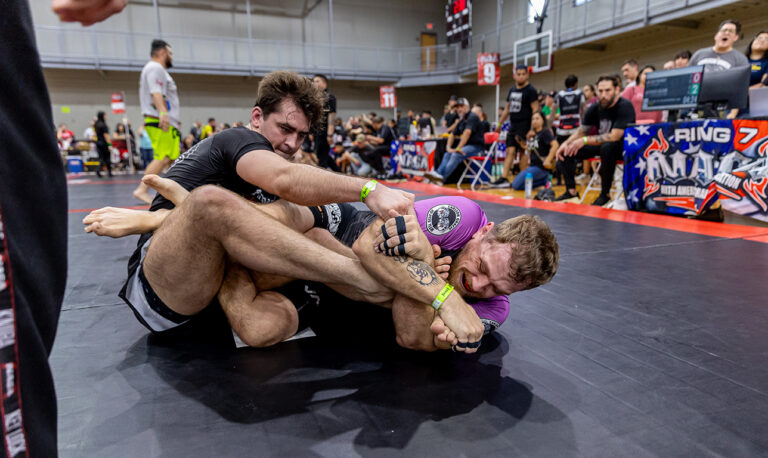
The inversion phase of a no-gi berimbolo — the moment most white belts either commit or freeze.
Step 1: Build the De La Riva Hook Without a Pant Grip
Everything starts with the de la riva hook — your outside leg wrapped around the opponent’s lead leg from the outside, foot hooking behind their knee. In the gi, you’d pair that hook with a sleeve and pant grip. In no-gi, replace the pant grip with a same-side underhook or a collar-tie style grip on the head, and replace the sleeve grip with a wrist or tricep control on the far arm. The hook does the same job either way: it stops the opponent from stepping back to reset their base the second you start moving.
Step 2: Break Their Posture Before You Invert
The single biggest mistake in no-gi berimbolo attempts is inverting before the opponent’s posture is actually broken. If they’re standing tall with their weight centered, spinning underneath them just hands over your back for free. Pull them forward with the underhook, drive your de la riva knee into their hip, and wait for them to post a hand on the mat or shift their weight onto their lead leg. That weight shift is the green light — not a timer, not a habit, an actual read on their base.
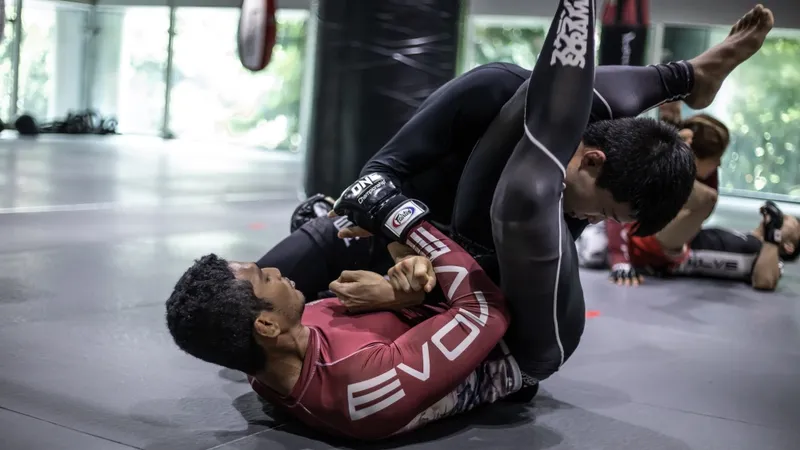
Hip and grip control has to come before the spin — invert too early and the back take never happens.
Step 3: Load the Inversion Off the Underhook
Once the posture breaks, commit. Post your outside hand on the mat, tuck your head, and roll your shoulder underneath their hip using the underhook as the pivot point. This is the part that scares people off the technique, and fairly — for about half a second your back is completely exposed and you’re relying on the de la riva hook to keep your opponent from simply stepping over you. Grapplers who hesitate here usually get stacked. Grapplers who commit usually come out the other side in the exact position they were aiming for.
Step 4: Control the Far Hip, Not the Leg
A lot of no-gi instruction still teaches leg control at this stage because it’s easier to demonstrate, but hip control is what actually matters. As you come up on the far side, your goal is to get your chest connected to their hip and ribs, not just your hand wrapped around a leg. Leg control alone lets a good opponent turn into you and face off; hip connection takes that option away before they know it’s gone.
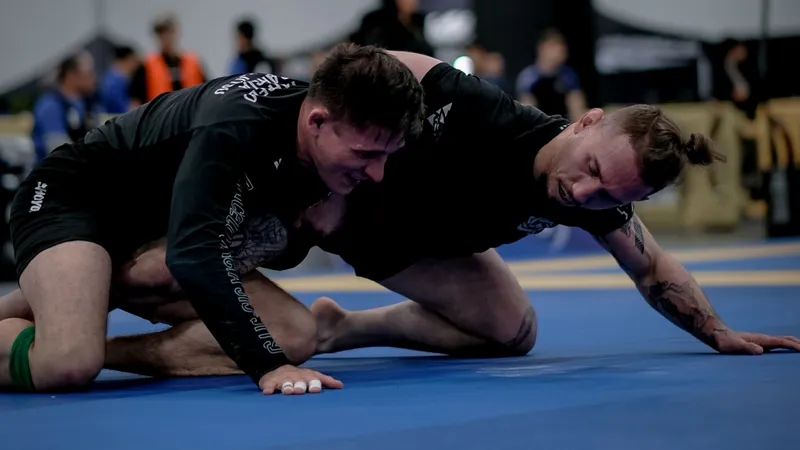
The scramble phase — hip connection beats leg control almost every time here.
Step 5: Finish the Spin, Don’t Muscle It
The actual rotation onto the back should come from your hips and legs driving through, not your arms pulling. Grapplers built more like wrestlers tend to try to power through this step with upper body strength, and it works often enough in the lower belts to become a bad habit. Against anyone with decent base, an arm-driven spin stalls out halfway and leaves you flattened out in a bad spot. Drive off your top leg, let your hip lead the rotation, and your arms are just there to maintain the grips you already have.
Step 6: Lock the Seatbelt Before You Celebrate
Landing on the back doesn’t mean anything without control. As you complete the spin, your first two priorities are a seatbelt grip — one arm over the shoulder, one arm underneath, hands clasped — and at least one hook in. Back control in no-gi disappears fast without both, because there’s no gi collar to slow down an opponent trying to strip your grip and turn back into you. Get the seatbelt first. Chase both hooks second. Submissions come third.
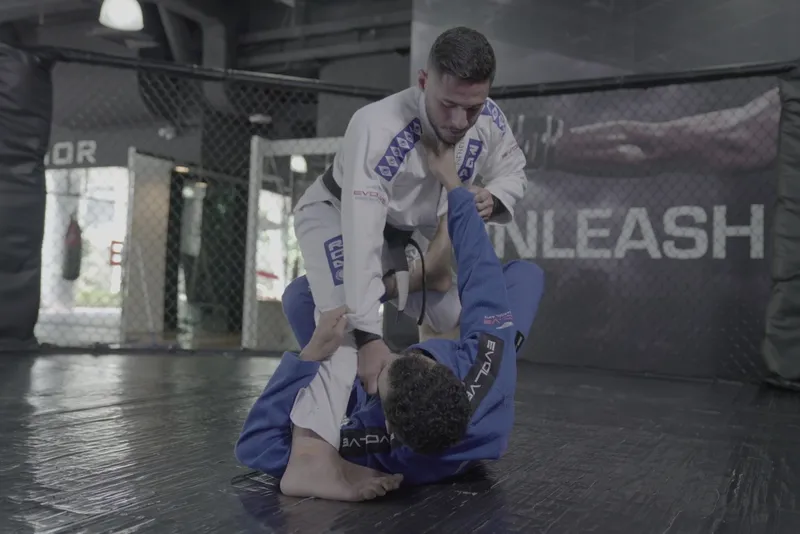
The finish everyone’s chasing: seatbelt and hooks locked before the opponent resets.
Step 7: Know When to Bail Instead of Finishing
Not every berimbolo attempt should end with a back take, and the grapplers who get hurt or gassed out are usually the ones who treat the spin as all-or-nothing. If your underhook gets stripped mid-inversion, abandon the back take and settle for the sweep — landing in top half guard or side control off a failed berimbolo is still a net win. Chasing the back after you’ve already lost your grip just burns energy you’ll want later in the round.
Common Mistakes That Kill the Spin
Two errors show up more than any others when grapplers first bring the berimbolo into no-gi rounds. The first is telegraphing — shooting the de la riva hook and immediately trying to invert in the same motion, which gives an experienced opponent all the warning they need to step back and pass. The second is chasing the technique against the wrong opponent. A berimbolo against a much heavier, much stronger grappler who simply refuses to move their base is usually a losing trade; save it for opponents who are willing to engage with grips and movement rather than sit and press forward.
- Inverting before posture is actually broken
- Gripping the leg instead of connecting to the hip
- Trying to power the spin with arms instead of hips
- Landing on the back with no seatbelt and no hooks
- Refusing to bail when the underhook gets stripped
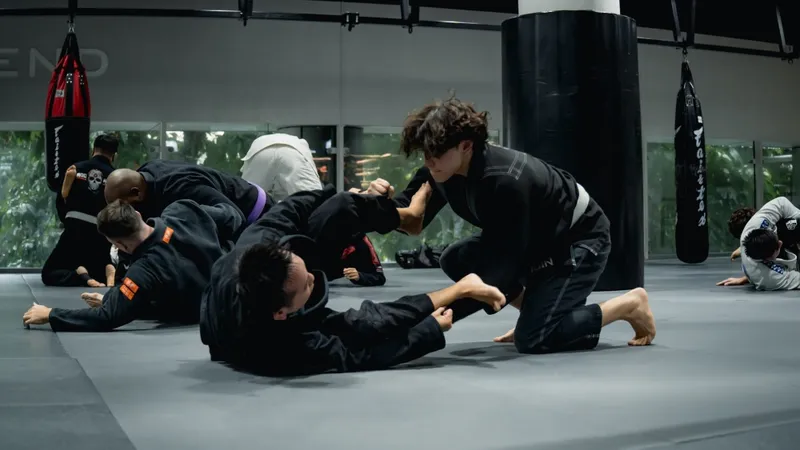
Drilling the entry hundreds of times is what makes the timing automatic under live pressure.
Where the No-Gi Berimbolo Fits Into a Bigger Guard Game
The berimbolo rarely stands alone. Most grapplers who use it well in no-gi treat it as one branch of a wider de la riva guard system that also includes leg entries, sweeps to mount, and transitions into x-guard when the spin gets shut down. Gianni Grippo built a career on exactly that kind of layered approach — the berimbolo was his signature, but it worked because opponents had to respect three or four other options coming from the same guard. Treat the berimbolo as a standalone party trick and good opponents will eventually stop biting on the setup.
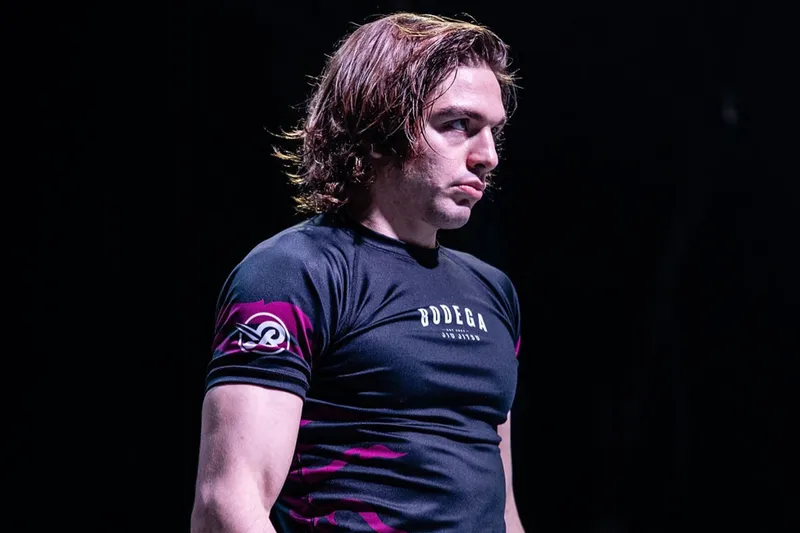
Gianni Grippo, one of the competitors most associated with a berimbolo-heavy guard game.
Takedown Pressure Sets Up the Same Read
The weight-shift read that triggers a berimbolo entry isn’t unique to guard work — it’s the same pressure read wrestlers use to time a takedown. Watching how an opponent reacts to being off-balanced on their feet carries directly into reading it from the bottom. Grapplers who cross-train wrestling or spend time on takedown defense tend to pick up the berimbolo’s timing faster than guard specialists who’ve never had to read weight distribution standing up.
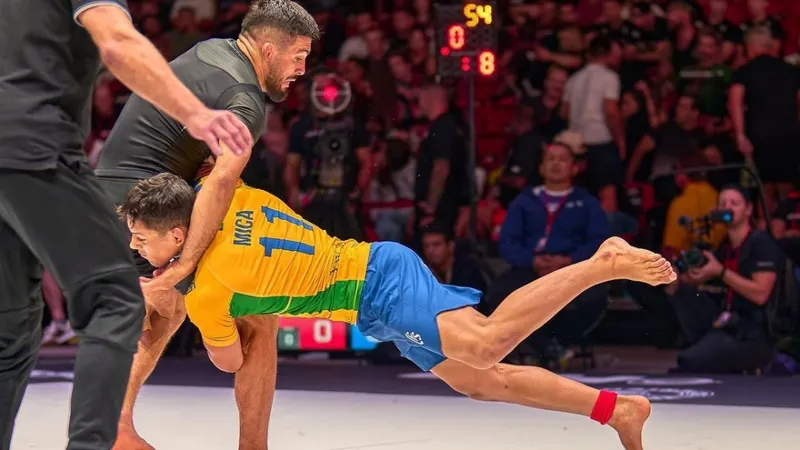
The same off-balance read that sets up a takedown also sets up the berimbolo from the bottom.
It Works Regardless of Body Type
The berimbolo gets pitched as a technique for small, flexible grapplers, and there’s some truth to that — a lower center of gravity makes the inversion easier. But the mechanics hold up across weight classes and across gender, because the sequence depends on hip mobility and timing rather than raw size. Women’s no-gi divisions have produced plenty of berimbolo specialists for the same reason lighter men’s divisions have: the technique rewards precision over strength.
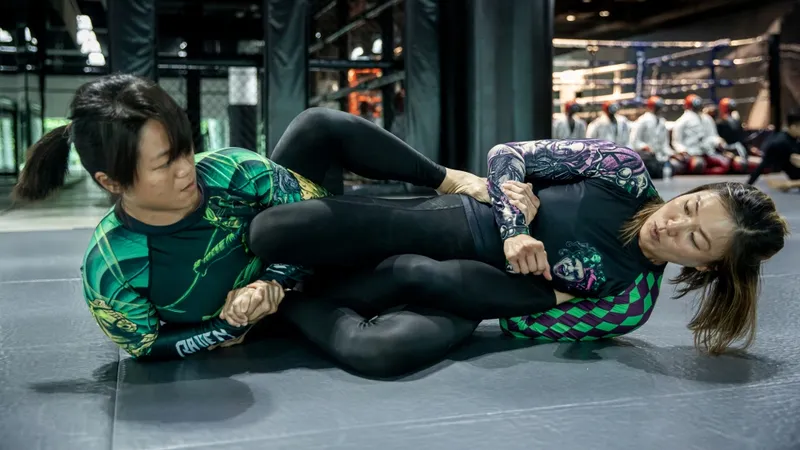
Hip mobility and timing matter more than size or strength for a clean berimbolo.
Drilling the berimbolo without a training partner willing to feed you honest reactions is close to useless — you’ll groove the mechanics against no resistance and then freeze the first time a real opponent doesn’t cooperate. Find a partner at a similar level, agree to work the entry at 50% resistance for a few rounds, and build the timing up from there before testing it live.
Is the No-Gi Berimbolo Legal in Competition?
Yes, with one hard limit that trips up newer competitors. IBJJF rules — which most no-gi submission-only and points formats have adopted in some form — ban reaping the knee during the inversion, meaning your hook can’t twist the opponent’s knee sideways while you spin. That rule exists because of injuries from the early berimbolo boom around 2013, and referees at events like No-Gi Pans and No-Gi Worlds watch for it specifically during back-take sequences. Keep your hook behind the knee rather than twisting across it and the entry stays legal under nearly every ruleset you’ll compete under.
Why Some Coaches Still Refuse to Teach It Early
Plenty of respected black belts, John Danaher among them, have argued publicly that guard players should build a solid base game before adding inversions — the logic being that a white belt who berimbolos their way to a back take without understanding why the sweep worked ends up with a hole-filled game that falls apart against better competition. That’s a fair concern, but it undersells how much the technique teaches about hip movement and off-balancing even when it fails. The honest middle ground: learn the berimbolo alongside your fundamentals, not instead of them, and expect it to take longer to become reliable in no-gi than it did for the gi grapplers who popularized it.
Sources
- When And How Should I Use The Berimbolo In BJJ? — Evolve MMA breakdown of berimbolo timing and setup
- Here’s What You Need To Know About The Berimbolo — BJJ Eastern Europe on berimbolo origins and IBJJF rules
- 5 Things To Know About Gianni Grippo — ONE Championship profile of a berimbolo-focused competitor